
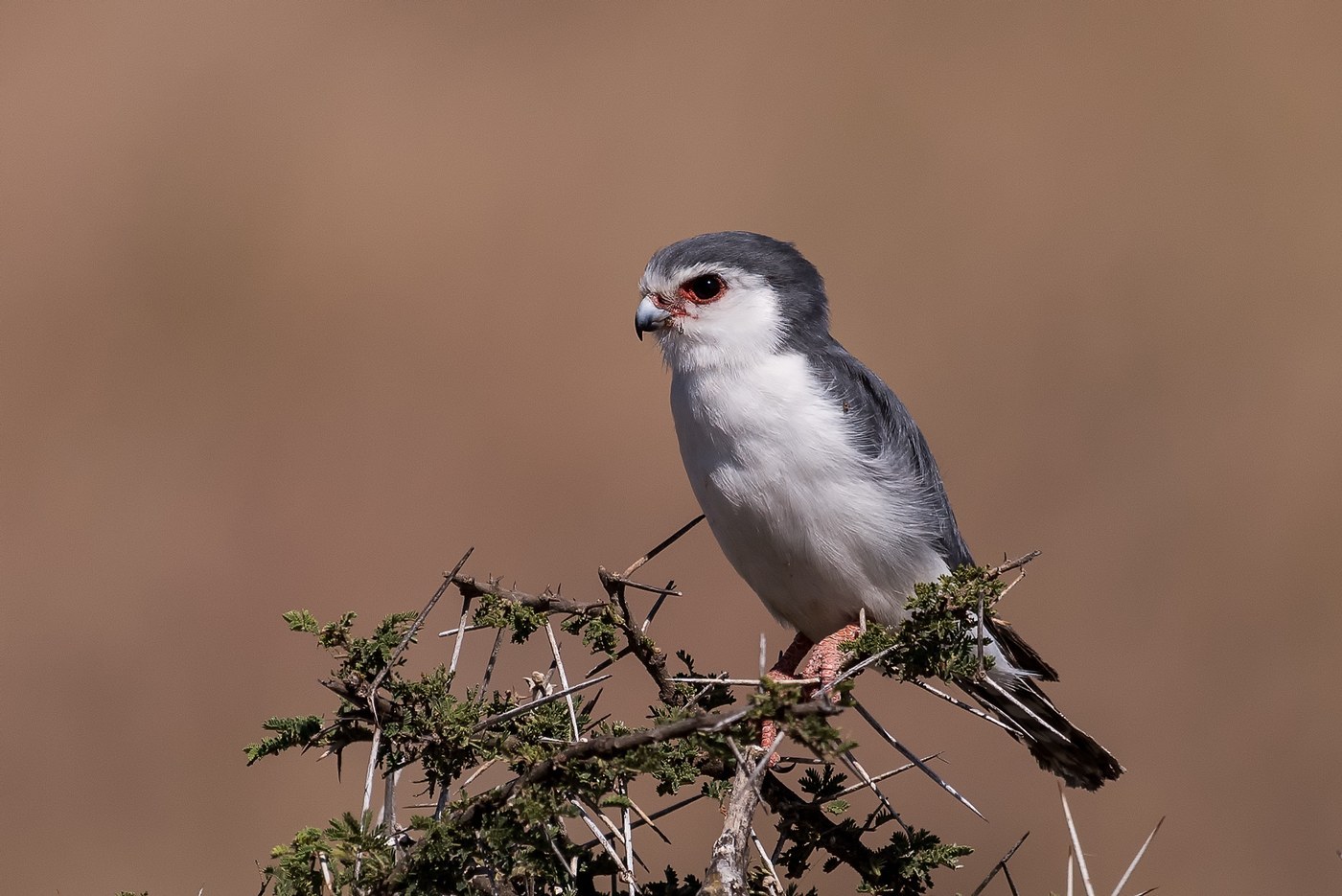
African Pygmy Falcon
Polihierax semitorquatus
One of the smallest raptors in the world, this tiny falcon of African thornveld shows crisp white underparts against a grey or chestnut back, often nesting alongside colonial weaverbirds.
- Feather type
- Tiny rounded flight feathers; short lightly barred tail; crisp white and grey/chestnut body feathers
- Colours
- White underparts; grey back in males or chestnut back in females; black wings with white spotting
- Bird size
- Very small falcon, ~19-20 cm, one of the smallest raptors
Found a feather like this?
Identify any feather from a photo, free.
Overview
The African Pygmy Falcon is a diminutive raptor of the dry savanna and thornveld of eastern and southern Africa, notable for its tiny size and its close association with sociable weaver or other colonial weaverbird nests, which it often uses for roosting and breeding.
Its feathers are correspondingly small and neatly patterned, with clean white underparts contrasting against a grey back in males and a rufous-chestnut back in females, a size-based clue as much as a color one given how few African raptors are this small.
Because of its habit of nesting in or near weaver colonies, feathers are frequently found close to large communal weaver nests in acacia or other thorny trees.
Identifying the Feather
Shape and size
- Flight feathers are notably tiny for a falcon, often under 8-9 cm, reflecting its status as one of the smallest raptors in the world.
- Tail feathers are short and show light barring, mostly blackish with white spotting near the tips.
Color and pattern
- Underparts feathers are clean white with no streaking.
- Male back and wing covert feathers are pale grey; female back feathers are chestnut-rufous instead.
- Wing feathers are blackish with crisp white spots, giving a spotted appearance in flight.
- Shafts are pale on underparts, dark on back and flight feathers.
Similar species
- Its extremely small size alone rules out nearly all other raptors sharing its range; the White-rumped Falcon is a close relative but occurs in a different region (Southeast Asia) and shows a white rump patch this species lacks.
Plumage & Molt
Males have a pale grey back, black wings with white spotting, and white underparts; females replace the grey back with rufous-chestnut. Juveniles resemble females but with some pale fringing that wears off within the first year.
Habitat & Range
Found in dry savanna, thornveld, and semi-arid scrub across eastern and southern Africa, frequently in areas with sociable weaver colonies. It is a non-migratory resident.
Behavior & Field Notes
Hunts insects and small vertebrates from low perches, often near or within weaver nest colonies which it uses for shelter and breeding. Voice is a high, thin chattering call. Nests are typically placed in chambers of large communal weaver nests.
Field note: tiny white-and-grey (or white-and-chestnut) spotted feathers found near large stick weaver nests in acacia trees are a strong indicator of this species.
Frequently asked questions
How small are this falcon's feathers?
Very small; flight feathers are often under 9 cm, reflecting its status as one of the world's smallest raptors.
How can I tell a male feather from a female feather?
Male back feathers are grey, while female back feathers are chestnut-rufous; underparts are white in both sexes.
Where should I look for its feathers?
Near large communal weaverbird nests in acacia or other thorny trees, which this species often uses for roosting and nesting.
Is it related to the White-rumped Falcon?
Yes, they are closely related pygmy falcons, but the White-rumped Falcon lives in Southeast Asia and shows a white rump patch not present on this species.
African Pygmy Falcon guides
In-depth guides for identifying and understanding African Pygmy Falcon.

Other feathers you may enjoy

Australian Hobby
Long, narrow pointed flight feathers; slender tail feathers

California Condor
Massive flight feathers; long broad primaries; large tail feathers

Brown Falcon
Broad, rounded flight feathers; variable-toned contour feathers
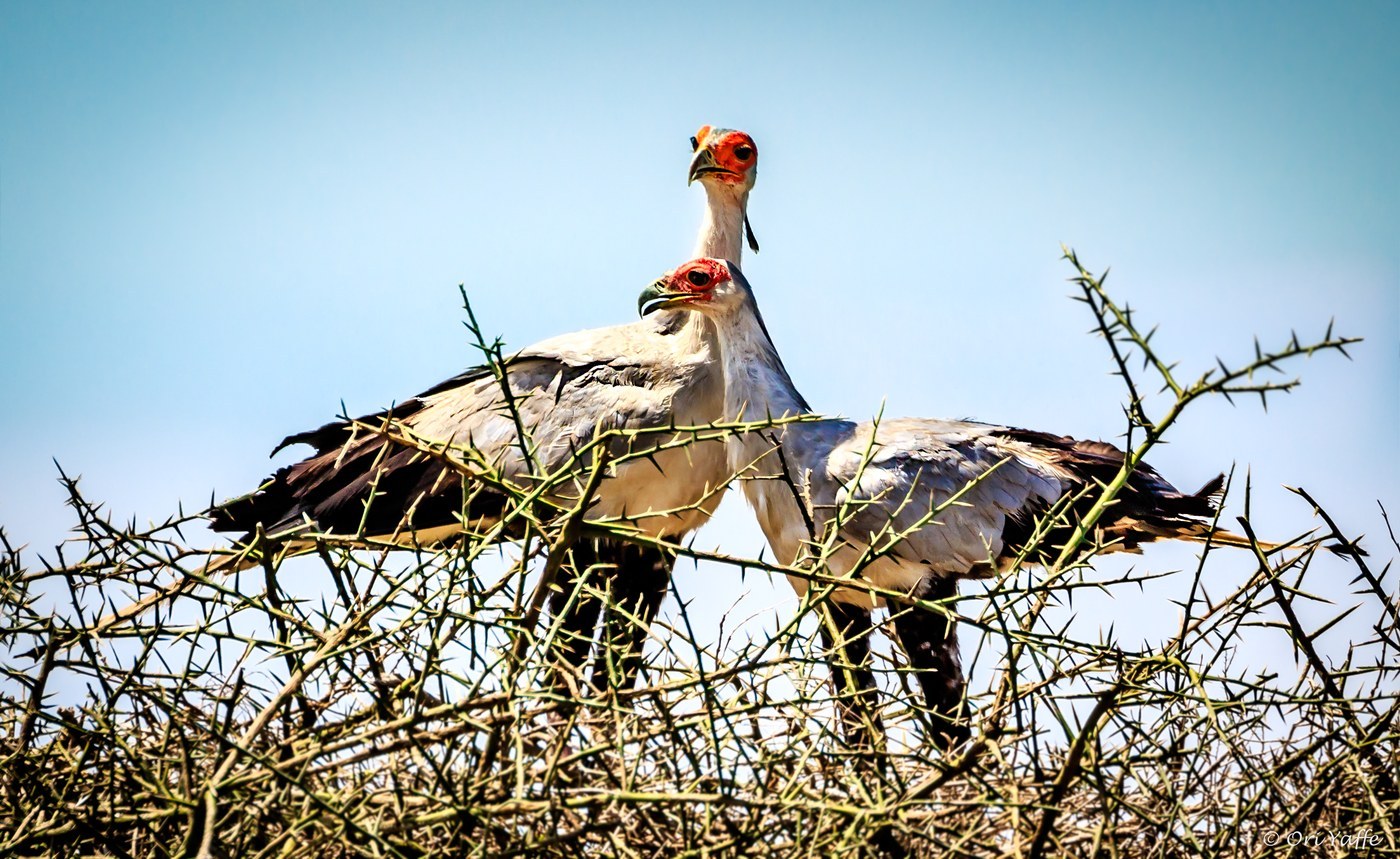
Secretarybird
Long crest feathers; broad flight feathers; elongated central tail feathers

Orange-breasted Falcon
Broad-based pointed flight feathers; bold breast and belly feathers
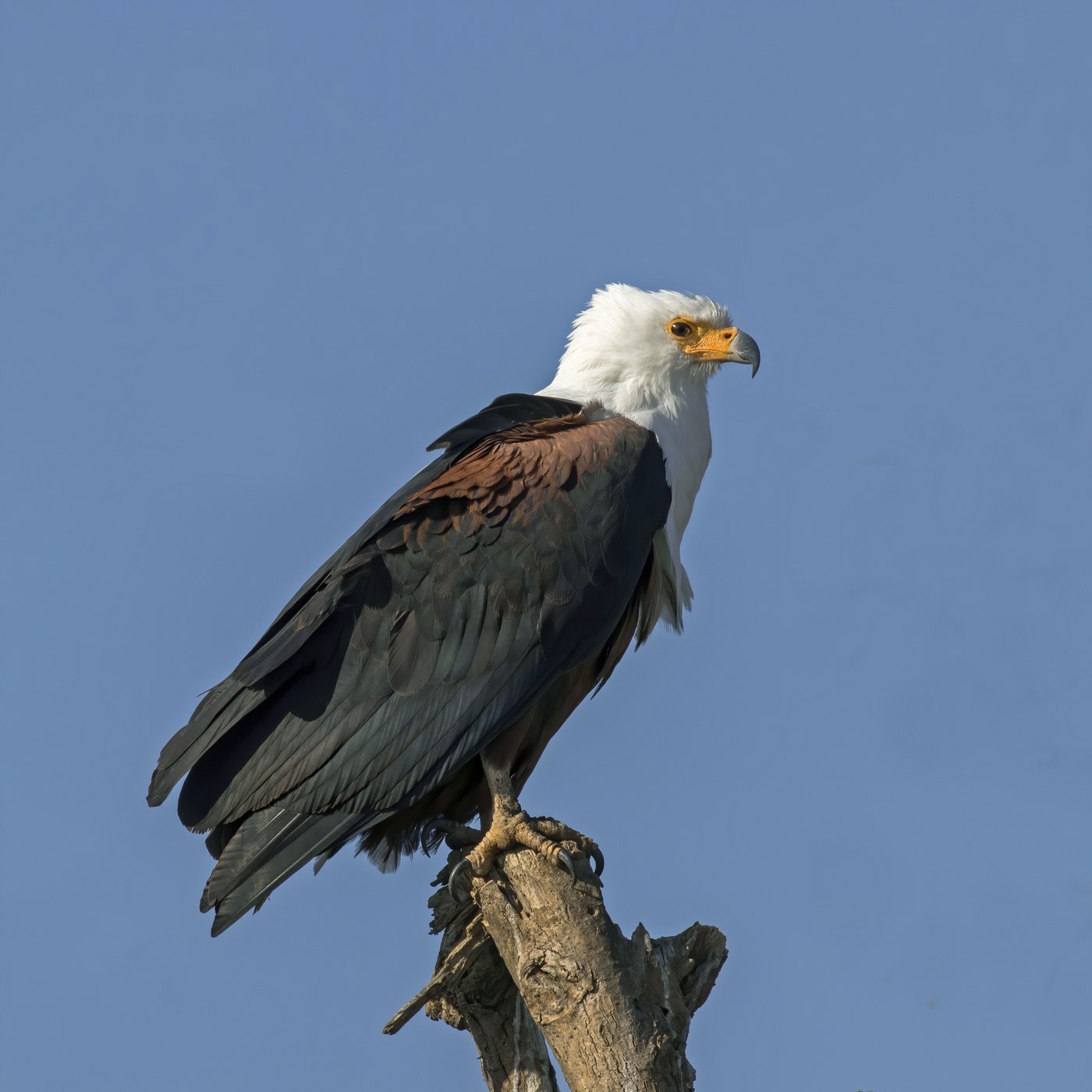
African Fish Eagle
Flight, tail, and body feathers

Amur Falcon
Slender pointed flight feathers; soft slate or orange-buff contour feathers
Red Kite
Flight (wing) and tail feathers
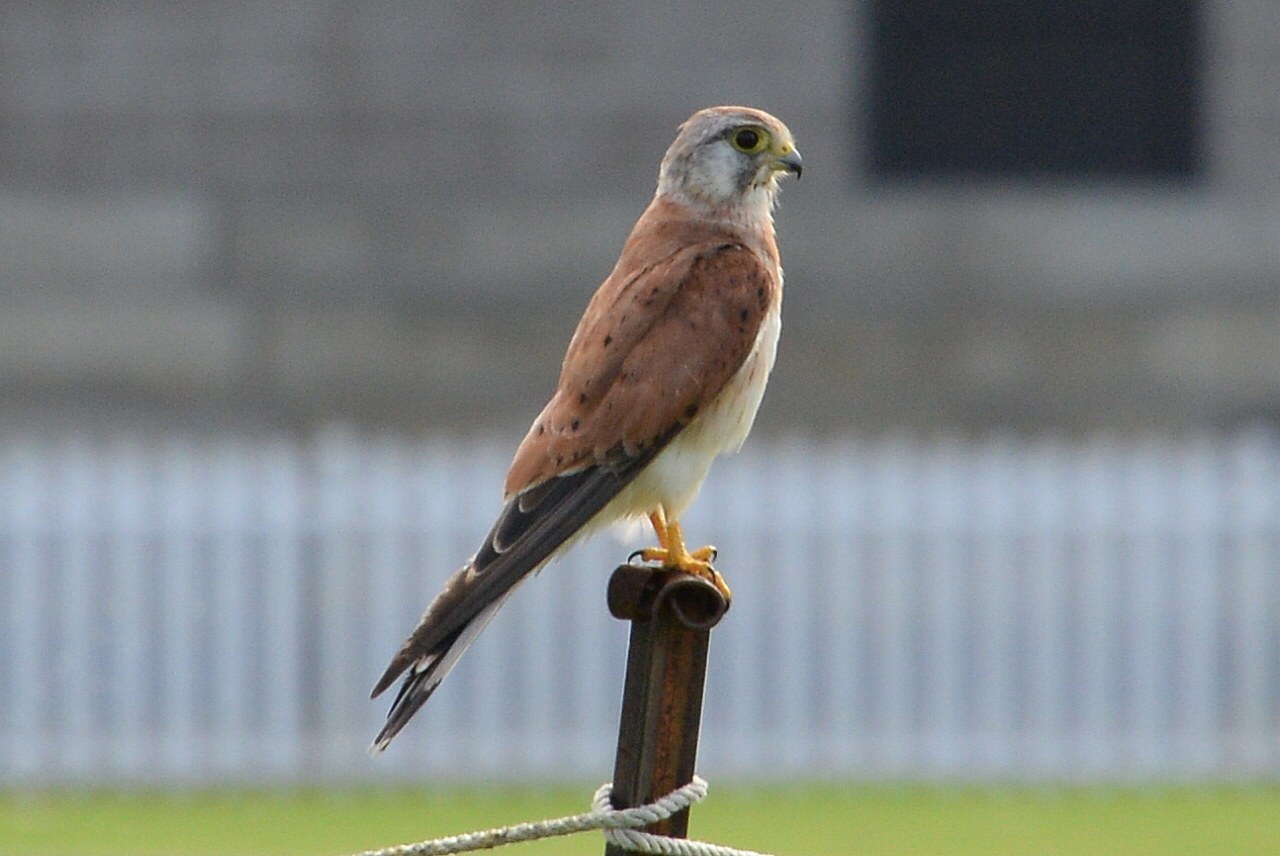
Nankeen Kestrel
Slim pointed flight feathers; lightly marked contour feathers

Andean Condor
Massive flight feathers; broad primaries and secondaries; sturdy tail feathers

Plumbeous Forest Falcon
Short rounded flight feathers; finely barred tail feathers

Sooty Falcon
Long pointed flight feathers; slim tail feathers