
Feather & Bird Encyclopedia
Search and identify feathers by species — with feather type, plumage, colours, size, habitat, and how to tell them apart in the field.

Black-headed Bunting
The Black-headed Bunting is a boldly colored songbird of southeastern Europe and southwest Asia, with breeding males showing a solid black head, chestnut back, and vivid yellow underparts.
songbird
Golden Pheasant Ring-necked Cross
An ornamental strain combining the fiery golden-yellow crest and cape of the Golden Pheasant with ring-necked pheasant influence, widely kept in aviculture for its dazzling plumage.
gamebird

European Greenfinch
A stocky, olive-green finch with a stout conical bill, brightened by bold yellow flashes along the edges of its wing and tail feathers, especially vivid in breeding males.
songbird
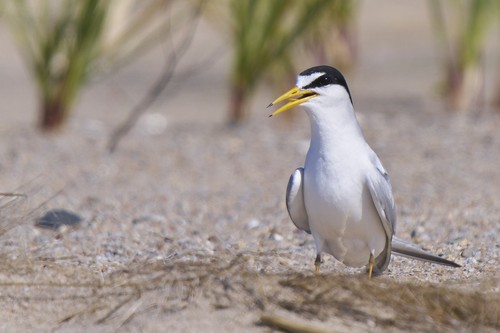
Least Tern
The smallest tern in North America, a diminutive, fast-flying species of sandy beaches and river sandbars, easily told by its small size, yellow bill, and white forehead patch above the black cap.
seabird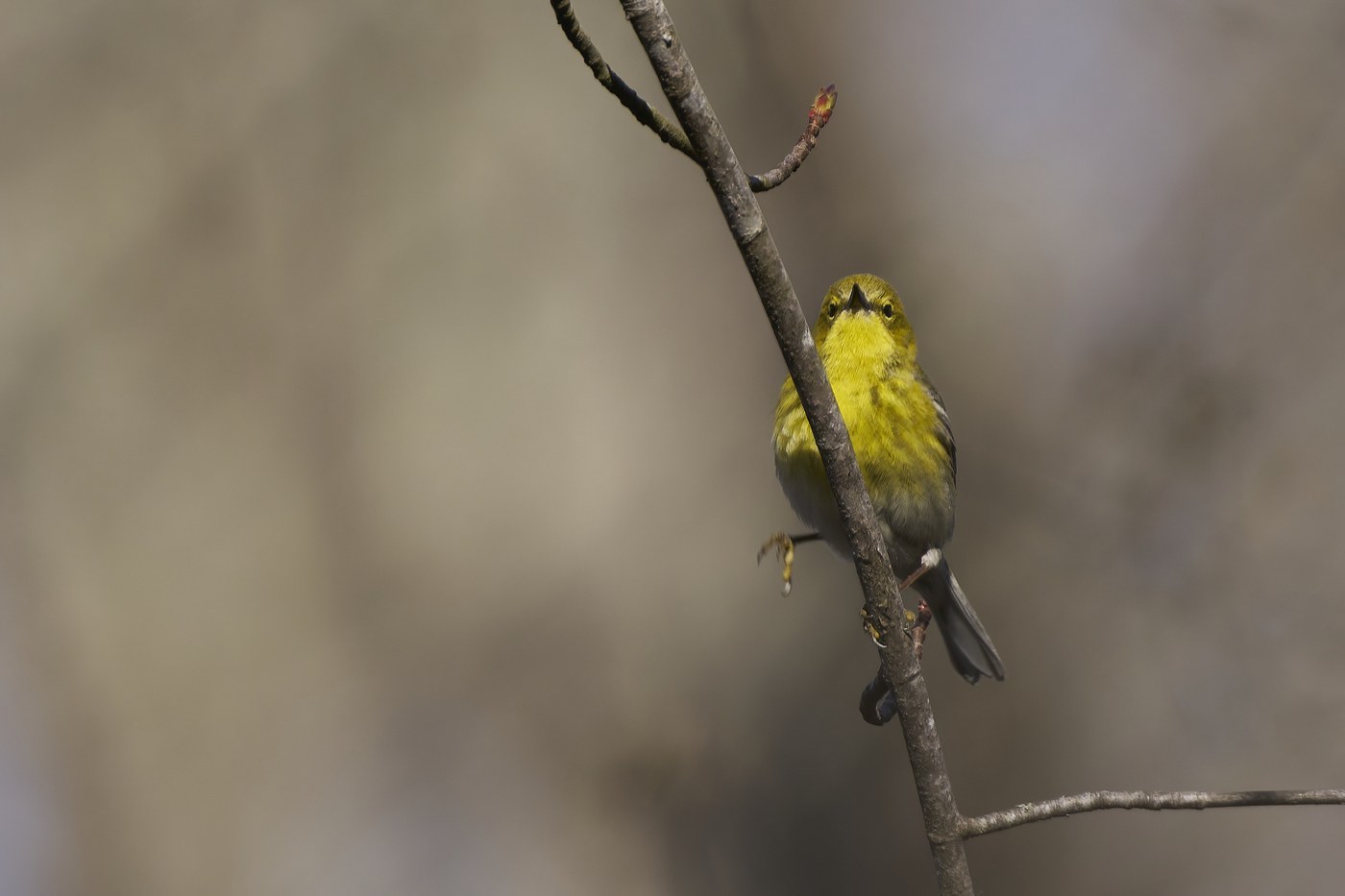
Pine Warbler
A warbler tightly associated with pine forests, showing subdued olive-yellow upperparts, dull yellow underparts, and two whitish wing bars, less flashy than many of its warbler relatives.
songbird
Little Tern
The Old World counterpart to the Least Tern, a tiny, fast-flying species of European, African, and Asian coasts, distinguished by its small size, yellow bill, and bold white forehead patch.
seabird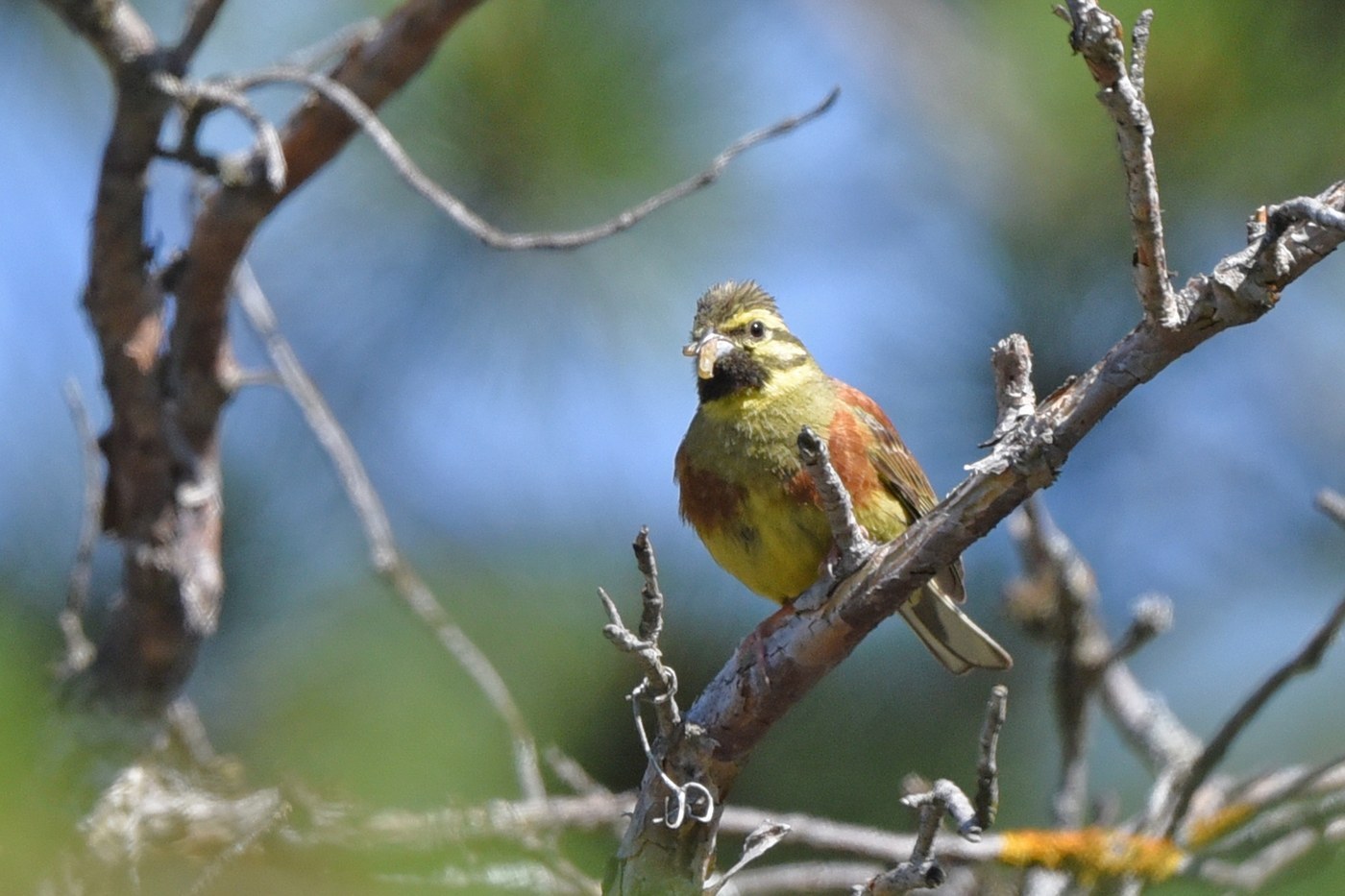
Cirl Bunting
The Cirl Bunting is a farmland songbird of southern Europe, with males showing a bold black-and-yellow striped face and an olive breast band, now a conservation success story in parts of its range.
songbird
Grey Wagtail
The Grey Wagtail is a slender, long-tailed songbird whose lemon-yellow underpart feathers contrast with a blue-grey back, making it the most colorful of the European wagtails found along fast-flowing water.
songbird
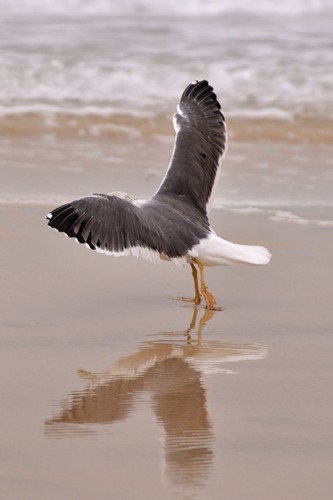
Lesser Black-backed Gull
A medium-large gull of European waters with dark slate-gray to blackish mantle feathers and yellow legs, the Lesser Black-backed Gull has expanded its range widely and increasingly turns up well inland.
seabird
Russet-backed Oropendola
A large, colonial oropendola of South American forests, olive-brown overall with a warm russet back and bright yellow outer tail feathers, best known for its hanging woven nests and gurgling song.
songbird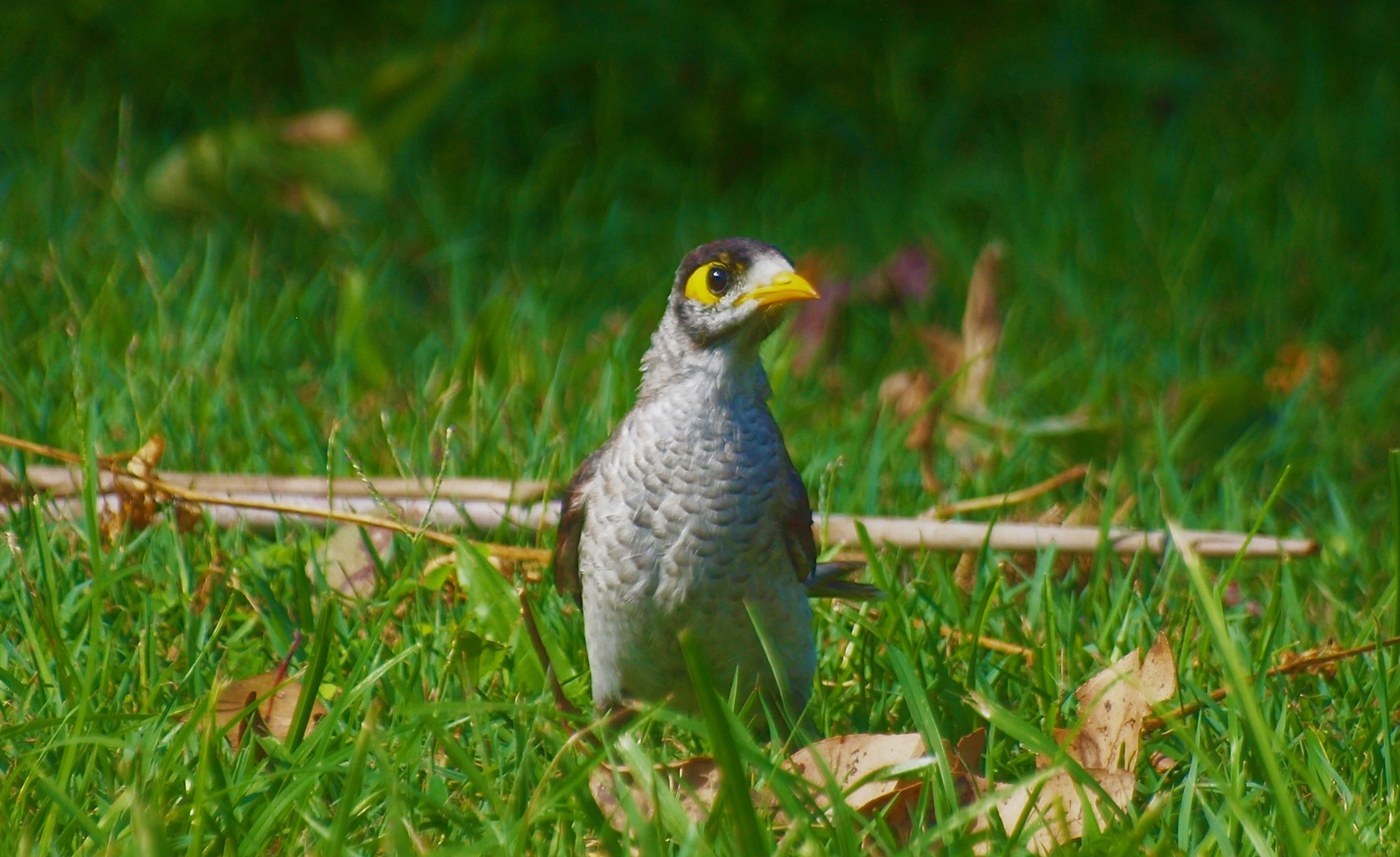
Noisy Miner
A vocal, highly social Australian honeyeater, the Noisy Miner has gray body plumage, a black cap, and a bright yellow bill and bare eye-patch, and is well known for its bold group defense of territory.
songbird
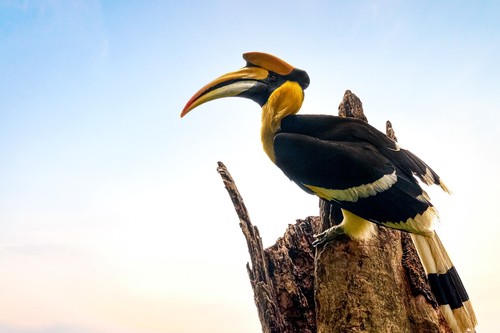
Great Hornbill
The Great Hornbill is one of the largest Asian hornbills, marked by bold black-and-white plumage and topped with a massive yellow-and-black casque. It flies with loud, whooshing wingbeats between fruiting trees in dense evergreen forest.
other
Green Aracari
The Green Aracari is a small toucan with an overall green back and yellow underparts, showing one of the more obvious plumage-based sex differences among toucans in its head color and belly band. It lives in the forests of the Guiana Shield in small, close-knit flocks.
other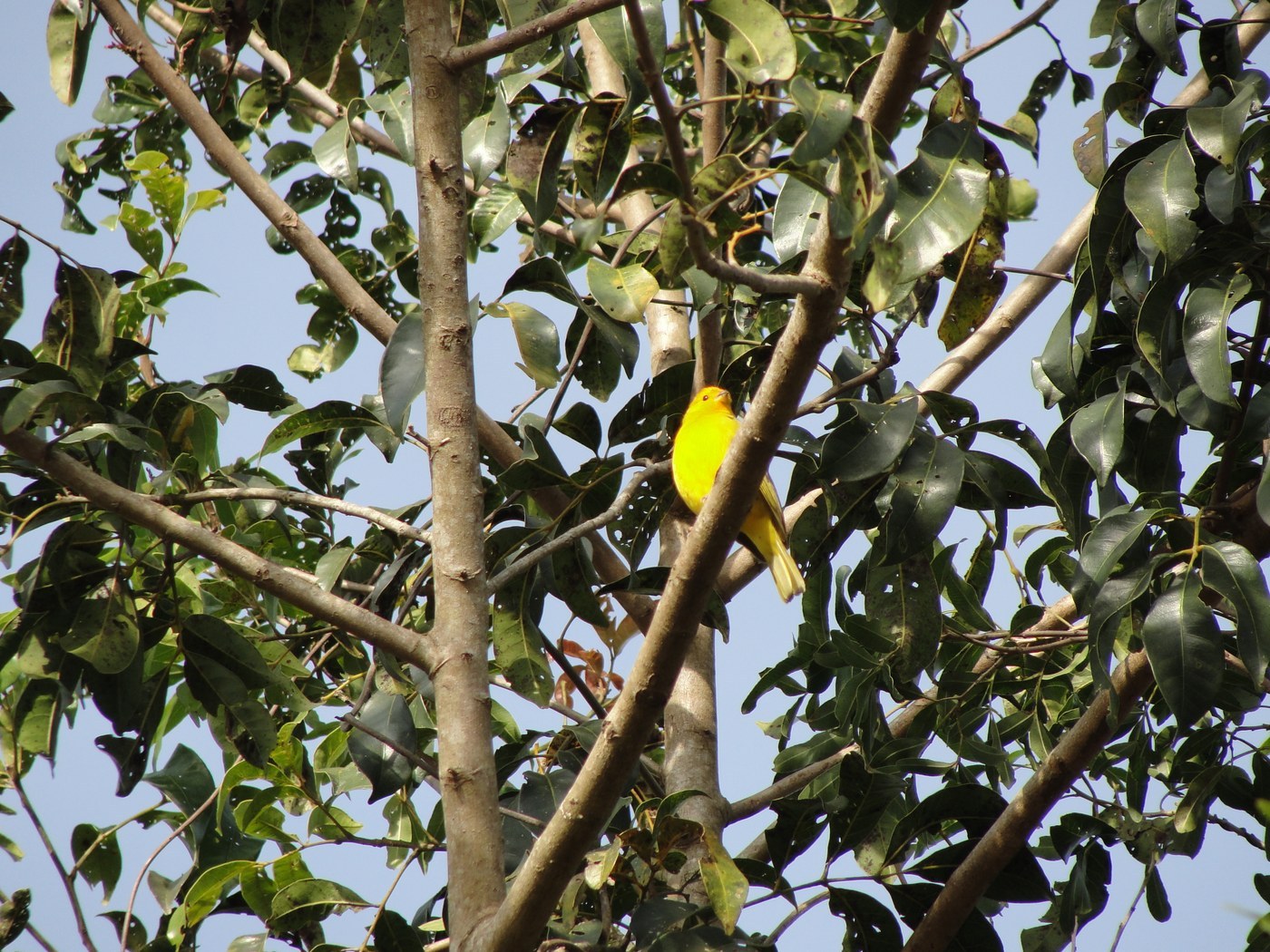
Saffron Finch
A sunny yellow finch of open South American country, with males showing an orange wash on the forecrown that females lack. Widely kept in aviculture, it has also become established outside its native range.
songbird
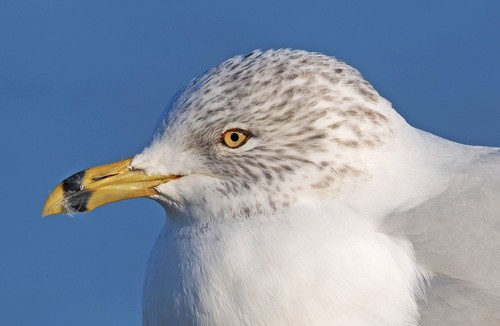
Ring-billed Gull
A common, adaptable medium-sized gull of North America named for the black band around its bill, the Ring-billed Gull shows pale gray back feathers and yellow legs, thriving in habitats from lakeshores to parking lots.
seabird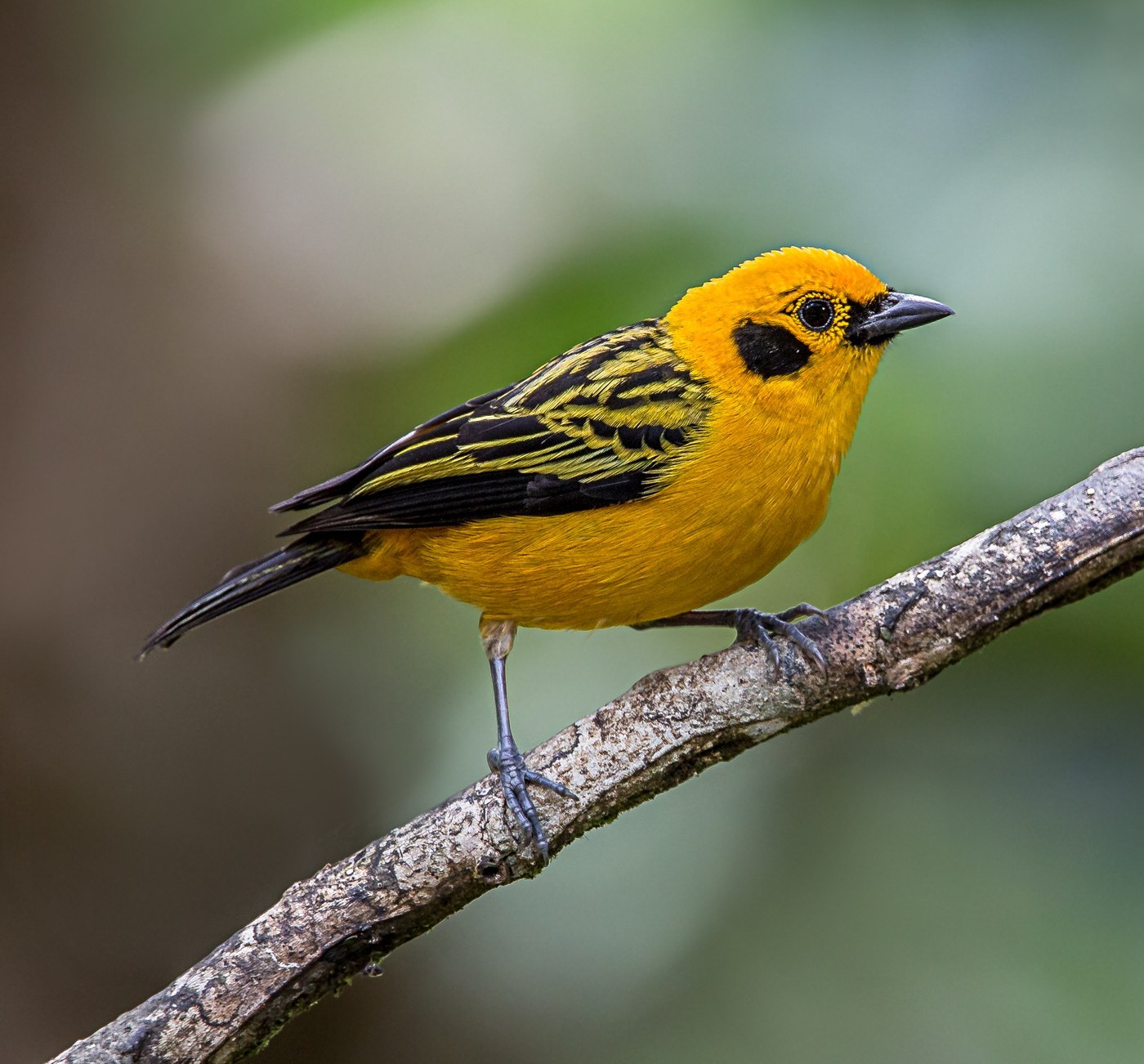
Golden Tanager
A vividly golden-yellow tanager of Andean cloud forests, marked by a bold black ear patch and dark streaking on the back and wings. Sexes look alike, and it often travels in mixed-species flocks through forest edge and secondary growth.
songbird