
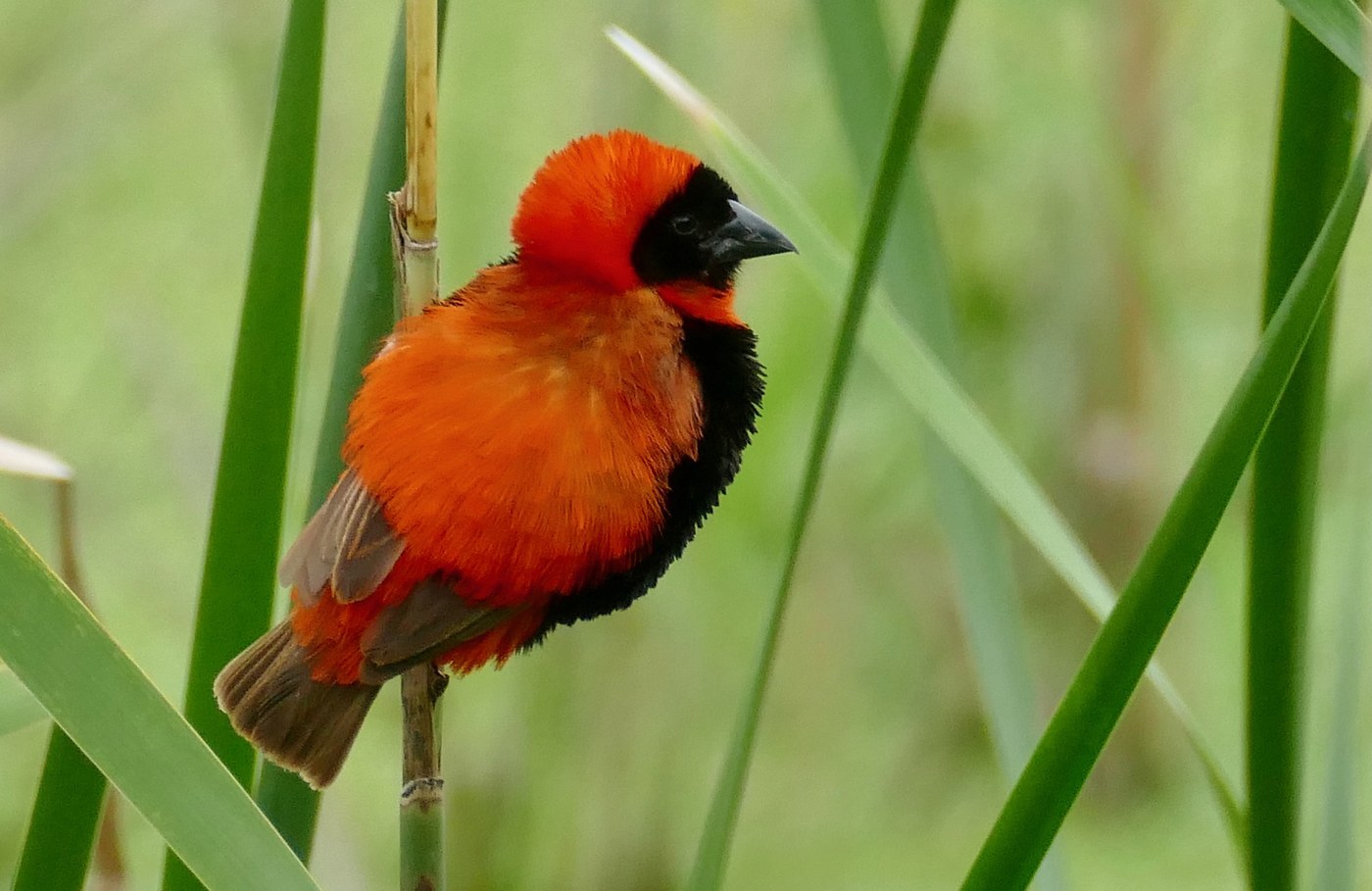
Southern Red Bishop
Euplectes orix
A small African weaver whose breeding males turn brilliant scarlet and black, one of the most vividly colored birds of Africa's wetland grasses.
- Feather type
- Small, dense body plumage; short wing and tail feathers
- Colours
- Scarlet-red and black (breeding male); streaky brown (female/nonbreeding)
- Bird size
- Sparrow-sized, ~13 cm
Found a feather like this?
Identify any feather from a photo, free.
Overview
The Southern Red Bishop is a compact weaver of sub-Saharan Africa's marshes and rank grassland. Outside the breeding season it is easy to overlook, resembling a streaky brown sparrow, but breeding males transform into one of the continent's most eye-catching small birds with a fiery red-and-black plumage pattern.
Males are polygynous, defending small territories of reed or grass where they weave globular nests to attract multiple mates, giving the species its alternate name of red-collared or grenadier weaver in some regions.
Identifying the Feather
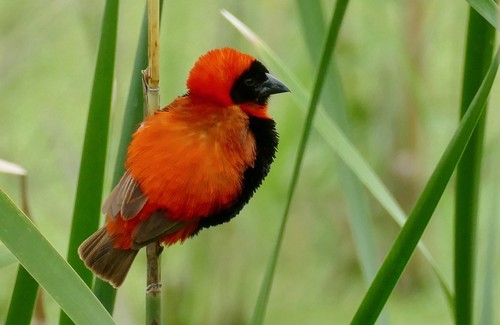
- Breeding male: Black face, throat, crown, belly, and vent contrast sharply with scarlet-red nape, back, breast, and rump
- Body feathers are short and dense, built for the dense reed and grass habitat rather than long-distance flight
- Wings and tail are blackish-brown, short and rounded, not showy
- Female and nonbreeding male: Streaky buff-brown overall, sparrow-like, with a stout conical bill
- Distinguished from other red bishops (such as Northern Red Bishop) by the extent of black on the crown and face and by range
Plumage & Molt
Breeding males acquire the red-and-black plumage through a molt before the breeding season; outside this period they molt into an eclipse plumage that closely resembles females. Females and nonbreeding males show buffy-brown, heavily streaked plumage with a paler belly, offering camouflage in grass and reeds. The bill is stout and conical, dark in breeding males and paler horn-colored in nonbreeding birds.
Habitat & Range
Found across sub-Saharan Africa in reedbeds, marshes, rank grassland, and cultivated areas near water. The species is resident to locally nomadic, often moving in response to seasonal flooding and grass seed availability, and forms large flocks outside the breeding season.
Behavior & Field Notes
Southern Red Bishops feed mainly on grass and grain seeds, supplemented with insects, foraging in flocks on the ground or clinging to grass stems. Males build multiple woven nests within a territory, displaying with fluffed plumage and buzzy, chattering calls to attract females, who select a nest and add the soft lining. Outside the breeding season, bishops gather in large mixed flocks with other weavers and queleas.
Frequently asked questions
What does a Southern Red Bishop feather look like?
Breeding male body feathers are vivid scarlet-red on the back, breast, and rump with jet-black feathers on the face, crown, throat, and belly; wing and tail feathers stay blackish-brown and short.
Do female Southern Red Bishops look different from males?
Yes, females are streaky buff-brown year-round and lack the male's red-and-black breeding colors, closely resembling a sparrow.
Where do Southern Red Bishops live?
They live in reedbeds, marshes, and grasslands across sub-Saharan Africa, often near water.
Why do male Southern Red Bishops turn red?
Males molt into bright scarlet-and-black plumage for the breeding season to attract mates and defend territory, then molt back to a duller brown eclipse plumage afterward.
Southern Red Bishop guides
In-depth guides for identifying and understanding Southern Red Bishop.
Other feathers you may enjoy

Yellow-breasted Bunting
Contour and flight feathers, chestnut-and-yellow breeding pattern
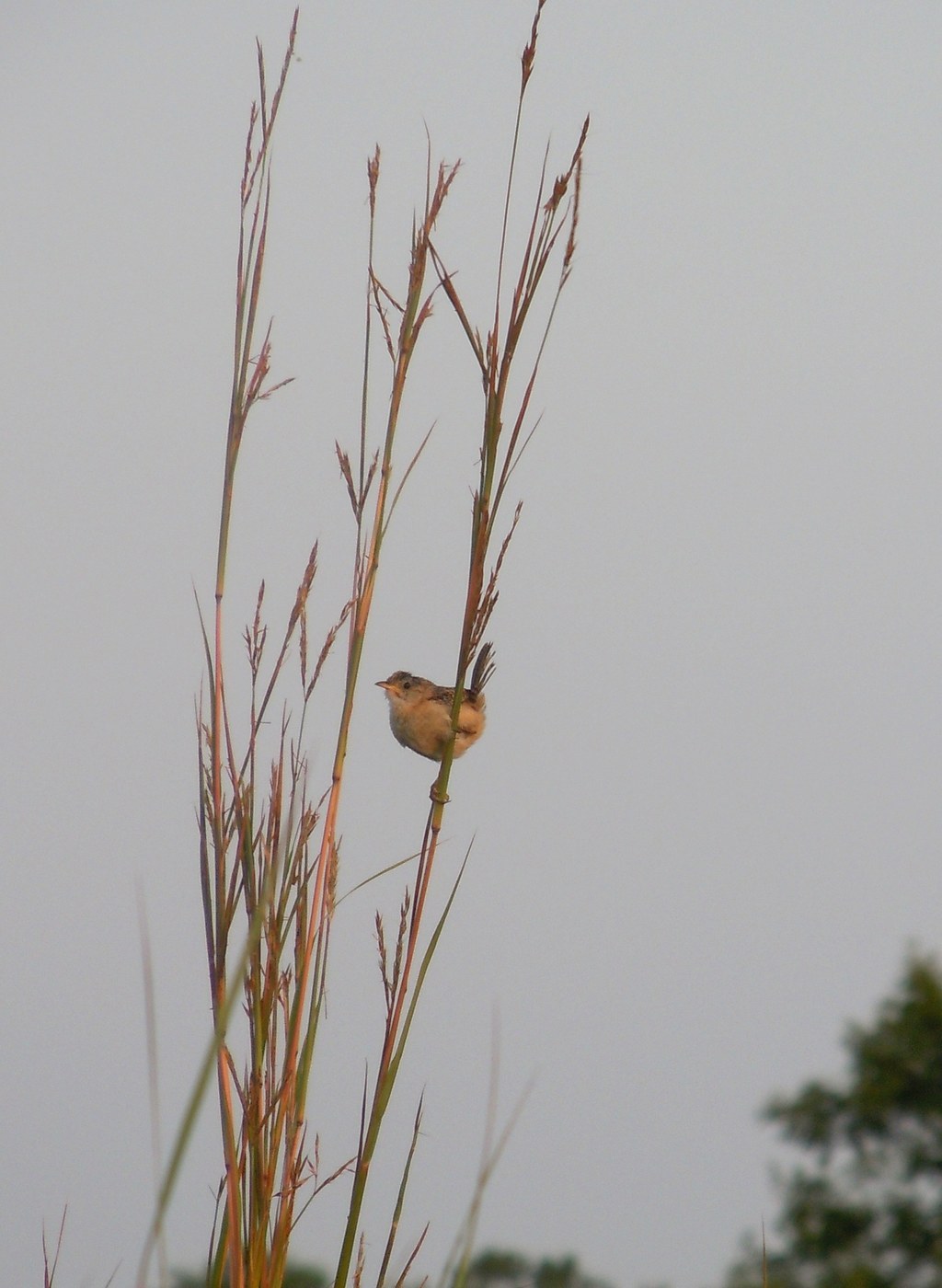
Sedge Wren
Tiny streaked crown and back feathers

Yellow-winged Cacique
Glossy black body feathers, yellow wing patch, shaggy crest

Yellow Warbler
Small contour and flight feathers
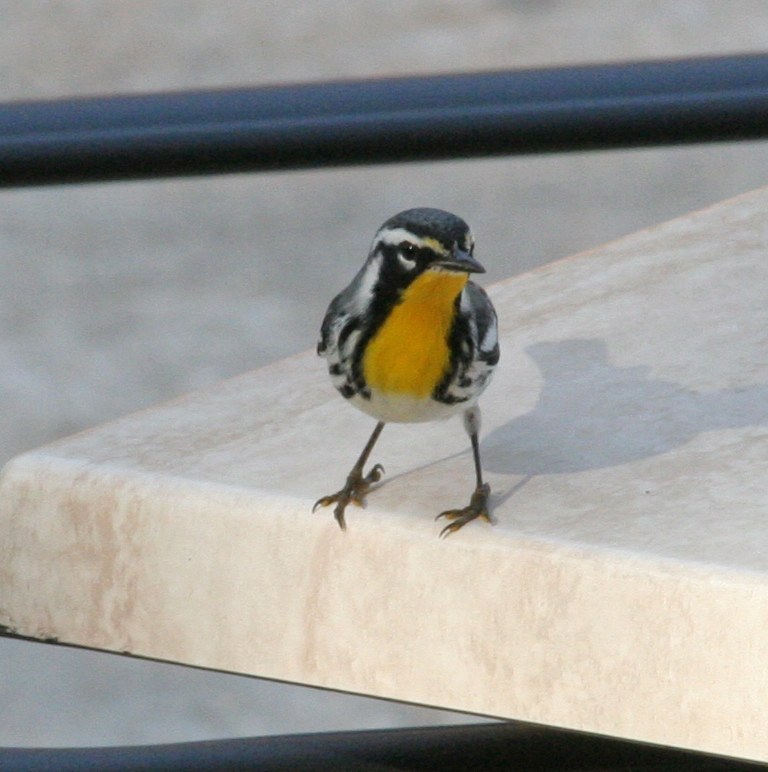
Yellow-throated Warbler
Small contour and flight feathers
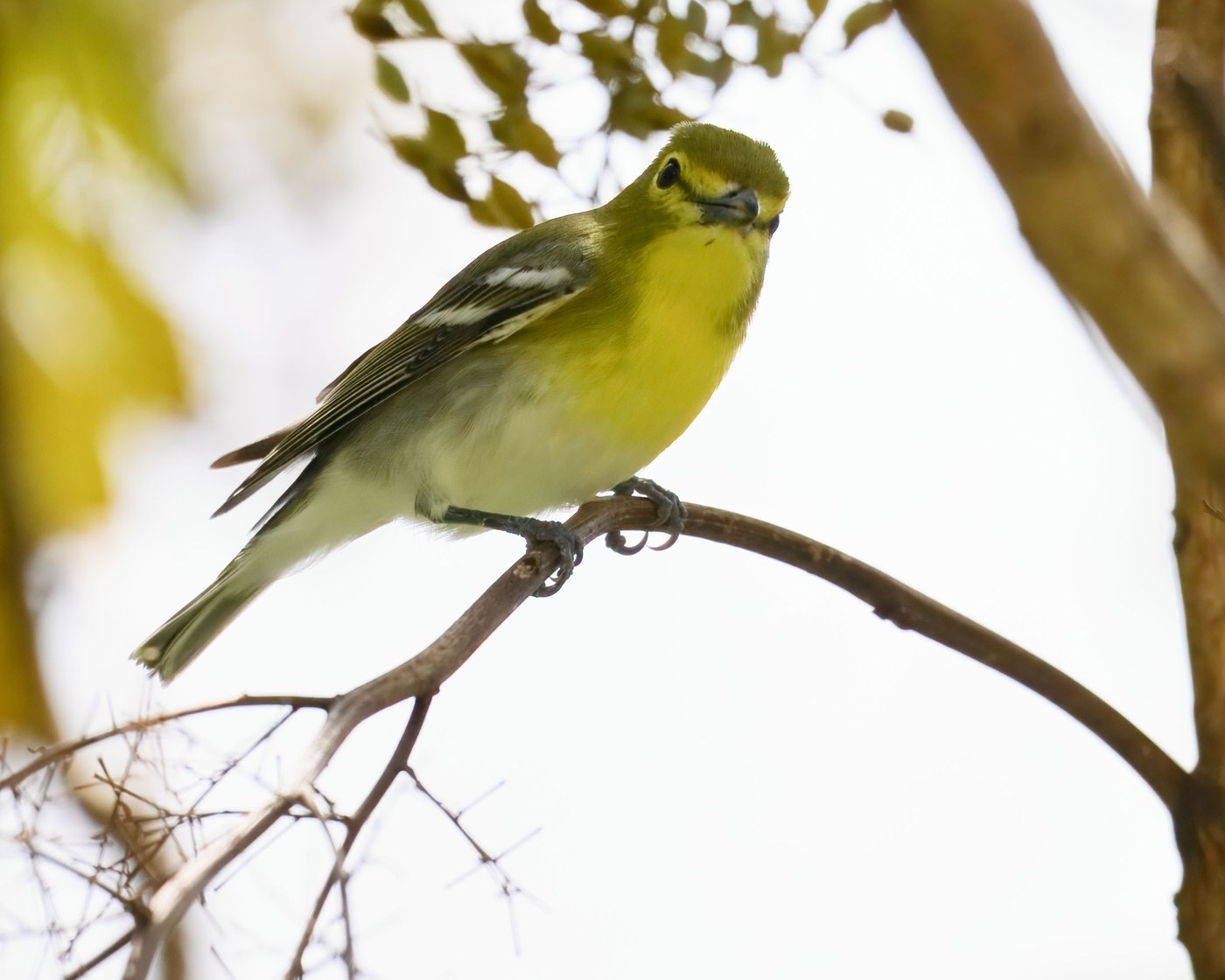
Yellow-throated Vireo
Bright yellow throat and spectacle feathers; olive-green back feathers; two white wing-bar feathers

Yellow-rumped Warbler
Small contour and flight feathers
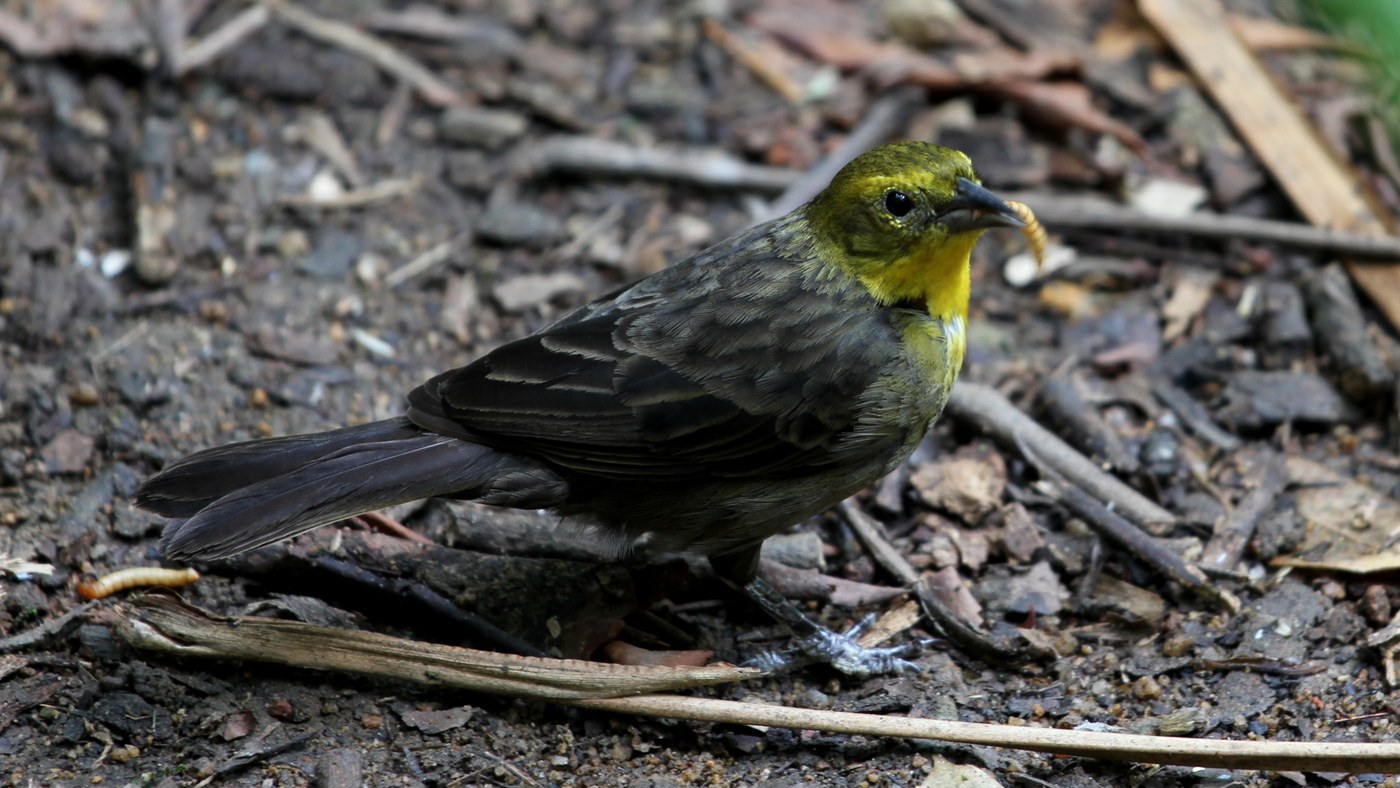
Yellow-hooded Blackbird
Contrasting hood and body feathers
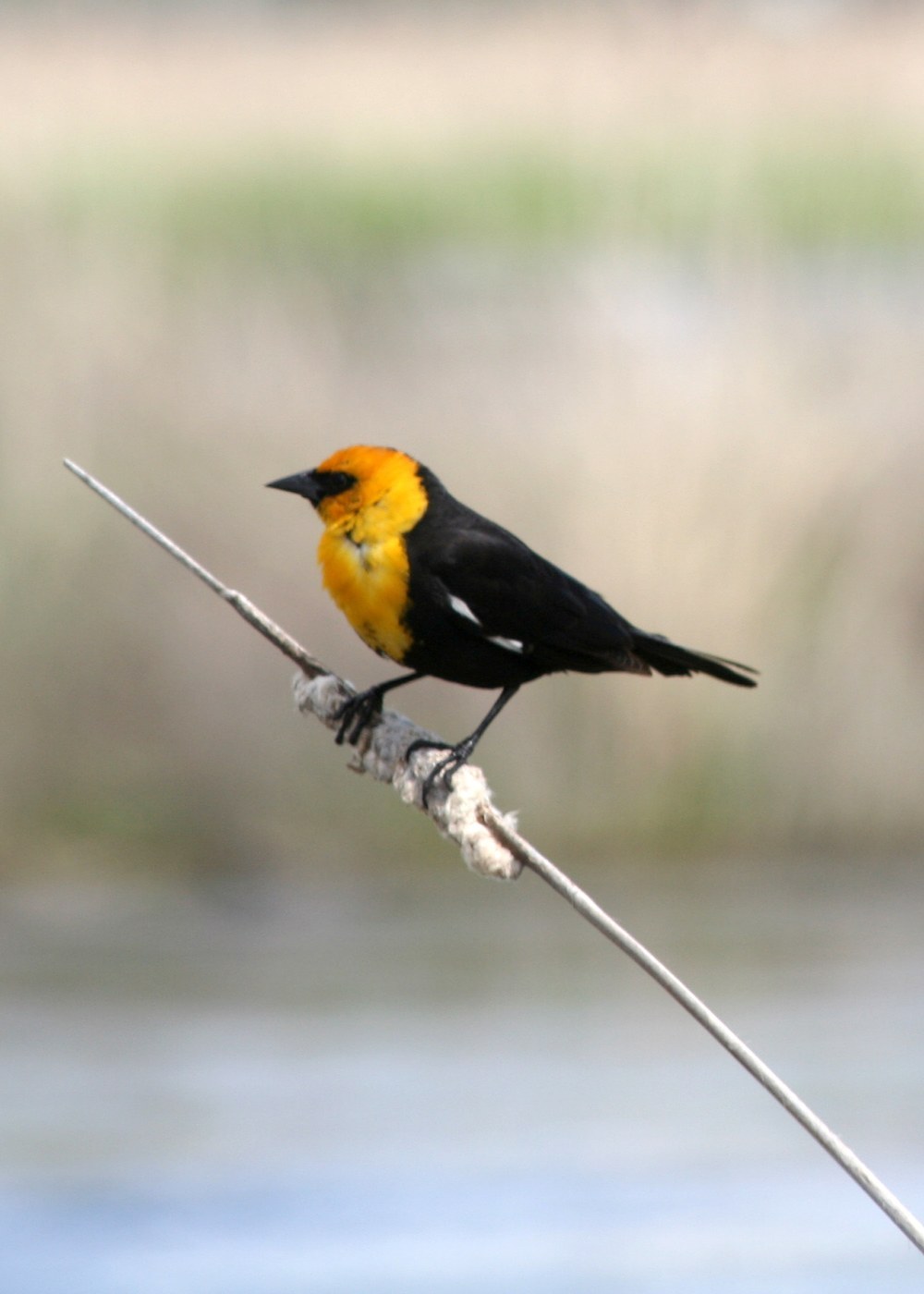
Yellow-headed Blackbird
Glossy black body plumage with a bright yellow head and breast

Yellow-eyed Junco
Contour and flight feathers

Yellow-fronted Canary
Small, smooth body plumage

Yellow-breasted Greenfinch
Compact, smooth body plumage