

Robust Woodpecker
Campephilus robustus
A large, striking woodpecker of the Atlantic Forest region of Brazil, Argentina, and Paraguay, marked by a prominent red crest and bold black-and-white pattern.
- Feather type
- Contour, crest, and flight feathers
- Colours
- Black body with white markings, prominent red crest, pale bill
- Bird size
- Large woodpecker, ~34-36 cm
Found a feather like this?
Identify any feather from a photo, free.
Overview
The Robust Woodpecker is one of the larger woodpeckers of South America's Atlantic Forest, a biome shared across parts of Brazil, Argentina, and Paraguay. It belongs to a genus of large, crested woodpeckers known for their striking appearance and powerful excavating ability.
Its prominent red crest and bold black-and-white plumage make it a memorable species where it still occurs in sufficiently large forest tracts.
Identifying the Feather
- Body feathers are predominantly black, set off by white markings on the face and wings
- An elongated, pointed crest on the crown is red in males and more restricted or differently patterned in females depending on the individual
- Wing feathers show white patches or panels that contrast against the black body
- Tail feathers are black, long, and heavily reinforced for use as a brace against tree trunks
- Overall feather size is notably large, reflecting the species' substantial body size
Plumage & Molt
Males show a fully red crest and more extensive red on the head, while females typically show less red, often with a black forecrown and red confined to the rear crest. Juveniles are duller with less crisp white markings. A single molt follows the breeding season.
Habitat & Range
- Restricted to the Atlantic Forest region of southeastern Brazil, northeastern Argentina, and eastern Paraguay
- Requires larger tracts of humid forest, showing sensitivity to forest fragmentation
- Resident, non-migratory
Behavior & Field Notes
This large woodpecker forages on trunks and large branches, excavating into wood for beetle larvae and other insects with powerful blows. Its calls and drumming are loud and far-carrying, fitting its substantial size. Nest cavities are excavated in large dead trunks within mature forest.
Frequently asked questions
What is the most distinctive feature of this species?
Its prominent red crest combined with a bold black-and-white body pattern and notably large size for a woodpecker.
How can males be told from females?
Males show more extensive red on the crest and head, while females typically show less red, often with a black forecrown.
Where is this species found?
It is restricted to the Atlantic Forest region of southeastern Brazil, northeastern Argentina, and eastern Paraguay.
Why might this species be harder to find than in the past?
It requires larger tracts of mature forest and is sensitive to habitat fragmentation, making it more localized where forest has been reduced.
Robust Woodpecker guides
In-depth guides for identifying and understanding Robust Woodpecker.

Other feathers you may enjoy

Ivory-billed Woodpecker
Very large flight feathers with a solid white trailing patch

Great Slaty Woodpecker
Massive, uniformly colored contour feathers

Yellow-tufted Woodpecker
Black body feathers with bright yellow forehead tufts

Magellanic Woodpecker
Very large, glossy contour feathers with a recurved crest

Yellow-bellied Sapsucker
Black-and-white patterned back and facial-stripe feathers
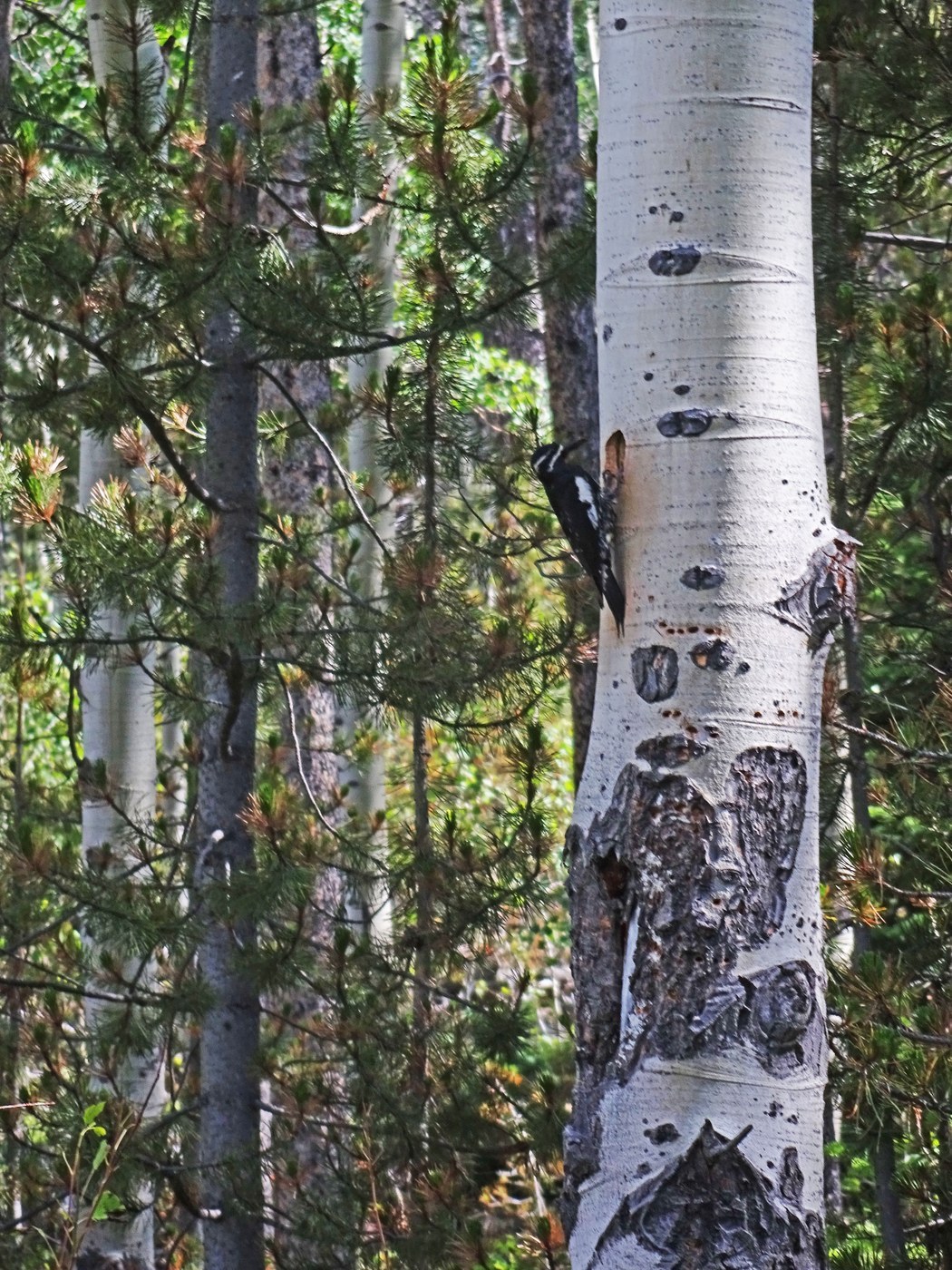
Williamson's Sapsucker
Strongly sexually dimorphic body feathers, glossy black or finely barred brown

Yellow-crowned Woodpecker
Contour and flight feathers

White Woodpecker
Mostly white body feathers with contrasting black wings and back

Red-throated Wryneck
Soft, cryptically mottled contour feathers

White-bellied Woodpecker
Large, glossy black contour and flight feathers

White-backed Woodpecker
Barred back feathers rather than a solid white patch
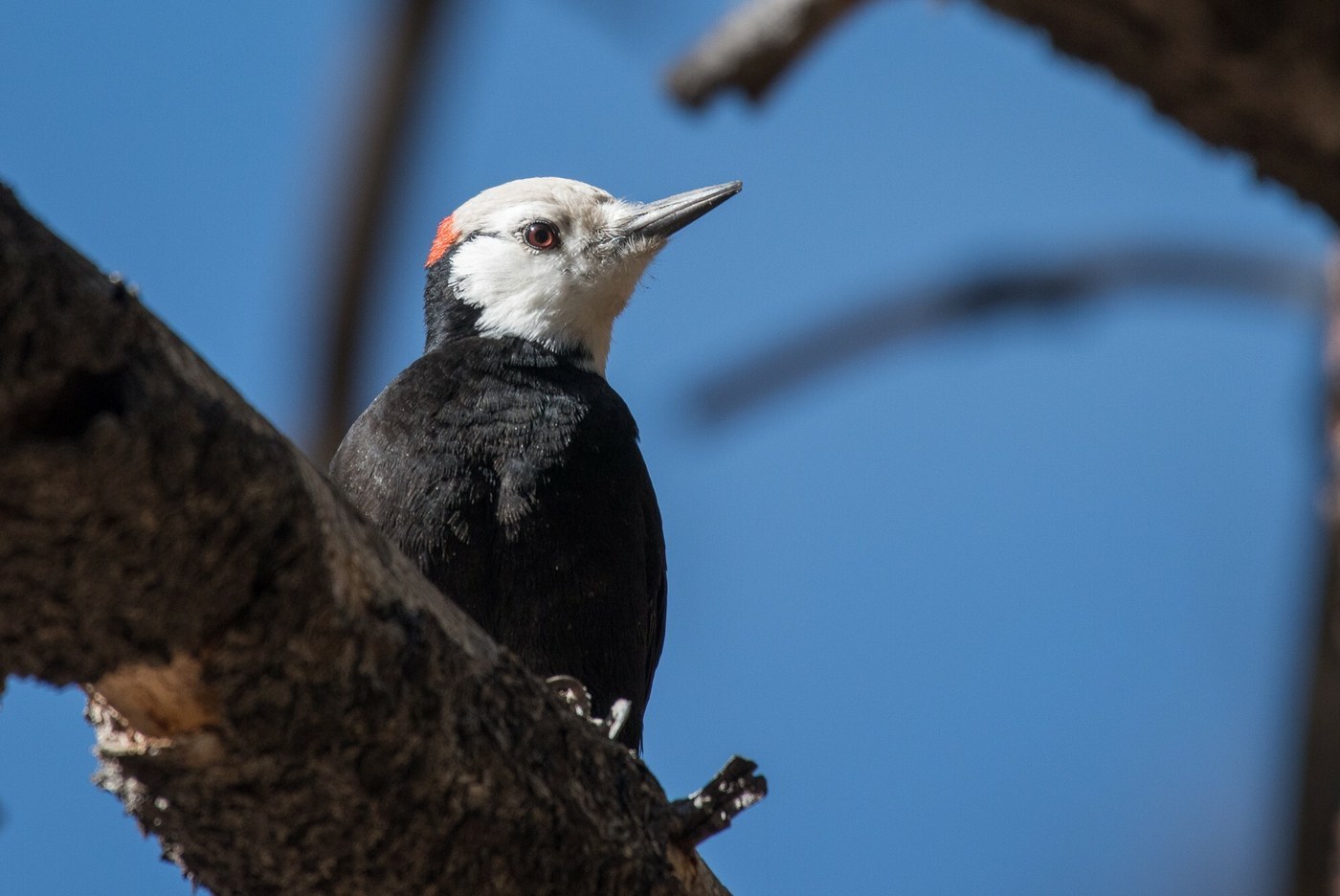
White-headed Woodpecker
Solid black body feathers with an entirely white head