
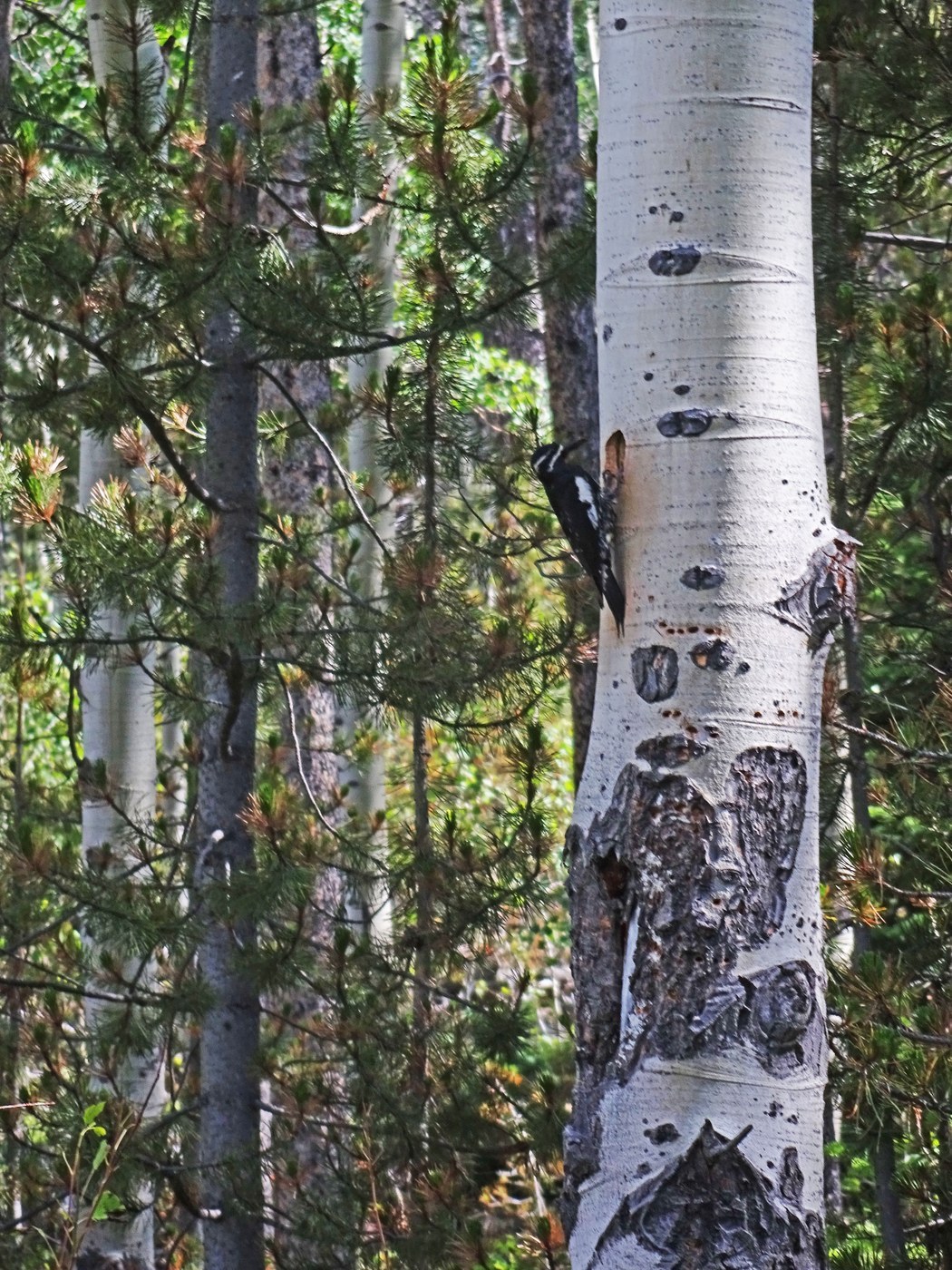
Williamson's Sapsucker
Sphyrapicus thyroideus
A western sapsucker with unusually different male and female plumages, so distinct they were once thought to be separate species.
- Feather type
- Strongly sexually dimorphic body feathers, glossy black or finely barred brown
- Colours
- Male: glossy black with white wing patch and yellow belly; female: barred brown overall
- Bird size
- Robin-sized, ~23 cm
Found a feather like this?
Identify any feather from a photo, free.
Overview
Williamson's Sapsucker breeds in montane coniferous forest of the western United States and adjacent Canada, and is remarkable for how differently the male and female are patterned. The male is largely glossy black with bold white markings and a yellow belly patch, while the female is barred brown and white overall with almost no black.
The contrast is so extreme that early ornithologists described the two sexes as separate species before their true relationship was understood.
Identifying the Feather
- Male: mostly glossy black body with a bold white wing patch, white rump, red throat patch, and pale yellow belly
- Female: finely barred brown-and-white overall, with a brownish head and a black breast patch, lacking the male's black body
- Vs. other sapsuckers: no other Sphyrapicus species shows this degree of difference between male and female plumage
- Wing pattern: male shows a crisp white wing patch visible at rest and in flight; female shows barred wings instead
Plumage & Molt
Males and females are so different in pattern that they can be mistaken for different species: males are glossy black with white markings, red throat, and yellow belly, while females are barred brown, black, and white with a brownish head. Juveniles resemble the respective adult sex pattern in muted tones. The species undergoes a single annual molt after breeding.
Habitat & Range
Breeds in montane conifer forest, especially areas with mature lodgepole pine, fir, or larch, across the western United States and southwestern Canada. It migrates to lower elevations or south into Mexico and the southwestern U.S. for winter.
Behavior & Field Notes
Feeds heavily on sap drilled from conifer bark, along with ants gathered from tree trunks, which make up an unusually large part of its diet compared to other sapsuckers. Nests are excavated in dead or dying conifers, often in trees already affected by heart rot. Its call is a sharp, sapsucker-typical mewing note, with drumming showing the family's irregular rhythm.
Frequently asked questions
Why do male and female Williamson's Sapsuckers look so different?
The species shows extreme sexual dimorphism, with males glossy black and white with a yellow belly, and females barred brown overall; the difference was once thought to represent two separate species.
How can I identify a female Williamson's Sapsucker?
Look for fine brown-and-white barring over the whole body with a brownish head and a black breast patch, rather than the male's mostly black plumage.
What does this sapsucker eat?
It feeds on sap from drilled wells along with ants gathered from tree trunks, relying more heavily on ants than most other sapsucker species.
Where does it breed?
It breeds in montane conifer forest across the western United States and southwestern Canada, often in areas with mature lodgepole pine or fir.
Williamson's Sapsucker guides
In-depth guides for identifying and understanding Williamson's Sapsucker.
Other feathers you may enjoy

Ivory-billed Woodpecker
Very large flight feathers with a solid white trailing patch

Great Slaty Woodpecker
Massive, uniformly colored contour feathers

Yellow-tufted Woodpecker
Black body feathers with bright yellow forehead tufts

Magellanic Woodpecker
Very large, glossy contour feathers with a recurved crest

Yellow-bellied Sapsucker
Black-and-white patterned back and facial-stripe feathers

Yellow-crowned Woodpecker
Contour and flight feathers

White Woodpecker
Mostly white body feathers with contrasting black wings and back

Red-throated Wryneck
Soft, cryptically mottled contour feathers

White-bellied Woodpecker
Large, glossy black contour and flight feathers

White-backed Woodpecker
Barred back feathers rather than a solid white patch
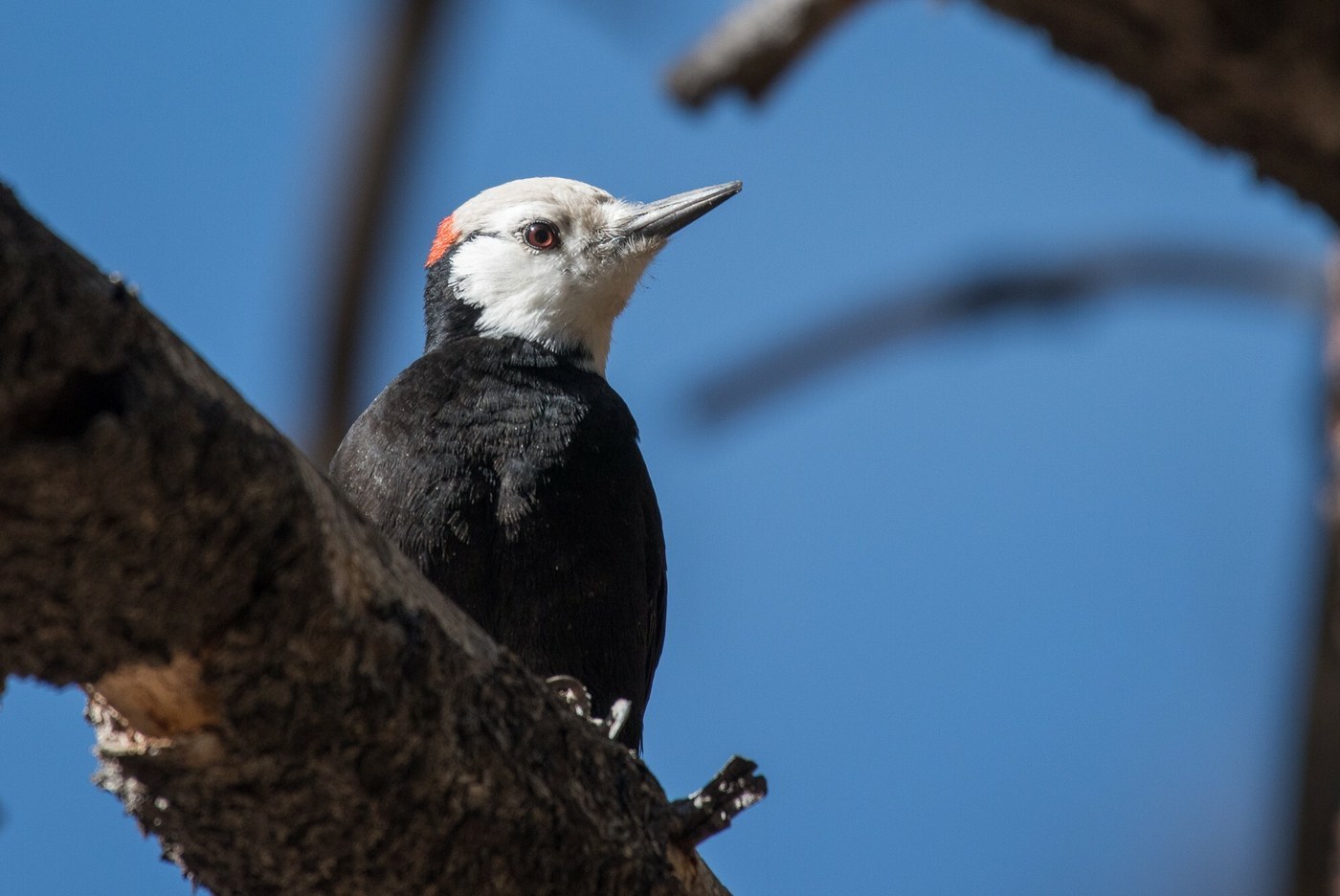
White-headed Woodpecker
Solid black body feathers with an entirely white head

Syrian Woodpecker
Great Spotted-type contour feathers with an incomplete neck bar