

White-bellied Woodpecker
Dryocopus javensis
One of Asia's largest woodpeckers, this glossy black bird is named for the flash of white on its lower belly, which sets it apart from its all-dark relatives.
- Feather type
- Large, glossy black contour and flight feathers
- Colours
- Glossy black overall with a contrasting white lower belly and vent
- Bird size
- Crow-sized, ~40 cm
Found a feather like this?
Identify any feather from a photo, free.
Overview
The White-bellied Woodpecker is a large, mostly black woodpecker found across South and Southeast Asia, from the hill forests of India and Sri Lanka east through Indochina to Sumatra, Borneo, and Java. It is one of the bulkiest woodpeckers in its range, rivaled only by the even larger Great Slaty Woodpecker in overlapping areas. Its striking white belly patch, glossy plumage, and shaggy crest make it a memorable, if uncommon, sight in mature forest.
Because it depends on large, old trees for both foraging and nest excavation, this species is considered a good indicator of intact forest habitat.
Identifying the Feather
Key features:
- Body and back feathers are deep, glossy black with a slight blue-green sheen in good light
- Lower belly, flanks, and undertail feathers are clean white, a sharp contrast to the black body
- Crest and crown feathers are elongated and pointed; males show red across crown and crest, females show black with red restricted to a smaller area
- Wings are broad and rounded, typical of the genus Dryocopus
Compared to similar species: the Lineated Woodpecker (a different genus but similar build) shows bold white stripes down the sides of the neck and back, which the White-bellied Woodpecker lacks entirely on its back — its white is confined to the belly and vent.
Plumage & Molt
Males have a red forehead, crown, and crest, while females show a black crown and crest with red reduced or largely absent, depending on subspecies. Both sexes share the diagnostic white lower underparts against an otherwise black body. Juveniles resemble females but have duller, sootier plumage and less defined feather edges. Molt follows a typical annual cycle timed around the breeding season, with flight feathers replaced gradually to maintain flight capability.
Habitat & Range
This species occupies dense evergreen and mixed deciduous forest, favoring areas with large mature trees for nesting and foraging. Its range spans the Western Ghats and Sri Lanka in the Indian subcontinent, continuing through Southeast Asia into the Greater Sundas. It is a non-migratory resident throughout its range, with different subspecies showing some variation in size and the extent of red head coloring in males.
Behavior & Field Notes
White-bellied Woodpeckers forage on large trunks and heavy branches, prying and excavating bark and dead wood in search of wood-boring beetle larvae, ants, and other insects. Pairs tend to hold large territories in forest interior and are often located by their loud, far-carrying calls before being seen. They excavate nest cavities in large dead or dying trees, a resource that limits their distribution to older forest stands. Drumming is used for territorial communication, and pairs may forage together within a shared territory.
Frequently asked questions
How can I tell a White-bellied Woodpecker feather from a crow feather?
Crow feathers are uniformly black without any white; White-bellied Woodpecker feathers from the belly or vent region show a clean white base or tip, and body feathers often have a subtle glossy sheen not typical of crow feathers.
What is the easiest feather to identify on this species?
A white belly or vent feather is the most diagnostic, since almost no other feather region on this bird shows white, making it stand out clearly against the black body plumage.
Do male and female feathers look different?
The main difference is in the crown and crest feathers, which are red in males and mostly black in females; body and wing feathers look similar in both sexes.
Where would I likely find a feather from this species?
Feathers are most likely to turn up on the forest floor beneath mature trees in evergreen or mixed forest across its South and Southeast Asian range, since the species rarely strays into open or degraded habitat.
White-bellied Woodpecker guides
In-depth guides for identifying and understanding White-bellied Woodpecker.

Other feathers you may enjoy

Ivory-billed Woodpecker
Very large flight feathers with a solid white trailing patch

Great Slaty Woodpecker
Massive, uniformly colored contour feathers

Yellow-tufted Woodpecker
Black body feathers with bright yellow forehead tufts

Magellanic Woodpecker
Very large, glossy contour feathers with a recurved crest

Yellow-bellied Sapsucker
Black-and-white patterned back and facial-stripe feathers
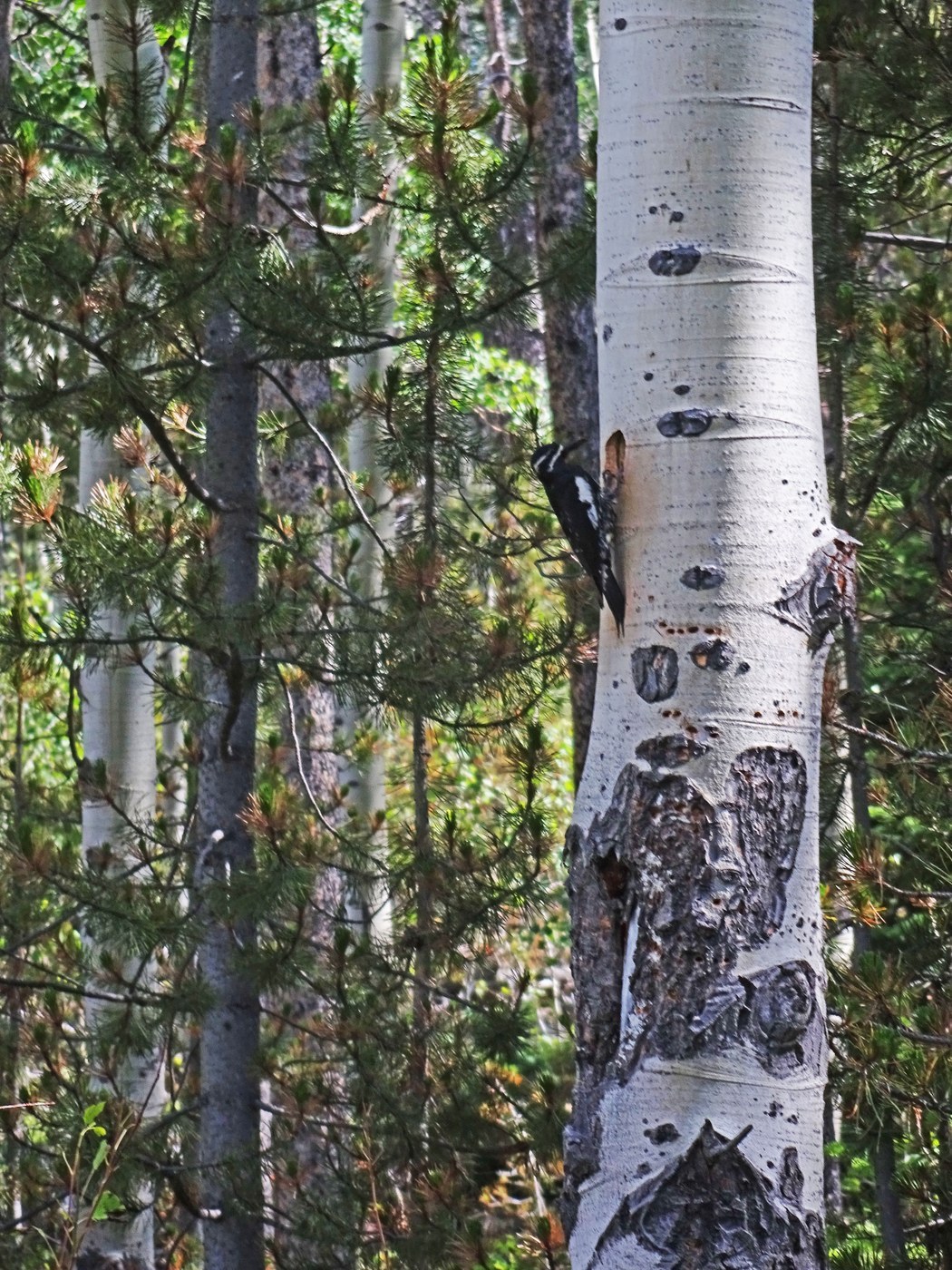
Williamson's Sapsucker
Strongly sexually dimorphic body feathers, glossy black or finely barred brown

Yellow-crowned Woodpecker
Contour and flight feathers

White Woodpecker
Mostly white body feathers with contrasting black wings and back

Red-throated Wryneck
Soft, cryptically mottled contour feathers

White-backed Woodpecker
Barred back feathers rather than a solid white patch
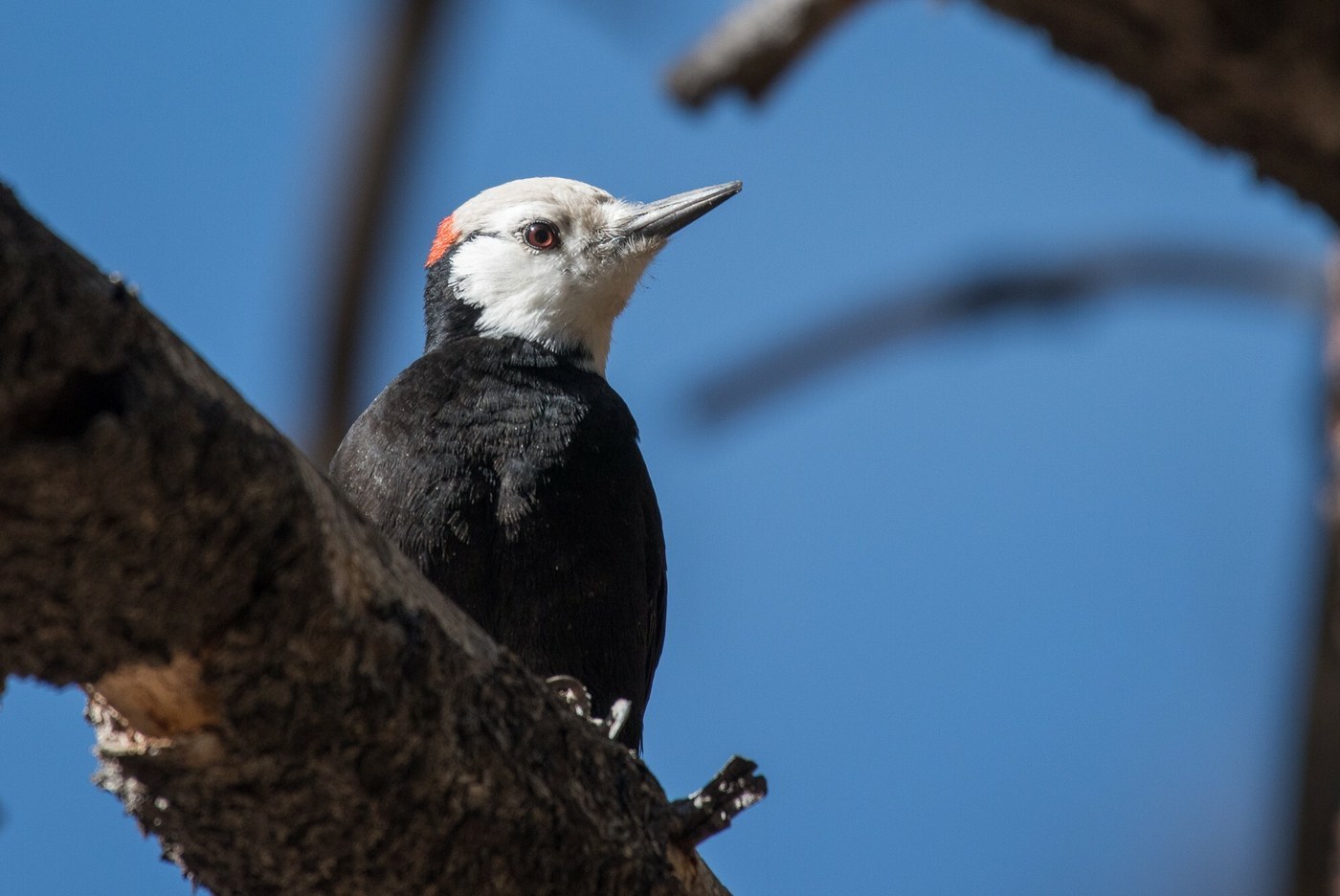
White-headed Woodpecker
Solid black body feathers with an entirely white head

Syrian Woodpecker
Great Spotted-type contour feathers with an incomplete neck bar