

Purple-throated Carib
Eulampis jugularis
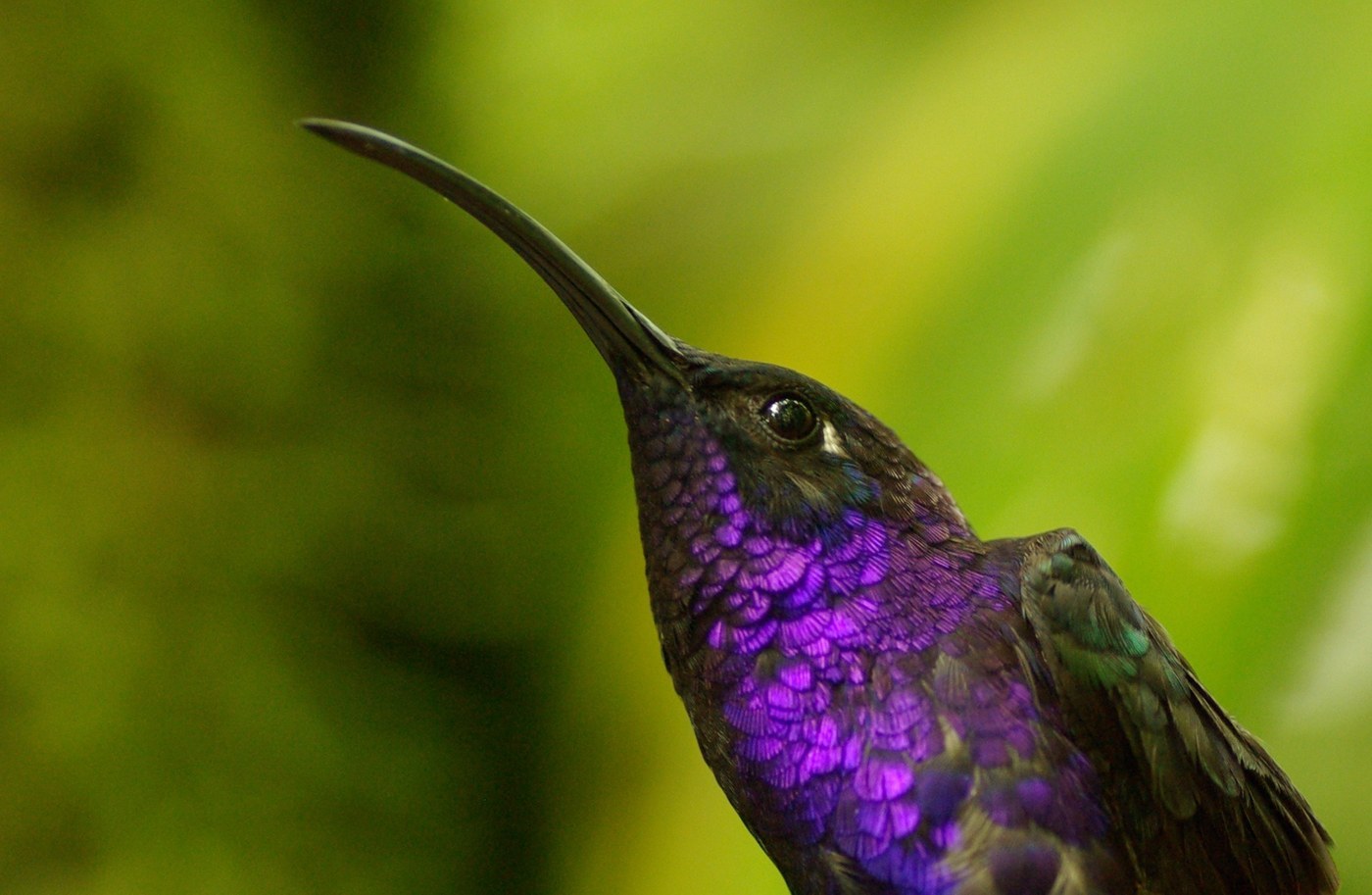
A Lesser Antillean hummingbird whose deep green body sets off a brilliant magenta-purple throat patch that can look nearly black until it catches direct light.
- Feather type
- Iridescent gorget feathers, dark green body feathers
- Colours
- Dark green body, brilliant magenta-purple throat patch
- Bird size
- Medium to large, ~11-12 cm
Found a feather like this?
Identify any feather from a photo, free.
Overview
Overview
The Purple-throated Carib is found across much of the Lesser Antilles, inhabiting forest, forest edge, plantations, and gardens with flowering plants. It is often one of the larger and more conspicuous hummingbirds present on the islands it inhabits, and its bill and body size can vary somewhat between island populations adapted to locally available flower shapes.
Males show a rich, dark green body with a brilliant magenta-purple throat patch that flashes vividly in good light but can appear dark or blackish in shade, a common feature of iridescent hummingbird gorgets.
Identifying the Feather
Feather ID Notes
The throat feathers show a striking magenta-purple iridescence, distinctly set off from the dark green body plumage. The wings and tail are dark, with little additional patterning beyond the body's green and the throat's purple.
- Throat feathers: magenta-purple, iridescent, can look black in shade
- Body feathers: dark green overall
- Tail feathers: dark, moderately long
- Bill: notably decurved, with length varying somewhat by island population Females lack the purple throat, appearing green above with paler, sometimes grayish underparts, and often have a more strongly decurved bill than males on the same island.
Plumage & Molt
Plumage Details
Adult males show the vivid magenta-purple throat against dark green body plumage. Females are duller, without the iridescent throat patch, and often show subtle differences in bill curvature adapted to different flower types compared to males. Juveniles resemble females. There is no strong seasonal plumage change, with an annual molt maintaining feather quality.
Habitat & Range
Habitat & Range
This species is found across much of the Lesser Antilles, occupying forest, forest edge, plantations, and gardens with abundant flowering plants. It is generally resident within its island range rather than migratory, though some local movement between habitats can occur.
Behavior & Field Notes
Behavior & Field Notes
Purple-throated Caribs feed on nectar from a variety of flowering plants, including certain Heliconia species closely associated with the genus across its range, and also take small insects. They can be territorial around good nectar sources. Nests are cup-shaped structures built in vegetation, sometimes suspended beneath large leaves. Calls include sharp chip notes and chattering during interactions with other hummingbirds.
Frequently asked questions
How do you identify a male Purple-throated Carib?
Look for a brilliant magenta-purple throat patch set against an otherwise dark green body.
Do females have the purple throat too?
No, females lack the iridescent throat patch and are generally duller, with a more strongly curved bill in some populations.
Where is this hummingbird found?
Across much of the Lesser Antilles, in forest, plantations, and gardens.
Is the Purple-throated Carib migratory?
No, it is generally resident within its island range.
Purple-throated Carib guides
In-depth guides for identifying and understanding Purple-throated Carib.

Other feathers you may enjoy

Speckled Hummingbird
Small contour feathers with fine speckled underpart markings
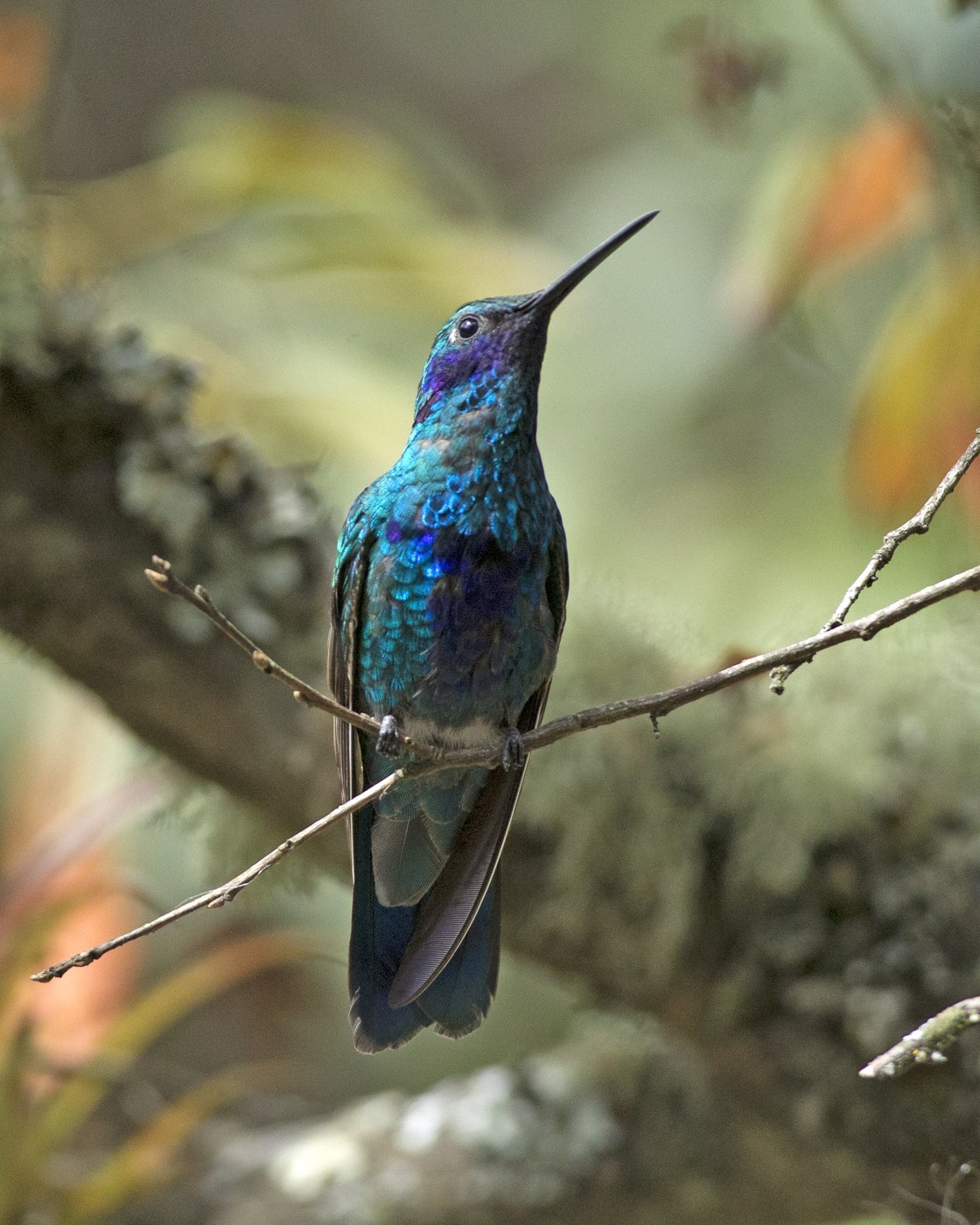
Sparkling Violetear
Iridescent body feathers, large violet ear and chest patches
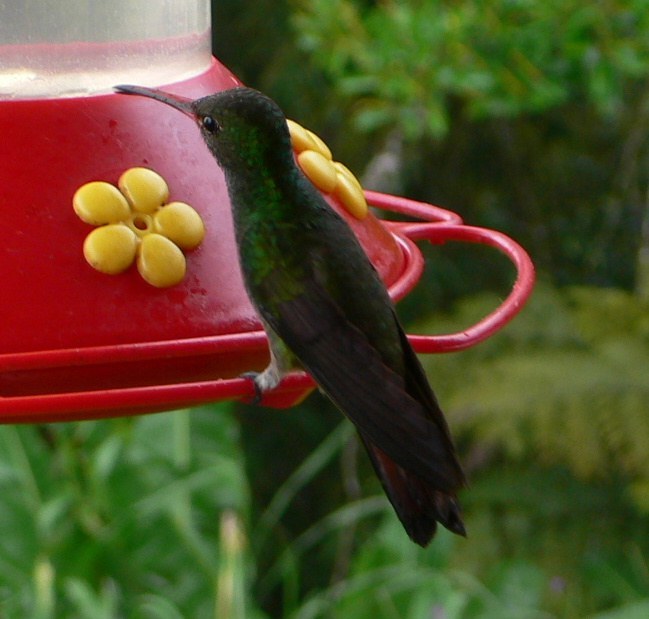
Rufous-tailed Hummingbird
Iridescent throat and breast feathers, rufous tail feathers

Rufous-breasted Hermit
Slightly decurved bill with rufous-washed contour feathers
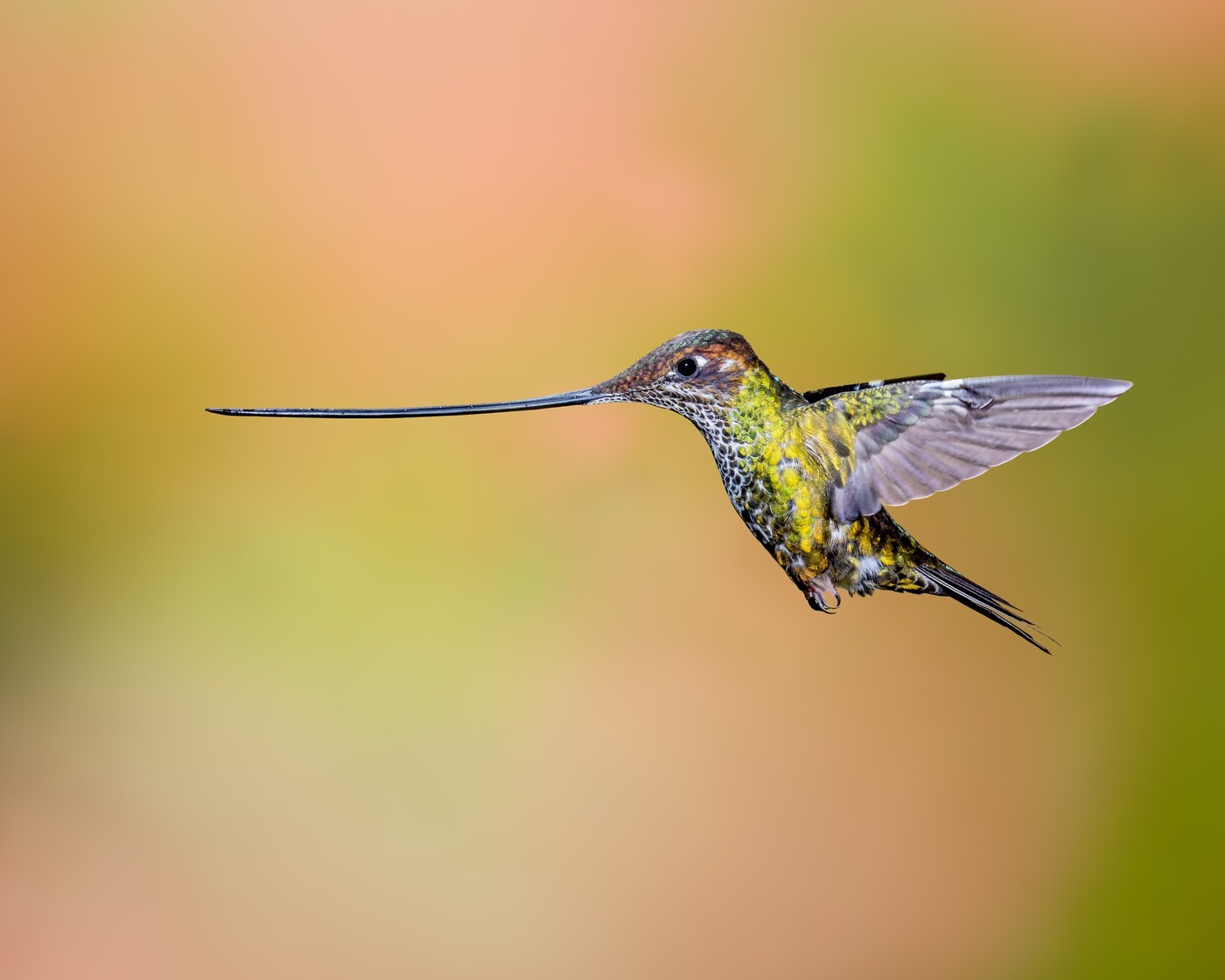
Sword-billed Hummingbird
Iridescent body feathers, extraordinarily long bill (non-feather feature)
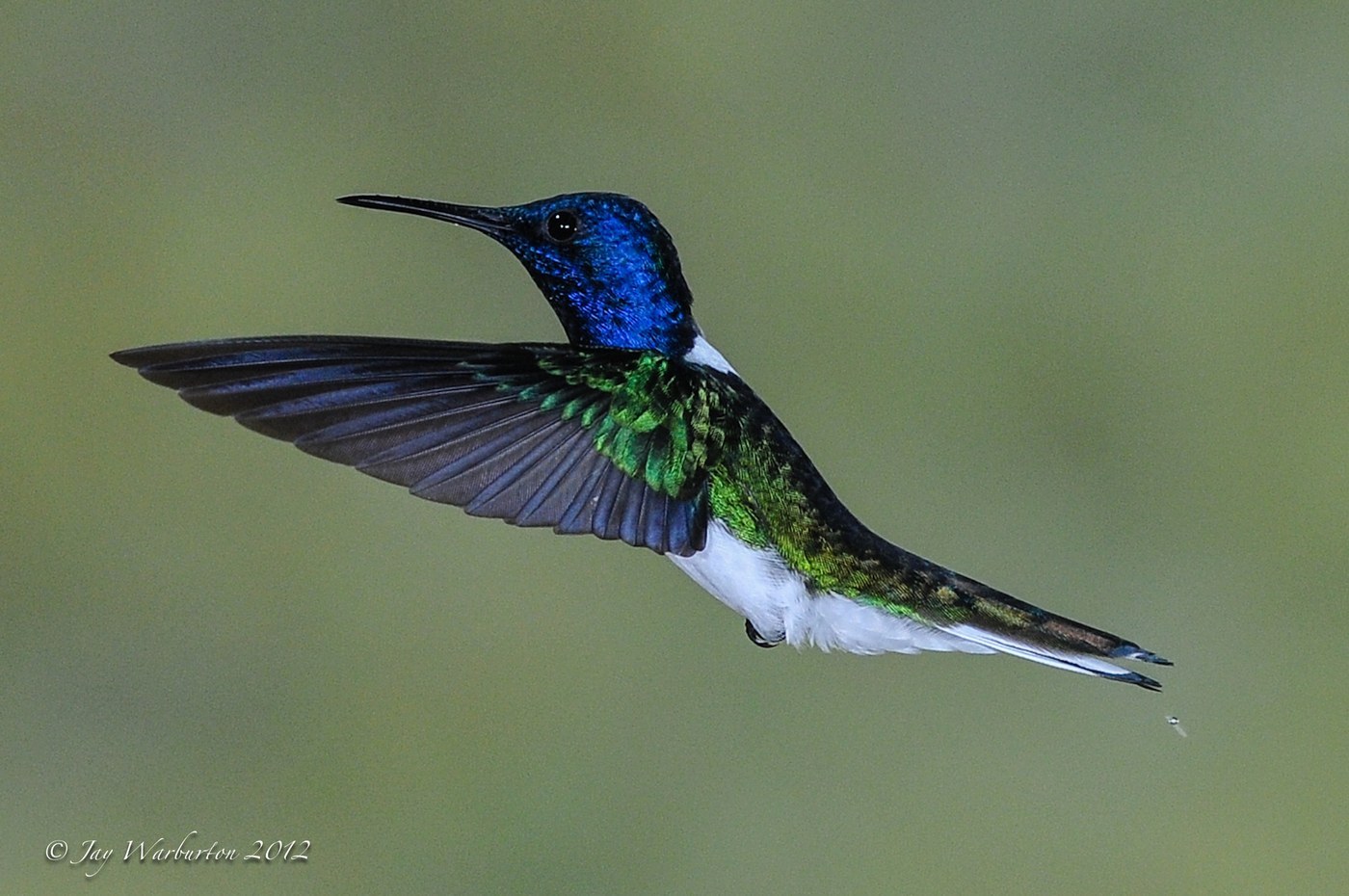
White-necked Jacobin
Iridescent head feathers, contrasting white nape and belly

White-eared Hummingbird
Iridescent gorget feathers, bold facial stripe
Violet Sabrewing
Iridescent body feathers, thickened curved primary shafts

Velvet-purple Coronet
Dense, velvety contour feathers with iridescent crown patch

Violet-crowned Hummingbird
Iridescent crown feathers, clean white underparts

Shining Sunbeam
Iridescent contour feathers with coppery-bronze wing sheen

Rufous Hummingbird
Tiny contour, gorget, and narrow flight feathers