
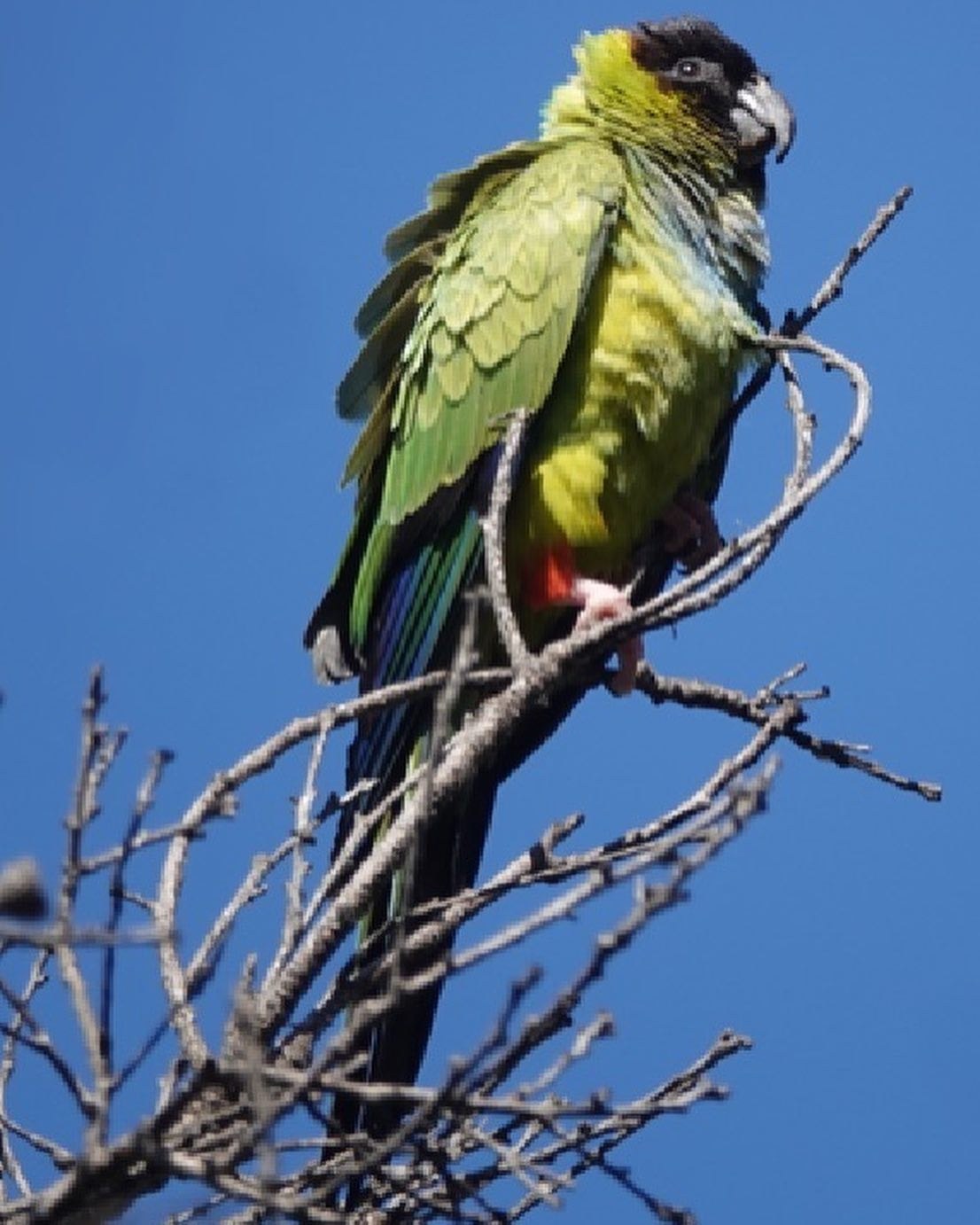
Nanday Conure
Aratinga nenday
A green South American conure easily told by its solid black head, or hood, along with a small blue patch on the breast and red-feathered thighs.
- Feather type
- Green body feathers with a contrasting black hood; long tapered tail
- Colours
- Green body with a black head, blue breast patch, and red thighs
- Bird size
- Medium conure, ~30 cm including tail
Found a feather like this?
Identify any feather from a photo, free.
Overview
The Nanday Conure, also known as the Black-hooded Parakeet, is native to south-central South America, including parts of Bolivia, Paraguay, Brazil, and Argentina, where it favors savanna, palm groves, and marsh-edge habitat. Its solid black head is unusual among green Aratinga-type conures and makes it one of the more easily recognized species in the group.
Identifying the Feather
The head and face are covered in solid black feathers forming a hood that contrasts sharply with the green body, a pattern unmatched by other similarly built conures. A small pale blue patch appears on the upper breast just below the black hood. The rest of the body is green, with red feathering on the thighs adding another spot of contrast low on the body. The tail is long and tapered, green with a blue tip. This combination of black hood, blue breast patch, and red thighs on an otherwise green bird is diagnostic for the species.
Plumage & Molt
Sexes are alike in plumage, with both males and females showing the same black hood, blue breast patch, and red thighs. Juveniles show a duller, less complete black hood and reduced blue breast patch, both of which become fully developed after the first molt.
Habitat & Range
This species occupies savanna, palm groves, marsh edge, and adjacent open habitat across south-central South America, including parts of Bolivia, Paraguay, Brazil, and Argentina. It is largely non-migratory, though local movements occur in response to food availability, and escaped populations have also become established in some areas outside its native range.
Behavior & Field Notes
Nanday Conures feed on seeds, fruit, blossoms, and palm nuts, foraging in flocks that can be large and vocal, particularly around communal roosts. Nests are placed in tree cavities or occasionally in earthen banks. Calls include loud, harsh, repeated screeching notes typical of Aratinga conures, given frequently in flight and at roosting sites.
Frequently asked questions
What makes the Nanday Conure's head distinctive?
A solid black hood covering the head and face, unusual among green conure species.
What other markings does the Nanday Conure have besides the black hood?
A small blue patch on the upper breast and red feathering on the thighs.
Where does the Nanday Conure live?
In savanna, palm groves, and marsh edge across south-central South America.
Do male and female Nanday Conures look different?
No, the sexes are alike in plumage.
Nanday Conure guides
In-depth guides for identifying and understanding Nanday Conure.
Other feathers you may enjoy
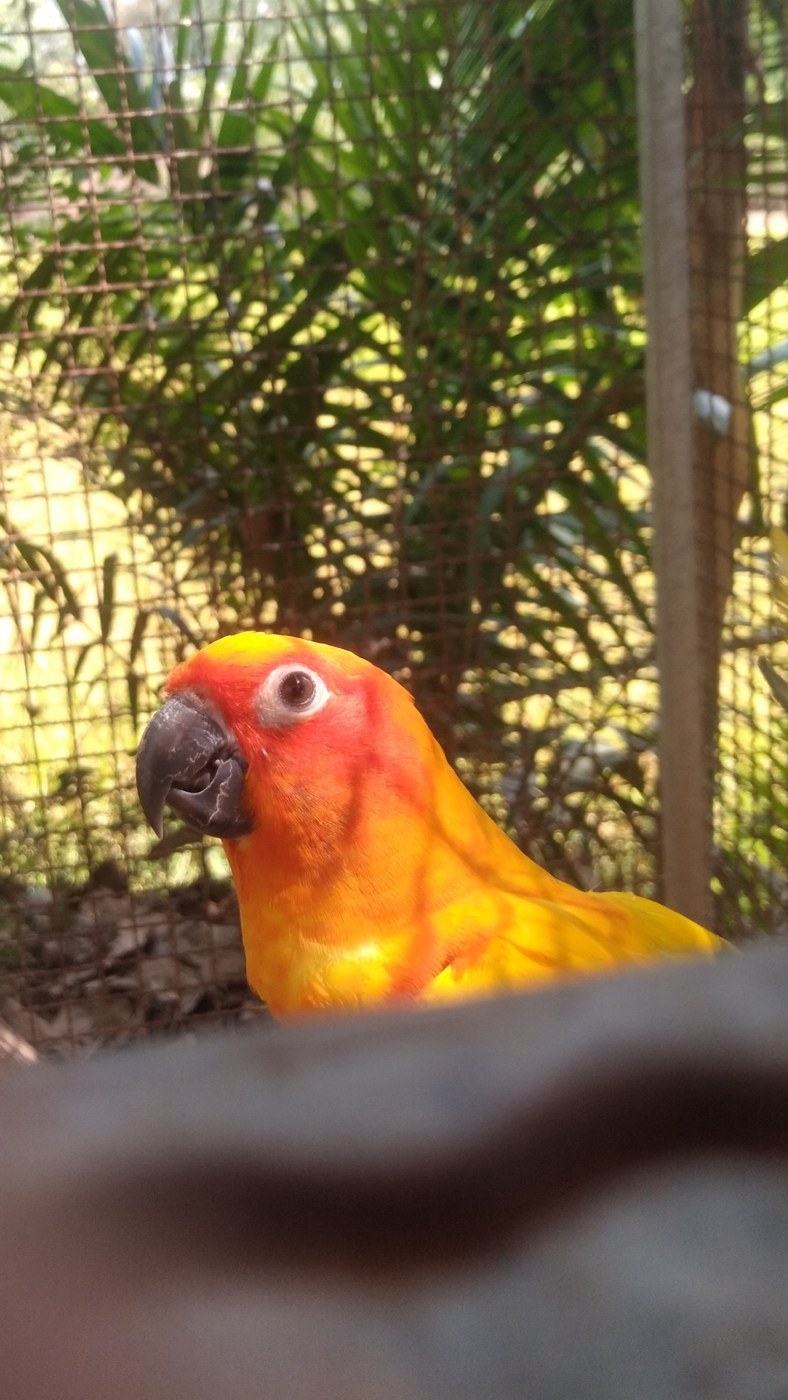
Sun Parakeet
Bright, dense body contour feathers; medium pointed tail feathers

Yellow-naped Amazon
Broad rounded contour feathers with sturdy flight feathers
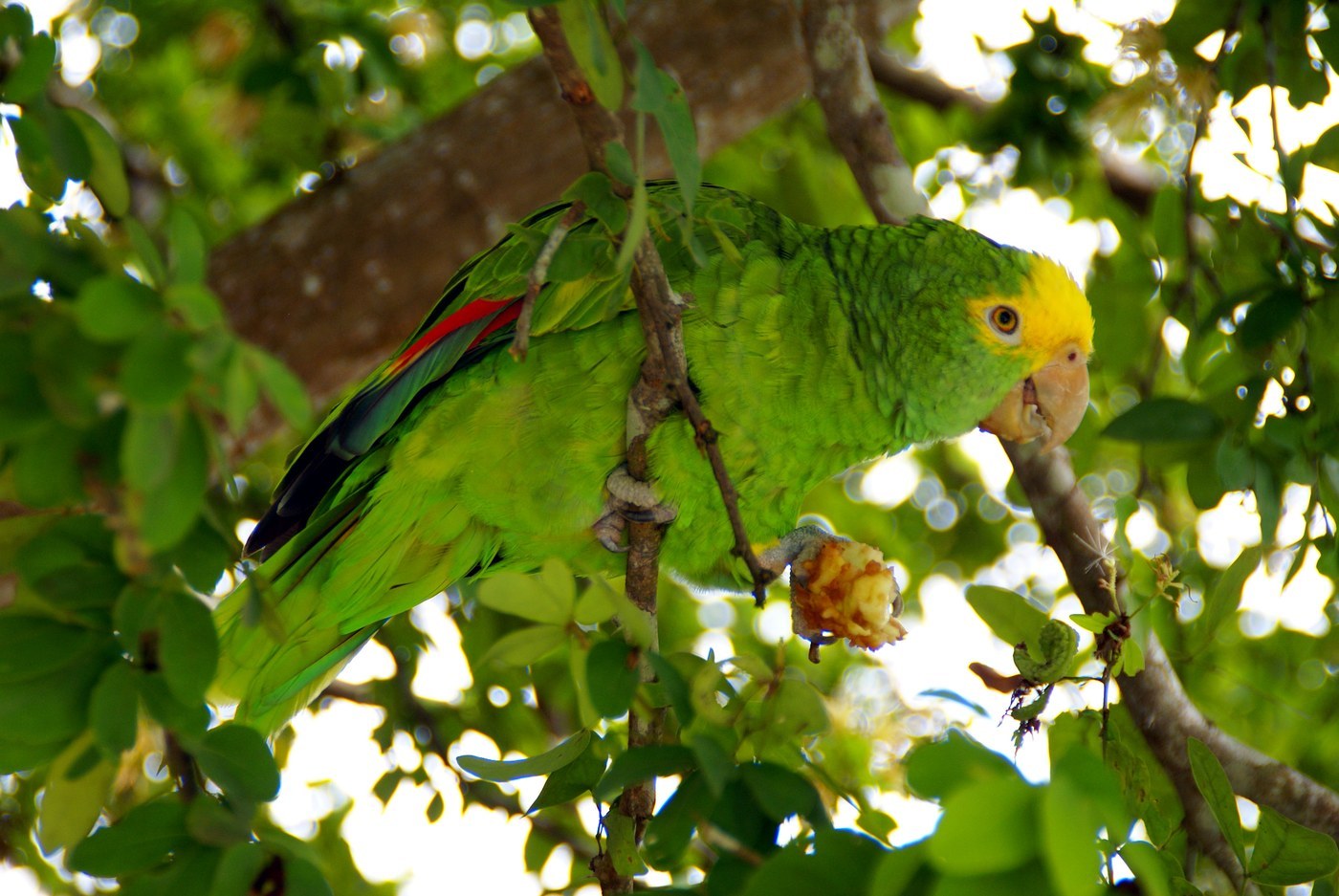
Yellow-headed Amazon
Dense, rounded body contour feathers; broad flight feathers
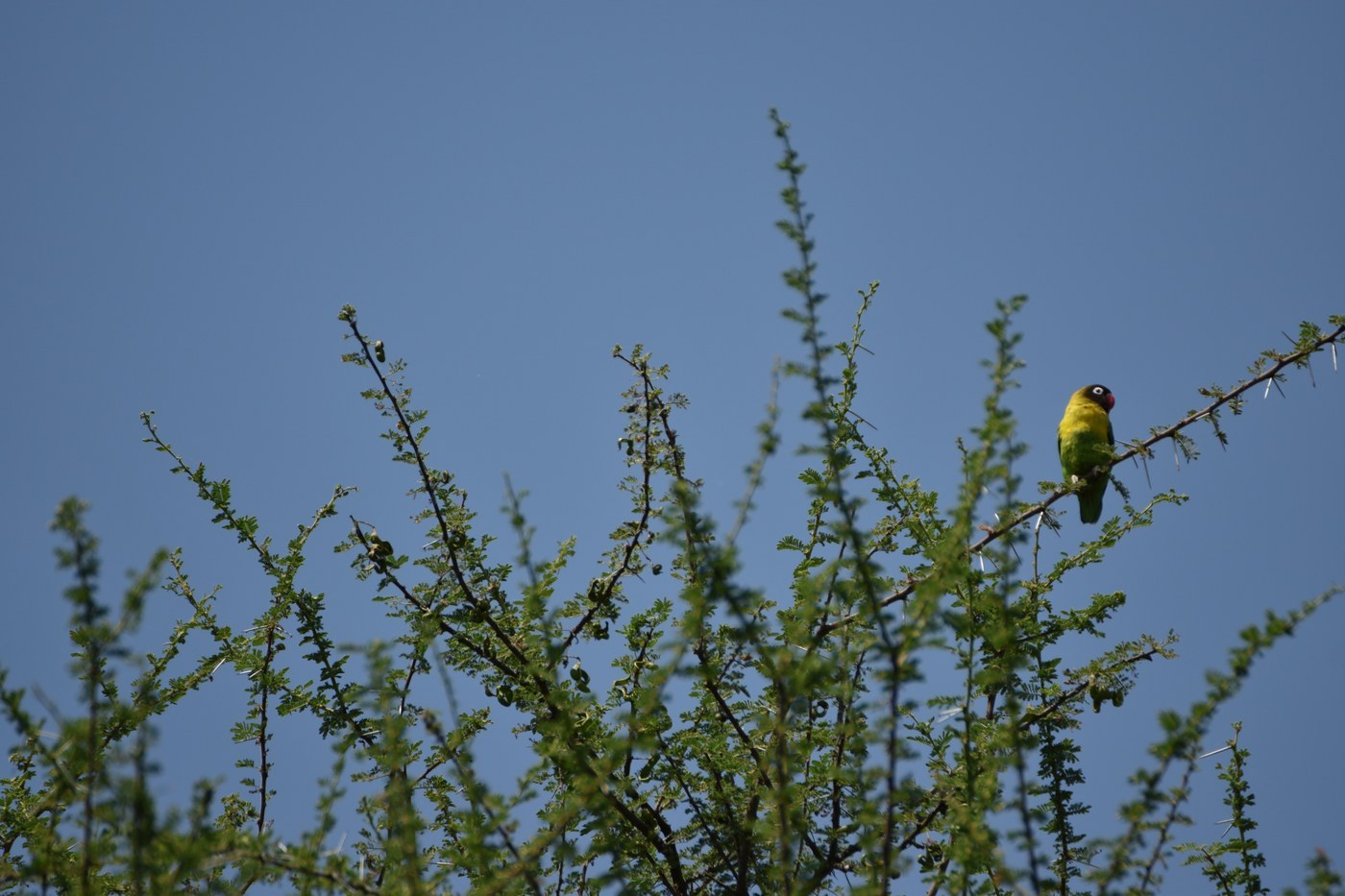
Yellow-collared Lovebird
Small compact flight feathers, short rounded tail

White-eyed Conure
Medium contour and long, graduated tail feathers

Yellow-tailed Black Cockatoo
Large, sturdy contour and flight feathers; short crest

Scarlet-chested Parrot
Small contour and flight feathers

Timneh Parrot
Broad flight feathers, scalloped body feathers with pale edges
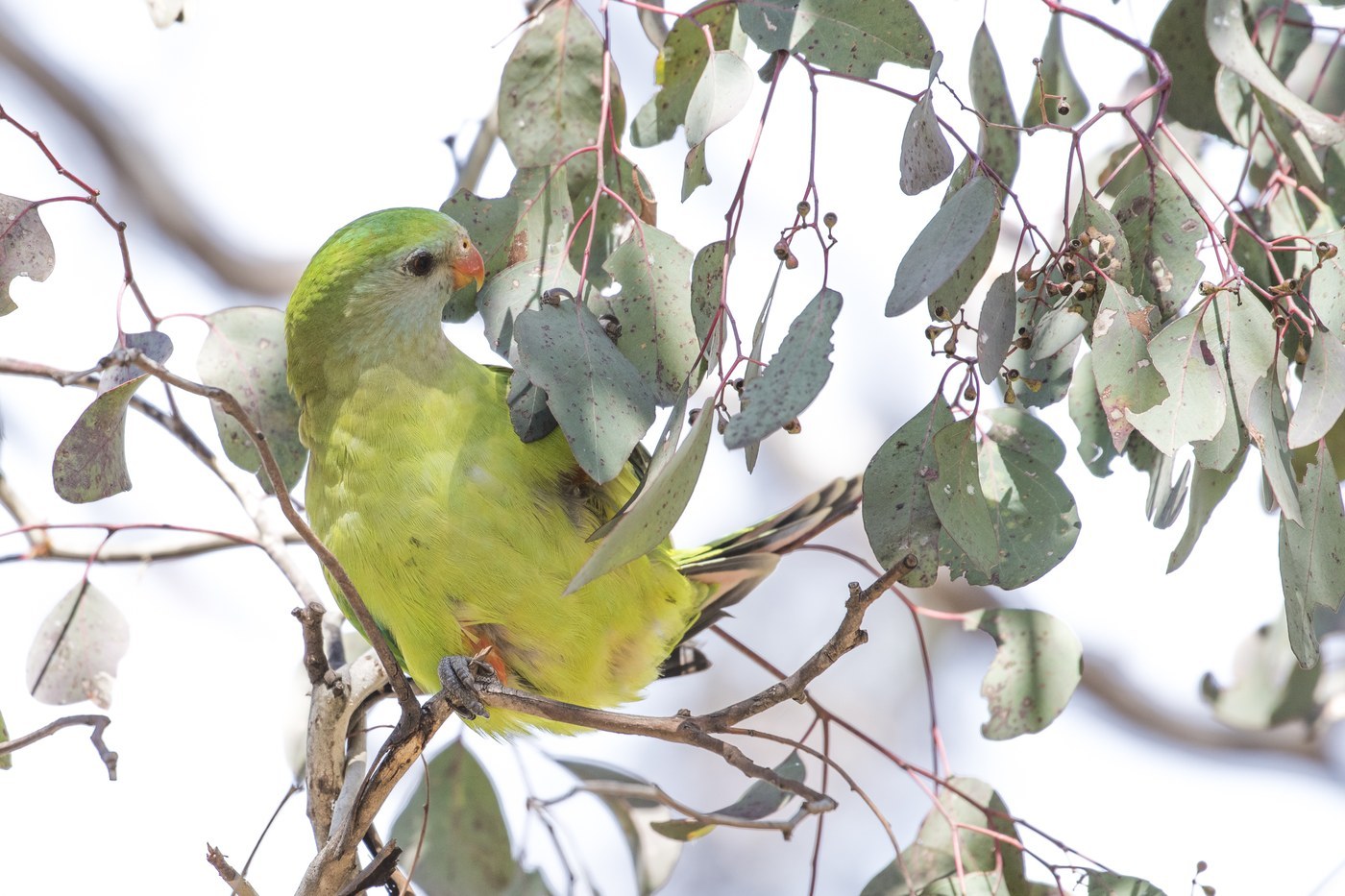
Superb Parrot
Sleek contour feathers with a long tapering tail

Red-shouldered Macaw
Compact body contour feathers; medium flight and tail feathers
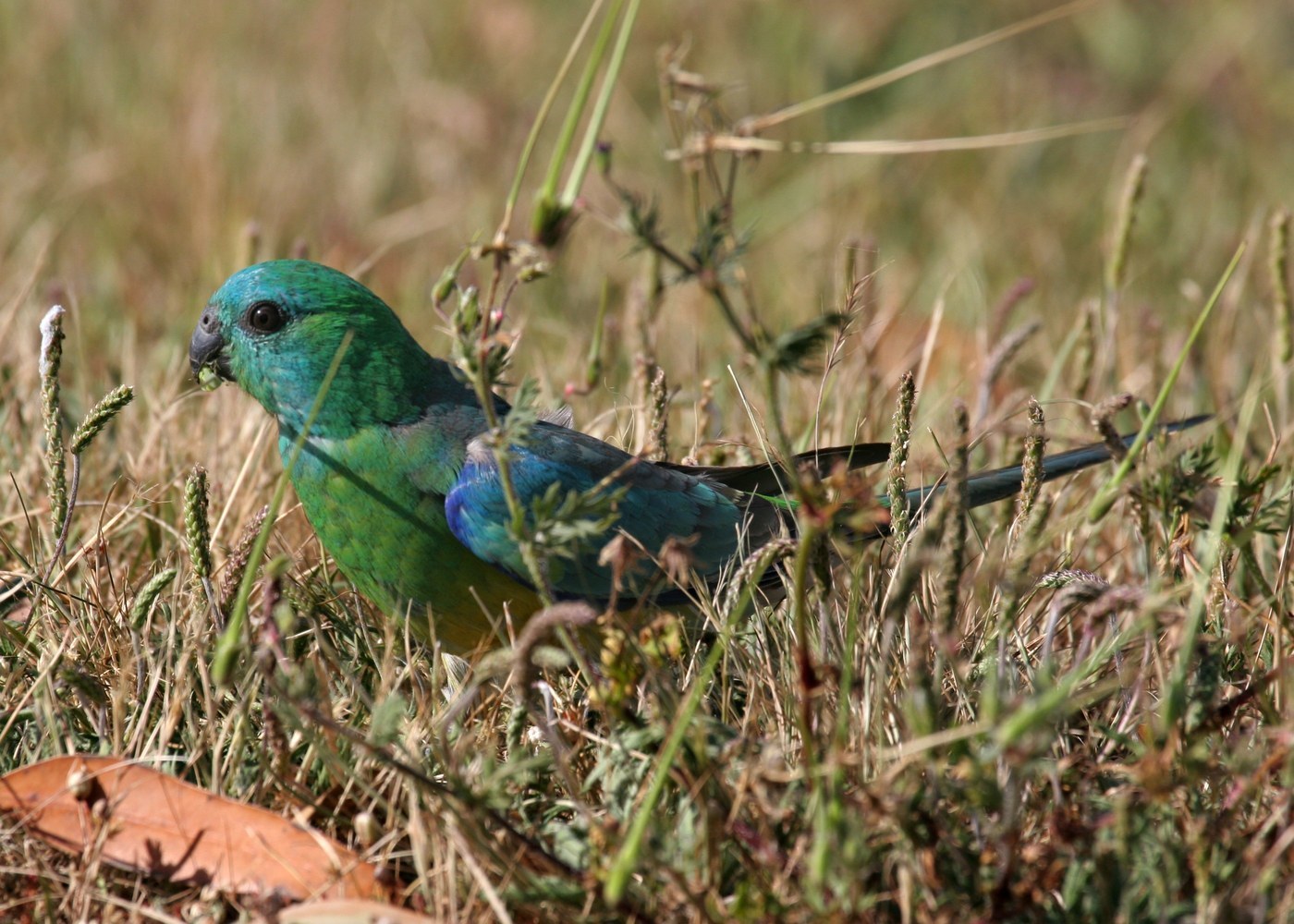
Red-rumped Parrot
Sleek contour feathers with a bright rump patch in males

White-capped Pionus
Compact contour feathers and short, squared tail feathers