

White-eyed Conure
Psittacara leucophthalmus
A mostly green South American parakeet marked by a small red eye patch and scattered red wing markings.
- Feather type
- Medium contour and long, graduated tail feathers
- Colours
- Green overall with scattered red patches and a bare white eye-ring
- Bird size
- Medium, ~33 cm
Found a feather like this?
Identify any feather from a photo, free.
Overview
Overview
The White-eyed Conure is a widespread South American parakeet, largely green in color but showing small patches of red around the face and wings. Its name refers to the bare white skin surrounding the eye, a feature shared with several related Psittacara conures.
- Mostly uniform green body plumage with limited red accents
- Long, tapering tail characteristic of the genus
- Wide distribution across multiple South American countries
Identifying the Feather
Feather Identification
White-eyed Conure feathers are predominantly green, with red limited to specific small areas rather than covering the head broadly.
- Face feathers: green with a small red patch typically near the eye, much less extensive than in some related species
- Eye region: a bare white ring of skin around the eye, giving the species its common name
- Wing feathers: green with scattered irregular red patches, particularly at the bend of the wing and on underwing coverts
- Tail feathers: long and green, tapering to a point
- Compared to similar species: the Red-masked Conure shows a much larger, more extensive red facial area, so the limited red patch confined near the eye is the clearest distinguishing feature of the White-eyed Conure
Plumage & Molt
Plumage Notes
Sexes are similar in plumage, both showing limited red facial markings and mostly green body feathers. Juveniles typically show even less red than adults, with the small facial patch developing gradually.
- No strong sexual dimorphism in coloring
- Juvenile plumage is a subdued version of the adult pattern
- Molt is gradual, without pronounced seasonal color change
Habitat & Range
Habitat & Range
Widely distributed across eastern and central South America, including Brazil, Bolivia, Paraguay, Uruguay, and Argentina.
- Found in forest, woodland, savanna, and cultivated or urban areas
- Non-migratory, though flocks may shift locally with food availability
- Adaptable to a range of habitats, including areas modified by agriculture
Behavior & Field Notes
Behavior & Field Notes
White-eyed Conures are social birds often seen in flocks, sometimes gathering at communal roosts in large numbers.
- Diet: fruits, seeds, and blossoms, occasionally including cultivated crops
- Nesting: nests in tree cavities or crevices in structures within its range
- Voice: loud, harsh calls typically given in flight or at roost sites
- Field notes: the limited red facial patch and bare white eye-ring are best seen at close range, since the overall green plumage otherwise blends with foliage
Frequently asked questions
Why is it called the White-eyed Conure?
It has a ring of bare white skin around the eye, a feature that gives the species its common name.
How much red does this species show?
Red is limited to a small patch near the eye and scattered markings on the wings, much less extensive than in some related conures.
How does it differ from the Red-masked Conure?
The Red-masked Conure has an extensively red head, while the White-eyed Conure shows only a small red patch confined near the eye.
Where is the White-eyed Conure found?
It is widely distributed across eastern and central South America, including Brazil, Bolivia, Paraguay, Uruguay, and Argentina.
White-eyed Conure guides
In-depth guides for identifying and understanding White-eyed Conure.

Other feathers you may enjoy
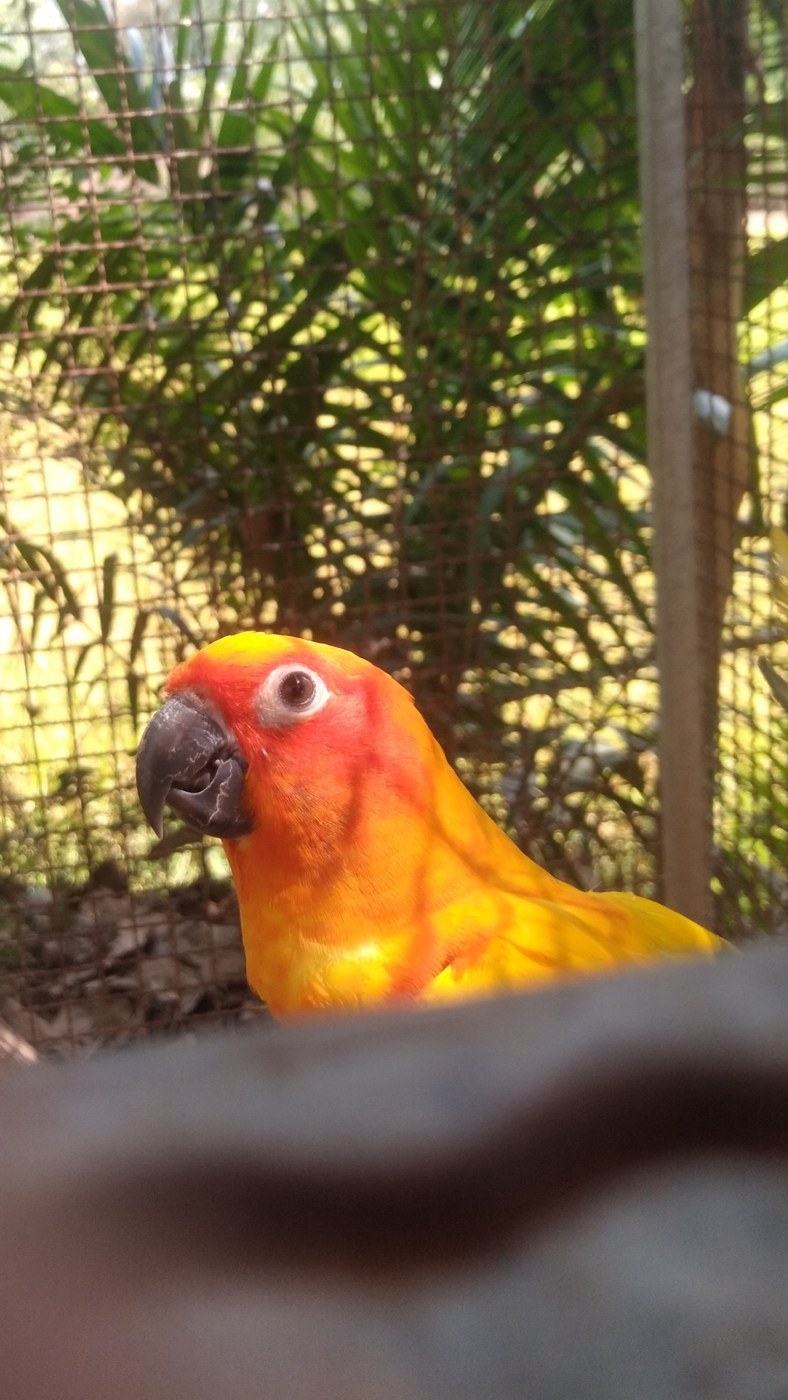
Sun Parakeet
Bright, dense body contour feathers; medium pointed tail feathers

Yellow-naped Amazon
Broad rounded contour feathers with sturdy flight feathers
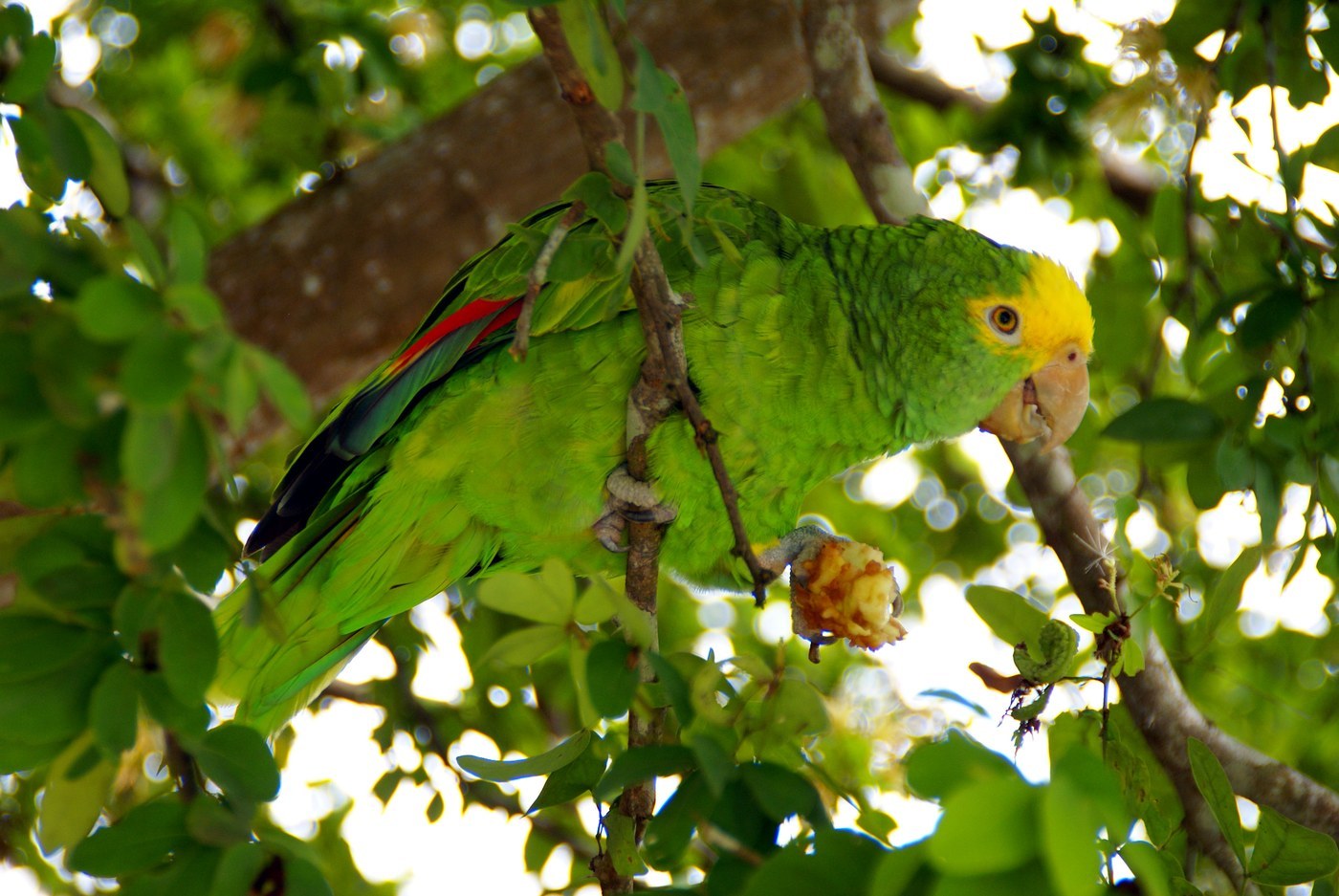
Yellow-headed Amazon
Dense, rounded body contour feathers; broad flight feathers
Yellow-collared Lovebird
Small compact flight feathers, short rounded tail

Yellow-tailed Black Cockatoo
Large, sturdy contour and flight feathers; short crest

Scarlet-chested Parrot
Small contour and flight feathers

Timneh Parrot
Broad flight feathers, scalloped body feathers with pale edges
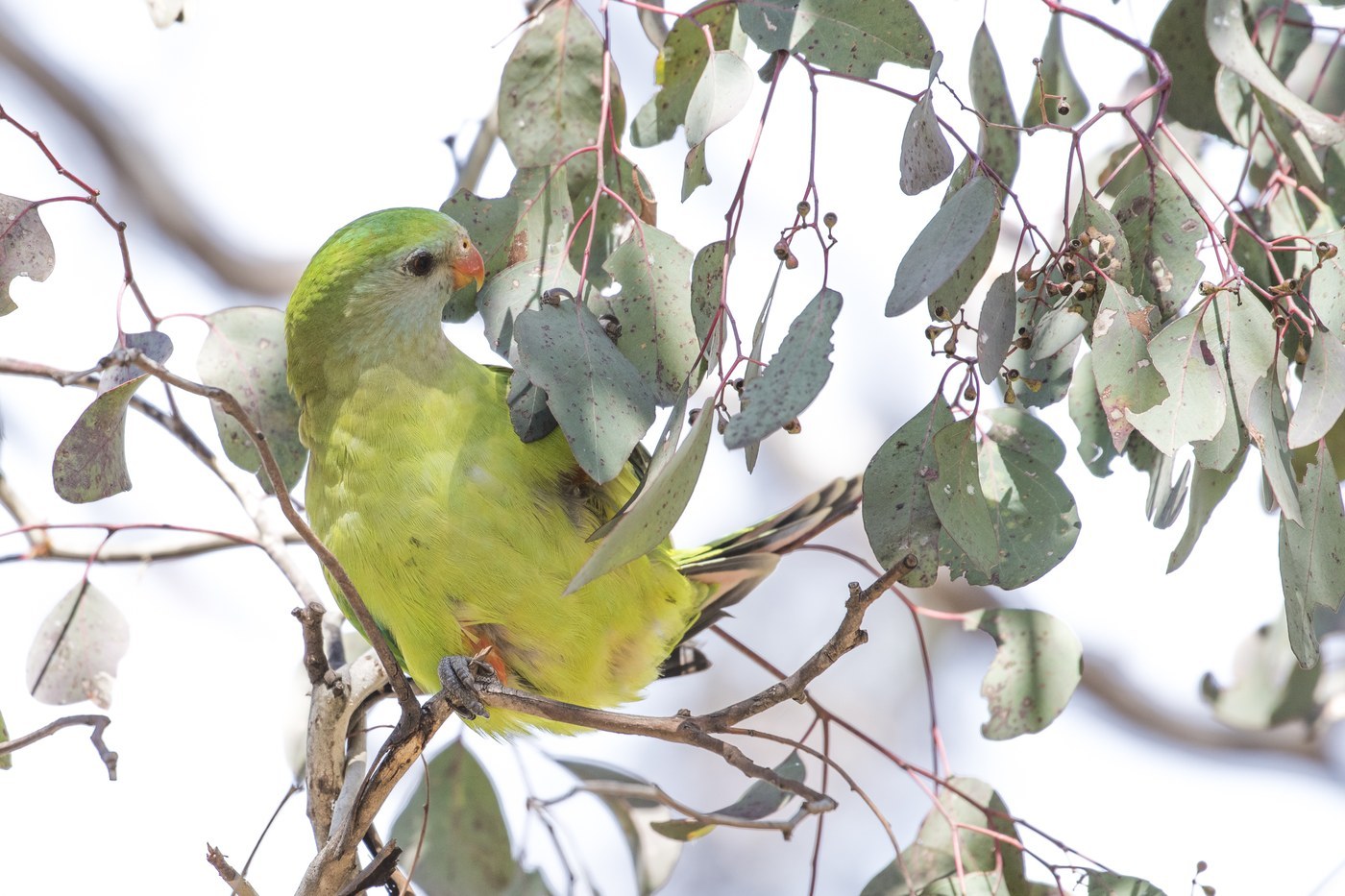
Superb Parrot
Sleek contour feathers with a long tapering tail

Red-shouldered Macaw
Compact body contour feathers; medium flight and tail feathers
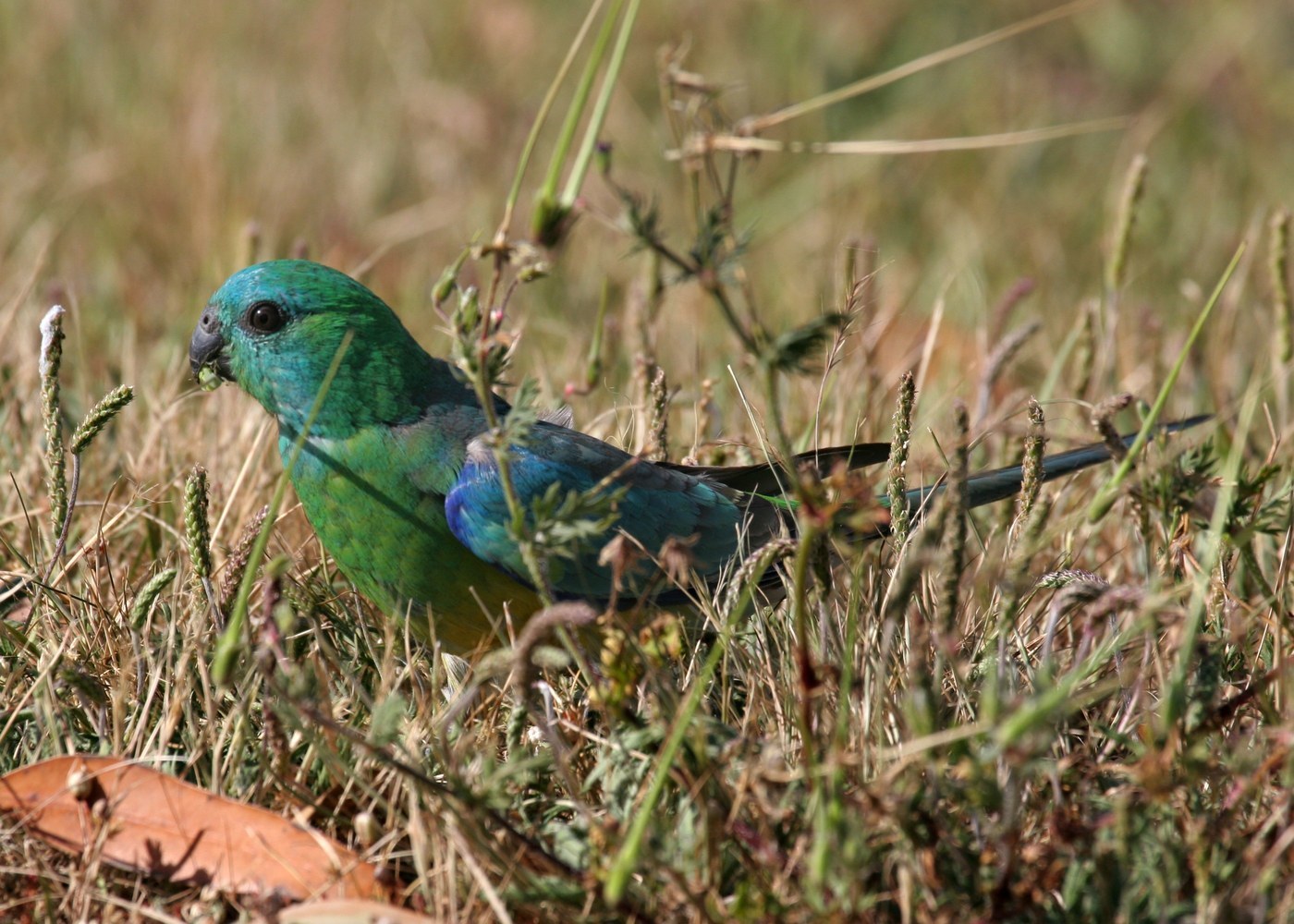
Red-rumped Parrot
Sleek contour feathers with a bright rump patch in males

White-capped Pionus
Compact contour feathers and short, squared tail feathers
Sun Conure
Vivid, soft-textured body feathers; moderately long, tapered tail