
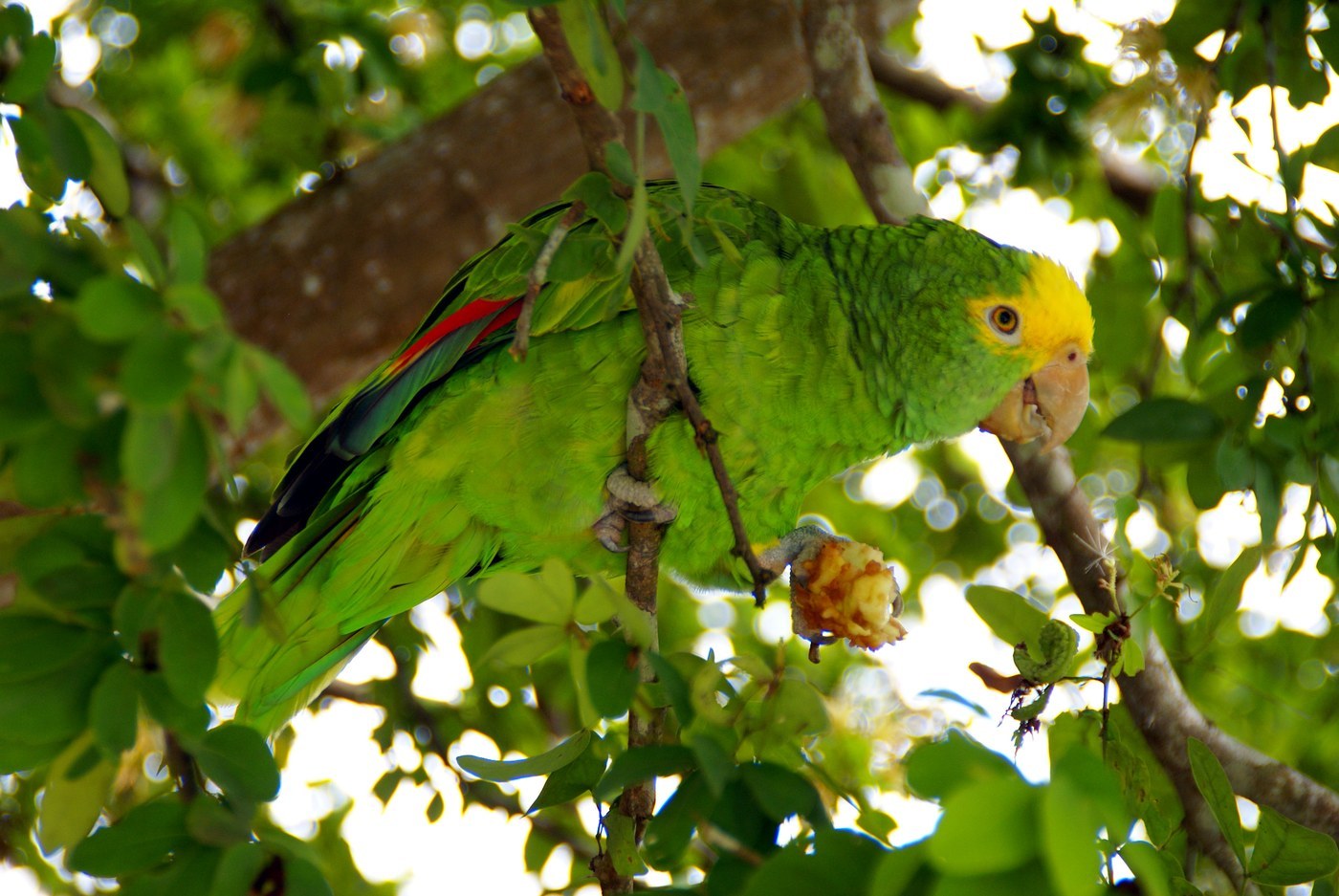
Yellow-headed Amazon
Amazona oratrix
A large green amazon parrot of Mexico and Central America, named for its yellow-washed head, with a red shoulder patch and blue in the wing visible in flight.
- Feather type
- Dense, rounded body contour feathers; broad flight feathers
- Colours
- Green body with a yellow head and red shoulder patch
- Bird size
- Medium-large parrot, ~35-38 cm
Found a feather like this?
Identify any feather from a photo, free.
Overview
The Yellow-headed Amazon is a large, striking parrot native to lowland tropical forest, riverine woodland, and mangroves of Mexico and Central America. Its bright yellow head plumage, which increases with age, sets it apart from other green amazon parrots in its range.
Highly intelligent and vocal, this species has long been sought after in aviculture for its talking ability, a demand that, combined with habitat loss, has led to significant declines and conservation concern for wild populations.
Identifying the Feather
- Body is green overall, with darker green edging giving a slightly scaled appearance on the back
- Head shows a yellow patch that varies in extent by subspecies and age, from a partial cap to an almost entirely yellow head
- Shoulder has a red patch, most visible when the wing is extended
- Flight feathers show blue and sometimes red patches near the base, visible in flight
- Tail is green with a yellowish tip in some individuals
- Distinguished from other amazon parrots by the extent and color of yellow head feathering combined with the red shoulder patch
Plumage & Molt
Adults show a yellow head that becomes more extensive with age, from a small area around the crown and face in younger birds to nearly the entire head in some mature individuals, particularly in certain subspecies. Sexes look alike in plumage. Juveniles have little to no yellow on the head, appearing mostly green, and gradually develop yellow feathering with successive molts over several years.
Habitat & Range
This species inhabits lowland tropical forest, riverine woodland, and mangrove habitats across Mexico and parts of Central America, generally in humid or seasonally flooded lowlands. It is largely resident, though some local movement occurs in response to seasonal food availability, and its range has become increasingly fragmented due to habitat loss.
Behavior & Field Notes
Yellow-headed Amazons feed on fruit, seeds, nuts, and blossoms, foraging in pairs or small flocks within the canopy. They nest in tree cavities, often reusing the same nest sites across years. The species is highly vocal, with loud squawks and screeches, and is well known for its capacity to mimic sounds, a trait that has contributed to its popularity and consequent trapping pressure in the wild.
Frequently asked questions
What does a Yellow-headed Amazon feather look like?
Body feathers are green with a scaled appearance from darker feather edges, the head shows yellow feathering that increases with age, and the shoulder has a red patch visible when the wing is spread.
How can I tell a young Yellow-headed Amazon from an adult?
Juveniles have little to no yellow on the head and appear mostly green, while adults show progressively more yellow head feathering as they age.
Where does the Yellow-headed Amazon live?
It is native to lowland tropical forest, riverine woodland, and mangroves in Mexico and parts of Central America.
Why is the Yellow-headed Amazon a conservation concern?
Habitat loss combined with historical trapping for the pet trade has led to significant population declines in parts of its range.
Yellow-headed Amazon guides
In-depth guides for identifying and understanding Yellow-headed Amazon.
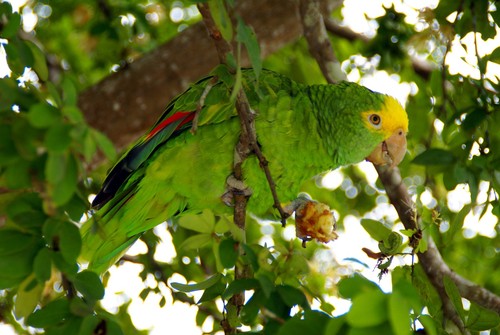
Yellow-headed Amazon identified by the community
Real feathers identified with Feather Identifier.

Other feathers you may enjoy
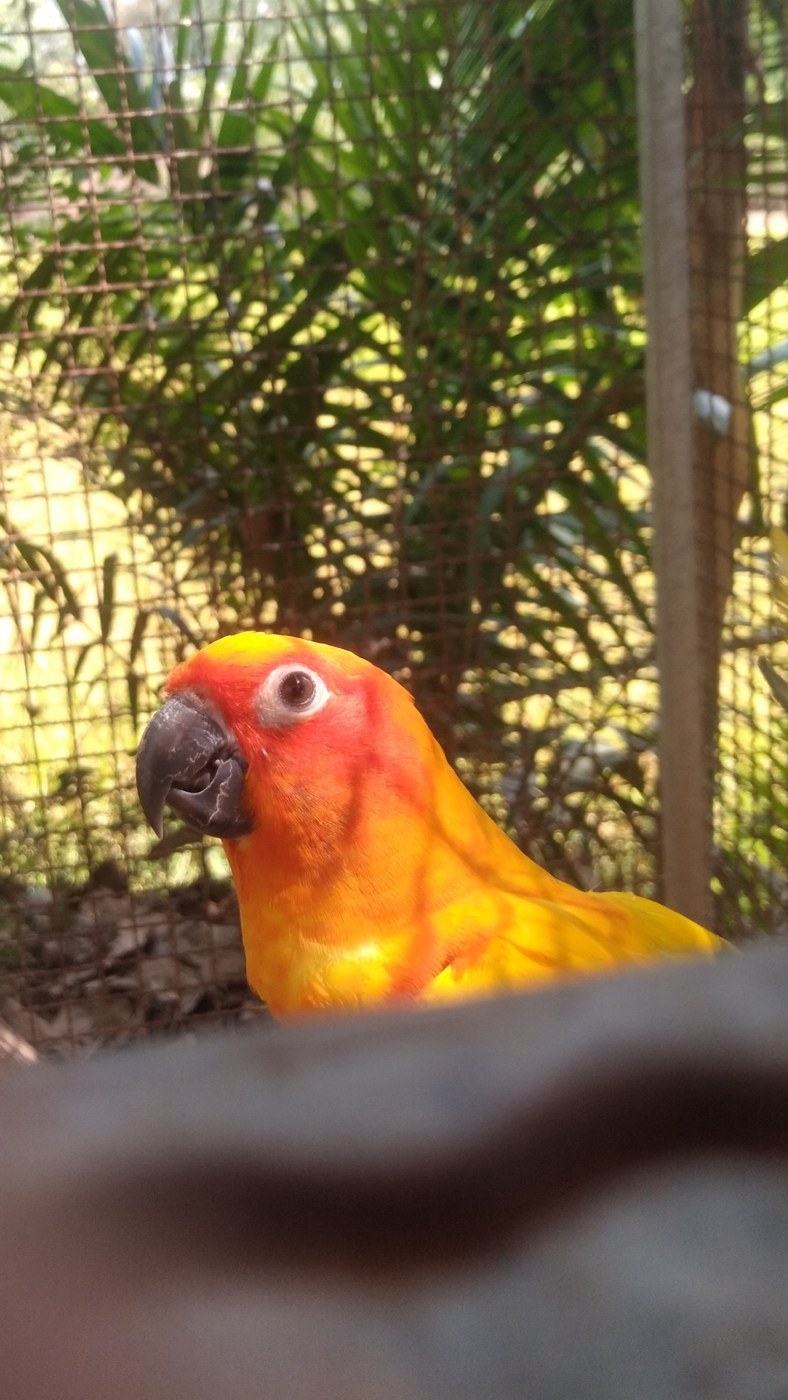
Sun Parakeet
Bright, dense body contour feathers; medium pointed tail feathers

Yellow-naped Amazon
Broad rounded contour feathers with sturdy flight feathers
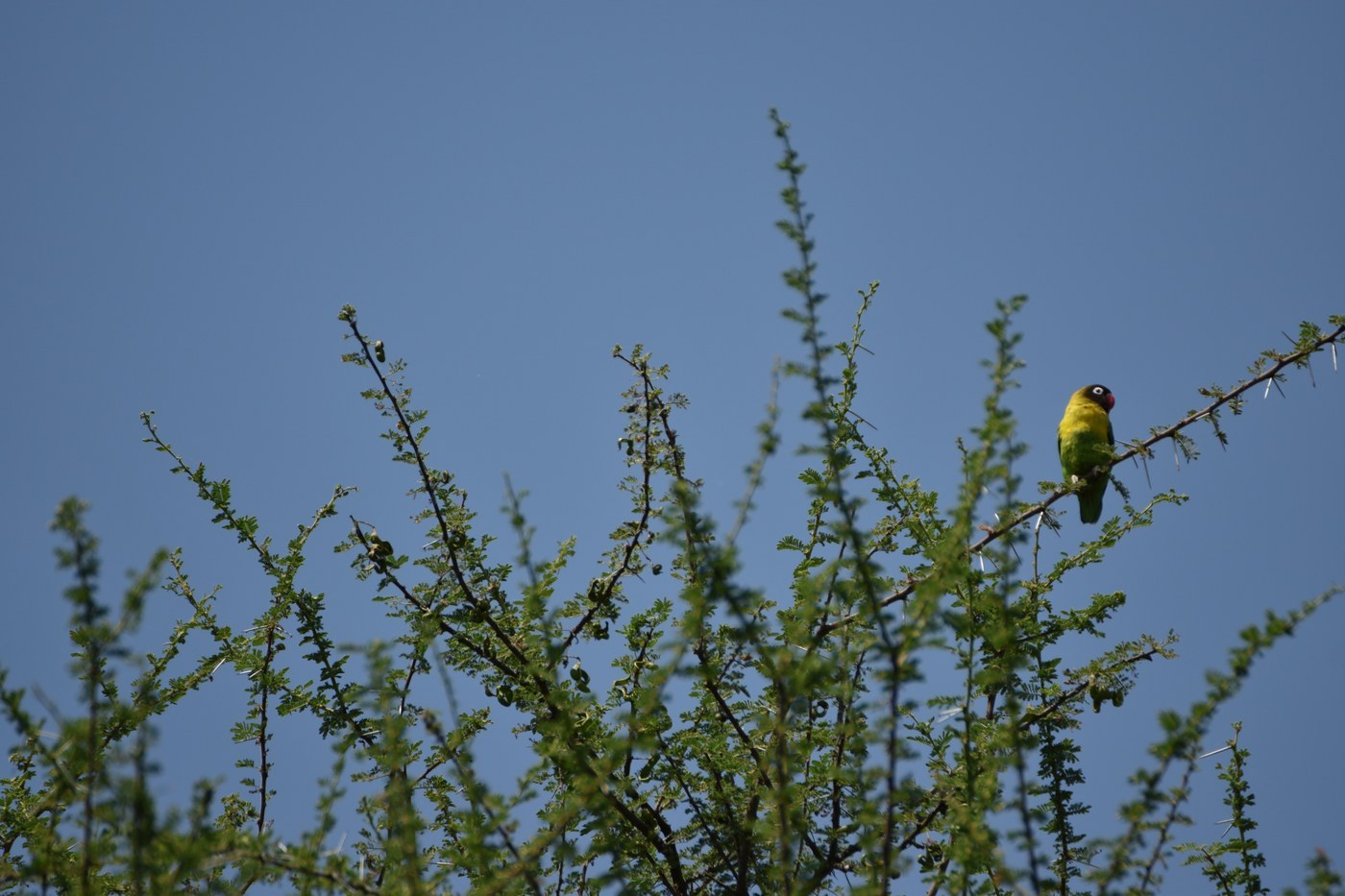
Yellow-collared Lovebird
Small compact flight feathers, short rounded tail

White-eyed Conure
Medium contour and long, graduated tail feathers

Yellow-tailed Black Cockatoo
Large, sturdy contour and flight feathers; short crest

Scarlet-chested Parrot
Small contour and flight feathers

Timneh Parrot
Broad flight feathers, scalloped body feathers with pale edges
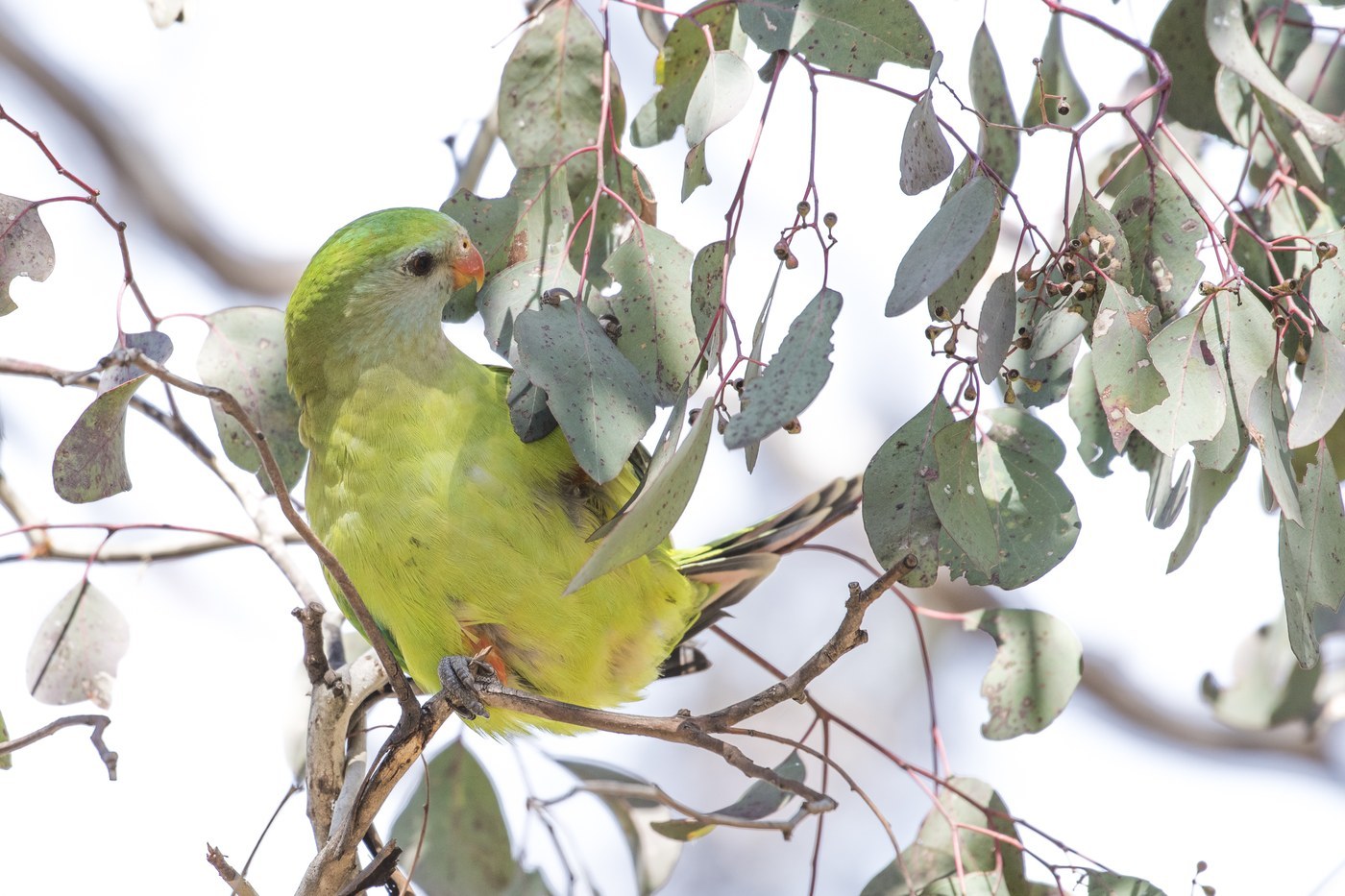
Superb Parrot
Sleek contour feathers with a long tapering tail

Red-shouldered Macaw
Compact body contour feathers; medium flight and tail feathers
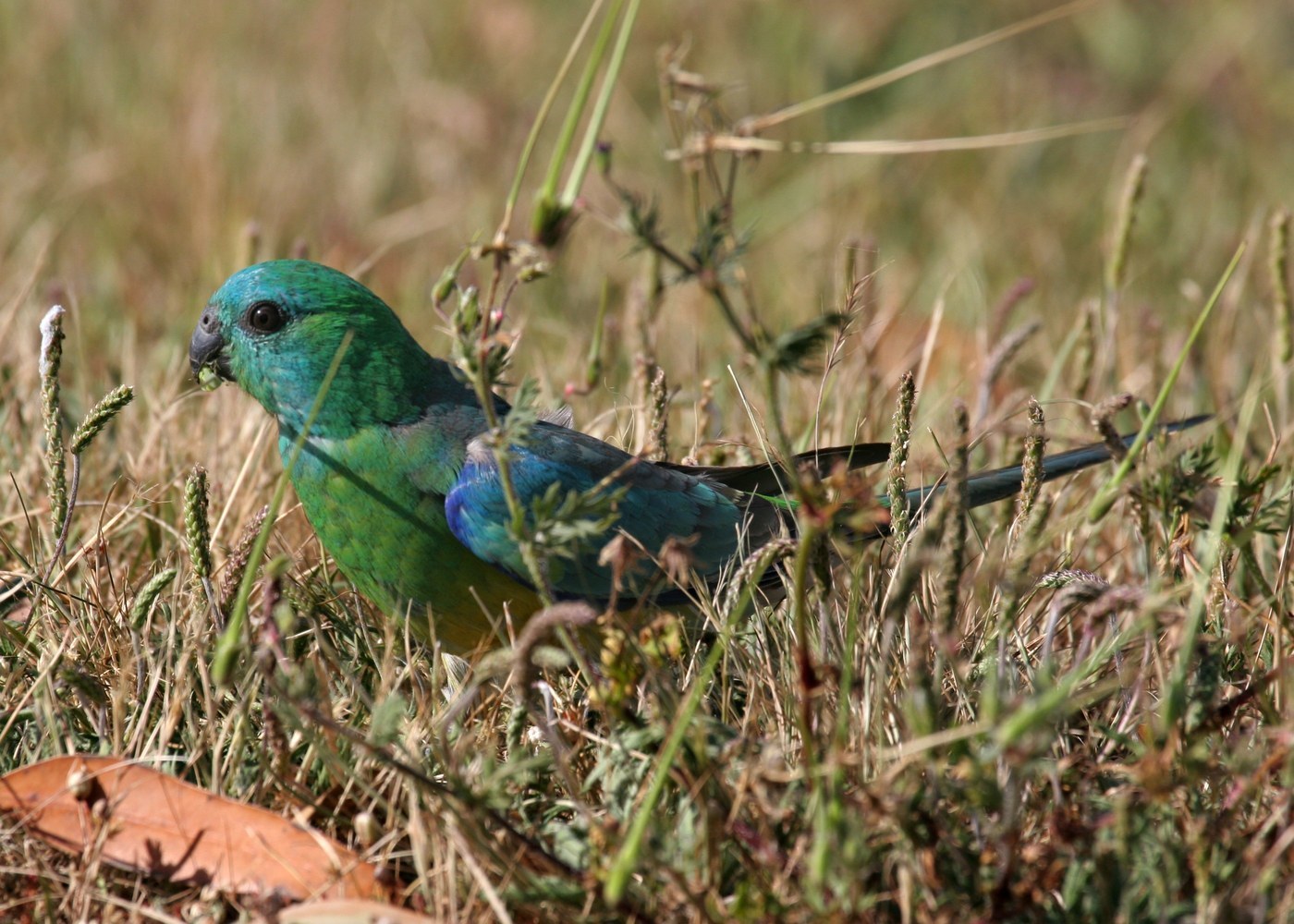
Red-rumped Parrot
Sleek contour feathers with a bright rump patch in males

White-capped Pionus
Compact contour feathers and short, squared tail feathers
Sun Conure
Vivid, soft-textured body feathers; moderately long, tapered tail