

Mexican Violetear
Colibri thalassinus
A vividly green montane hummingbird set apart by patches of violet-blue iridescence across the ear coverts and breast.
- Feather type
- Iridescent body feathers, violet ear and breast patches
- Colours
- Green overall with violet-blue ear patch and breast band
- Bird size
- Medium, ~10.5 cm
Found a feather like this?
Identify any feather from a photo, free.
Overview
Overview
The Mexican Violetear inhabits montane forest edges, clearings, and gardens from Mexico south through Central America, favoring middle to upper elevations. It is a vocal and conspicuous member of many highland hummingbird communities, often heard calling from an exposed perch before it is seen.
Its body is a rich, uniform green, but patches of glittering violet-blue on the ear coverts and across the breast provide contrasting color highlights that distinguish it from other green-bodied hummingbirds in its range.
Identifying the Feather
Feather ID Notes
Most body feathers show a deep, even green iridescence, while the ear coverts carry a distinct violet-blue patch and a smaller violet patch crosses the upper breast. These violet patches can look dark without direct light but flash brightly when lit at the right angle.
- Body feathers: rich green overall
- Ear covert patch: violet-blue, well defined
- Breast patch: violet-blue, narrower band across the upper chest
- Tail: dark, slightly notched The combination of green body plus a violet ear patch and breast band distinguishes this species from the closely related Sparkling Violetear, which shows larger, more extensive violet patches.
Plumage & Molt
Plumage Details
Sexes are similar in the Mexican Violetear, both showing green body plumage with violet ear and breast patches, though patch size and intensity can vary somewhat between individuals rather than strictly by sex. Juveniles are duller, with reduced violet patches. There is no marked seasonal plumage difference, with an annual molt refreshing feather color.
Habitat & Range
Habitat & Range
This species is found in montane forest edge, clearings, second growth, and gardens at moderate to high elevations from Mexico south through Central America into parts of northern South America. Some populations show seasonal elevational movements, descending to lower elevations outside the breeding season.
Behavior & Field Notes
Behavior & Field Notes
Mexican Violetears feed on nectar from a variety of flowering trees, shrubs, and epiphytes, often defending favored flowering patches vigorously, and also take small insects. They are known for persistent, repetitive calling from prominent perches, a behavior that makes them easy to detect even when not visible. Nests are small cups built in shrubs or low trees. Calls include a sharp, repeated "tsip" note given over long periods.
Frequently asked questions
How do you identify a Mexican Violetear's feathers?
Look for a green body with a violet-blue ear patch and a violet band across the upper breast.
How is this species different from the Sparkling Violetear?
The Mexican Violetear generally shows smaller, less extensive violet patches on the ear and breast.
What is distinctive about this species' behavior?
It is known for persistent, repetitive calling from an exposed perch, often heard before it is seen.
Where does the Mexican Violetear live?
In montane forest edges and clearings from Mexico through Central America and into northern South America.
Mexican Violetear guides
In-depth guides for identifying and understanding Mexican Violetear.

Other feathers you may enjoy

Speckled Hummingbird
Small contour feathers with fine speckled underpart markings
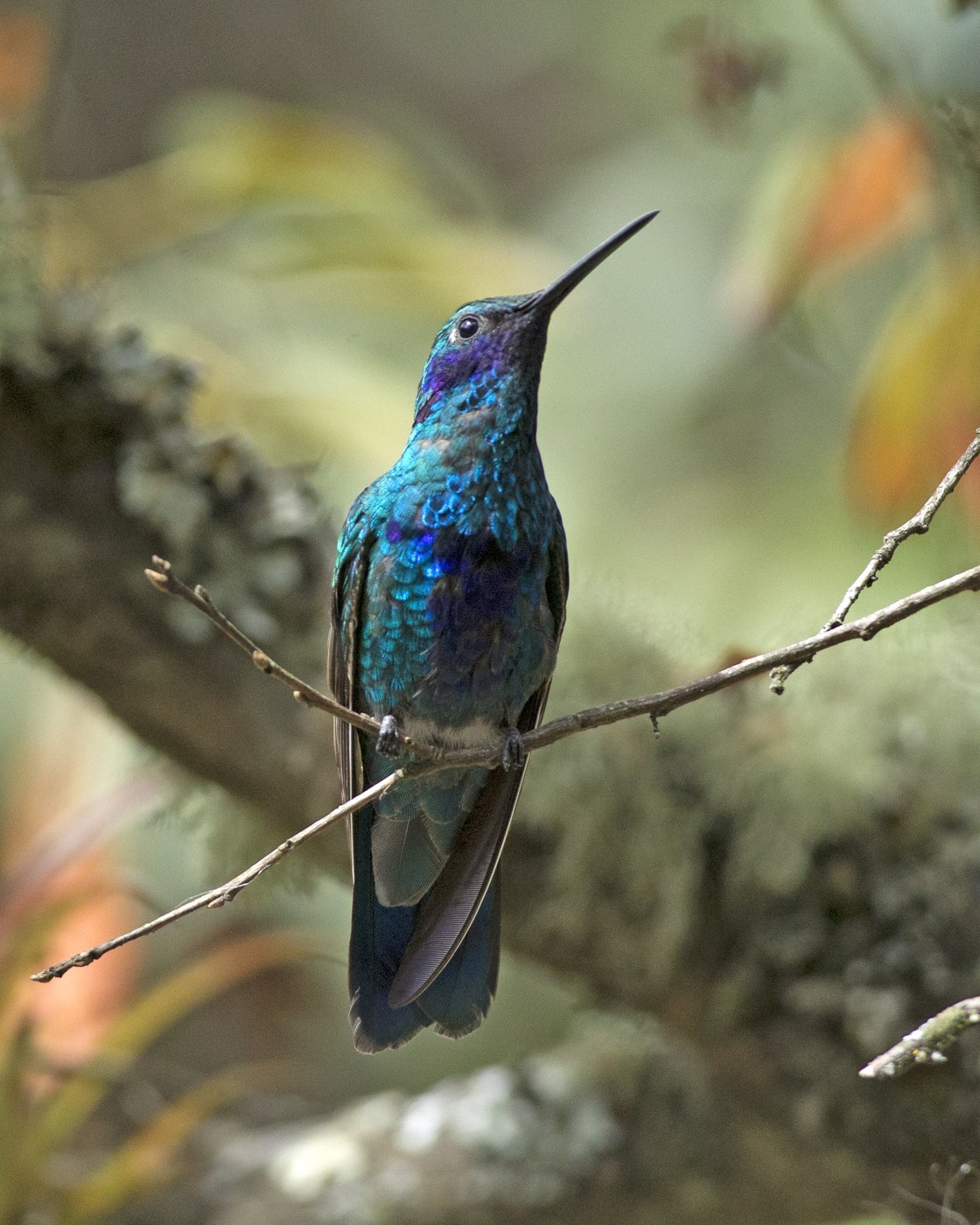
Sparkling Violetear
Iridescent body feathers, large violet ear and chest patches
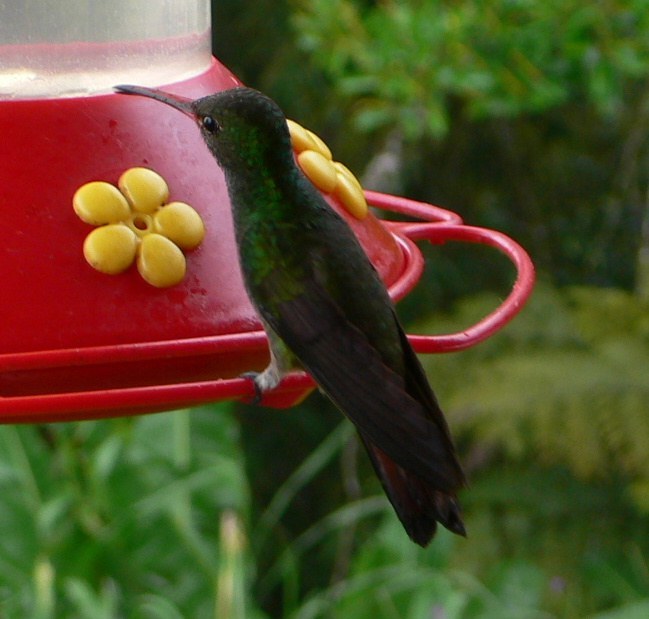
Rufous-tailed Hummingbird
Iridescent throat and breast feathers, rufous tail feathers

Rufous-breasted Hermit
Slightly decurved bill with rufous-washed contour feathers
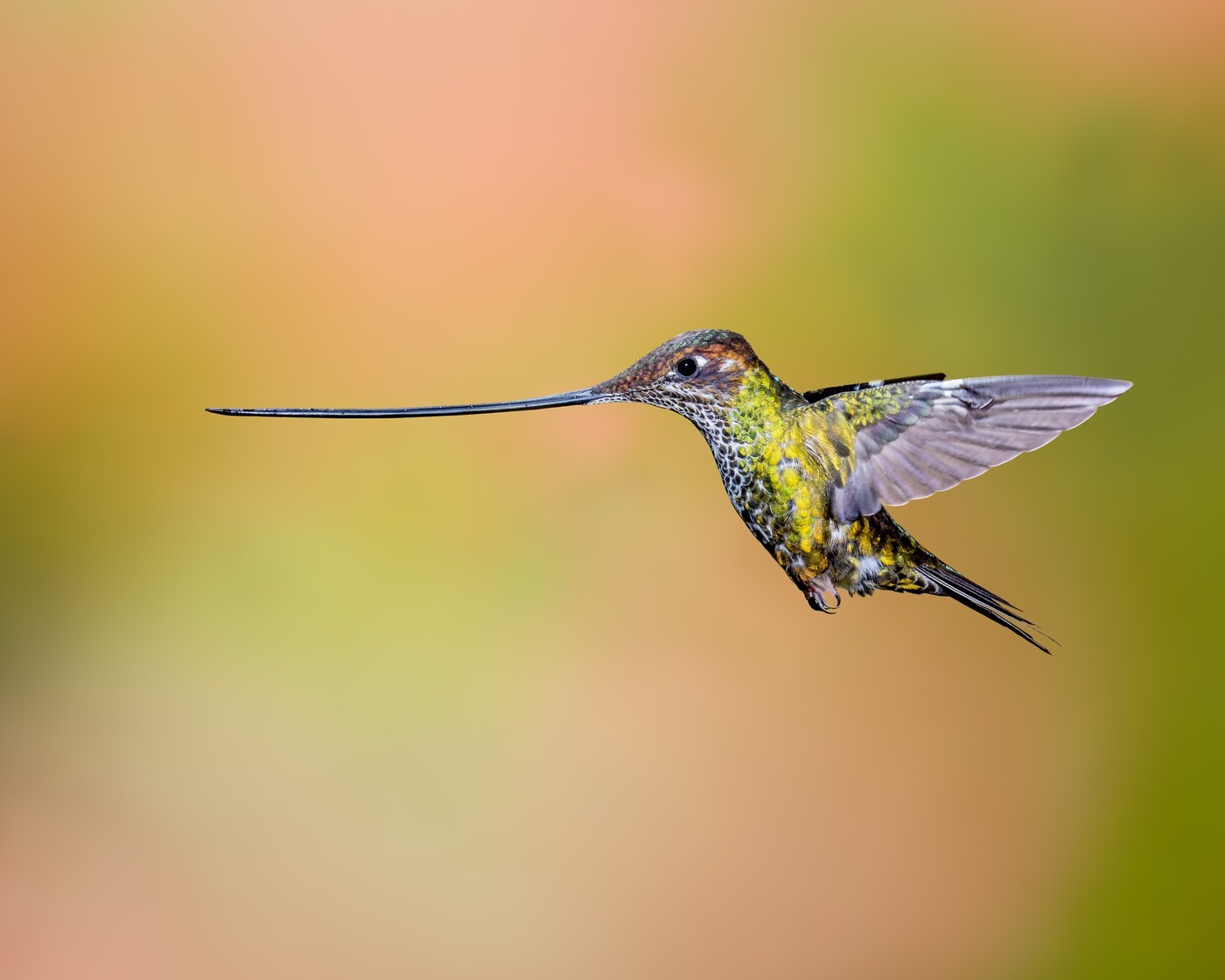
Sword-billed Hummingbird
Iridescent body feathers, extraordinarily long bill (non-feather feature)
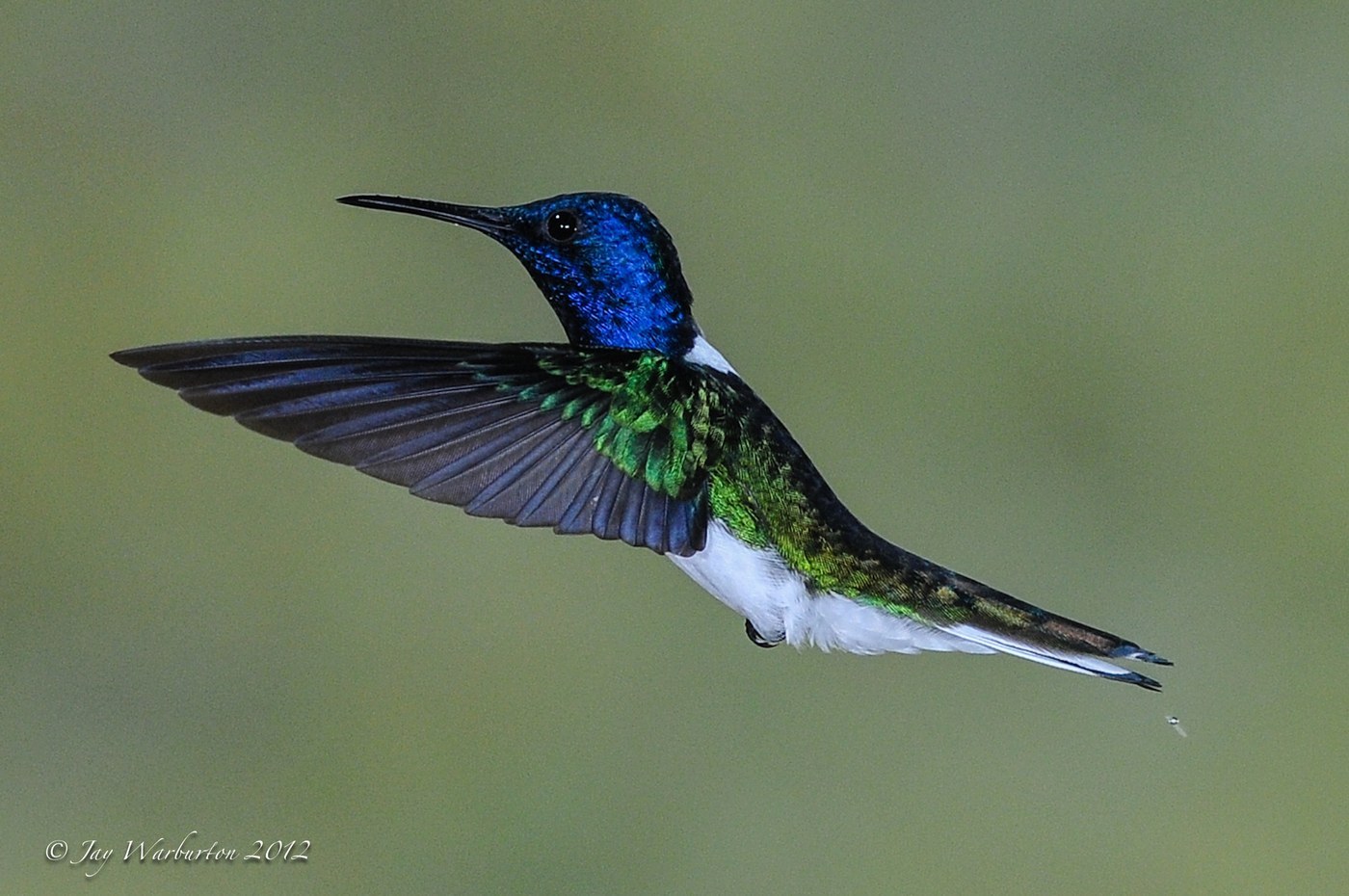
White-necked Jacobin
Iridescent head feathers, contrasting white nape and belly

White-eared Hummingbird
Iridescent gorget feathers, bold facial stripe
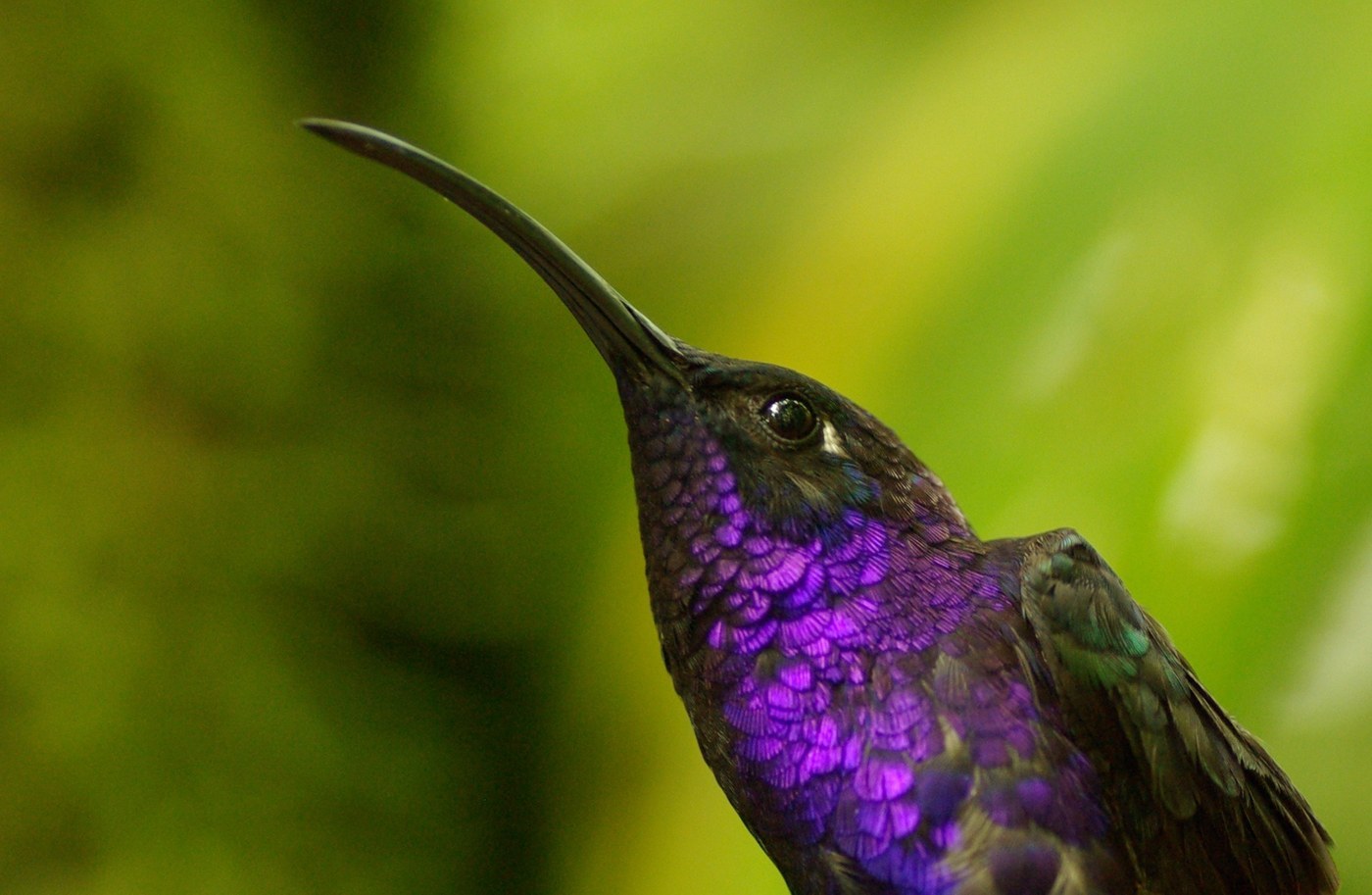
Violet Sabrewing
Iridescent body feathers, thickened curved primary shafts

Velvet-purple Coronet
Dense, velvety contour feathers with iridescent crown patch

Violet-crowned Hummingbird
Iridescent crown feathers, clean white underparts

Shining Sunbeam
Iridescent contour feathers with coppery-bronze wing sheen

Rufous Hummingbird
Tiny contour, gorget, and narrow flight feathers