

Marvelous Spatuletail
Loddigesia mirabilis
An extremely rare Peruvian hummingbird whose male carries just four tail feathers, two of them reduced to long bare wires tipped with glossy violet-blue paddles that cross during display.
- Feather type
- Iridescent gorget feathers, wire-thin tail feathers ending in violet-blue spatules
- Colours
- Green body, turquoise throat patch, wire tail feathers with violet-blue paddle tips
- Bird size
- Small body, ~6.5 cm, with dramatically elongated tail wires in males
Found a feather like this?
Identify any feather from a photo, free.
Overview
Overview
The Marvelous Spatuletail is a hummingbird endemic to a small area of northern Peru, known for one of the most unusual tail structures in the bird world. Adult males possess only four tail feathers total, a highly reduced number compared to most birds, with the outermost pair reduced to thin, wire-like shafts that extend well beyond the body and terminate in glossy, disc-shaped violet-blue tips.
During courtship, males maneuver these tail wires so the two spatule-tipped ends cross and swing in coordinated arcs in front of perched females, a display made possible by the unique feather structure of the tail.
Identifying the Feather
Feather ID Notes
Male tail feathers are reduced to just two long, bare, wire-thin shafts, each ending in an oval to paddle-shaped web with glossy violet-blue iridescence - unlike the tail structure of any other hummingbird. The throat shows a turquoise, iridescent patch, and body feathers are otherwise green.
- Tail feathers (male): only two elongated wire shafts present, each tipped with a violet-blue spatule
- Throat feathers: turquoise, iridescent patch
- Body feathers: green overall
- Crown: green, without a strongly contrasting cap color This tail structure - reduced to wire shafts with paddle tips - is unique to this species and unmistakable when observed.
Plumage & Molt
Plumage Details
Adult males show the diagnostic spatule-tipped tail wires and turquoise throat patch. Females lack the elongated tail feathers, having a normally proportioned short tail, along with green upperparts and paler, spotted underparts. Juveniles resemble females, with young males gradually developing the wire tail feathers as they mature, sometimes over more than one molt cycle. There is no strong seasonal plumage variation beyond this maturation process.
Habitat & Range
Habitat & Range
This species is restricted to a small area of montane scrub, forest edge, and river valley habitat in the Utcubamba River region of northern Peru, making it one of the more range-restricted hummingbirds in the world. It is a year-round resident within its limited range rather than a migratory species.
Behavior & Field Notes
Behavior & Field Notes
Marvelous Spatuletails feed on nectar from a variety of local flowering plants and also take small insects. Males perform an elaborate courtship display, swinging the paired tail wires so the spatule tips cross and move in synchronized arcs in front of a female. Nests are small, cup-shaped structures. Calls include soft chips and buzzing notes, generally less loud than some other hummingbird species.
Frequently asked questions
What makes the Marvelous Spatuletail's tail so unusual?
Adult males have only four tail feathers total, with the outer pair reduced to wire-thin shafts tipped with violet-blue paddle-shaped webs.
Do females have the spatule tail?
No, females have a normally shaped short tail without the elongated wires or spatule tips.
Where is this species found?
It is restricted to a small area of montane scrub and forest edge in the Utcubamba River region of northern Peru.
How are the tail wires used?
Males swing the paired wires during courtship display so the spatule tips cross and arc in front of a female.
Marvelous Spatuletail guides
In-depth guides for identifying and understanding Marvelous Spatuletail.

Other feathers you may enjoy

Speckled Hummingbird
Small contour feathers with fine speckled underpart markings
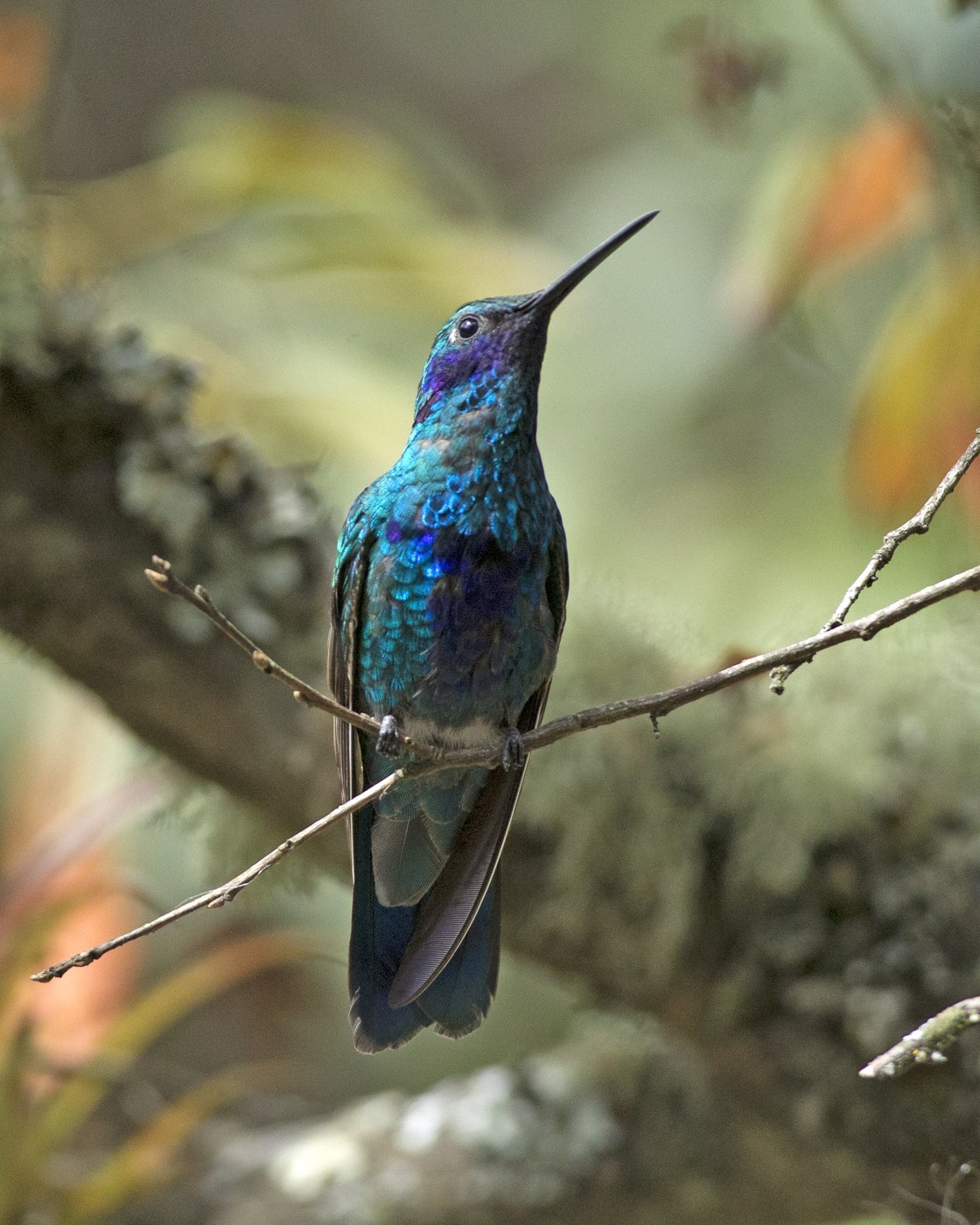
Sparkling Violetear
Iridescent body feathers, large violet ear and chest patches
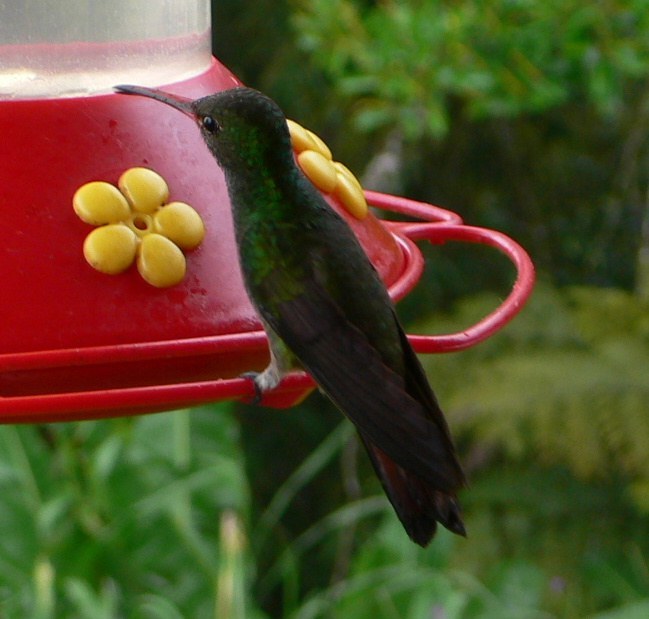
Rufous-tailed Hummingbird
Iridescent throat and breast feathers, rufous tail feathers

Rufous-breasted Hermit
Slightly decurved bill with rufous-washed contour feathers
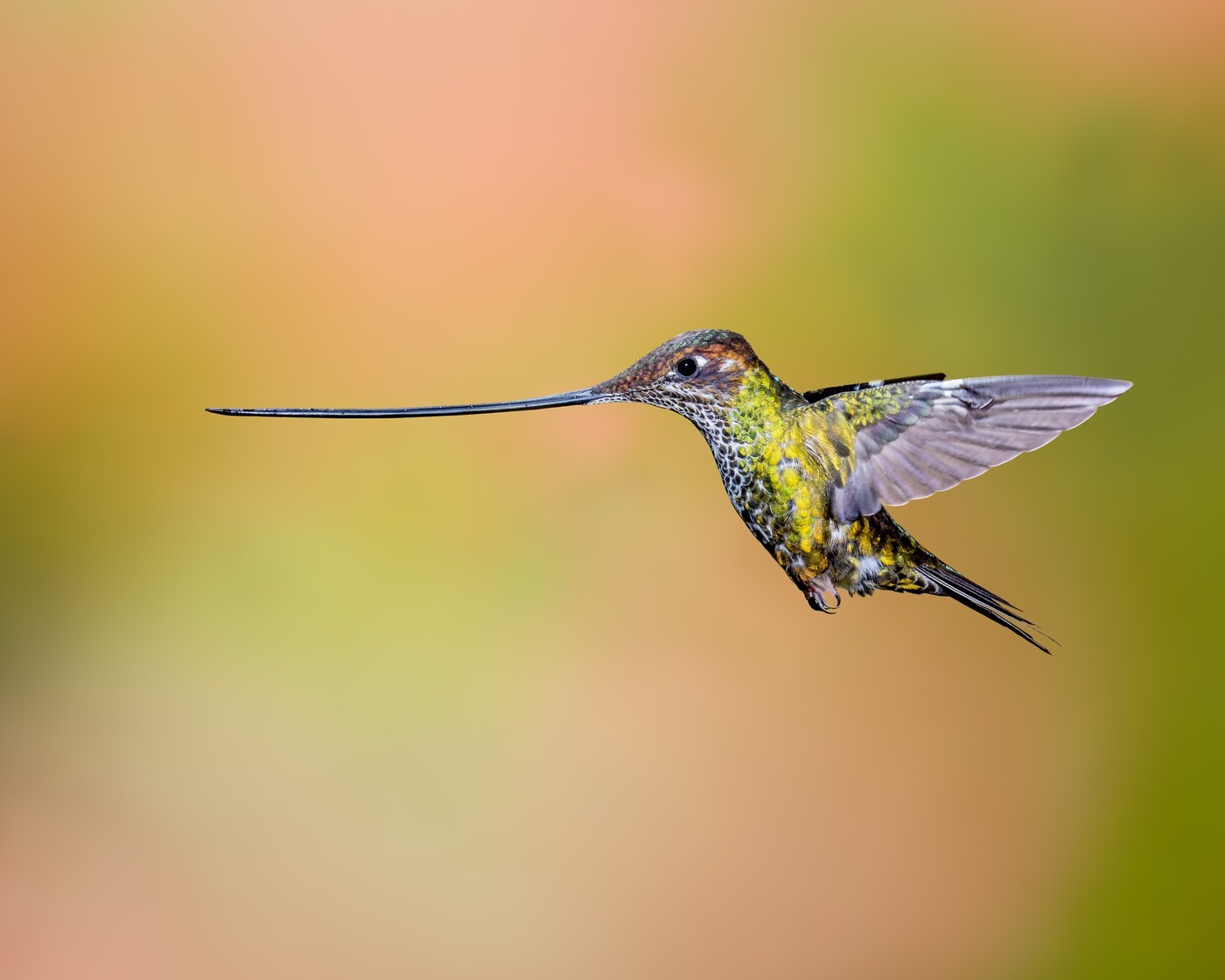
Sword-billed Hummingbird
Iridescent body feathers, extraordinarily long bill (non-feather feature)
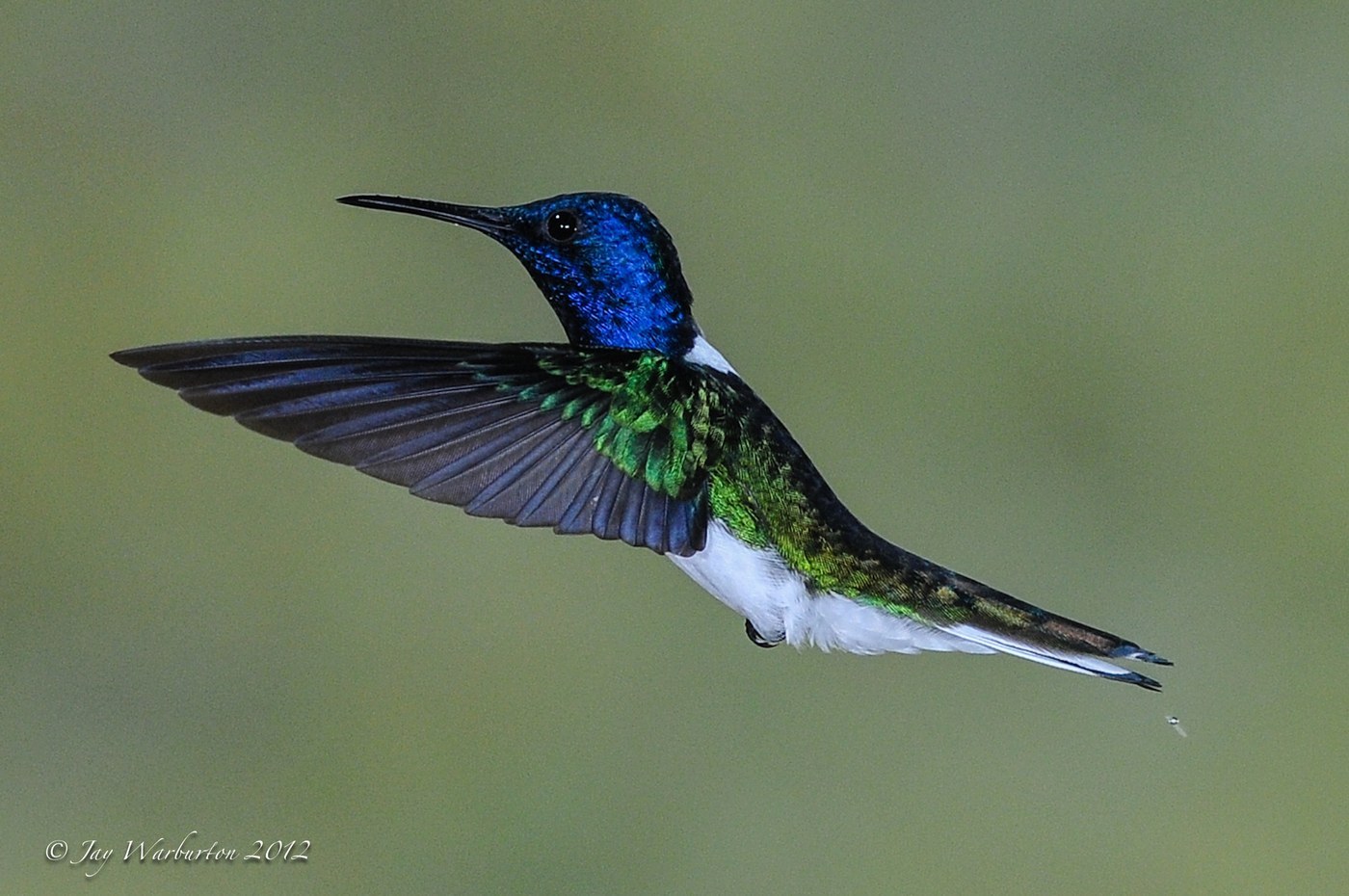
White-necked Jacobin
Iridescent head feathers, contrasting white nape and belly

White-eared Hummingbird
Iridescent gorget feathers, bold facial stripe
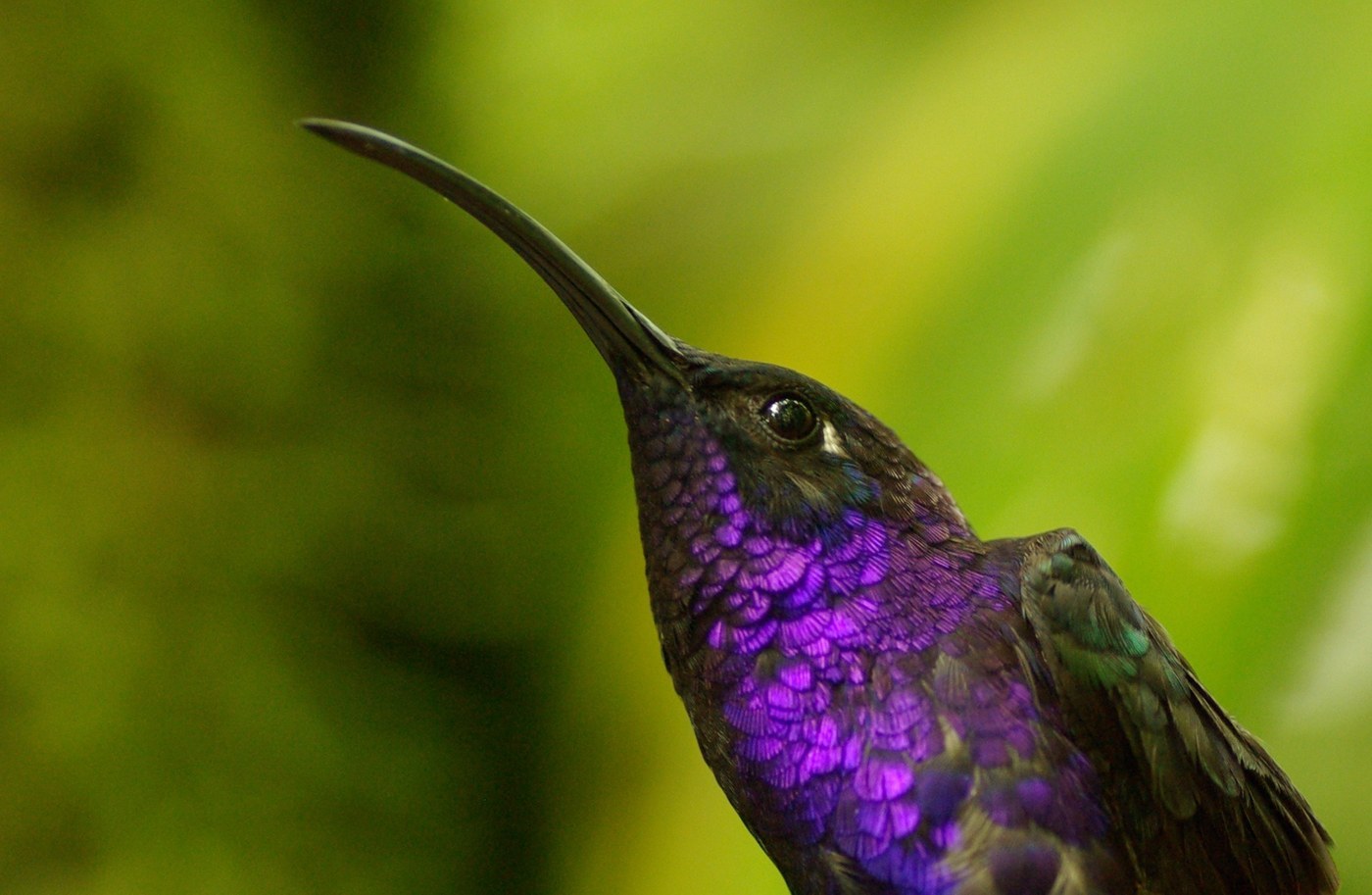
Violet Sabrewing
Iridescent body feathers, thickened curved primary shafts

Velvet-purple Coronet
Dense, velvety contour feathers with iridescent crown patch

Violet-crowned Hummingbird
Iridescent crown feathers, clean white underparts

Shining Sunbeam
Iridescent contour feathers with coppery-bronze wing sheen

Rufous Hummingbird
Tiny contour, gorget, and narrow flight feathers