

Lineated Woodpecker
Dryocopus lineatus
A widespread Neotropical woodpecker with a shaggy red crest and bold white stripes running down the sides of its neck, common in forest edge habitats from Mexico to northern Argentina.
- Feather type
- Long flight feathers with a bold white racing stripe on the neck and back
- Colours
- Black with white neck stripes and a red crest
- Bird size
- Large, ~33 cm
Found a feather like this?
Identify any feather from a photo, free.
Overview
The Lineated Woodpecker is a large, conspicuous woodpecker found across a huge swath of the Neotropics, from Mexico south through Central America and much of South America to northern Argentina. Its combination of a tall red crest and bold white neck stripes makes it one of the more easily recognized large woodpeckers in its range, though it is often confused with the similar Campephilus woodpeckers that share its habitat.
Unlike some of its forest-interior relatives, the Lineated Woodpecker tolerates disturbed and secondary habitats well, making it one of the more frequently encountered large woodpeckers across its range.
Identifying the Feather
Key features:
- Overall black body feathers with a bold white stripe running from the base of the bill down the side of the neck, continuing onto the back where the two stripes form a narrow V
- Flanks show white barring rather than solid black
- Crest feathers are elongated, pointed, and red in both sexes
- Males additionally show a red malar stripe and red reaching the base of the bill on the forecrown; females have a black forehead and forecrown
Compared to similar species: Pale-billed and Crimson-crested Woodpeckers (genus Campephilus) have fully red heads in males and lack the sharply defined double white neck stripe that meets in a V on the back, which is diagnostic for the Lineated Woodpecker.
Plumage & Molt
Both sexes show a shaggy red crest, but males have red extending onto the forehead and a red malar (mustache) stripe, while females have a black forehead and black malar area. Juveniles are duller and sootier overall, with a less crisply defined white neck stripe. The species undergoes a complete annual molt following the breeding season.
Habitat & Range
This species is a habitat generalist, found in forest edge, open woodland, secondary growth, plantations, and semi-open country from Mexico through Central America and across much of South America to Argentina. Unlike some of the more deep-forest Neotropical woodpeckers, it readily uses disturbed and human-modified landscapes. It is non-migratory throughout its extensive range.
Behavior & Field Notes
Lineated Woodpeckers forage at all heights on trunks and branches, feeding mainly on ants, beetle larvae, and other wood-boring insects, and will also visit fruiting trees occasionally. Their calls are loud, sharp "kick" or "kyeek" notes, and pairs frequently drum on resonant dead wood to advertise territory. Nest cavities are excavated in dead trees or dead limbs of living trees, often reused or expanded in subsequent years. Pairs maintain contact with frequent vocal exchanges while foraging in loosely associated territories.
Frequently asked questions
What is the best way to identify a Lineated Woodpecker feather?
Look for a black feather with a broad white stripe along one edge, typically from the neck or upper back region; the width and sharp contrast of this stripe is a strong clue for this species.
How do I tell this species apart from a Crimson-crested Woodpecker feather?
Crimson-crested Woodpecker head feathers are entirely red in males with no black at all, while Lineated Woodpecker males retain a black crown patch behind the red forehead and crest, and the back stripe pattern differs between the two.
Are the crest feathers always red?
Yes, both male and female Lineated Woodpeckers show a red crest; the sex difference is in the face, where males have red reaching the bill and a red mustache stripe that females lack.
Does this species live in deep rainforest?
It favors edges, clearings, and secondary growth over dense unbroken rainforest interior, so feathers are more likely found near forest margins, plantations, or open woodland than deep primary forest.
Lineated Woodpecker guides
In-depth guides for identifying and understanding Lineated Woodpecker.

Other feathers you may enjoy

Ivory-billed Woodpecker
Very large flight feathers with a solid white trailing patch

Great Slaty Woodpecker
Massive, uniformly colored contour feathers

Yellow-tufted Woodpecker
Black body feathers with bright yellow forehead tufts

Magellanic Woodpecker
Very large, glossy contour feathers with a recurved crest

Yellow-bellied Sapsucker
Black-and-white patterned back and facial-stripe feathers
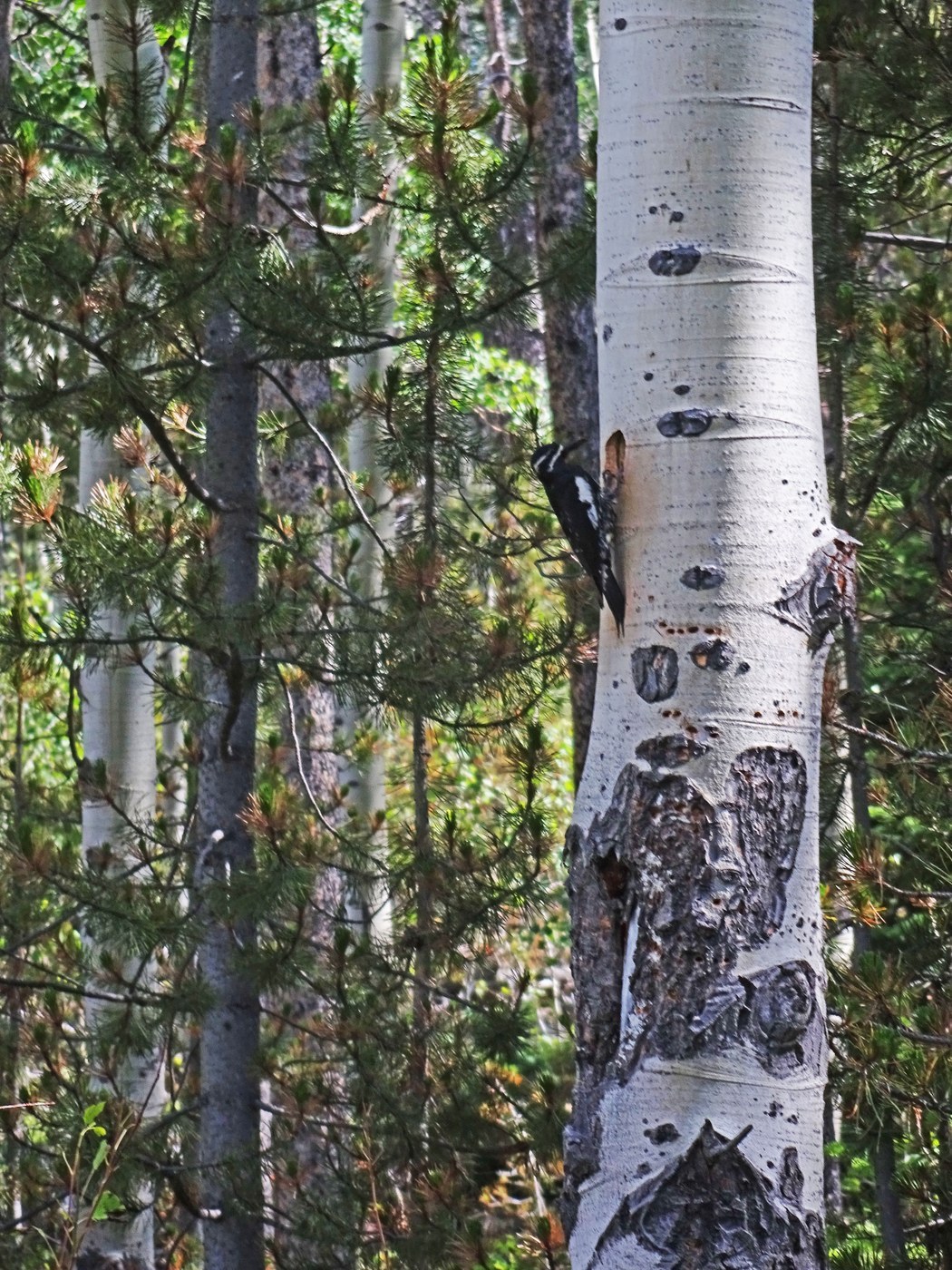
Williamson's Sapsucker
Strongly sexually dimorphic body feathers, glossy black or finely barred brown

Yellow-crowned Woodpecker
Contour and flight feathers

White Woodpecker
Mostly white body feathers with contrasting black wings and back

Red-throated Wryneck
Soft, cryptically mottled contour feathers

White-bellied Woodpecker
Large, glossy black contour and flight feathers

White-backed Woodpecker
Barred back feathers rather than a solid white patch
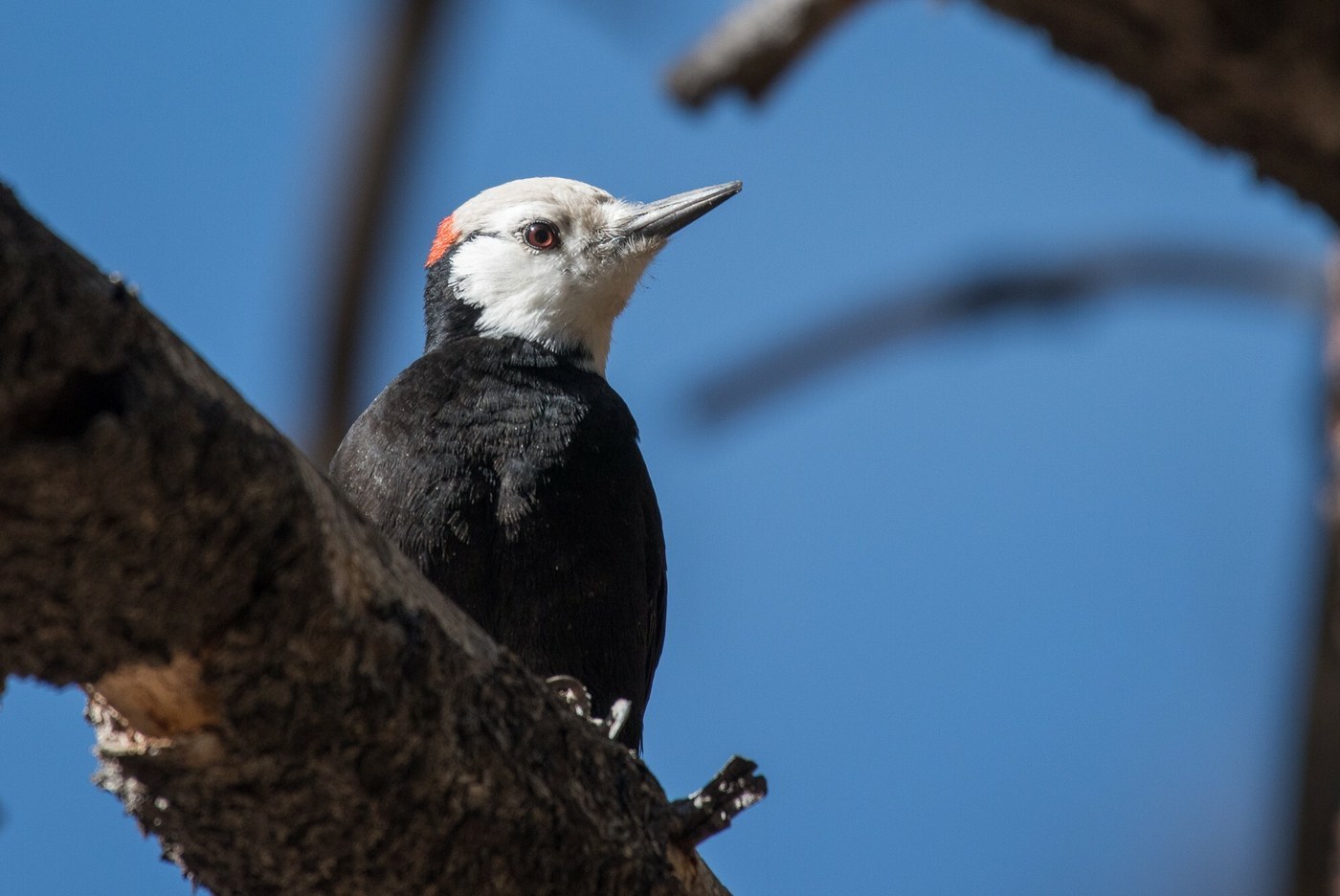
White-headed Woodpecker
Solid black body feathers with an entirely white head