

Lewis's Woodpecker
Melanerpes lewis
An unusually plumaged western woodpecker with an iridescent greenish-black back, dark red face, and pink-toned belly, often seen flycatching like a crow.
- Feather type
- Iridescent greenish-black back feathers, unusual glossy sheen
- Colours
- Iridescent greenish-black back, dark red face, pinkish-gray belly, gray collar
- Bird size
- Jay-sized, ~28 cm
Found a feather like this?
Identify any feather from a photo, free.
Overview
Lewis's Woodpecker departs from the typical black-and-white woodpecker template, showing an iridescent greenish-black back, a dark red face, a pale gray collar and breast, and a pinkish wash on the belly. Its flight and foraging style are also unusual, often flying out from a perch to catch insects on the wing in a crow-like, buoyant flight.
Named for explorer Meriwether Lewis, it favors open pine and oak woodland, burned forest, and riparian cottonwood groves across the western United States.
Identifying the Feather
- Back and wings: dark, glossy greenish-black with iridescent sheen in good light
- Face: dark red, unlike the red crown patches of most other woodpeckers
- Collar and breast: pale gray band across the upper chest
- Belly: pinkish-gray wash, unusual coloring for a woodpecker
- Vs. Acorn Woodpecker: Lewis's lacks the crisp black-and-white clown face and pale eye of Acorn Woodpecker, instead showing a dark red face and duller, glossier body tones
Plumage & Molt
Sexes look alike, both showing the same greenish-black back, dark red face, gray collar, and pinkish belly. Juveniles lack the red face and pink belly wash, appearing browner and duller until their first complete molt. It undergoes a single annual molt after breeding.
Habitat & Range
Breeds in open pine woodland, oak savanna, burned forest, and riparian cottonwood stands across the interior western United States and adjacent Canada, wintering at lower elevations or farther south depending on food availability. Its distribution can be irregular, tracking insect abundance and mast crops.
Behavior & Field Notes
Forages unusually for a woodpecker, sallying out from an exposed perch to catch flying insects in mid-air with crow-like wingbeats, and also gleans insects from bark and eats acorns and other mast in fall and winter. It nests in cavities in dead or dying trees, often reusing existing holes rather than excavating extensively. Its calls are relatively quiet compared to other woodpeckers, including soft chattering notes, and it drums infrequently.
Frequently asked questions
What makes Lewis's Woodpecker plumage so unusual?
It shows an iridescent greenish-black back, a dark red face, a gray collar, and a pinkish-gray belly wash, quite different from the black-and-white patterns typical of most woodpeckers.
Why does Lewis's Woodpecker fly like a crow?
It commonly catches flying insects in mid-air by sallying from a perch, using a buoyant, crow-like flight style rather than the typical woodpecker foraging technique of gleaning bark.
What does Lewis's Woodpecker eat in winter?
It shifts toward eating acorns and other stored mast during colder months when flying insects become scarce.
Does Lewis's Woodpecker excavate its own nest cavity?
It nests in cavities in dead or dying trees but often reuses existing holes rather than doing extensive excavation itself.
Lewis's Woodpecker guides
In-depth guides for identifying and understanding Lewis's Woodpecker.

Other feathers you may enjoy

Ivory-billed Woodpecker
Very large flight feathers with a solid white trailing patch

Great Slaty Woodpecker
Massive, uniformly colored contour feathers

Yellow-tufted Woodpecker
Black body feathers with bright yellow forehead tufts

Magellanic Woodpecker
Very large, glossy contour feathers with a recurved crest

Yellow-bellied Sapsucker
Black-and-white patterned back and facial-stripe feathers
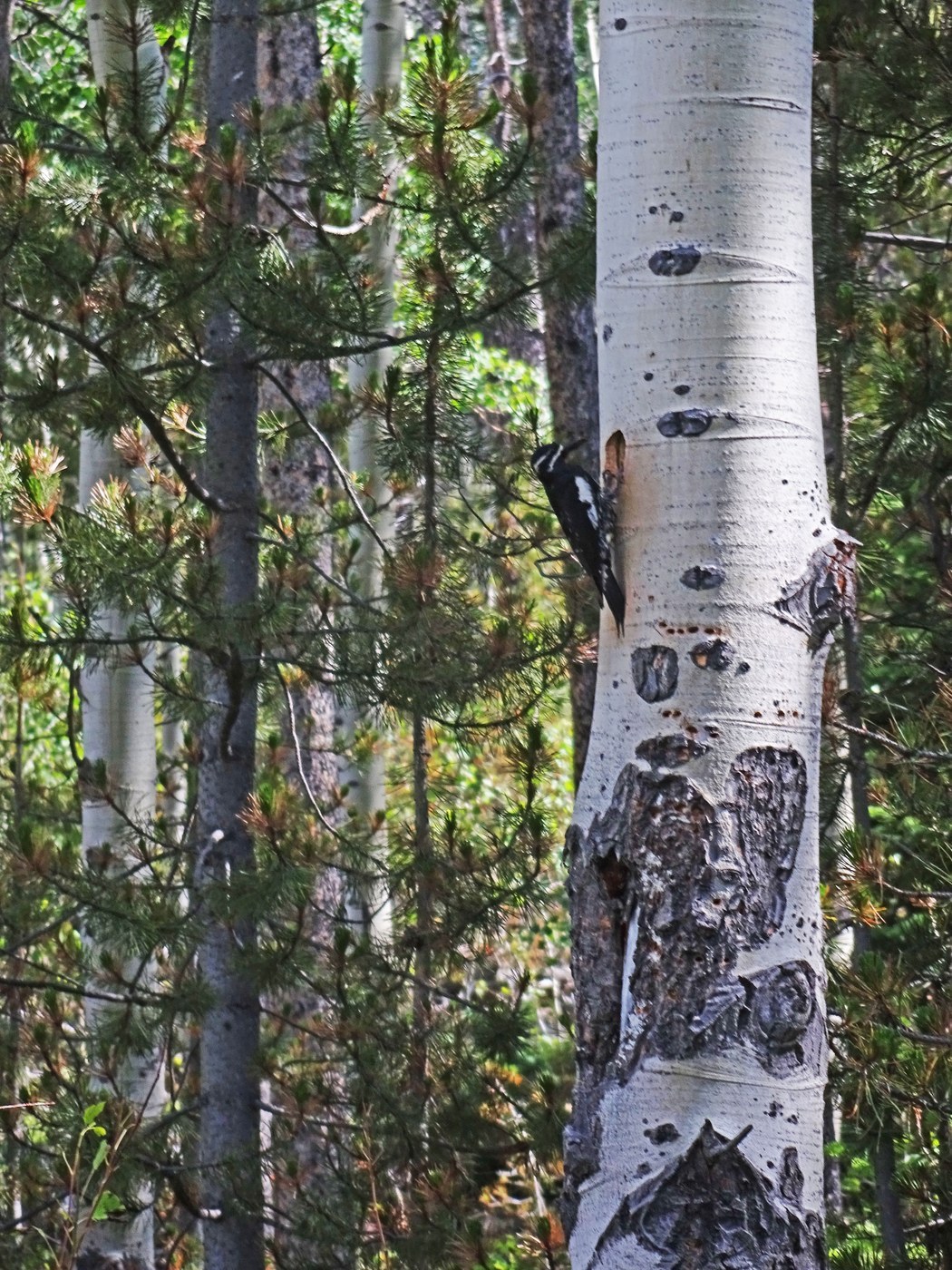
Williamson's Sapsucker
Strongly sexually dimorphic body feathers, glossy black or finely barred brown

Yellow-crowned Woodpecker
Contour and flight feathers

White Woodpecker
Mostly white body feathers with contrasting black wings and back

Red-throated Wryneck
Soft, cryptically mottled contour feathers

White-bellied Woodpecker
Large, glossy black contour and flight feathers

White-backed Woodpecker
Barred back feathers rather than a solid white patch
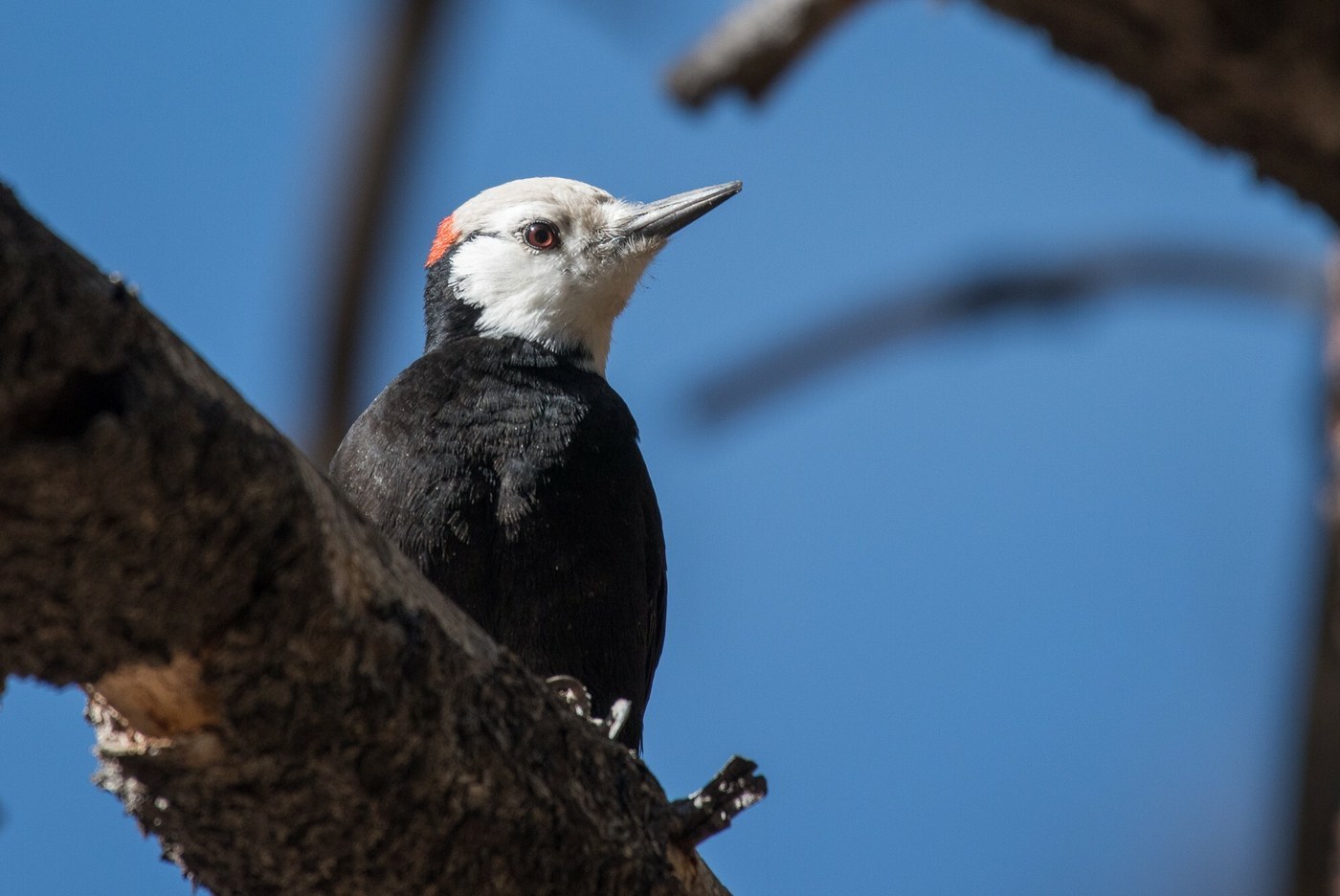
White-headed Woodpecker
Solid black body feathers with an entirely white head