

Green-breasted Mango
Anthracothorax prevostii
A widespread lowland hummingbird whose male shows a bold black stripe running down the center of otherwise green underparts, paired with a rich magenta-maroon tail.
- Feather type
- Iridescent breast feathers, dark central stripe, magenta-maroon tail
- Colours
- Green upperparts, black central breast stripe, magenta-maroon tail
- Bird size
- Medium, ~11 cm
Found a feather like this?
Identify any feather from a photo, free.
Overview
Overview
The Green-breasted Mango occupies open woodland, forest edge, scrub, and gardens across a broad range from Mexico through Central America and into parts of northern South America. It favors more open and semi-open habitats compared to many strictly forest-dwelling hummingbirds, and is a fairly common and familiar species where present.
Males show a bold black stripe running down the center of the green underparts, bordered variably by iridescent blue-green, along with a curved black bill and a rich magenta-maroon tail that helps confirm identification.
Identifying the Feather
Feather ID Notes
Breast and belly feathers show iridescent green bordering a bold black central stripe running down the underparts - a strong, high-contrast pattern not seen in most other similarly sized hummingbirds. The tail shows magenta-maroon coloring, distinct from the green body.
- Underpart feathers: green with a bold black central stripe
- Tail feathers: magenta-maroon
- Upperpart feathers: green, glossy
- Bill: black, moderately curved Females show a narrower, less distinct dark central stripe on white to pale underparts and lack the male's fuller magenta tail tones, appearing duller overall.
Plumage & Molt
Plumage Details
Adult males show the bold black-striped underparts and magenta-maroon tail described above. Females are considerably duller, with white to pale gray underparts marked by a narrower dark central stripe, green upperparts, and a less vividly colored tail. Juveniles resemble females. There is no strong seasonal plumage change, with an annual molt maintaining feather condition.
Habitat & Range
Habitat & Range
This species inhabits open woodland, forest edge, scrub, and gardens from Mexico through Central America and into parts of northern South America, generally at lower elevations. Most populations are resident, with some local movement tied to flowering availability.
Behavior & Field Notes
Behavior & Field Notes
Green-breasted Mangos feed on nectar from a variety of flowering trees and shrubs in open and edge habitats and also take small insects. Males can be territorial around good nectar sources. Nests are small, cup-shaped structures built on slender branches, often in more open settings than many forest hummingbirds. Calls include sharp chip notes and buzzy chattering.
Frequently asked questions
How do you identify a male Green-breasted Mango?
Look for a bold black central stripe running down otherwise green underparts, paired with a magenta-maroon tail.
What do females look like?
Females are duller, with a narrower dark central stripe on pale underparts and a less vividly colored tail.
Where does this species live?
In open woodland, forest edge, and gardens from Mexico through Central America into northern South America.
Is the Green-breasted Mango a forest specialist?
No, it favors more open and semi-open habitats compared to many strictly forest-dwelling hummingbirds.
Green-breasted Mango guides
In-depth guides for identifying and understanding Green-breasted Mango.

Other feathers you may enjoy

Speckled Hummingbird
Small contour feathers with fine speckled underpart markings
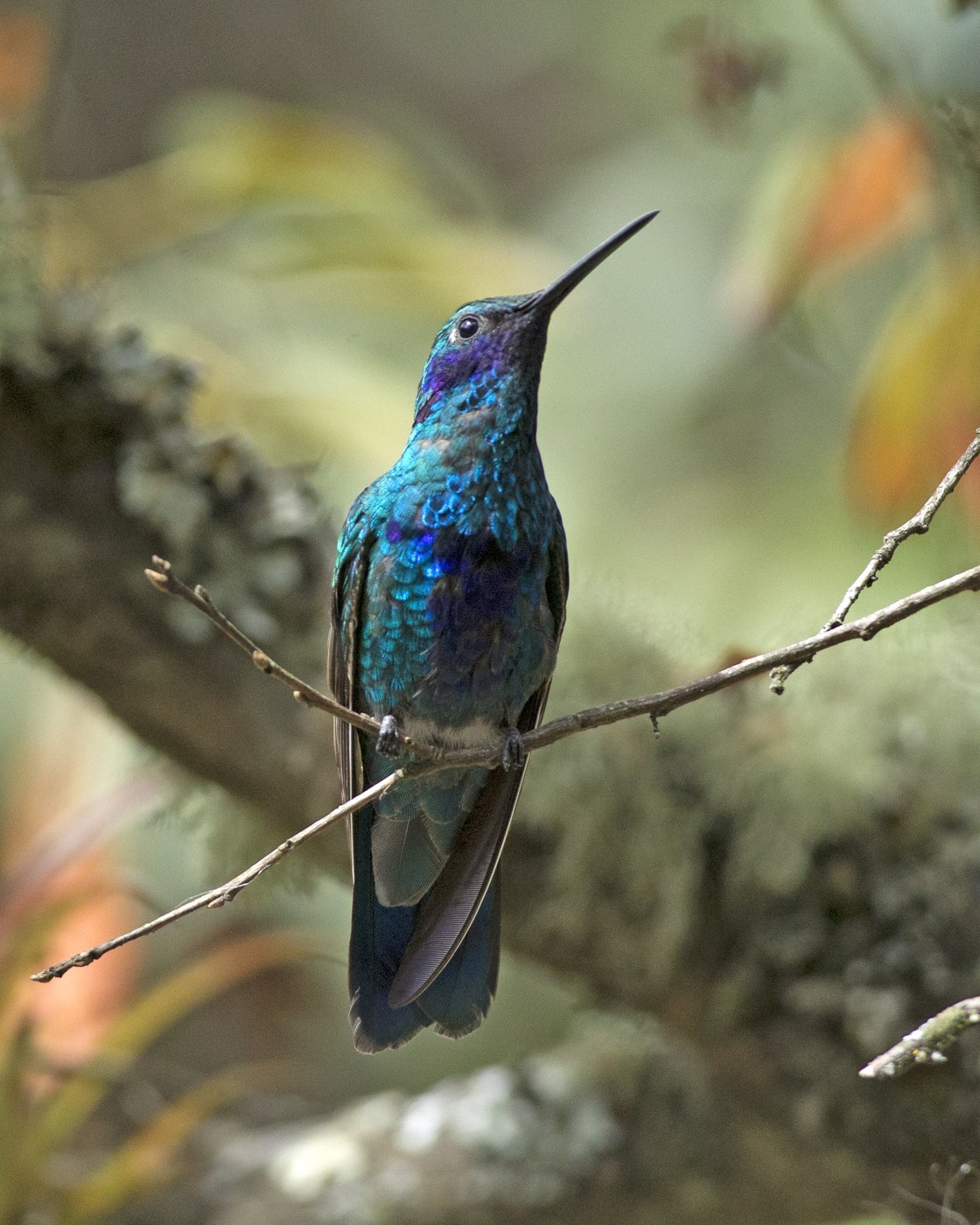
Sparkling Violetear
Iridescent body feathers, large violet ear and chest patches
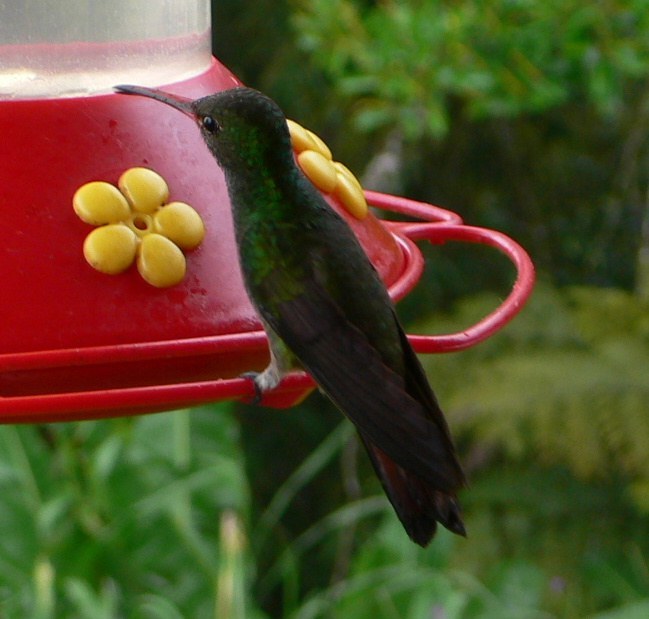
Rufous-tailed Hummingbird
Iridescent throat and breast feathers, rufous tail feathers

Rufous-breasted Hermit
Slightly decurved bill with rufous-washed contour feathers
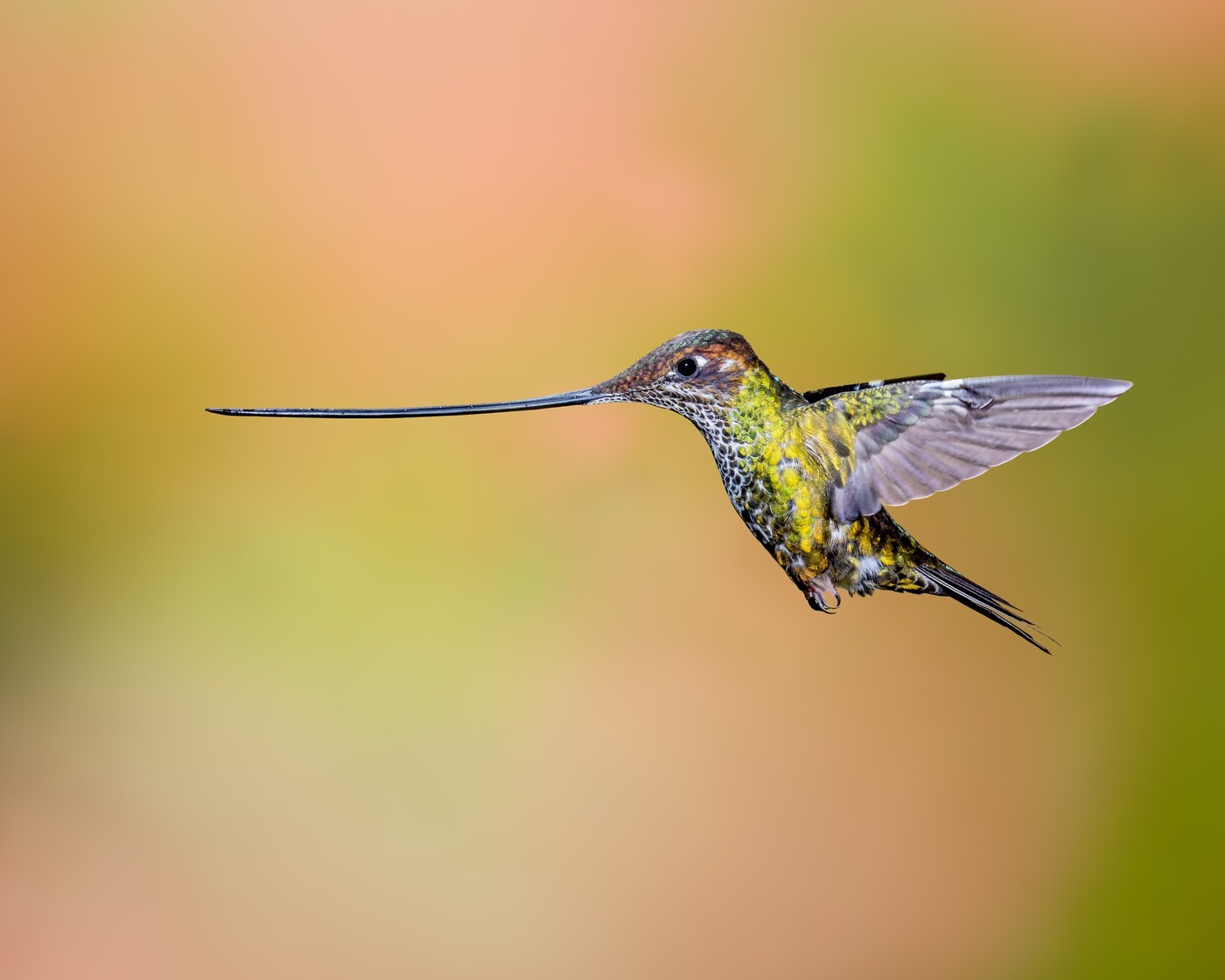
Sword-billed Hummingbird
Iridescent body feathers, extraordinarily long bill (non-feather feature)
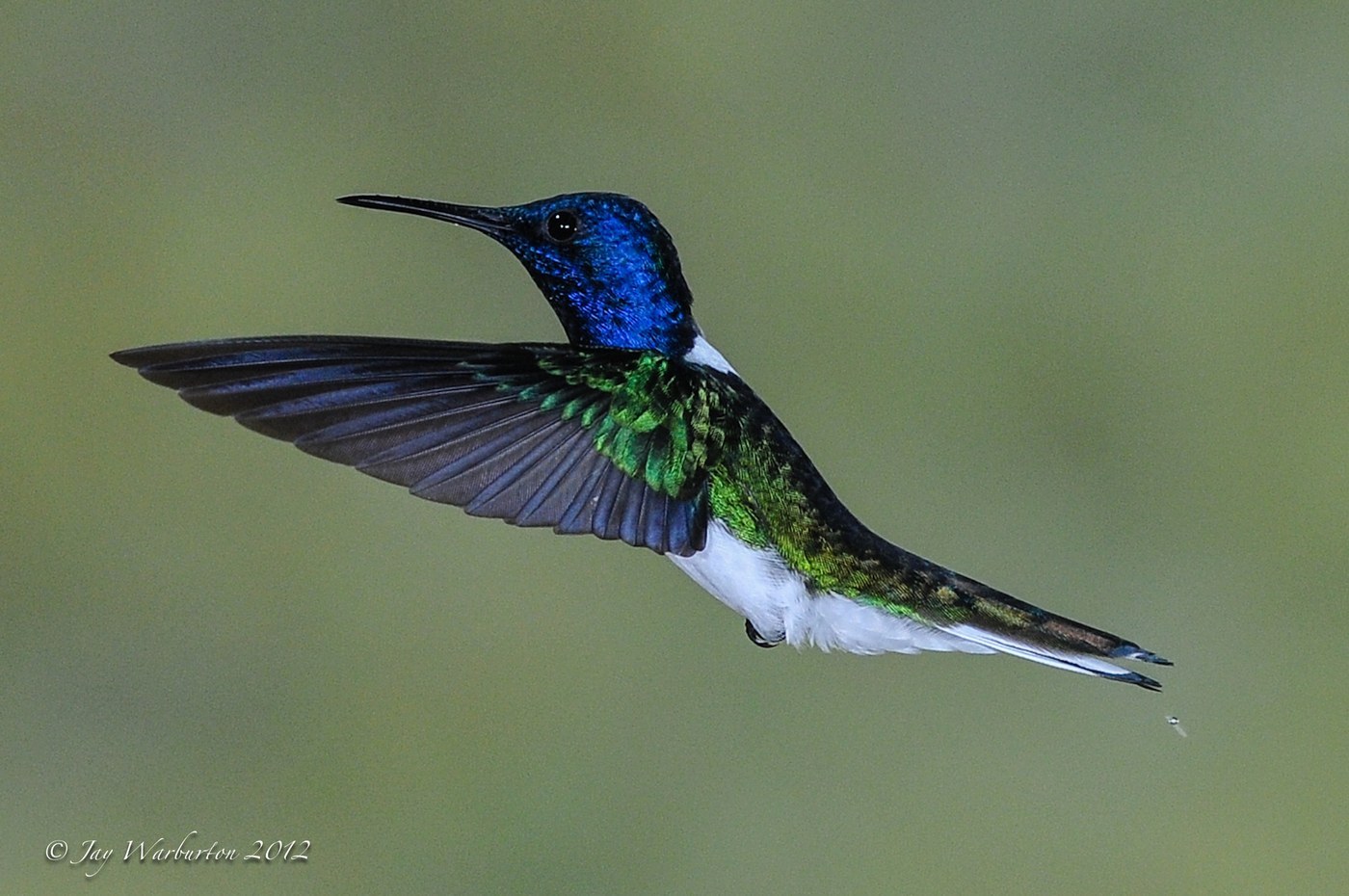
White-necked Jacobin
Iridescent head feathers, contrasting white nape and belly

White-eared Hummingbird
Iridescent gorget feathers, bold facial stripe
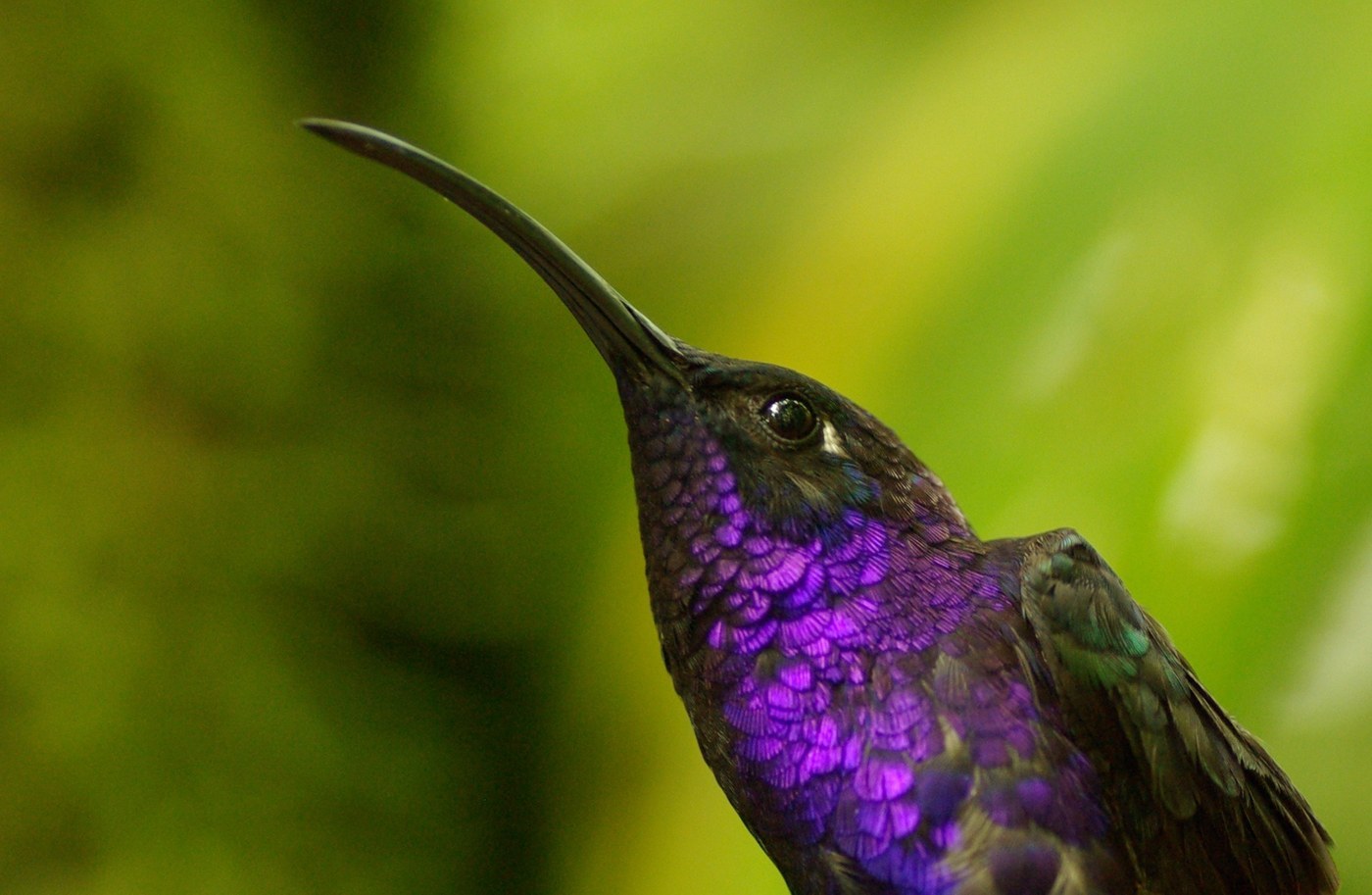
Violet Sabrewing
Iridescent body feathers, thickened curved primary shafts

Velvet-purple Coronet
Dense, velvety contour feathers with iridescent crown patch

Violet-crowned Hummingbird
Iridescent crown feathers, clean white underparts

Shining Sunbeam
Iridescent contour feathers with coppery-bronze wing sheen

Rufous Hummingbird
Tiny contour, gorget, and narrow flight feathers