

Great Sapphirewing
Pterophanes cyanopterus
One of the largest hummingbirds, the Great Sapphirewing shows deep green body plumage set off by brilliant sapphire-blue wing feathers visible in flight.
- Feather type
- Large contour feathers with brilliant blue flight feathers
- Colours
- Green body with vivid sapphire-blue wing feathers
- Bird size
- Very large hummingbird, ~16-19 cm
Found a feather like this?
Identify any feather from a photo, free.
Overview
Overview
The Great Sapphirewing is among the largest hummingbird species, inhabiting high-elevation forest edge, shrubland, and páramo habitats along the Andes from Colombia to Bolivia. Its large size and vivid blue wing coloring make it a striking presence at high-altitude flowers.
Adult males show particularly intense sapphire-blue on the flight feathers, contrasting with green body plumage, while females are generally similar but can appear slightly less vivid.
Identifying the Feather
Feather Identification
- Body feathers: Deep green overall, sometimes with a coppery tinge on the back
- Wing feathers: Brilliant sapphire-blue primaries and secondaries, most visible when the wings are spread or in flight
- Tail feathers: Dark, somewhat rounded, without strong iridescence compared to the wings
- Shaft color: Dark, contrasting with the vivid blue vane on the flight feathers
- Size: Notably large and heavy-bodied for a hummingbird, with correspondingly larger flight feathers than most species
- Similar species: The combination of large size and sapphire-blue wings is distinctive; few other Andean hummingbirds approach this size or wing coloration
Plumage & Molt
Plumage Details
Adults show deep green body plumage with striking sapphire-blue flight feathers that flash prominently in flight. Some individuals show a coppery wash on the back. Sexes are broadly similar, though color intensity can vary individually. Juveniles are duller, with less vivid blue in the wings until after their first molt. There is no strong seasonal plumage variation.
Habitat & Range
Habitat & Range
Great Sapphirewings occur in high-elevation forest edge, shrubby páramo, and montane scrub along the Andes from Colombia south through Ecuador and Peru to Bolivia, typically well above 3,000 meters. The species is resident, with possible local movements tracking flowering patterns.
Behavior & Field Notes
Behavior & Field Notes
This large hummingbird feeds on nectar from a variety of high-altitude flowering plants, often defending rich patches from smaller hummingbirds due to its size advantage. It also takes small insects. Nests are substantial cups built in shrubs or low trees. Calls include sharp chips, and the wingbeats can produce an audible hum given the bird's larger size and wing surface area.
Frequently asked questions
How can I identify a Great Sapphirewing feather?
Look for a large flight feather with vivid sapphire-blue coloring paired with green body feathers, both notably large for a hummingbird.
Why is this species called a 'great' sapphirewing?
It is one of the largest hummingbird species, and its name reflects both its size and the brilliant blue of its wings.
Where does this hummingbird live?
High-elevation forest edge, scrub, and páramo habitats along the Andes, typically above 3,000 meters.
Is the blue wing color visible at rest?
It is most vivid in flight or when the wings are spread; at rest the folded wings can appear darker and less colorful.
Great Sapphirewing guides
In-depth guides for identifying and understanding Great Sapphirewing.

Other feathers you may enjoy

Speckled Hummingbird
Small contour feathers with fine speckled underpart markings
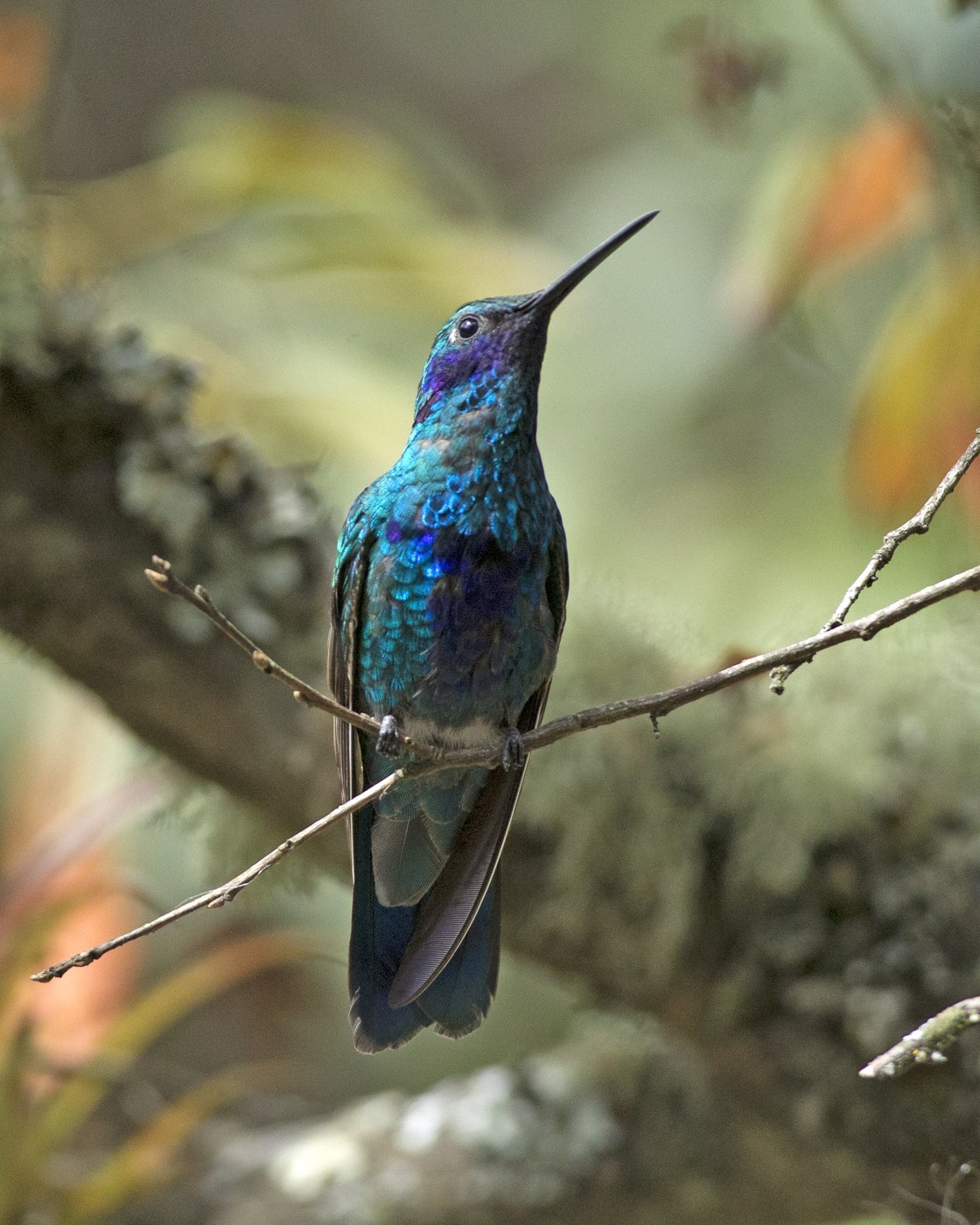
Sparkling Violetear
Iridescent body feathers, large violet ear and chest patches
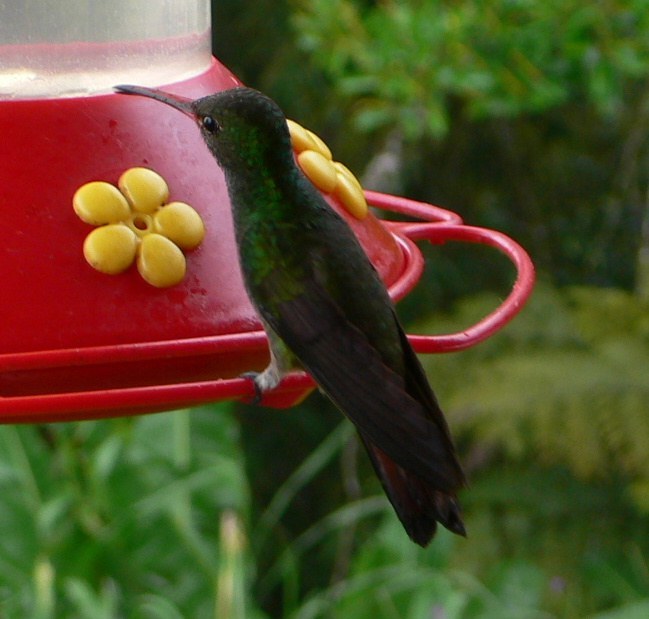
Rufous-tailed Hummingbird
Iridescent throat and breast feathers, rufous tail feathers

Rufous-breasted Hermit
Slightly decurved bill with rufous-washed contour feathers
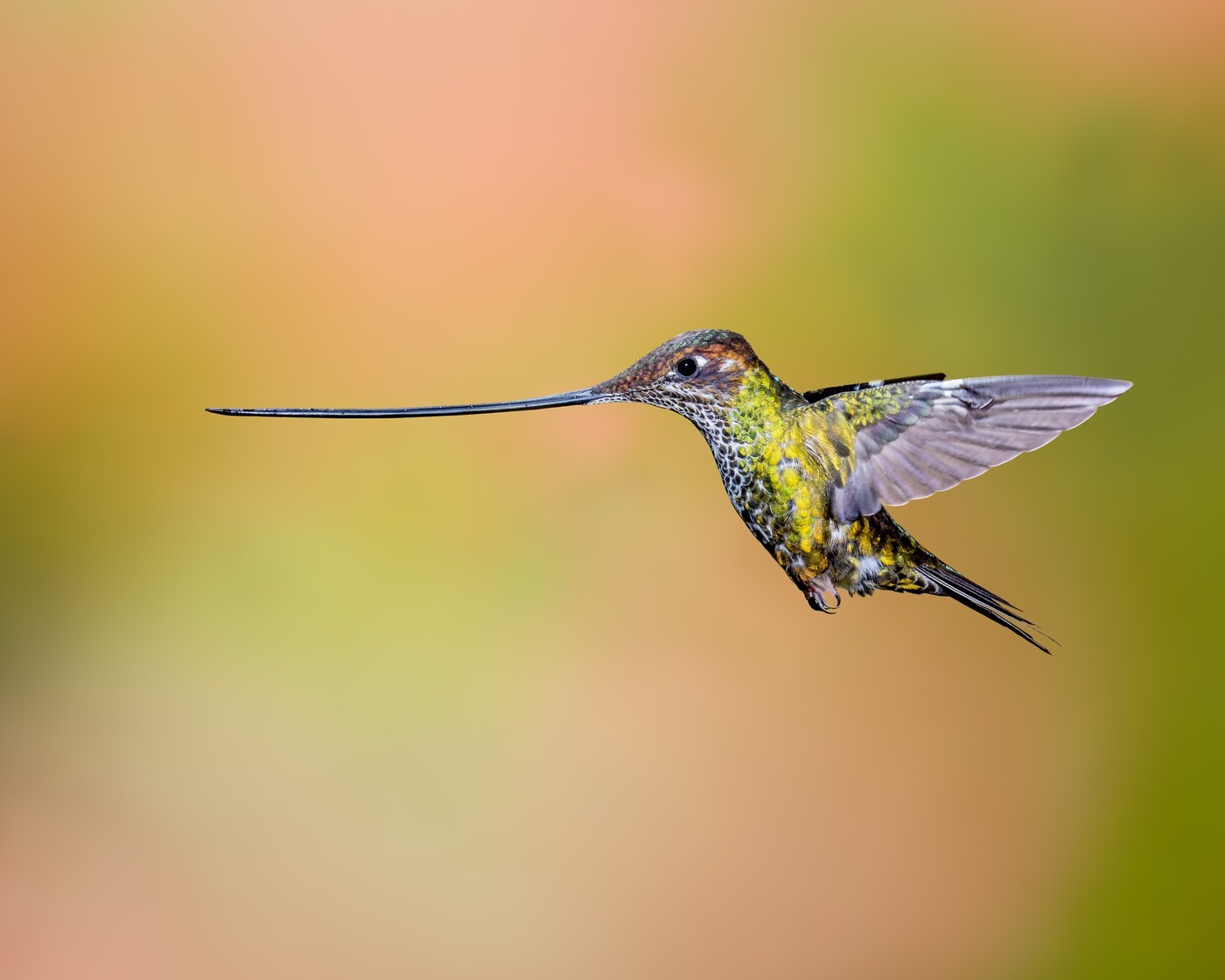
Sword-billed Hummingbird
Iridescent body feathers, extraordinarily long bill (non-feather feature)
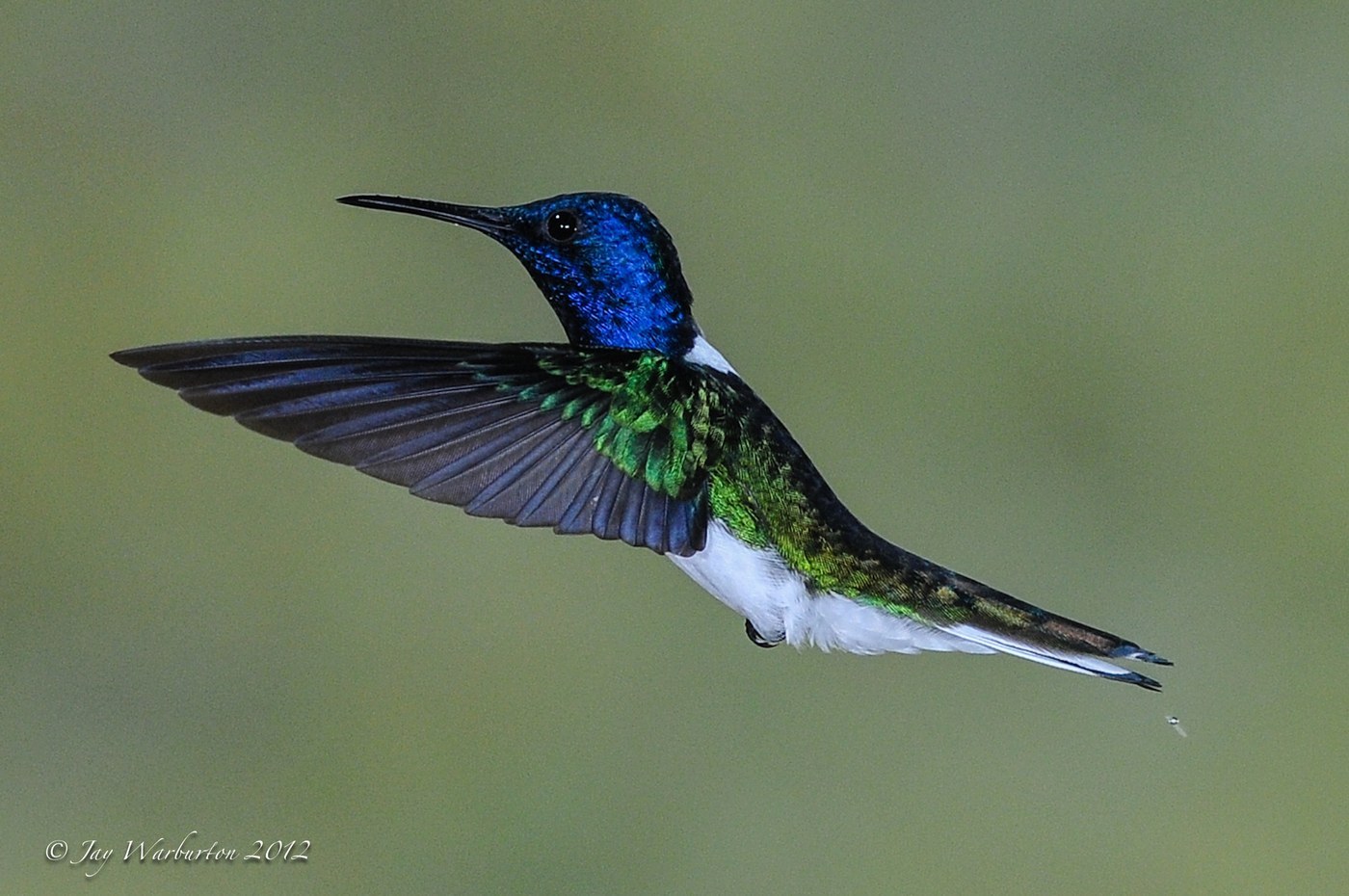
White-necked Jacobin
Iridescent head feathers, contrasting white nape and belly

White-eared Hummingbird
Iridescent gorget feathers, bold facial stripe
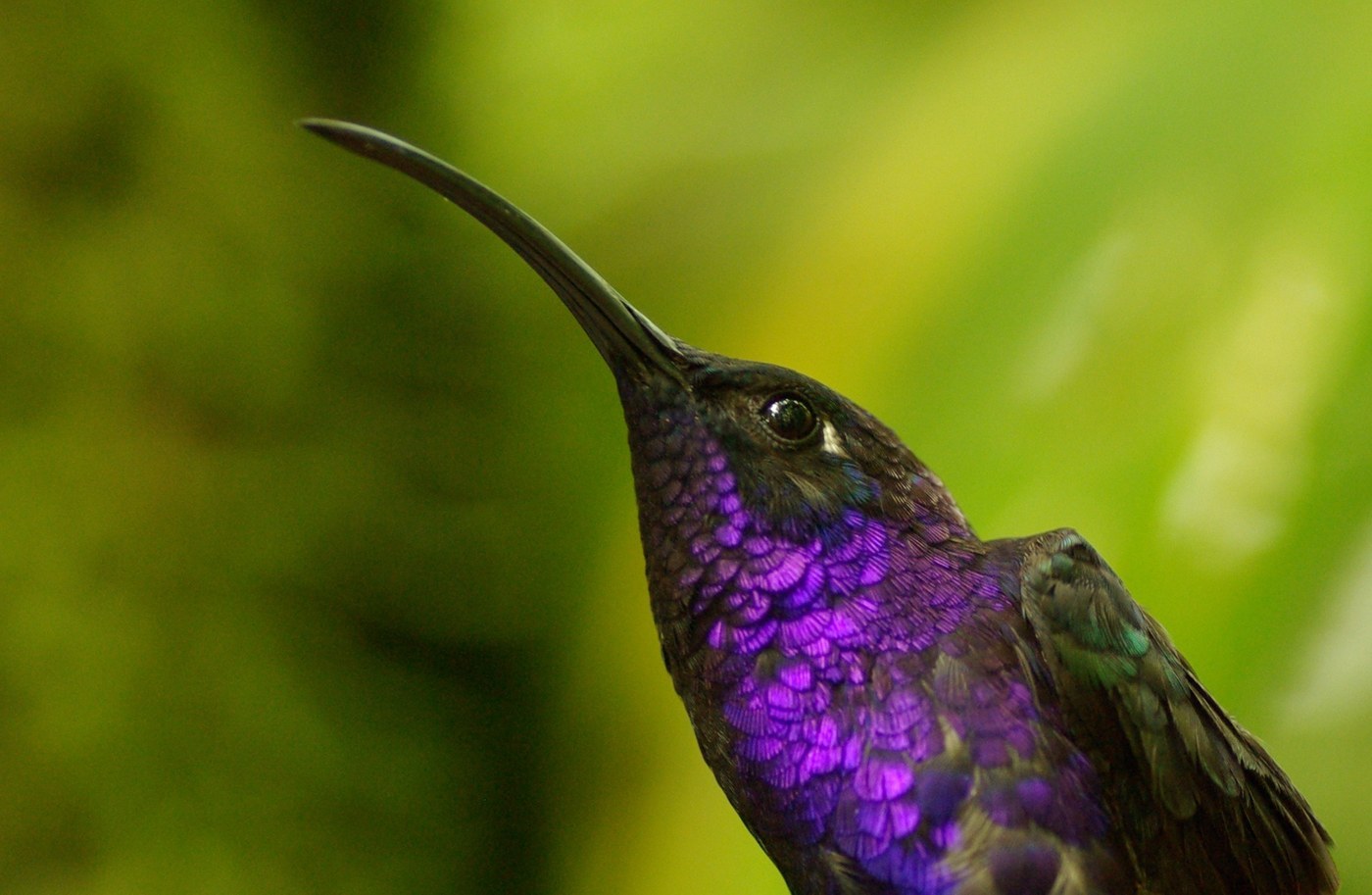
Violet Sabrewing
Iridescent body feathers, thickened curved primary shafts

Velvet-purple Coronet
Dense, velvety contour feathers with iridescent crown patch

Violet-crowned Hummingbird
Iridescent crown feathers, clean white underparts

Shining Sunbeam
Iridescent contour feathers with coppery-bronze wing sheen

Rufous Hummingbird
Tiny contour, gorget, and narrow flight feathers