

Golden-olive Woodpecker
Colaptes rubiginosus
A Neotropical woodpecker with a warm olive-golden back and grey face, ranging from Mexico through Central America into the Andean foothills of South America.
- Feather type
- Contour and flight feathers
- Colours
- Olive-golden barred back, grey face, buffy scaled underparts
- Bird size
- Medium woodpecker, ~20-24 cm
Found a feather like this?
Identify any feather from a photo, free.
Overview
The Golden-olive Woodpecker is a widespread Neotropical species found from Mexico south through Central America and into the Andean region of South America. Its warm olive-golden upperparts and contrasting grey face give it a distinctive appearance among the region's woodpeckers.
It favors forest edge and secondary woodland over deep closed-canopy forest, often foraging at low to middle heights.
Identifying the Feather
- Back and wing-covert feathers are olive-golden with fine dark barring
- Facial feathers are predominantly grey, contrasting with the warmer tones of the back
- Males show a red malar stripe or nape patch depending on subspecies, while females lack red in these areas
- Underparts are buffy with dusky scaling or barring
- Tail feathers are dark and stiffened for trunk support
Plumage & Molt
Males typically show red in the malar area or on the nape, varying somewhat across the species' wide range and subspecies; females lack red in these regions. Juveniles are duller with softer barring below. A single complete molt follows breeding.
Habitat & Range
- Ranges from Mexico through Central America into the Andean foothills of Colombia, Ecuador, Peru, and neighboring countries
- Favors forest edge, secondary woodland, and semi-open country with scattered trees
- Generally resident, with some populations showing local elevational movement
Behavior & Field Notes
This species forages at low to middle heights, gleaning insects from bark, moss, and epiphyte-covered branches, and also takes ants on the ground on occasion. Calls include sharp, repeated notes, and drumming is used to advertise territory. Nest cavities are excavated in dead wood or soft-barked trunks.
Frequently asked questions
What is the most distinctive feather feature?
The combination of an olive-golden barred back with a contrasting grey face is the most useful identification feature.
How can males be separated from females?
Males typically show red in the malar area or nape depending on the population, while females lack red in these regions.
What is its typical habitat?
Forest edge, secondary woodland, and semi-open country with scattered trees, rather than dense unbroken forest.
How wide is its range?
It extends from Mexico through Central America into the Andean foothills of northern and western South America.
Golden-olive Woodpecker guides
In-depth guides for identifying and understanding Golden-olive Woodpecker.

Other feathers you may enjoy

Ivory-billed Woodpecker
Very large flight feathers with a solid white trailing patch

Great Slaty Woodpecker
Massive, uniformly colored contour feathers

Yellow-tufted Woodpecker
Black body feathers with bright yellow forehead tufts

Magellanic Woodpecker
Very large, glossy contour feathers with a recurved crest

Yellow-bellied Sapsucker
Black-and-white patterned back and facial-stripe feathers
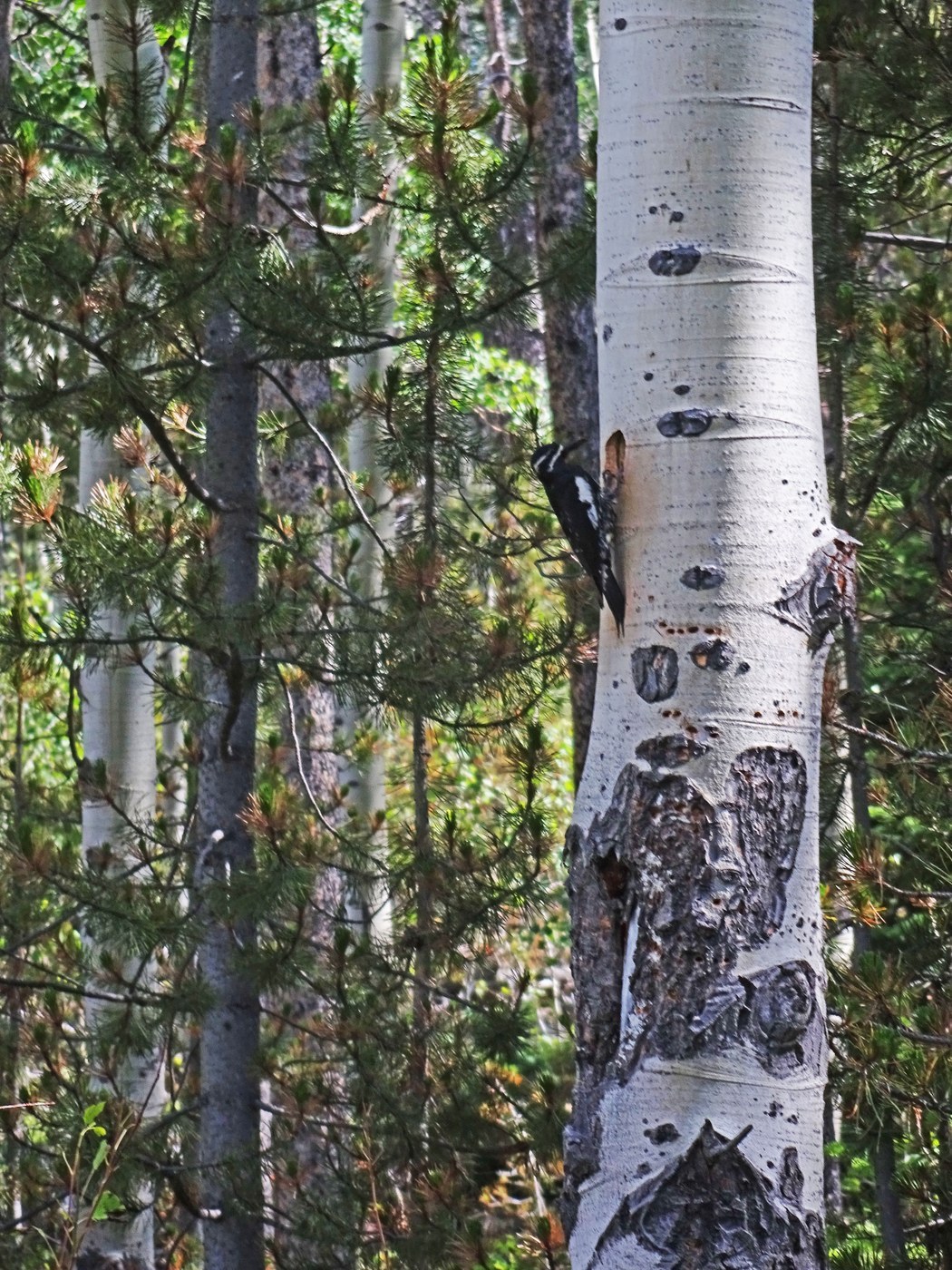
Williamson's Sapsucker
Strongly sexually dimorphic body feathers, glossy black or finely barred brown

Yellow-crowned Woodpecker
Contour and flight feathers

White Woodpecker
Mostly white body feathers with contrasting black wings and back

Red-throated Wryneck
Soft, cryptically mottled contour feathers

White-bellied Woodpecker
Large, glossy black contour and flight feathers

White-backed Woodpecker
Barred back feathers rather than a solid white patch
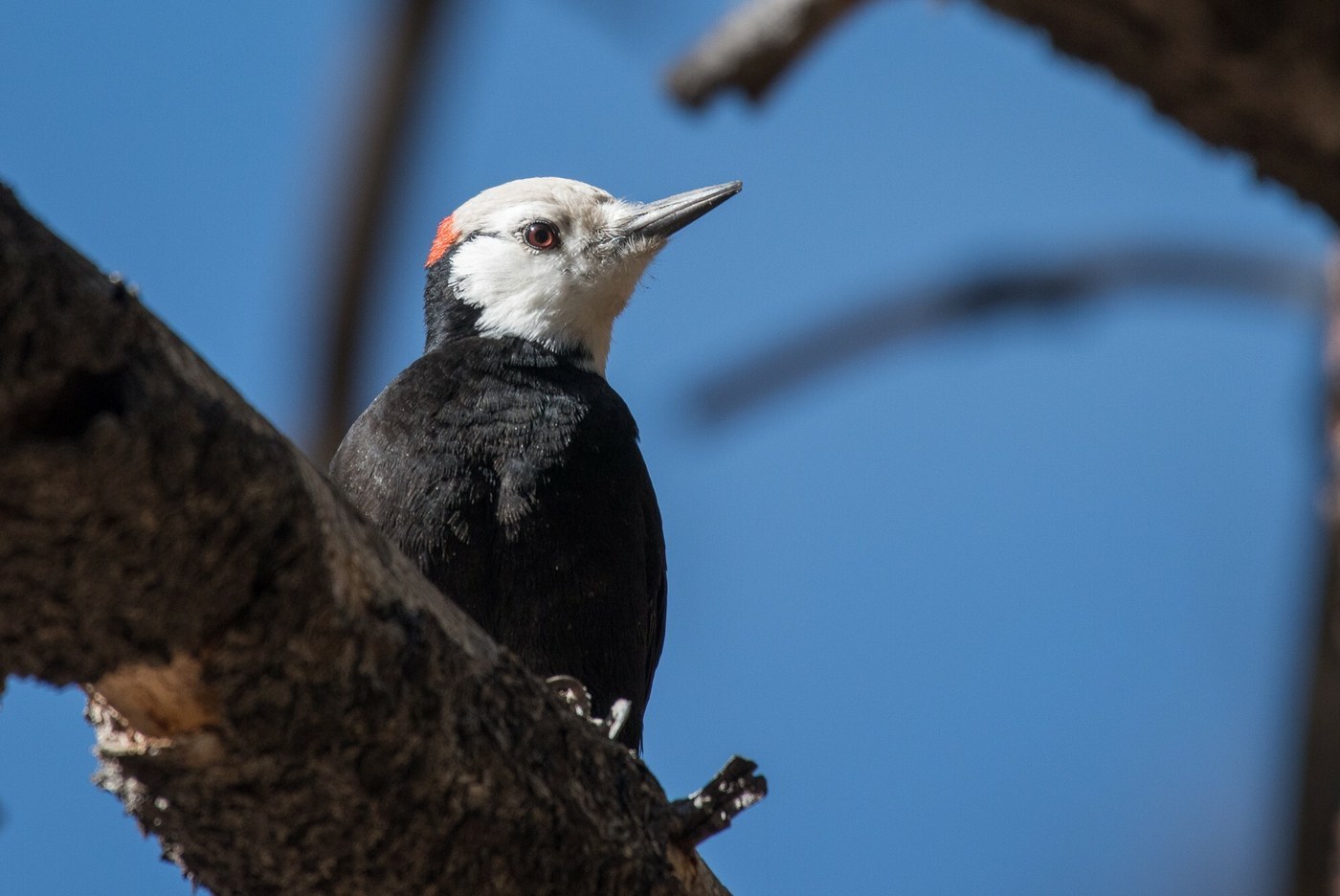
White-headed Woodpecker
Solid black body feathers with an entirely white head