

Gilded Flicker
Colaptes chrysoides
A desert flicker of the Southwest that nests almost exclusively in saguaro cacti and flashes golden-yellow underwings in flight.
- Feather type
- Flight feathers with bright golden-yellow shafts and undersides
- Colours
- Cinnamon-brown, black-barred back, golden-yellow underwing
- Bird size
- Robin-to-jay-sized, ~28 cm
Found a feather like this?
Identify any feather from a photo, free.
Overview
The Gilded Flicker is a large ground-foraging woodpecker of the Sonoran and lower Colorado desert, closely tied to saguaro cactus for nest cavities. It resembles other flickers in shape and posture but carries the golden-yellow flight-feather color typical of desert populations rather than the pinkish-red of nearby Northern Flicker races.
It is often seen bounding across open desert floor probing for ants, then flying up to a saguaro arm or utility pole, flashing a bright rump patch and yellow underwings as it goes.
Identifying the Feather
- Flight feathers: golden-yellow shafts and undersides of the wing and tail, visible in flight or on a spread wing
- Back and wings: black bars on a warm brown ground color
- Crown: plain grayish-tan, without the gray nape/red nape marks of Northern Flicker
- Face: males show a black mustache stripe; females lack it
- Vs. Northern Flicker (red-shafted): red-shafted birds show salmon-pink flight feather color and a gray face with brown crown, not the golden tone of this species
- Rump: white patch visible in flight, shared with other flickers
Plumage & Molt
Both sexes show a barred brown-and-black back and spotted buffy-tan underparts with a black crescent bib on the breast. Males have a black malar stripe that females lack. Juveniles resemble adults but with looser, duller barring. There is a single annual molt after the breeding season, with flight feathers replaced gradually so the bird retains flight capability throughout.
Habitat & Range
Resident of low desert scrub, arid flats, and desert riparian corridors of Arizona, southeastern California, and northwestern Mexico, wherever tall saguaro or other large columnar cacti are present for nesting. It does not migrate and occupies the same territory year-round, sometimes moving short distances to washes or towns in the hottest months.
Behavior & Field Notes
Forages mostly on the ground, walking and hopping while probing soil and leaf litter for ants and other insects, unlike many woodpeckers that concentrate on tree trunks. Pairs excavate a new nest cavity in a saguaro or occasionally a tree each season, and the resulting holes are later reused by many other desert species. Its call is a loud, sustained "wick-wick-wick" series, and it also drums on resonant dead wood or metal to advertise territory.
Frequently asked questions
How can I tell a Gilded Flicker feather from a Northern Flicker feather?
Look at the underside color of a flight feather: Gilded Flicker shows golden-yellow, while red-shafted Northern Flickers show salmon-pink; yellow-shafted Northern Flickers overlap in color but occur in a different range.
Why does this species depend on saguaro cactus?
Saguaros provide tall, sturdy trunks in an otherwise low desert landscape, and their pulpy interior is relatively easy to excavate into a nest cavity that later dries into a firm chamber.
Does the Gilded Flicker migrate?
No, it is a year-round desert resident that stays on or near its territory throughout the year.
What is the black crescent marking on the chest?
It is a solid black bib-like patch across the upper breast, a shared field mark among flicker species that contrasts with the spotted lower underparts.
Gilded Flicker guides
In-depth guides for identifying and understanding Gilded Flicker.

Other feathers you may enjoy

Ivory-billed Woodpecker
Very large flight feathers with a solid white trailing patch

Great Slaty Woodpecker
Massive, uniformly colored contour feathers

Yellow-tufted Woodpecker
Black body feathers with bright yellow forehead tufts

Magellanic Woodpecker
Very large, glossy contour feathers with a recurved crest

Yellow-bellied Sapsucker
Black-and-white patterned back and facial-stripe feathers
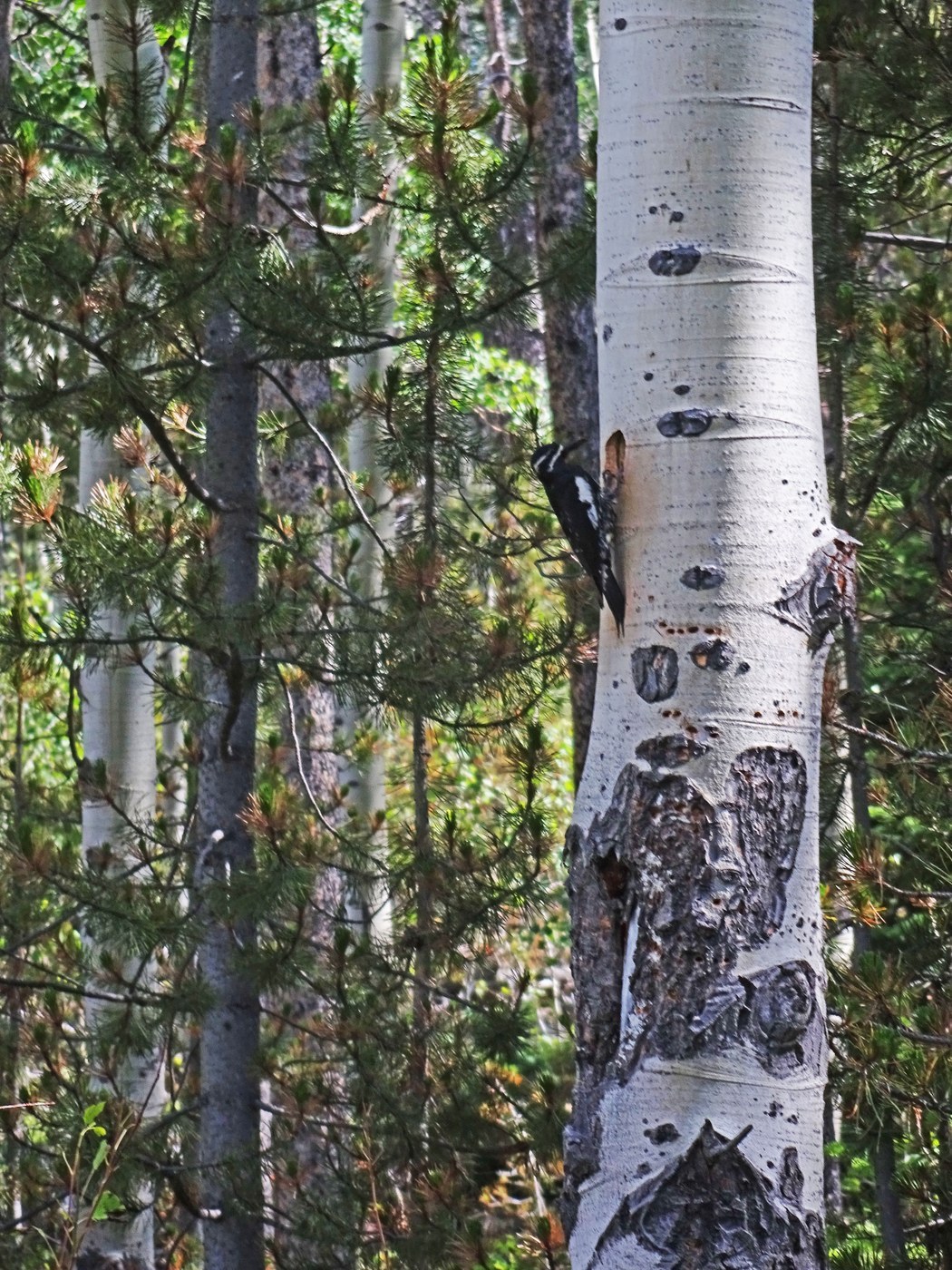
Williamson's Sapsucker
Strongly sexually dimorphic body feathers, glossy black or finely barred brown

Yellow-crowned Woodpecker
Contour and flight feathers

White Woodpecker
Mostly white body feathers with contrasting black wings and back

Red-throated Wryneck
Soft, cryptically mottled contour feathers

White-bellied Woodpecker
Large, glossy black contour and flight feathers

White-backed Woodpecker
Barred back feathers rather than a solid white patch
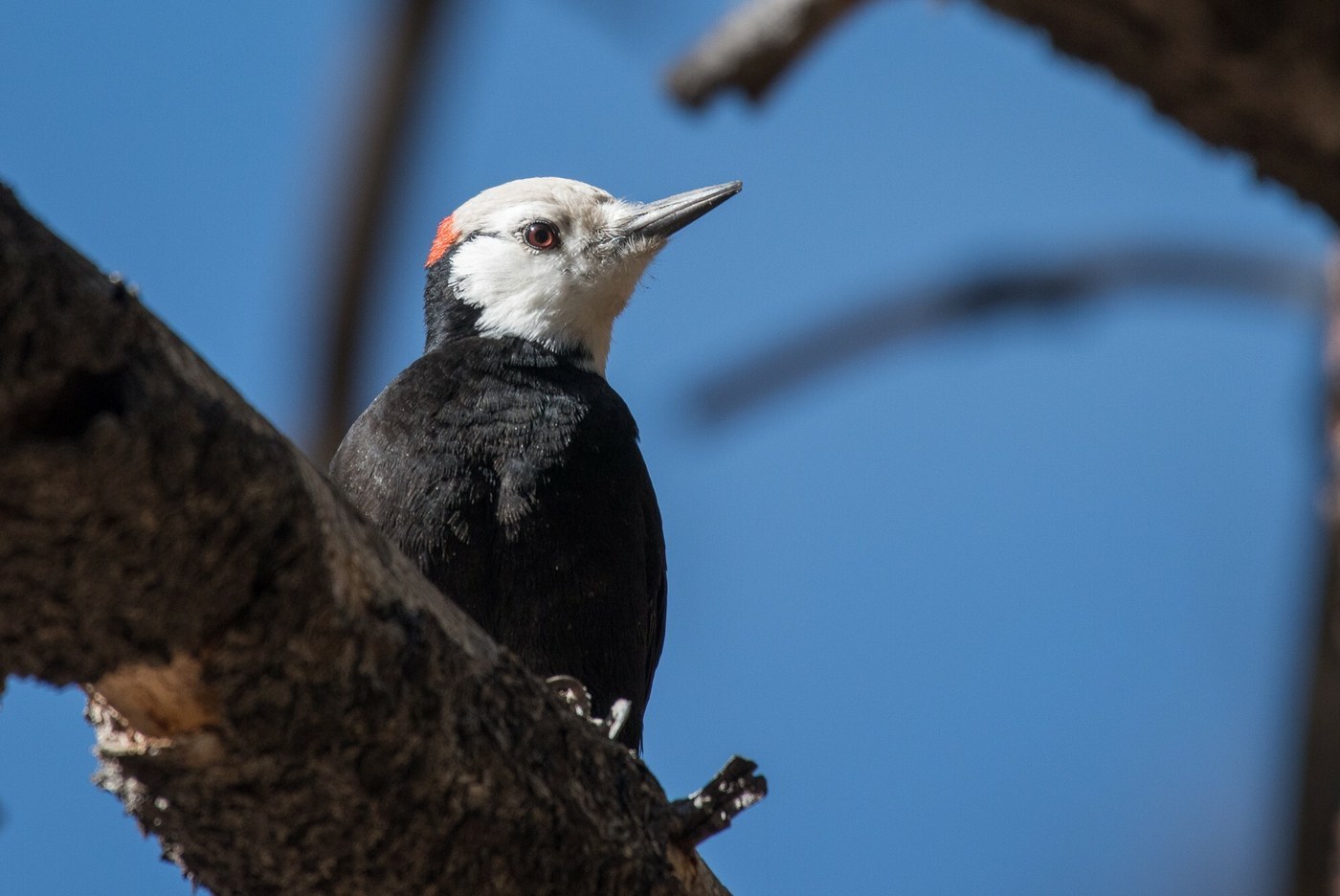
White-headed Woodpecker
Solid black body feathers with an entirely white head