
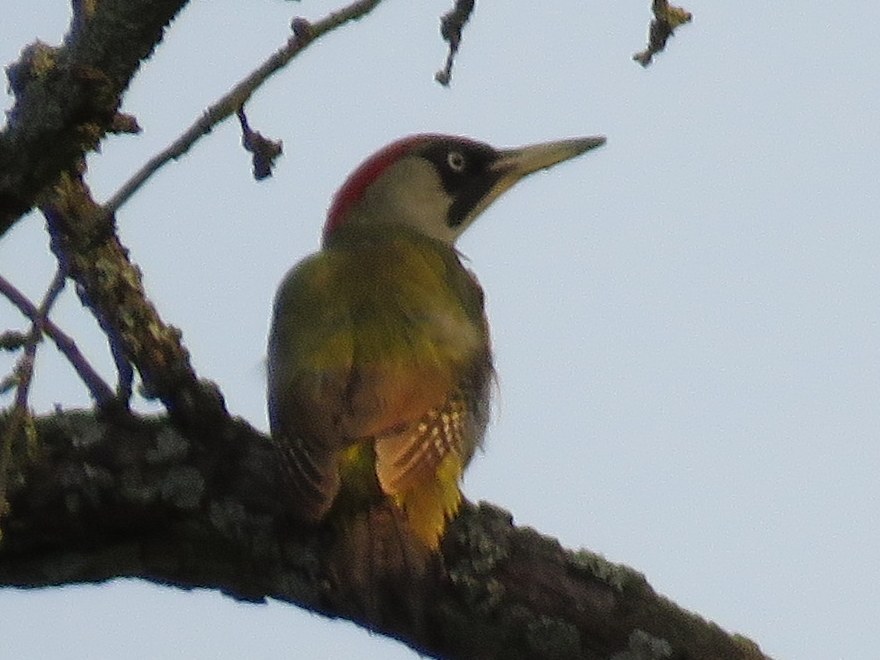
European Green Woodpecker
Picus viridis
The European Green Woodpecker is a large, ground-feeding woodpecker with olive-green body feathers, a bright yellow rump, and a red crown, feeding more on the ground than most of its relatives.
- Feather type
- Stiff pointed tail feathers for climbing support; strong flight feathers; soft green body contour feathers
- Colours
- Green back, yellow rump, red crown, black face mask, pale streaked underparts
- Bird size
- Large, ~30-33 cm
Found a feather like this?
Identify any feather from a photo, free.
Overview
The European Green Woodpecker is the largest and most colorful common woodpecker in much of its range, often seen feeding on the ground rather than climbing trees.
Its plumage combines olive-green upperparts with a bright yellow rump, a scarlet crown, and a distinctive black face mask.
Its loud, laughing call, sometimes nicknamed the 'yaffle,' is as recognizable as its striking feathers.
Identifying the Feather
Size & Shape
- The largest feathers among common European woodpeckers covered here, reflecting its bigger overall size.
- Tail feathers remain stiff and pointed for climbing support, though the species spends much time foraging on the ground.
Color & Pattern
- Back and wing feathers: olive-green, unbarred, unlike the black-and-white pattern of spotted woodpeckers.
- Rump feathers: bright yellow-green, conspicuous in flight.
- Crown feathers: scarlet red in both sexes; a black face mask surrounds the eye and extends to the bill.
- Males show a red center to the black moustachial stripe; females have an all-black moustachial stripe.
- Underparts are pale grey-green with faint barring.
Similar Species
- The plain green back and bright yellow rump immediately separate this species from the black-and-white spotted woodpeckers; no other common European woodpecker shows this green-and-yellow combination.
Plumage & Molt
Overall Plumage
Olive-green upperparts, bright yellow rump, scarlet crown, black face mask, and pale grey-green underparts.
Sex & Age Differences
Males show a red center within the black moustachial stripe; females have an entirely black moustachial stripe. Juveniles are spottier and more barred overall before their first molt.
Molt
One complete molt after breeding in late summer; juveniles undergo a partial post-juvenile molt of body feathers.
Habitat & Range
Habitat
Open woodland edges, parkland, orchards, and grassland with short turf and anthills, needed for its main food source.
Range
Widespread across most of Europe, generally absent from the far north.
Movements
Resident, with little seasonal movement.
Behavior & Field Notes
Behavior
Forages extensively on the ground, probing anthills and lawns with its long, sticky tongue, more so than any other common European woodpecker.
Diet
Feeds mainly on ants and their larvae, extracted from ground nests using a long, extensible tongue.
Nesting
Excavates a nest hole in a tree trunk, often reusing favored sites in successive years.
Voice
A loud, laughing call sometimes described as a 'yaffle,' among the most distinctive sounds of open woodland.
Field Notes
A plain green feather with a yellow rump tone, found near open grassland or woodland edge with anthills, is diagnostic of Green Woodpecker among European woodpeckers.
Frequently asked questions
What color pattern separates Green Woodpecker feathers from other woodpeckers?
A plain olive-green back and bright yellow rump, unlike the black-and-white barring of spotted woodpeckers.
How can I tell male from female Green Woodpecker feathers?
Males show a red center within the black moustachial stripe; females have an all-black stripe.
Why does this woodpecker feed on the ground more than others?
It specializes in eating ants, which it extracts from ground nests using its long tongue.
What is the origin of the nickname 'yaffle'?
It refers to the bird's loud, laughing call.
European Green Woodpecker guides
In-depth guides for identifying and understanding European Green Woodpecker.
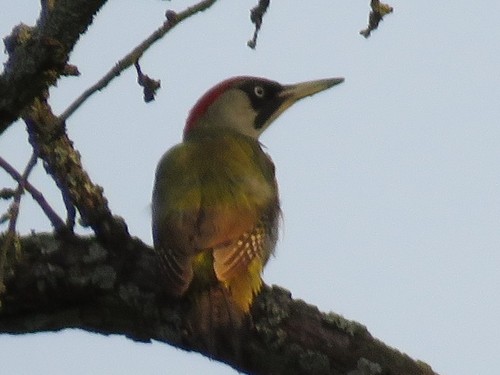
Other feathers you may enjoy

Ivory-billed Woodpecker
Very large flight feathers with a solid white trailing patch

Great Slaty Woodpecker
Massive, uniformly colored contour feathers

Yellow-tufted Woodpecker
Black body feathers with bright yellow forehead tufts

Magellanic Woodpecker
Very large, glossy contour feathers with a recurved crest

Yellow-bellied Sapsucker
Black-and-white patterned back and facial-stripe feathers
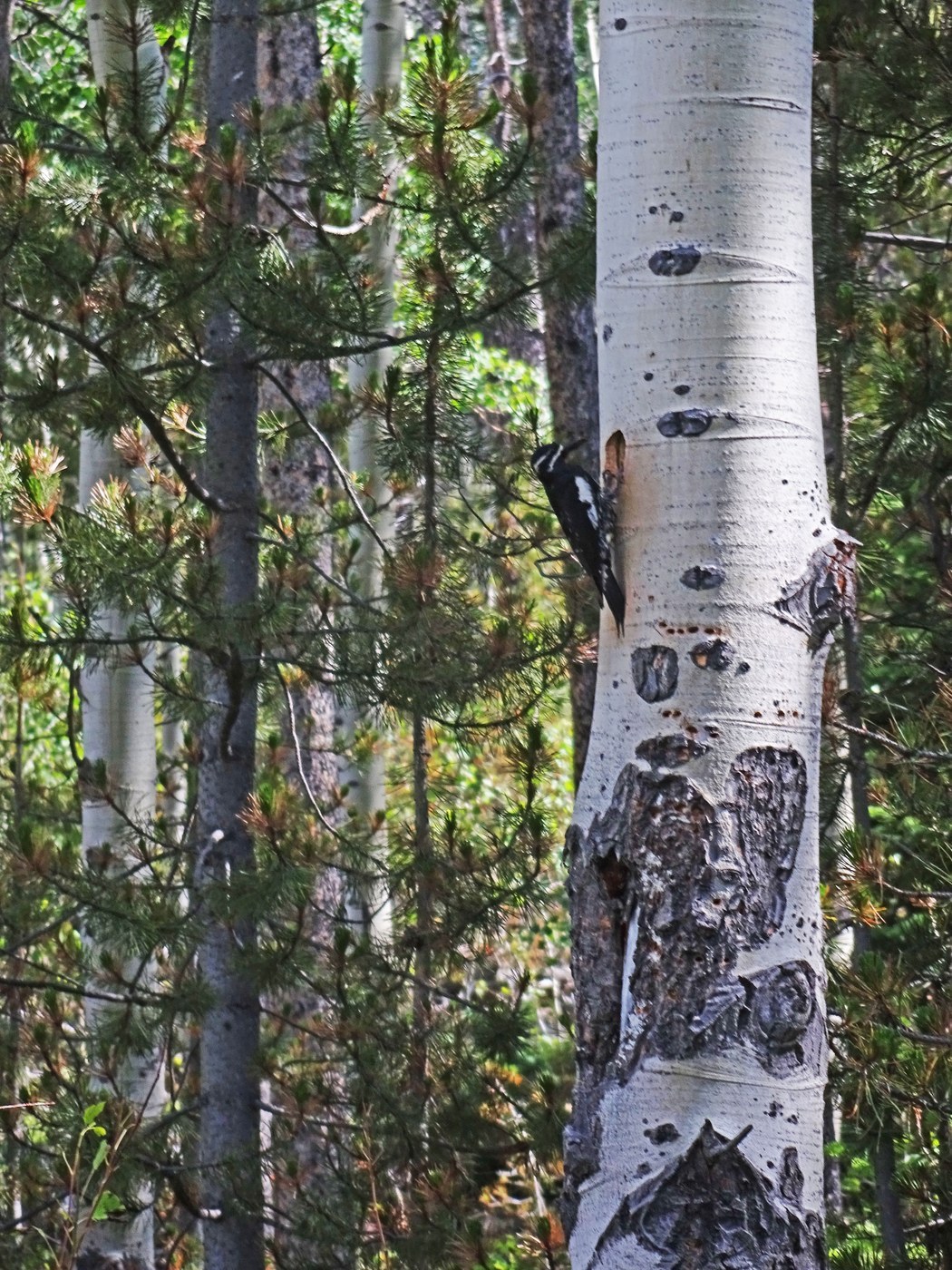
Williamson's Sapsucker
Strongly sexually dimorphic body feathers, glossy black or finely barred brown

Yellow-crowned Woodpecker
Contour and flight feathers

White Woodpecker
Mostly white body feathers with contrasting black wings and back

Red-throated Wryneck
Soft, cryptically mottled contour feathers

White-bellied Woodpecker
Large, glossy black contour and flight feathers

White-backed Woodpecker
Barred back feathers rather than a solid white patch
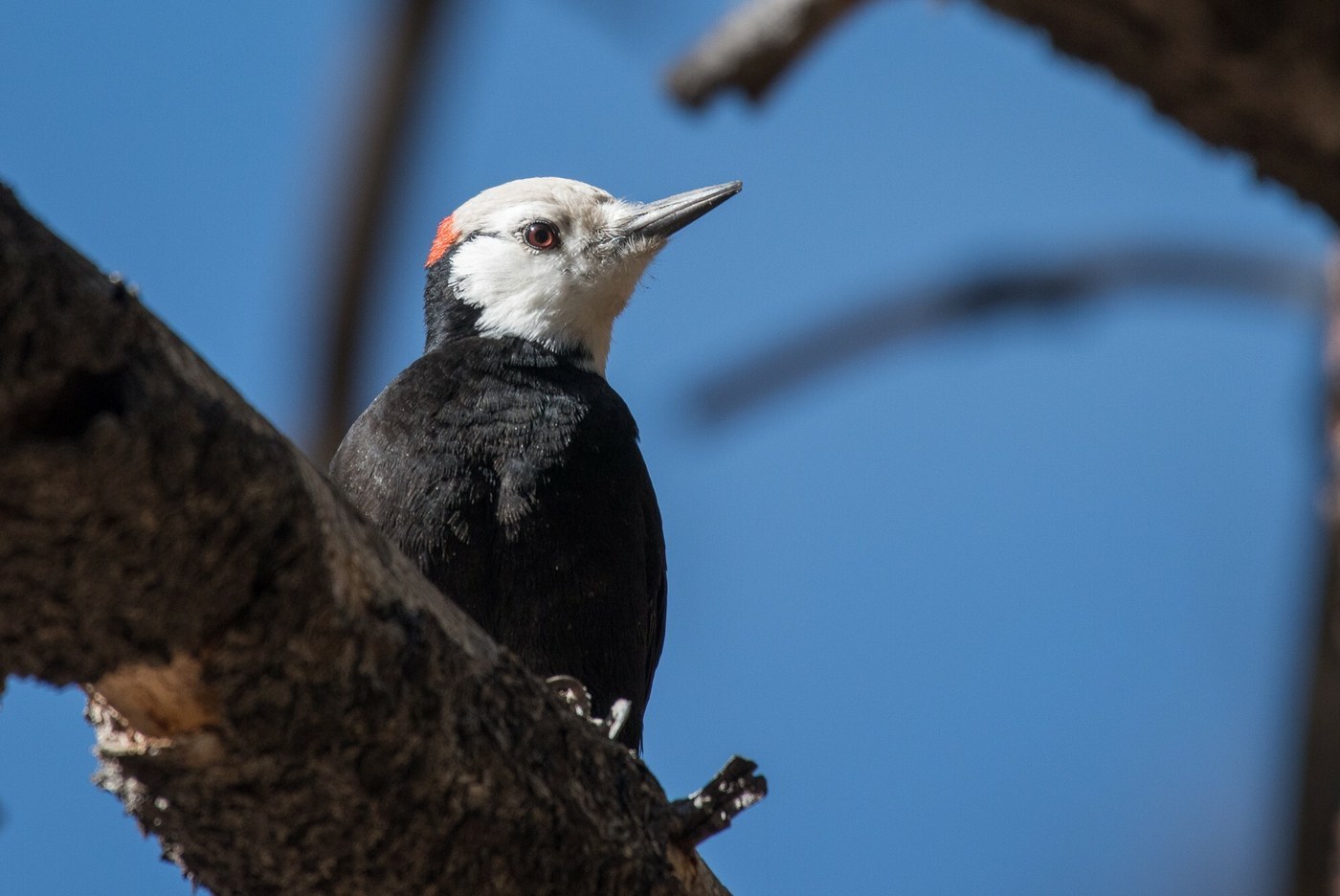
White-headed Woodpecker
Solid black body feathers with an entirely white head