
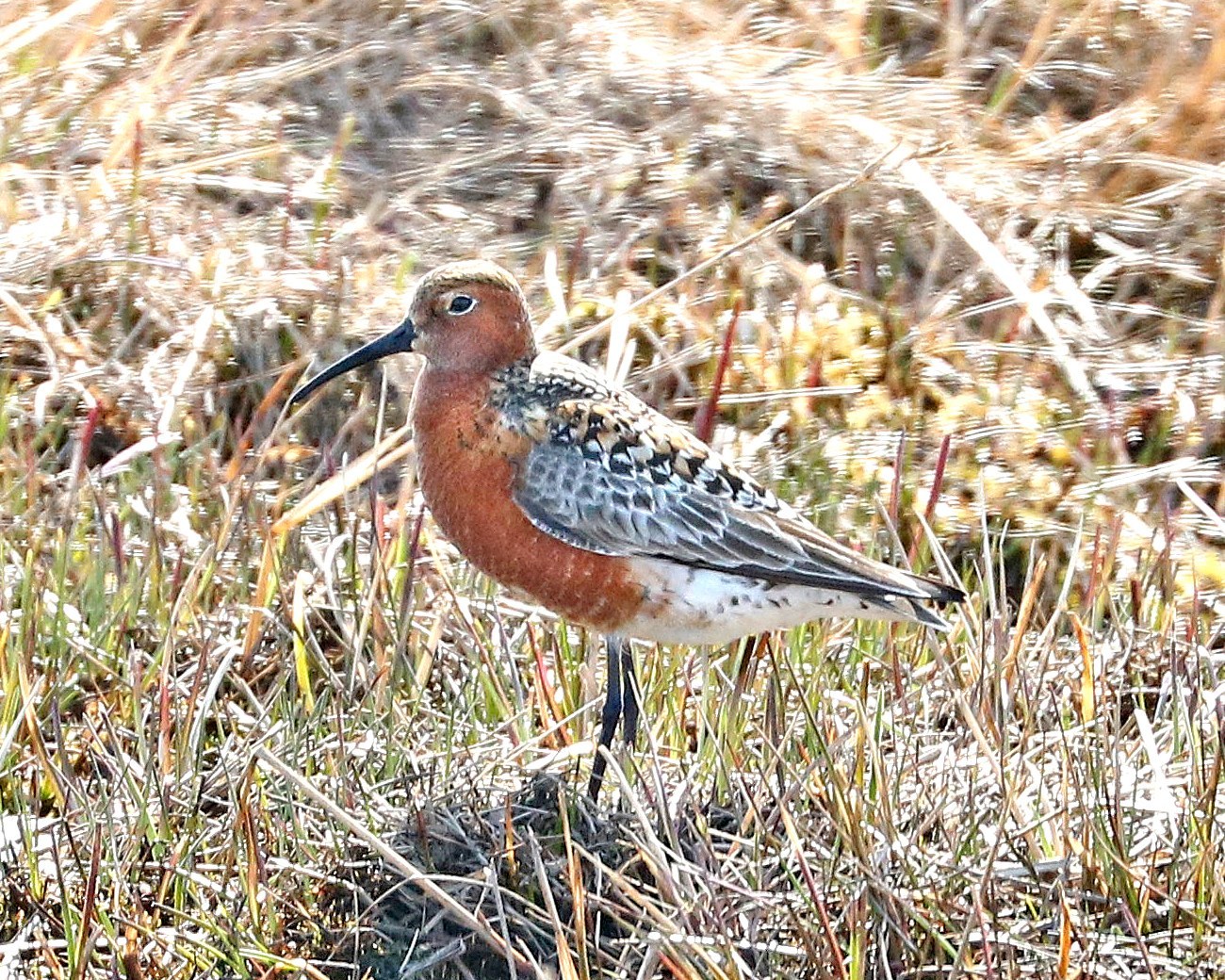
Curlew Sandpiper
Calidris ferruginea
A slender, long-legged sandpiper with a gently down-curved bill, best distinguished in the field and in shed feathers by its bright white rump, which flashes clearly in flight.
- Feather type
- Small wader contour and flight feathers
- Colours
- Brick-red breeding underparts fading to pale gray; bold white rump
- Bird size
- Sandpiper-sized, ~19-23 cm
Found a feather like this?
Identify any feather from a photo, free.
Overview
Overview
The Curlew Sandpiper is a graceful, mid-sized calidrid named for its slightly down-curved bill, which echoes the shape of a curlew's in miniature. It breeds in the high Arctic of Siberia and undertakes one of the longest migrations of any shorebird, wintering across Africa, South Asia, and Australia.
Feather hunters usually encounter Curlew Sandpiper feathers on migration staging grounds or wintering mudflats rather than near the remote tundra breeding sites, most often mixed among Dunlin and other small sandpipers at a shared roost.
Identifying the Feather
Feather Identification
- Rump feathers: the standout clue - a solid white rump and uppertail-covert patch, unlike the dark-centered rump of the similar Dunlin.
- Breeding body feathers: brick-red to rufous, with fine dark scalloping visible on close inspection of individual flank feathers.
- Nonbreeding body feathers: plain pale gray above with narrow whitish fringes, giving a soft, unmarked look; clean white below.
- Wing feathers: primaries and secondaries blackish-brown with a narrow white wingbar formed by white tips on the greater coverts.
- Shape and size: feathers are slightly more elongated and slender than a Dunlin's, matching the bird's longer neck, longer legs, and longer, more evenly curved bill.
- Versus Dunlin: the white rump is the single most reliable feather-based distinction; Dunlin also tends to show a heavier, straighter-based bill silhouette and a duller nonbreeding gray.
Plumage & Molt
Plumage Notes
Breeding adults of both sexes show rich brick-red faces, necks, and underparts overlaid with fine dark barring, especially along the flanks; the sexes look alike, though females average slightly paler. Nonbreeding adults become plain pale gray above and white below, among the cleanest, least-marked plumages of any calidrid.
Juveniles show a distinctive peachy-buff wash across the breast with neatly scaled upperparts, each feather dark-centered with a pale buff fringe. Adults undergo a complete molt mostly after arriving on wintering grounds, while juveniles replace body feathers gradually through their first winter before acquiring more adult-like gray plumage.
Habitat & Range
Habitat & Range
Curlew Sandpipers breed on wet, sedge-dominated tundra in Arctic Siberia. Outside the breeding season they are highly migratory, traveling enormous distances to winter on coastal mudflats, estuaries, and inland wetlands across sub-Saharan Africa, the Middle East, South Asia, Southeast Asia, and Australia. They are a scarce but regular vagrant on other continents, including North America and Europe, where individuals sometimes turn up among flocks of Dunlin.
Behavior & Field Notes
Behavior & Field Notes
Curlew Sandpipers forage by probing steadily in soft mud and shallow water, taking small invertebrates from the substrate; they often wade deeper than Dunlin, sometimes submerging the head briefly. They readily join mixed flocks of small shorebirds at high-tide roosts.
Nesting occurs on tundra in a shallow scrape lined with plant material, with the male typically taking a larger share of incubation duties in many populations. The flight call is a soft, rolling chirrup, distinct from the harsher note of Dunlin. Because of their long migratory routes, Curlew Sandpiper feathers found far from the breeding range are almost always molted feathers dropped during a migratory stopover or on the wintering grounds.
Frequently asked questions
What is the fastest way to tell a Curlew Sandpiper feather from a Dunlin's?
Look for the white rump and uppertail coverts - Curlew Sandpiper's are solid white, while Dunlin shows a dark central rump stripe.
Do Curlew Sandpiper feathers look different in summer versus winter?
Yes. Breeding-season body feathers are brick-red with fine dark barring, while nonbreeding feathers are plain pale gray with narrow whitish fringes.
Are male and female feathers different colors?
No obvious difference - the sexes look alike in both breeding and nonbreeding plumage, though females can average marginally paler.
Where are Curlew Sandpiper feathers most likely to be found?
On coastal mudflats and estuaries along migration routes or wintering grounds, often where the birds mix with Dunlin and other small sandpipers.
What do juvenile Curlew Sandpiper feathers look like?
Juvenile upperpart feathers are neatly scaled, with a dark center and pale buff fringe, paired with a peachy wash across the breast.
Curlew Sandpiper guides
In-depth guides for identifying and understanding Curlew Sandpiper.
Other feathers you may enjoy
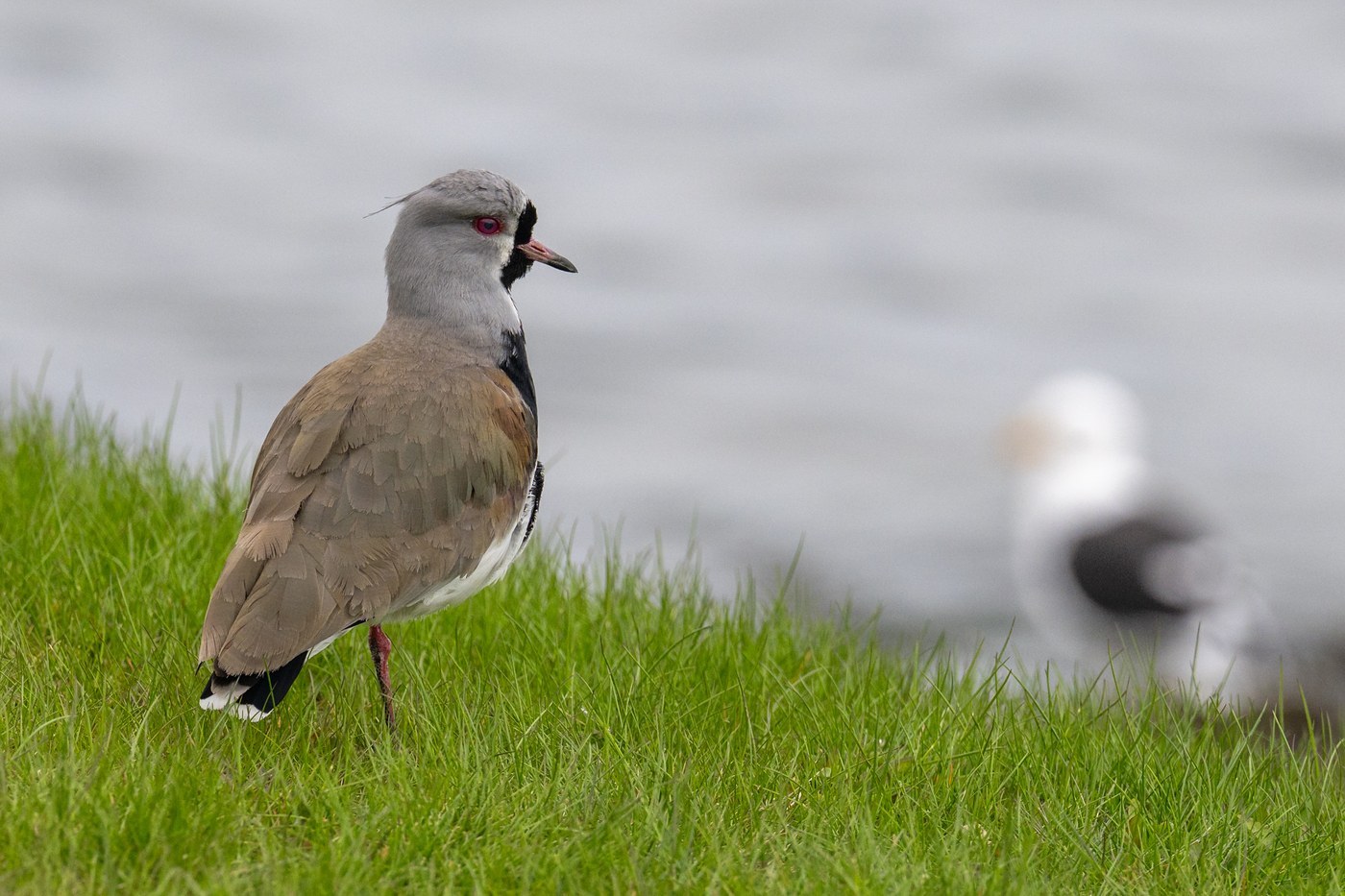
Southern Lapwing
Body, flight, and tail feathers

Jack Snipe
Body and flight feathers

Far Eastern Curlew
Body, flight, and tail feathers

Terek Sandpiper
Body and flight feathers

Wilson's Phalarope
Body and flight feathers
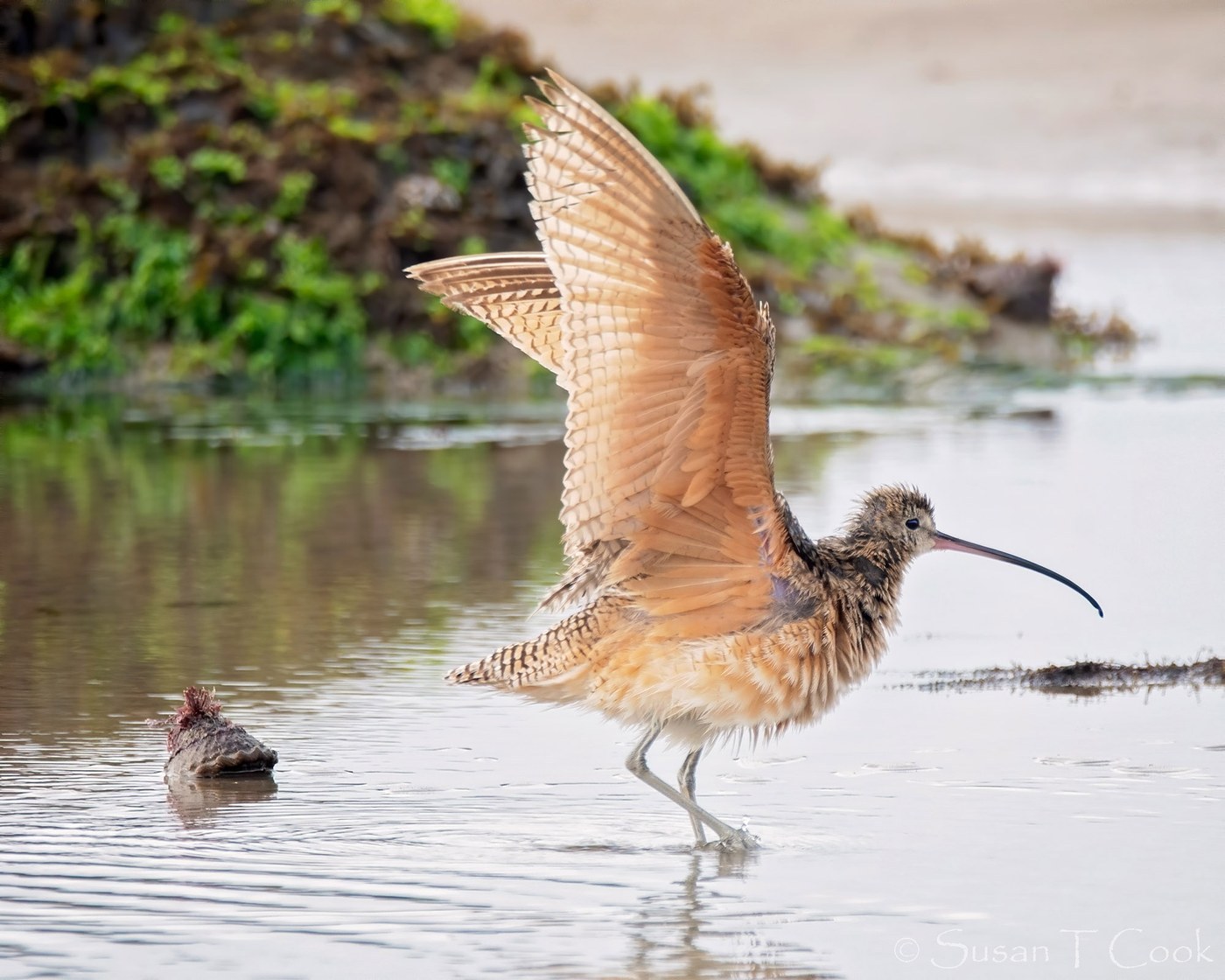
Long-billed Curlew
Body, flight, and tail feathers

Upland Sandpiper
Body, flight, and tail feathers

Red Phalarope
Body and flight feathers

Eurasian Dotterel
Body feathers
Masked Lapwing
Body, flight, and tail feathers
Eurasian Curlew
Body, flight, and tail feathers
Solitary Sandpiper
Contour and flight feathers