

Crimson Topaz
Topaza pella
One of the largest and most spectacular hummingbirds, the Crimson Topaz shows a glowing ruby-red body and long, crossed golden tail feathers in adult males.
- Feather type
- Iridescent contour feathers, curved elongated central tail feathers
- Colours
- Fiery red-orange body with green throat and golden-copper tail
- Bird size
- Large hummingbird, ~20-23 cm including tail streamers
Found a feather like this?
Identify any feather from a photo, free.
Overview
Overview
The Crimson Topaz is among the largest hummingbirds in South America, found along forest rivers and edges in the Guiana Shield, Amazon basin, and adjacent lowlands. Its size and brilliant coloring make it a standout even among the region's many dazzling hummingbird species.
Adult males are unmistakable, combining a rich crimson body with an emerald-green throat patch and unusually long, twisted tail feathers. Females are far duller, lacking the elongated tail and showing more subdued bronze-green tones.
Identifying the Feather
Feather Identification
- Body feathers: Deep red-orange with a metallic sheen that shifts with light angle
- Throat feathers: Small, scale-like, glittering emerald-green in males
- Tail feathers: Central pair greatly elongated and curved, crossing near the tips in adult males; overall tail is golden-copper
- Shaft color: Dark, inconspicuous against the vivid vane color
- Size: Notably larger and heavier-shafted than most hummingbird feathers, reflecting the species' large body size
- Similar species: No other hummingbird in its range combines crimson body plumage with crossed, elongated tail streamers
Plumage & Molt
Plumage Details
Adult male Crimson Topaz have a glowing crimson-red back and underparts, a glittering green throat bordered in black, and elongated central tail feathers that cross one another, tipped in violet-black. Females are duller overall, bronzy-green above with paler underparts and a shorter, less ornate tail. Juveniles resemble females until maturing into full adult plumage over successive molts. There is no distinct seasonal plumage variation beyond normal feather wear and molt.
Habitat & Range
Habitat & Range
This species inhabits lowland tropical rainforest, especially along rivers, streams, and forest edges in the Guiana Shield (Guyana, Suriname, French Guiana), southern Venezuela, and the northern Amazon basin of Brazil. It is non-migratory, remaining resident within humid forest habitat year-round, often perching on low branches over water.
Behavior & Field Notes
Behavior & Field Notes
Crimson Topaz feed on nectar from flowering trees and shrubs along waterways, supplementing their diet with small insects. Males perform display flights and defend favored perches near feeding areas. Nests are small cups built low over water on twigs or vines. Calls include sharp, high-pitched chips. Observers most often see this species perched on exposed branches near rivers rather than in continuous flight.
Frequently asked questions
What makes a Crimson Topaz feather distinctive?
The vivid crimson-red body color combined with elongated, crossed golden tail feathers is unique among hummingbirds in its range.
Do female Crimson Topaz look like males?
No, females are much duller with bronzy-green tones and lack the long, ornate tail streamers of adult males.
Where would I encounter this species?
Along rivers and forest edges in lowland rainforest of the Guiana Shield and northern Amazon basin.
Is the green throat patch always visible?
The iridescent throat feathers only flash brightly when catching direct light at the right angle, otherwise appearing dark.
Crimson Topaz guides
In-depth guides for identifying and understanding Crimson Topaz.

Other feathers you may enjoy

Speckled Hummingbird
Small contour feathers with fine speckled underpart markings
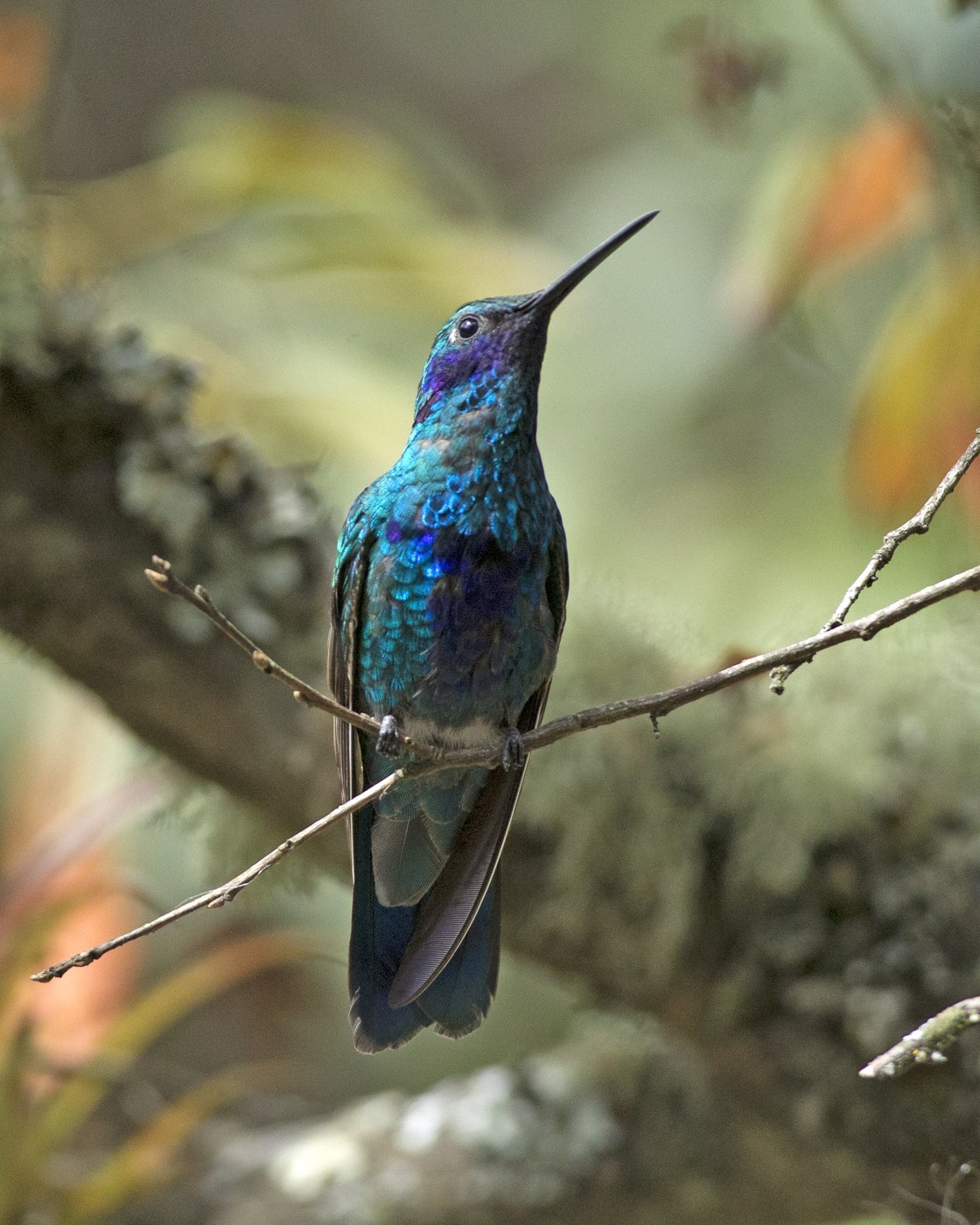
Sparkling Violetear
Iridescent body feathers, large violet ear and chest patches
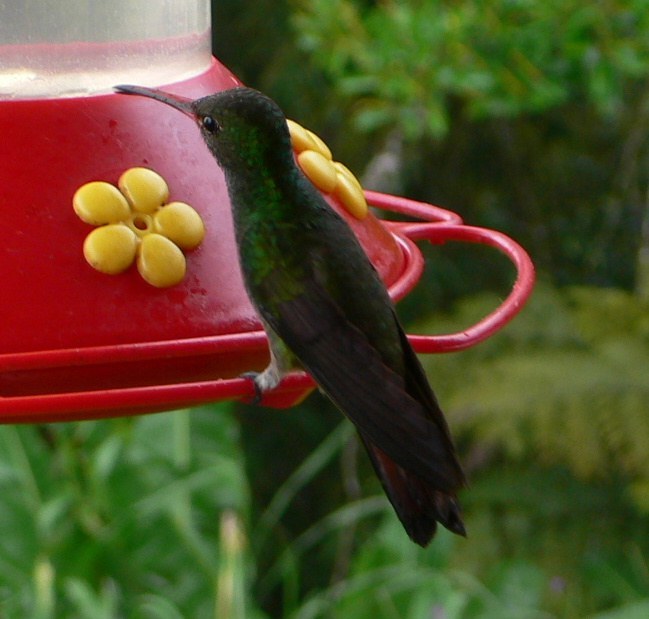
Rufous-tailed Hummingbird
Iridescent throat and breast feathers, rufous tail feathers

Rufous-breasted Hermit
Slightly decurved bill with rufous-washed contour feathers
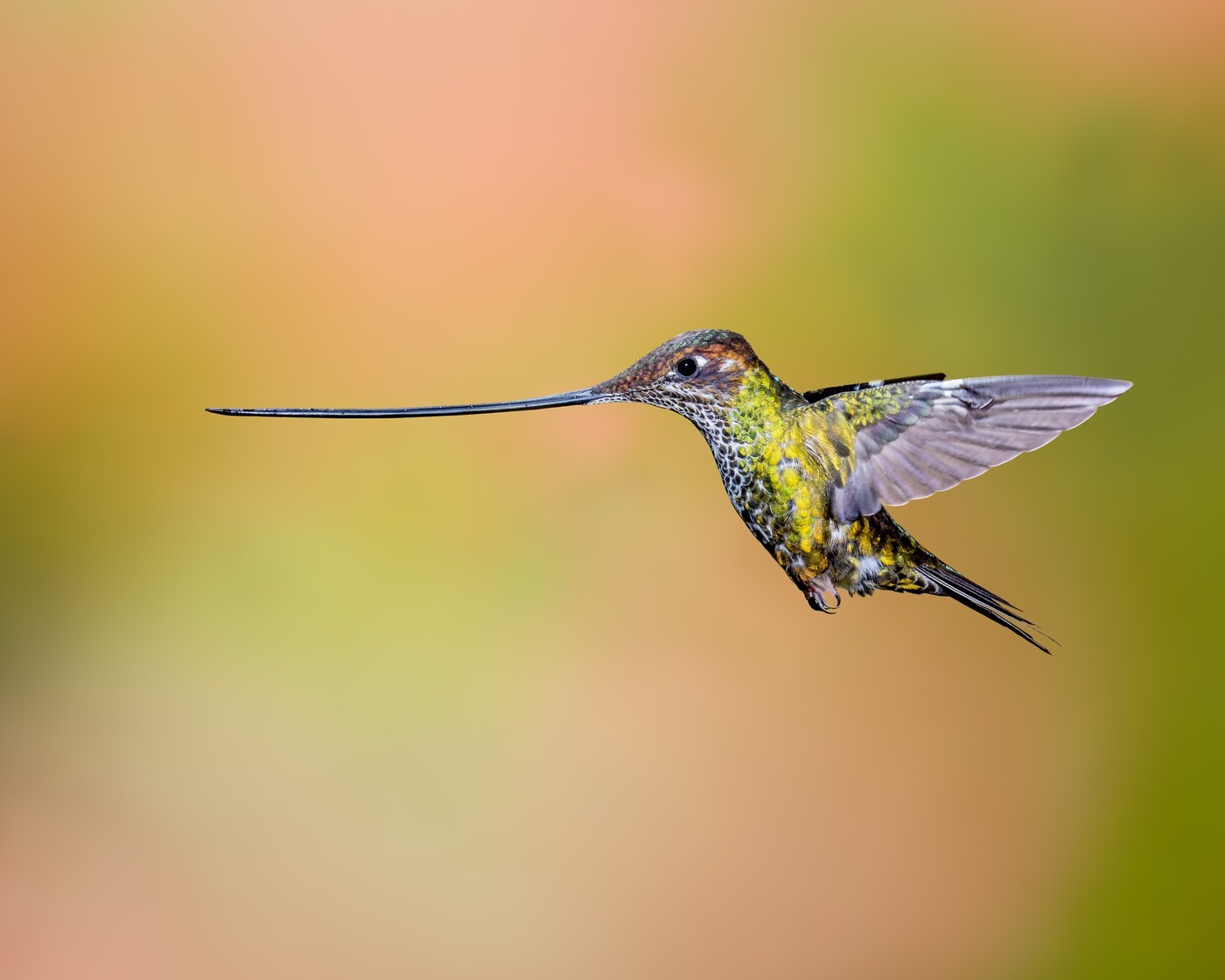
Sword-billed Hummingbird
Iridescent body feathers, extraordinarily long bill (non-feather feature)
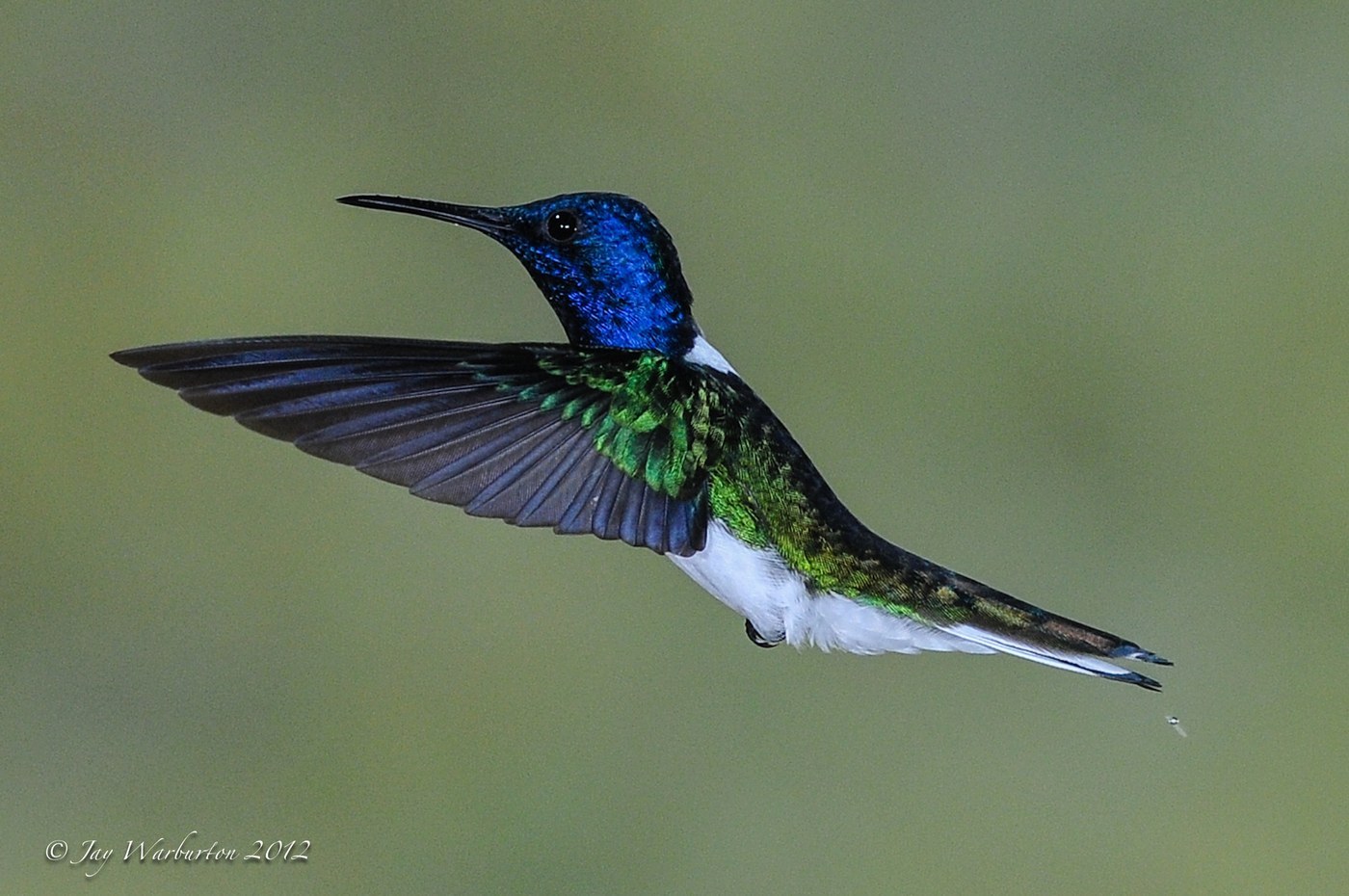
White-necked Jacobin
Iridescent head feathers, contrasting white nape and belly

White-eared Hummingbird
Iridescent gorget feathers, bold facial stripe
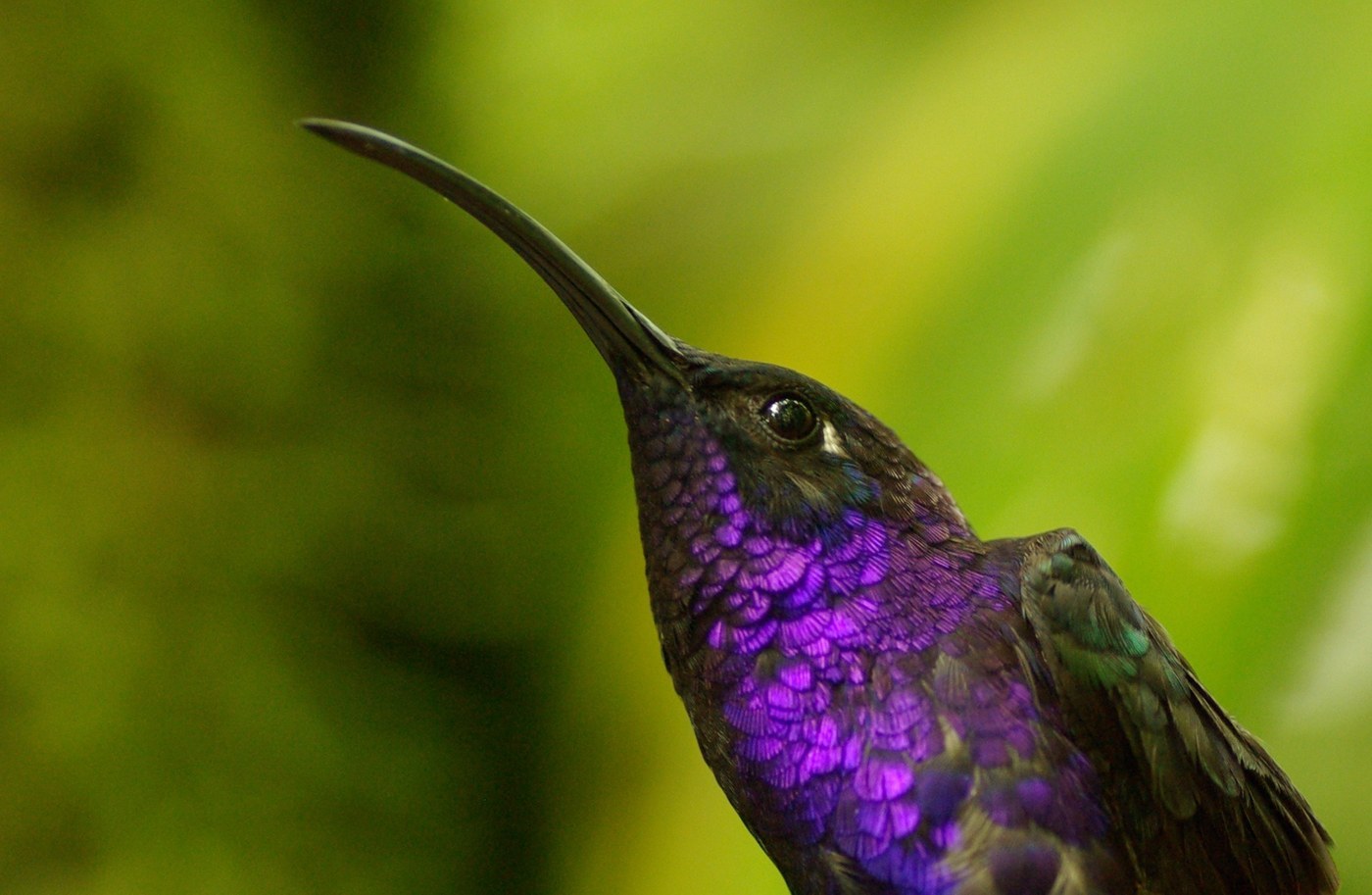
Violet Sabrewing
Iridescent body feathers, thickened curved primary shafts

Velvet-purple Coronet
Dense, velvety contour feathers with iridescent crown patch

Violet-crowned Hummingbird
Iridescent crown feathers, clean white underparts

Shining Sunbeam
Iridescent contour feathers with coppery-bronze wing sheen

Rufous Hummingbird
Tiny contour, gorget, and narrow flight feathers