

Crimson-crested Woodpecker
Campephilus melanoleucos
A striking South American woodpecker whose entirely crimson head and crest stand out sharply against its black-and-white barred body.
- Feather type
- Stiff, pointed tail feathers and boldly patterned back feathers
- Colours
- Crimson-red head, black back with a white V-stripe, and barred belly
- Bird size
- Large, ~33-36 cm
Found a feather like this?
Identify any feather from a photo, free.
Overview
The Crimson-crested Woodpecker is found across much of South America east of the Andes, from Colombia and Venezuela south to Argentina and Uruguay. It is one of the largest and most vividly marked woodpeckers in its range, sharing habitat with several other big Campephilus woodpeckers but standing out for the fully red head shown by males.
Its powerful bill and strong excavating behavior allow it to exploit deeply decayed wood that other, smaller woodpeckers cannot access.
Identifying the Feather
Key features:
- Head and crest feathers are entirely crimson-red in males, forming one of the most fully red heads among Neotropical woodpeckers
- Back and wing feathers are black with a pale, whitish stripe running down each side that converges toward a V shape on the lower back
- White throat patch bordered below by a red (male) or black (female) malar stripe
- Belly and flank feathers show black-and-white barring
Compared to similar species: the Lineated Woodpecker retains a black forecrown even in males, while the Crimson-crested Woodpecker male shows red covering the entire head, including the forehead — the single clearest distinguishing feature between the two.
Plumage & Molt
Males have an entirely red head, crest, and malar stripe, while females show a black forehead and forecrown, with red restricted to the rear crown and crest, and a black rather than red malar stripe. Juveniles resemble females but appear duller and less crisply patterned. A complete molt occurs annually, generally after breeding.
Habitat & Range
This species occupies lowland tropical forest, gallery forest along rivers, and semi-open wooded habitats across a broad range of South America east of the Andes. It is a non-migratory resident and can persist in fragmented or secondary forest as long as large trees remain available for nesting.
Behavior & Field Notes
Crimson-crested Woodpeckers are powerful excavators, tearing into dead and dying wood to extract beetle larvae and ants. Their calls are loud, and they frequently perform double-rap drumming on resonant branches to signal territory. Nests are excavated in cavities within large dead trees, and pairs defend territories year-round. They are usually encountered singly or in pairs, moving methodically up trunks and along large branches while foraging.
Frequently asked questions
How do I recognize a Crimson-crested Woodpecker feather?
A solid crimson-red feather from the head or crest is highly distinctive for this species, especially if it lacks any black at the base, which would suggest a male; body feathers show black with a pale side stripe.
Can feather color alone tell males and females apart?
Yes, largely — male head feathers are red throughout, while female head feathers show black on the forehead and forecrown with red confined to the back of the crown and crest.
What habitat is this feather most likely to come from?
Lowland tropical or gallery forest in South America east of the Andes, since this species does not occur in Central America or west of the Andes.
How does this compare to the Pale-billed Woodpecker?
The two species are very similar but do not overlap in range — Pale-billed occurs in Central America and Crimson-crested in South America — so location is often the most useful clue alongside the nearly identical plumage pattern.
Crimson-crested Woodpecker guides
In-depth guides for identifying and understanding Crimson-crested Woodpecker.

Other feathers you may enjoy

Ivory-billed Woodpecker
Very large flight feathers with a solid white trailing patch

Great Slaty Woodpecker
Massive, uniformly colored contour feathers

Yellow-tufted Woodpecker
Black body feathers with bright yellow forehead tufts

Magellanic Woodpecker
Very large, glossy contour feathers with a recurved crest

Yellow-bellied Sapsucker
Black-and-white patterned back and facial-stripe feathers
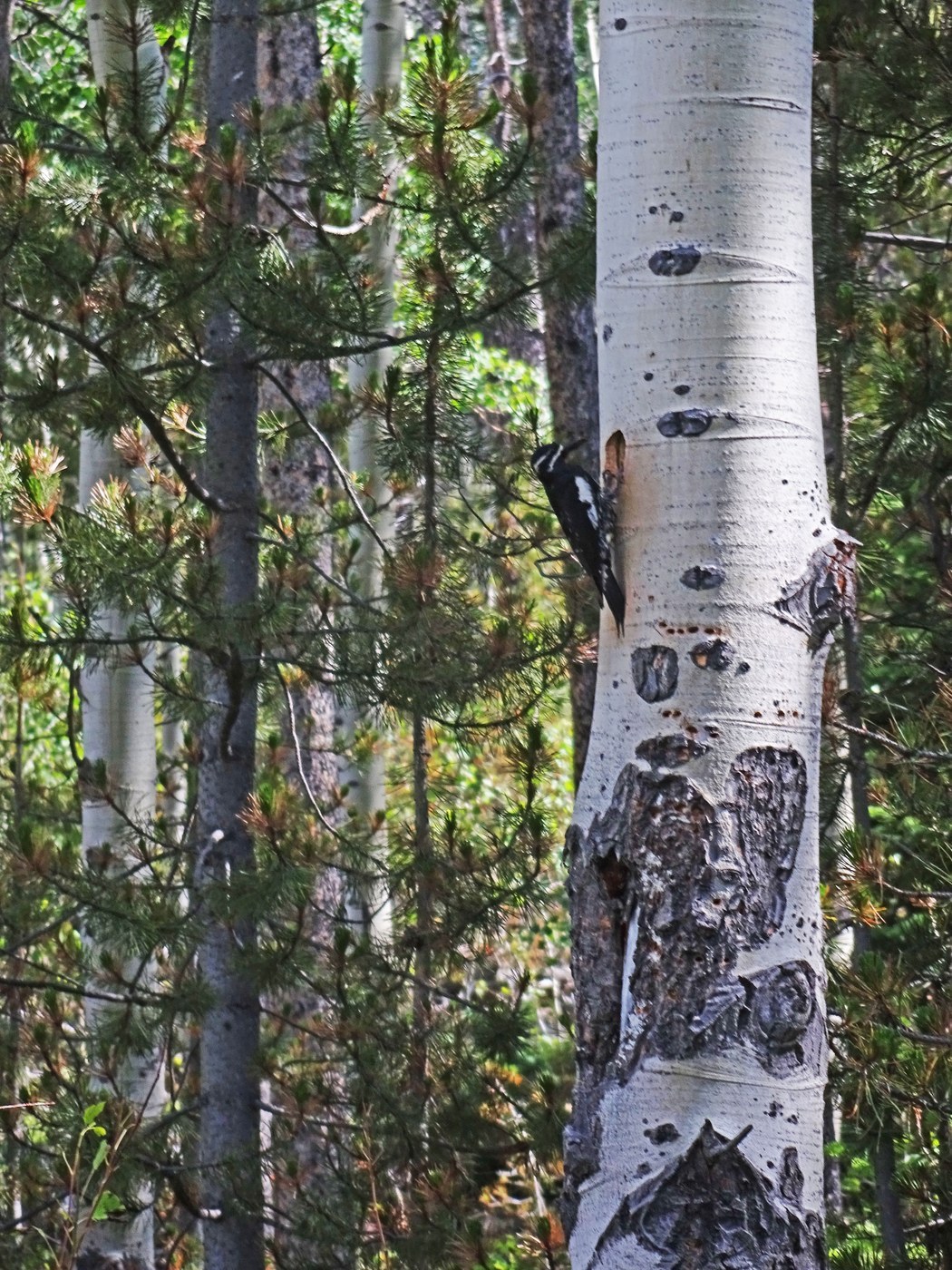
Williamson's Sapsucker
Strongly sexually dimorphic body feathers, glossy black or finely barred brown

Yellow-crowned Woodpecker
Contour and flight feathers

White Woodpecker
Mostly white body feathers with contrasting black wings and back

Red-throated Wryneck
Soft, cryptically mottled contour feathers

White-bellied Woodpecker
Large, glossy black contour and flight feathers

White-backed Woodpecker
Barred back feathers rather than a solid white patch
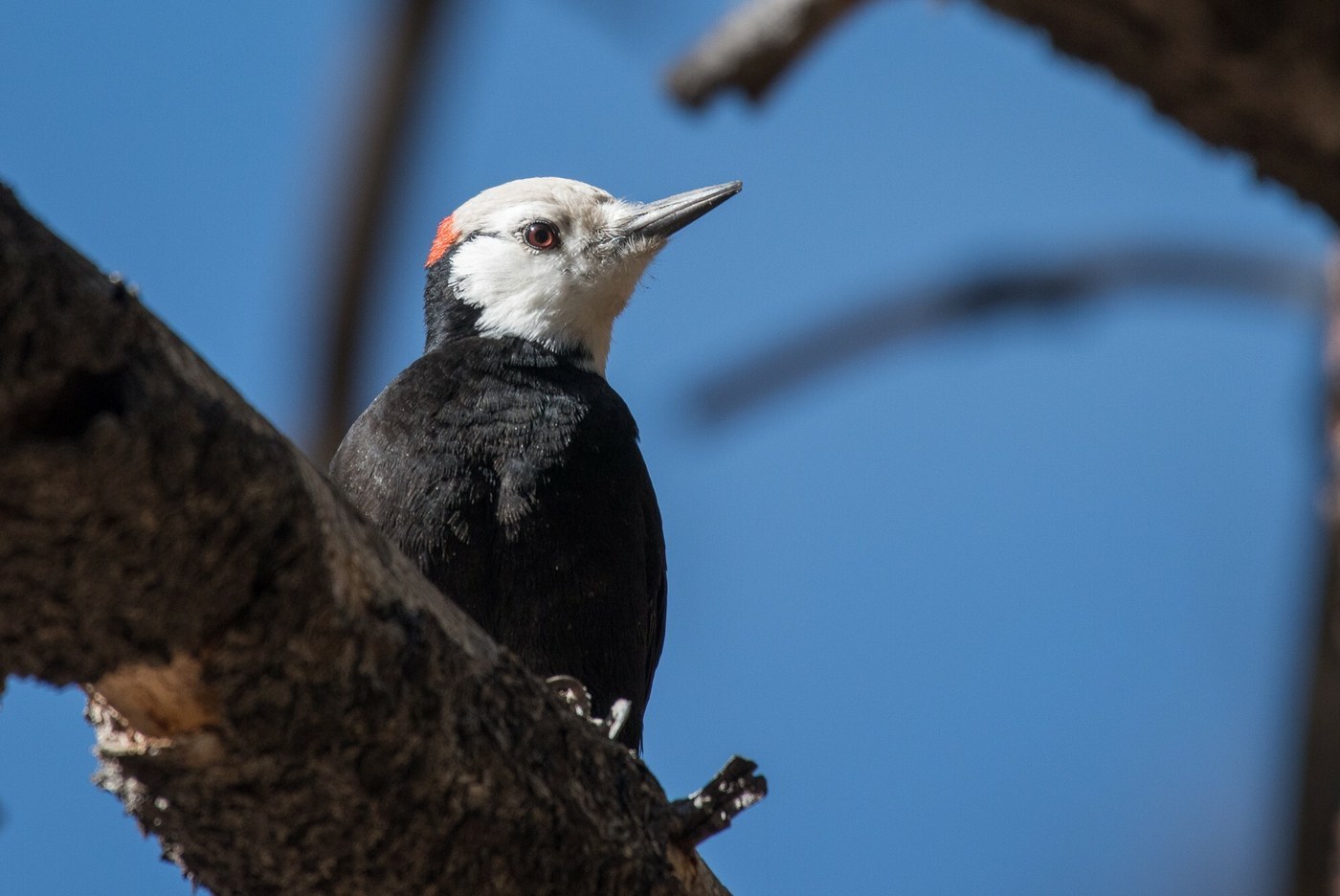
White-headed Woodpecker
Solid black body feathers with an entirely white head