

Collared Inca
Coeligena torquata
A dark, glossy Andean hummingbird easily recognized by the bold white patch across its chest, contrasting sharply with its otherwise blackish-green plumage.
- Feather type
- Dense contour feathers with a bold white breast band
- Colours
- Glossy black-green body with a broad white chest patch and white tail edges
- Bird size
- Medium hummingbird, ~13-14 cm
Found a feather like this?
Identify any feather from a photo, free.
Overview
Overview
The Collared Inca is a distinctive cloud-forest hummingbird found along the Andes, where it inhabits humid forest interior and edges at middle to upper elevations. Its striking white chest patch against dark plumage makes it one of the more readily identifiable Andean hummingbirds.
Both sexes show generally similar dark, glossy plumage with a prominent white breast patch, though subtle differences in gloss and underpart extent of white can help separate males and females.
Identifying the Feather
Feather Identification
- Body feathers: Glossy blackish-green overall, with a coppery or bronze sheen on the back in good light
- Breast feathers: Bold, well-defined white patch crossing the upper chest, contrasting sharply with the dark surrounding plumage
- Tail feathers: Dark with white tips or edges on the outer feathers, visible when the tail is fanned
- Shaft color: Dark above, pale within the white breast patch
- Size: Medium-sized, larger-bodied than many forest hummingbirds sharing its range
- Similar species: The bold white chest collar is distinctive; no other similarly dark Andean hummingbird shows such a sharply defined white breast band
Plumage & Molt
Plumage Details
Adults are mostly glossy blackish-green with a conspicuous white patch across the breast and white tips on the outer tail feathers. Some subspecies show a small white spot behind the eye. Sexes are generally similar, though females can appear slightly duller. Juveniles resemble adults but with less defined gloss and a less crisp white breast patch until after their first molt. No strong seasonal plumage change occurs.
Habitat & Range
Habitat & Range
Collared Incas are found in humid montane and cloud forest along the Andes from Venezuela and Colombia south through Ecuador and Peru to Bolivia, typically at middle to upper elevations within forest interior and edge habitats. The species is resident and non-migratory throughout its range.
Behavior & Field Notes
Behavior & Field Notes
This hummingbird feeds on nectar from a range of understory and canopy flowers, often trap-lining regular routes between blooms, and supplements its diet with small insects caught in flight. It can be territorial around rich nectar sources, chasing off other hummingbirds. Nests are cup-shaped, built from moss and plant fibers on sheltered branches. Calls include sharp chips and buzzy chatter notes typical of forest hummingbirds.
Frequently asked questions
How do I identify a Collared Inca feather?
Look for glossy blackish-green body feathers paired with a bold, well-defined white patch across the chest.
Is the white chest patch present in both sexes?
Yes, both sexes show the white breast patch, though it may appear slightly less crisp in females and juveniles.
What kind of forest does this species prefer?
Humid montane cloud forest interior and edges at middle to upper Andean elevations.
Does the tail show any distinct markings?
Yes, the outer tail feathers often show white tips or edges, visible when the tail is spread.
Collared Inca guides
In-depth guides for identifying and understanding Collared Inca.

Other feathers you may enjoy

Speckled Hummingbird
Small contour feathers with fine speckled underpart markings
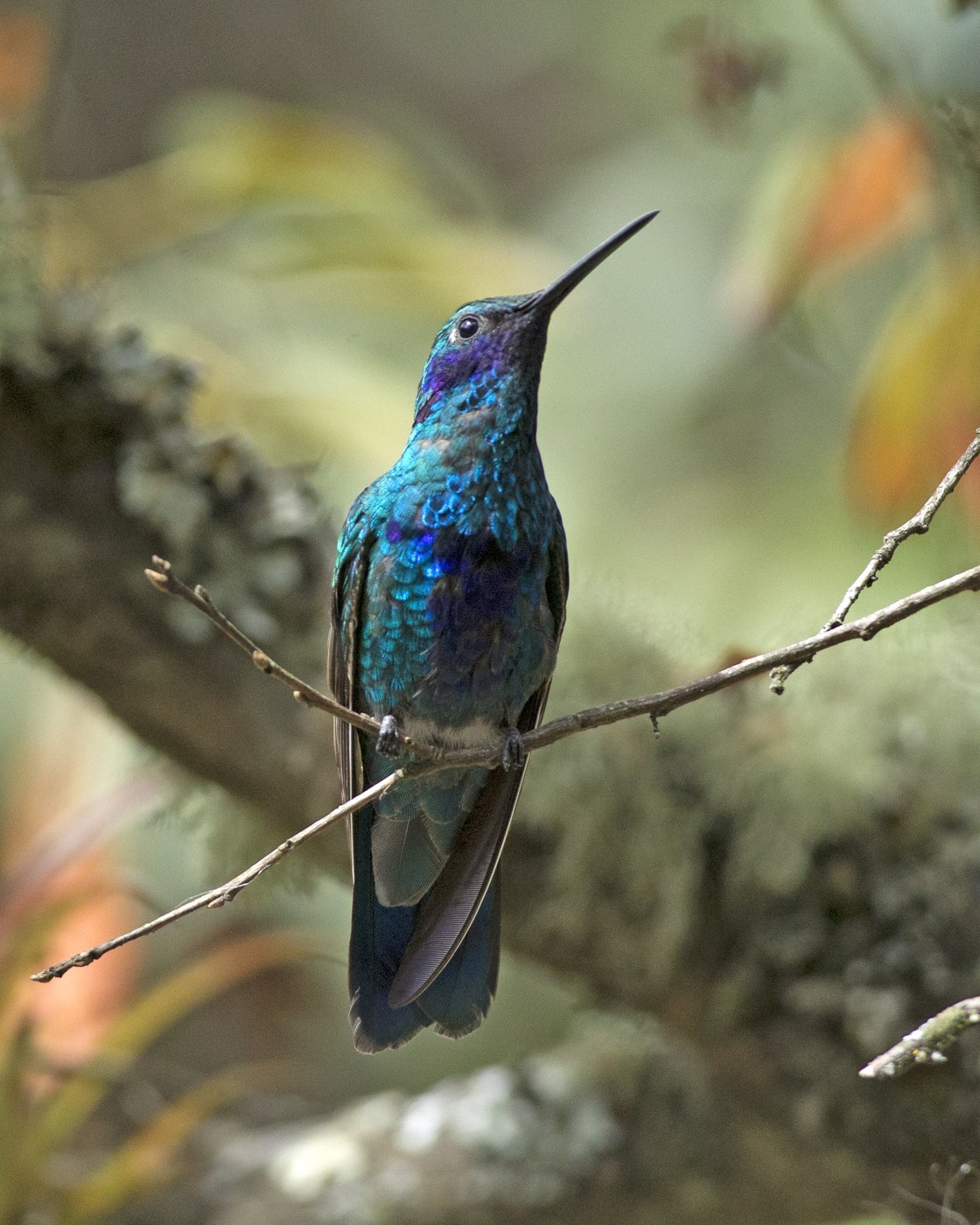
Sparkling Violetear
Iridescent body feathers, large violet ear and chest patches
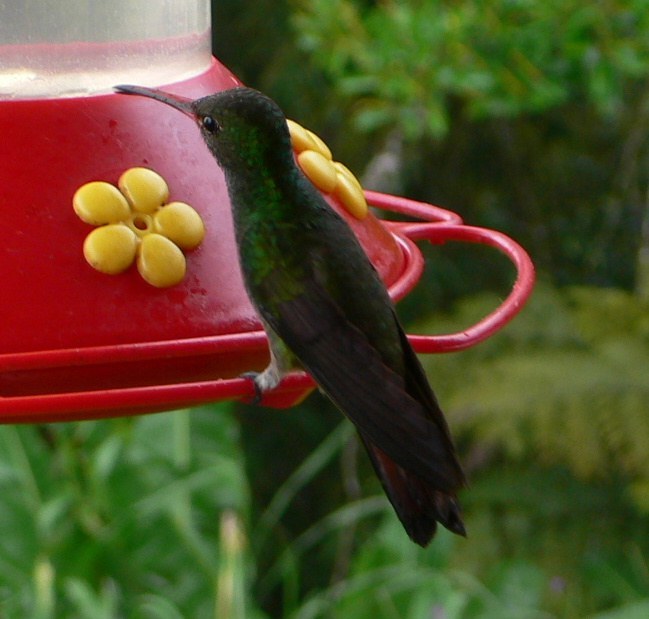
Rufous-tailed Hummingbird
Iridescent throat and breast feathers, rufous tail feathers

Rufous-breasted Hermit
Slightly decurved bill with rufous-washed contour feathers
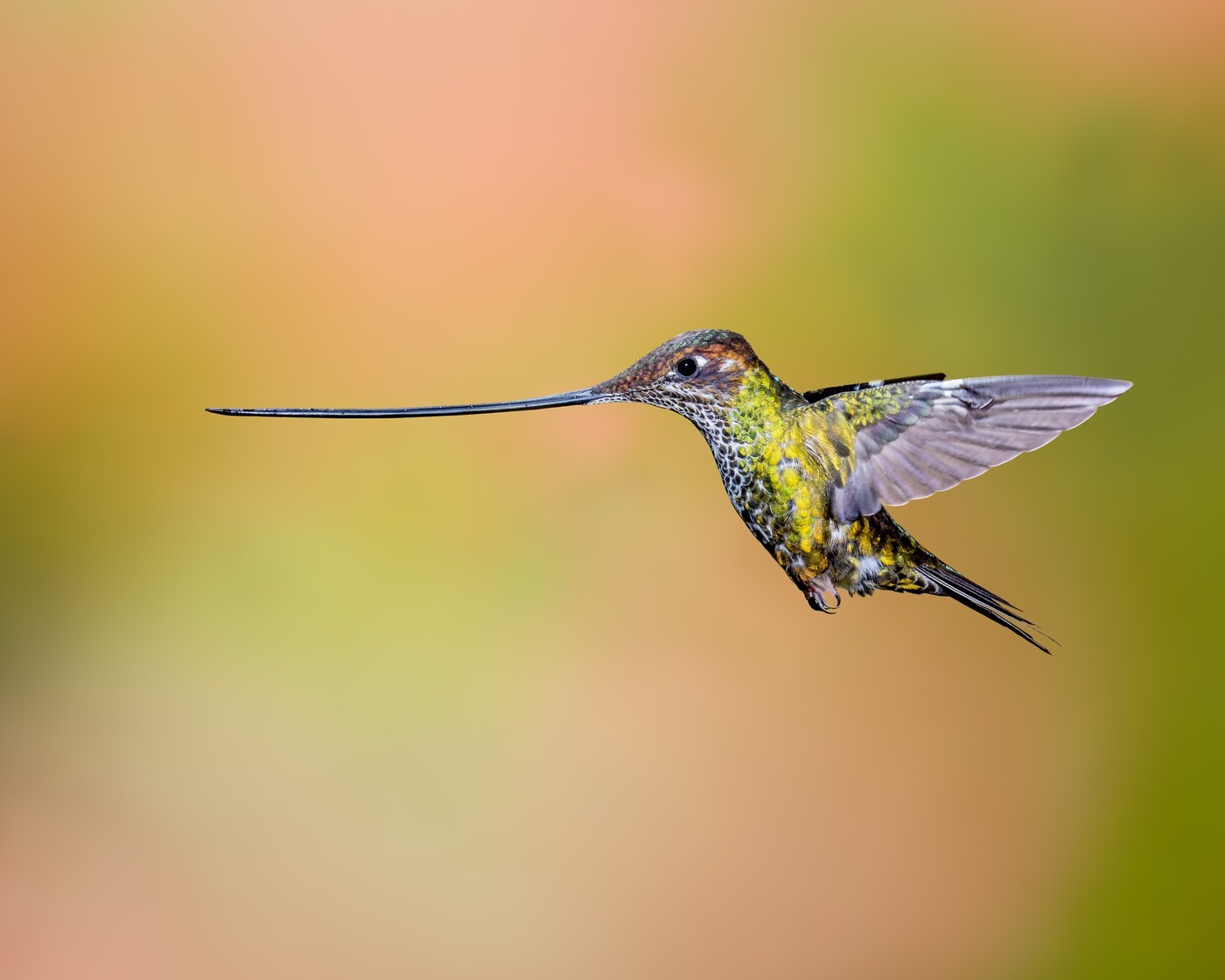
Sword-billed Hummingbird
Iridescent body feathers, extraordinarily long bill (non-feather feature)
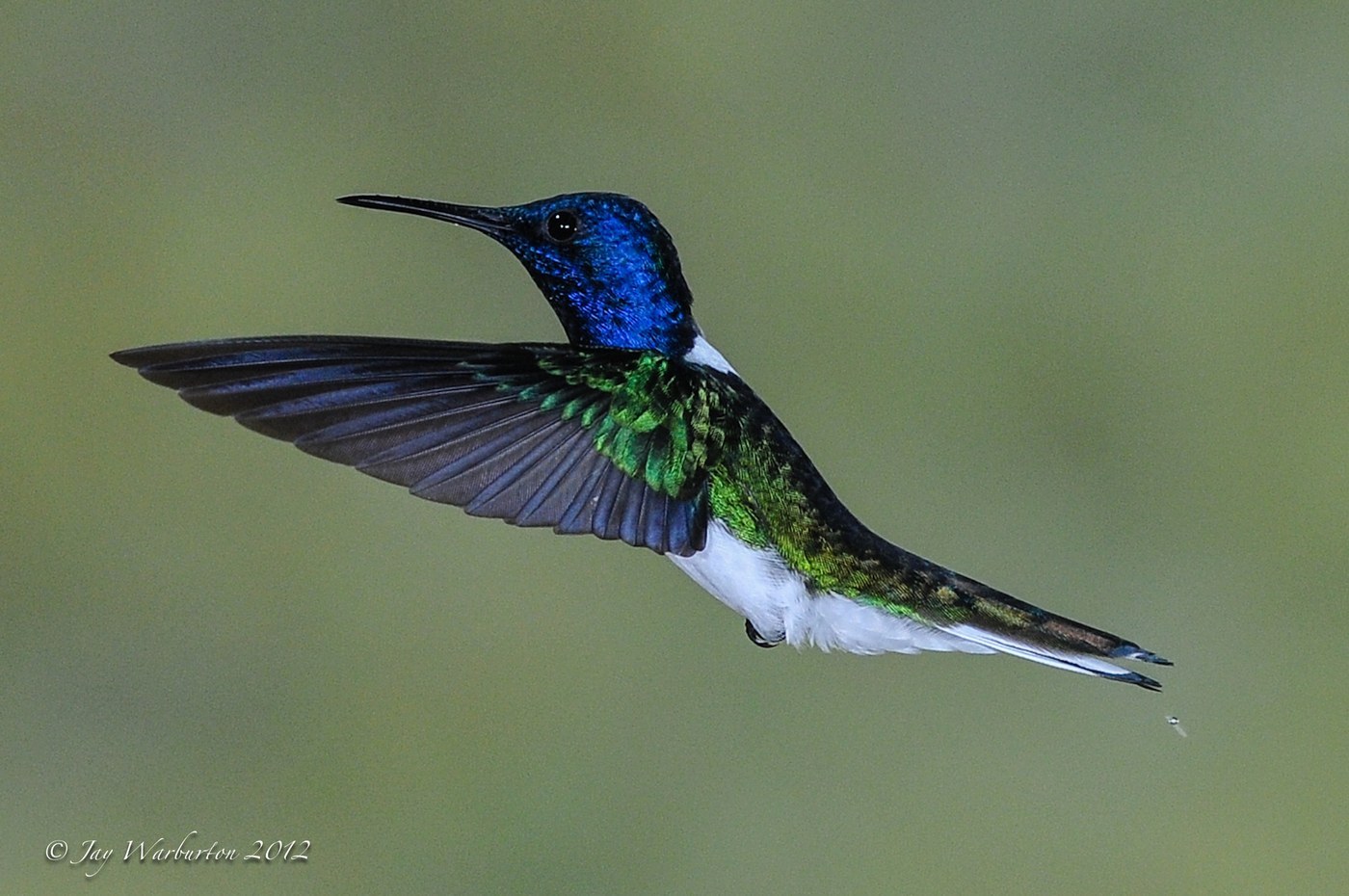
White-necked Jacobin
Iridescent head feathers, contrasting white nape and belly

White-eared Hummingbird
Iridescent gorget feathers, bold facial stripe
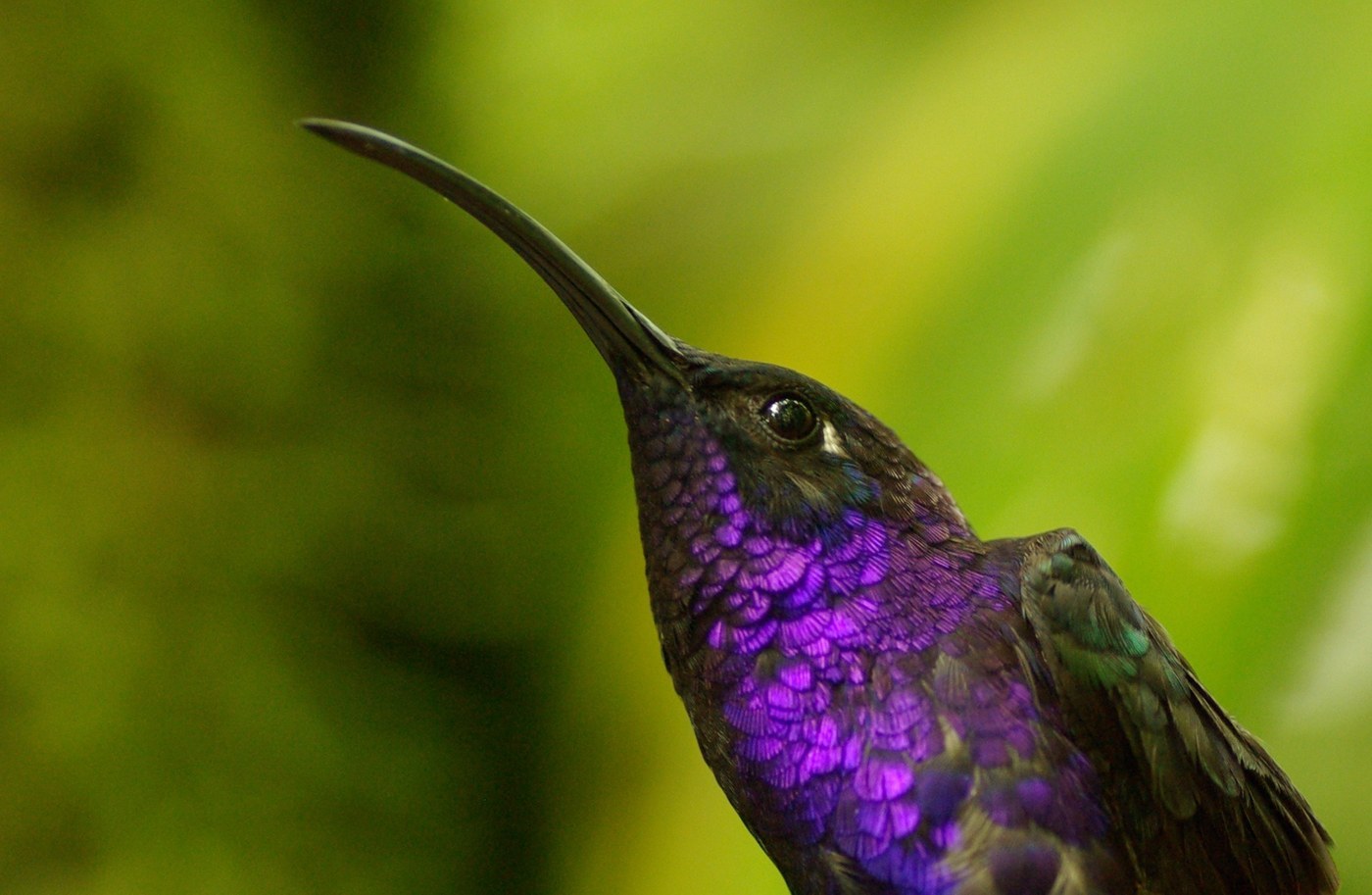
Violet Sabrewing
Iridescent body feathers, thickened curved primary shafts

Velvet-purple Coronet
Dense, velvety contour feathers with iridescent crown patch

Violet-crowned Hummingbird
Iridescent crown feathers, clean white underparts

Shining Sunbeam
Iridescent contour feathers with coppery-bronze wing sheen

Rufous Hummingbird
Tiny contour, gorget, and narrow flight feathers