
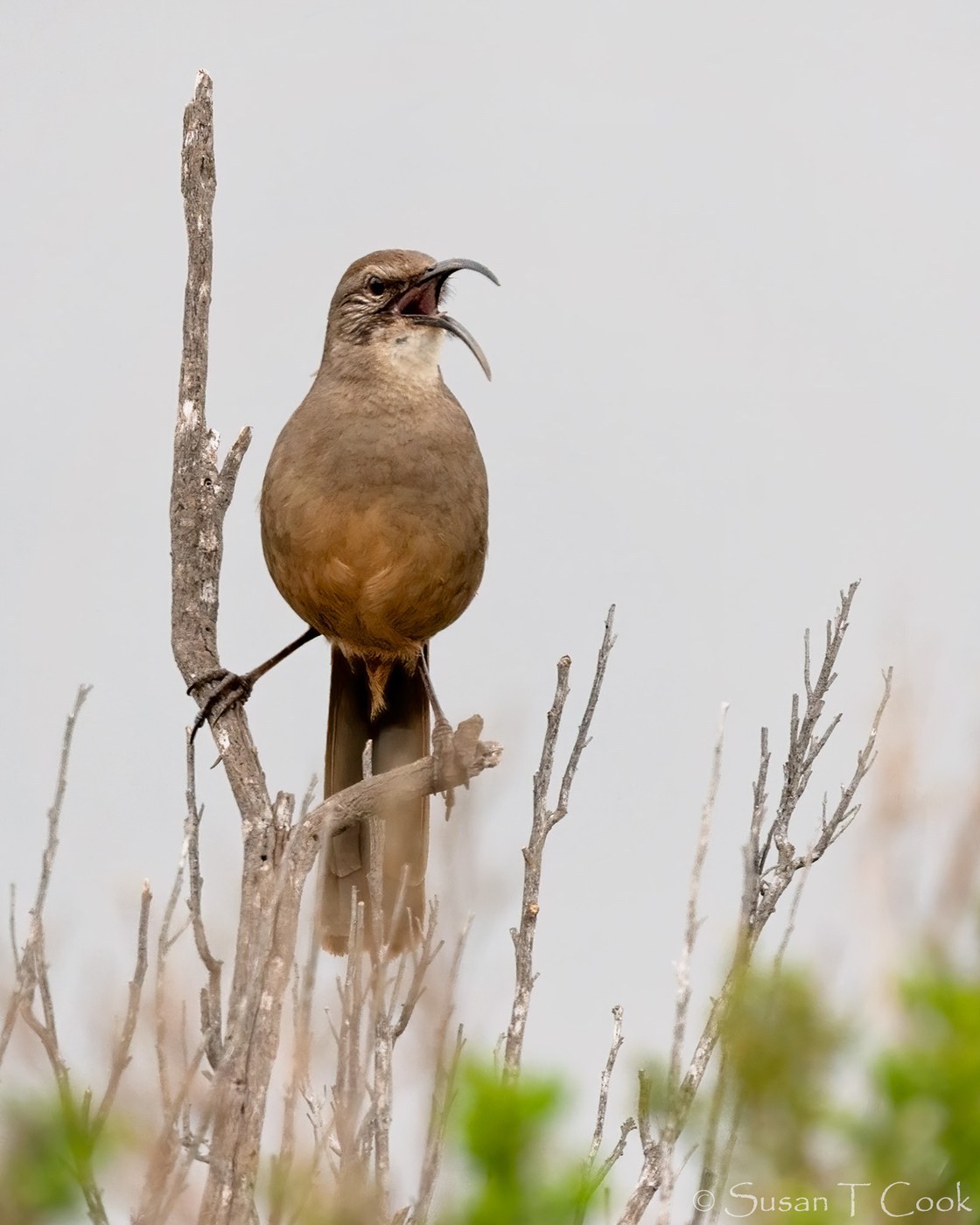
California Thrasher
Toxostoma redivivum
The largest North American thrasher, a dark chocolate-brown bird of California chaparral with a long, strongly curved bill adapted for digging through leaf litter.
- Feather type
- Long tail and flight feathers; sturdy body feathers
- Colours
- Dark chocolate-brown above, paler buffy-brown below
- Bird size
- Robin-sized to slightly larger, ~31 cm (largest North American thrasher)
Found a feather like this?
Identify any feather from a photo, free.
Overview
The California Thrasher is the largest thrasher species in North America, a dark, long-tailed songbird endemic to the chaparral and coastal scrub habitats of California and northern Baja California. Its notably long, strongly down-curved bill is used to dig through leaf litter and soil for food, and the species is more often heard than seen as it moves through dense cover.
Identifying the Feather
Flight feathers: dark brown, broad and rounded, suited for short flights within dense shrub cover rather than long-distance flight. Tail feathers: very long and graduated, dark brown, contributing to the species' notably long-tailed silhouette. Body feathers: dark chocolate-brown above, warmer buffy-brown on the belly and undertail coverts, with unspotted underparts (unlike many other thrashers) and a pale buffy throat bordered by a faint dark malar stripe. This unspotted underparts pattern and dark, rich brown coloration separate California Thrasher feathers from the paler, faintly spotted Curve-billed Thrasher.
Plumage & Molt
Sexes look alike. Adults show dark chocolate-brown upperparts, warm buffy-brown underparts without spotting, a pale buffy throat, and a long, strongly curved dark bill. Juveniles are similar but slightly duller and softer in texture, with a shorter bill that lengthens and curves more strongly with age. There is no marked seasonal plumage change.
Habitat & Range
California Thrashers are largely restricted to dense chaparral and coastal scrub habitats within California and adjacent northern Baja California, Mexico. The species is non-migratory and highly sedentary, with most individuals remaining within a small home range for life.
Behavior & Field Notes
This thrasher forages primarily on the ground, using its long curved bill to sweep through leaf litter and soil in search of insects and other invertebrates, also taking plant material seasonally. It builds a bulky twig nest low in dense shrubs. Rather than fly conspicuously, it tends to run or hop through cover, and its rich, varied song, which includes frequent mimicry, is often the best clue to its presence in dense chaparral.
Frequently asked questions
What is the most distinctive feather feature of the California Thrasher?
Its dark chocolate-brown, unspotted plumage combined with an exceptionally long, strongly curved bill distinguishes it from other North American thrashers.
How does this species compare in size to other thrashers?
It is the largest thrasher species in North America, with correspondingly longer tail and flight feathers than smaller relatives like the Sage Thrasher.
Why are California Thrasher feathers rarely spotted below?
Unlike many other thrashers, this species has plain, unspotted underparts, which is a useful distinguishing feature from the faintly spotted Curve-billed Thrasher.
Where is this species typically found?
It is restricted to dense chaparral and coastal scrub habitat within California and adjacent northern Baja California, rarely straying from this specific habitat type.
California Thrasher guides
In-depth guides for identifying and understanding California Thrasher.
Other feathers you may enjoy

Yellow-breasted Bunting
Contour and flight feathers, chestnut-and-yellow breeding pattern

Sedge Wren
Tiny streaked crown and back feathers

Yellow-winged Cacique
Glossy black body feathers, yellow wing patch, shaggy crest

Yellow Warbler
Small contour and flight feathers

Yellow-throated Warbler
Small contour and flight feathers

Yellow-throated Vireo
Bright yellow throat and spectacle feathers; olive-green back feathers; two white wing-bar feathers

Yellow-rumped Warbler
Small contour and flight feathers

Yellow-hooded Blackbird
Contrasting hood and body feathers

Yellow-headed Blackbird
Glossy black body plumage with a bright yellow head and breast

Yellow-eyed Junco
Contour and flight feathers

Yellow-fronted Canary
Small, smooth body plumage

Yellow-breasted Greenfinch
Compact, smooth body plumage