
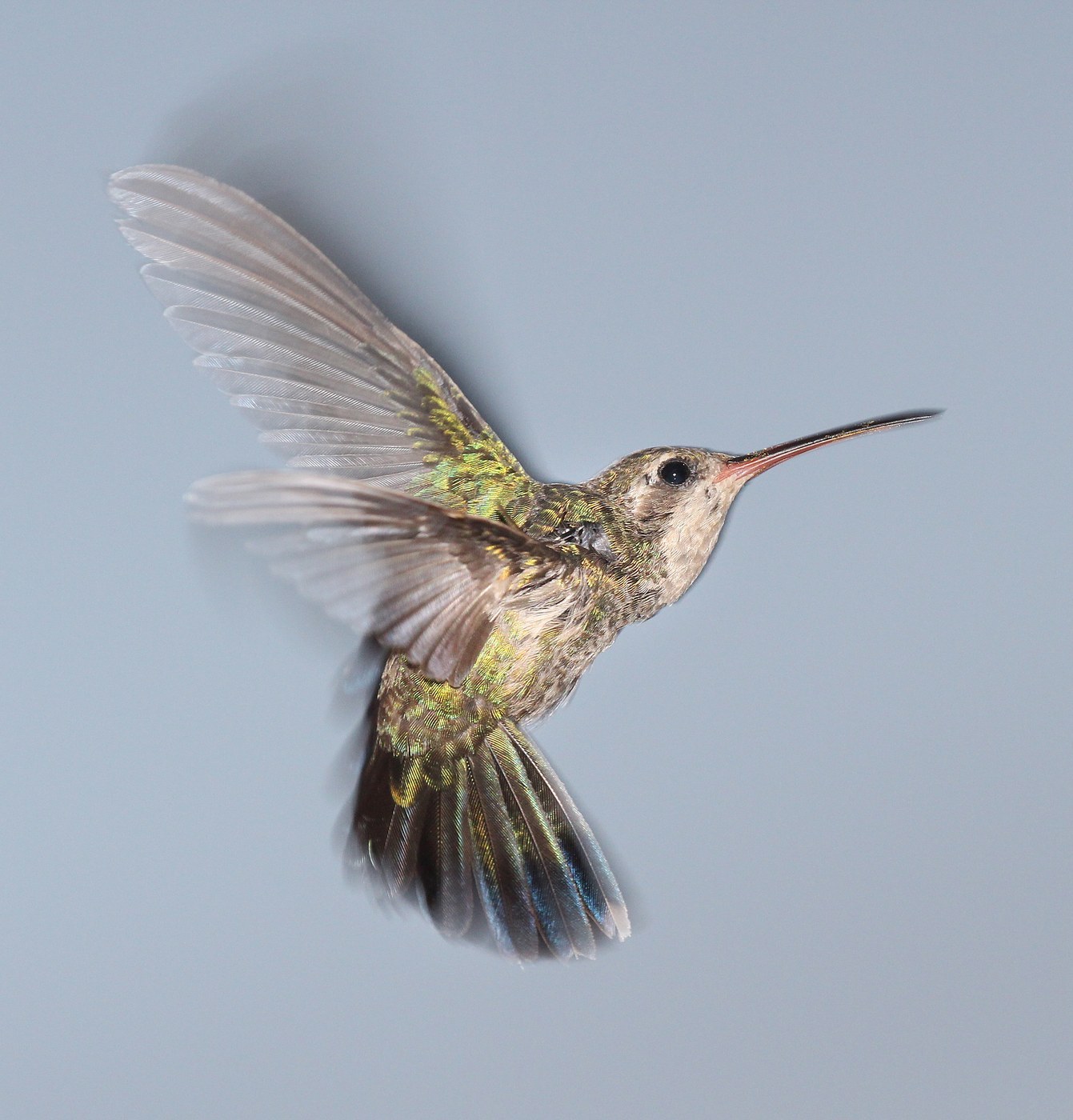
Broad-billed Hummingbird
Cynanthus latirostris
A desert-canyon hummingbird with a bright coral-red, black-tipped bill and a male plumage that glows blue-green from throat to breast.
- Feather type
- Iridescent gorget and body feathers, forked tail feathers
- Colours
- Blue-green throat and breast, bronze-green back, blue-black forked tail
- Bird size
- Small, ~9.5 cm
Found a feather like this?
Identify any feather from a photo, free.
Overview
Overview
The Broad-billed Hummingbird is a resident of arid canyons, washes, and streamside vegetation in the southwestern United States and much of Mexico. Its bright bicolored bill is often the first clue to identification, standing out even at a distance and in poor light when the body's iridescence is hard to judge.
Males show extensive blue-green iridescence across the throat and underparts along with a distinctly forked, blue-black tail, while females are far plainer, identified mainly by the same reddish bill base and a bold white stripe behind the eye.
Identifying the Feather
Feather ID Notes
Male body feathers show a continuous wash of iridescent blue-green from chin through breast, distinguishing them from species with a limited gorget patch. The tail feathers are dark blue-black and notably forked, unlike the squared or rounded tails of many similarly sized hummingbirds.
- Throat/breast feathers: iridescent blue-green, extensive rather than patch-like
- Back feathers: bronzy green
- Tail feathers: blue-black, forked shape
- Bill: coral-red with a black tip, a useful non-feather ID clue Females lack the blue-green underparts, showing gray-white feathering below with green upperparts, and are best told from similar females by the eyestripe and bill color.
Plumage & Molt
Plumage Details
Adult males are the more striking sex, with glittering blue-green feathering covering the throat and breast and a forked black tail. Adult females are duller, gray-white below with green upperparts and a prominent white stripe behind the eye. Immature birds resemble females, with young males gradually acquiring throat iridescence through their first year. No distinct seasonal plumage exists; feather wear and an annual molt refresh the coloration.
Habitat & Range
Habitat & Range
This species favors desert canyons, arid scrub, and streamside woodland from the southwestern United States (Arizona, New Mexico, Texas) south through much of Mexico. Populations in the northern part of the range are migratory, moving south for winter, while those farther south in Mexico tend to be year-round residents.
Behavior & Field Notes
Behavior & Field Notes
Broad-billed Hummingbirds feed on nectar from tubular desert and canyon flowers and take small insects on the wing, often hovering low near shrubs and vines. Males perform modest display flights near favored feeding areas and can be territorial around nectar sources. Nests are small cups of plant fiber and spider silk placed low in shrubs or small trees, often near water. Calls include a dry, buzzy chattering note given in flight and while perched.
Frequently asked questions
What is the easiest way to identify a Broad-billed Hummingbird?
Look for the bright coral-red, black-tipped bill combined with extensive blue-green iridescence on the male's throat and breast.
How does the tail help with identification?
The blue-black, forked tail is more deeply notched than in many other similarly sized hummingbirds.
What do females look like?
Females are gray-white below with green upperparts and a bold white eyestripe, lacking the male's colorful throat.
Are Broad-billed Hummingbirds migratory?
Northern populations migrate south for winter, while southern Mexican populations tend to remain resident year-round.
Broad-billed Hummingbird guides
In-depth guides for identifying and understanding Broad-billed Hummingbird.
Other feathers you may enjoy

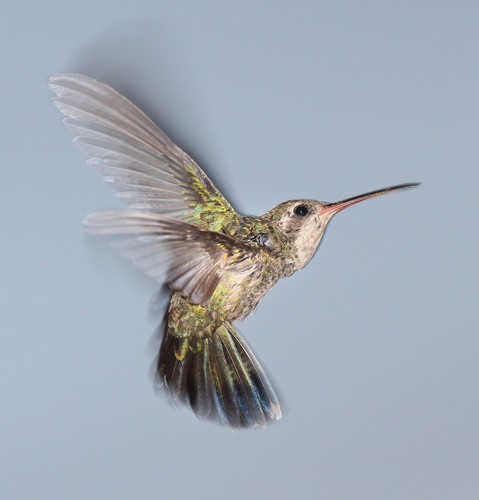
Speckled Hummingbird
Small contour feathers with fine speckled underpart markings
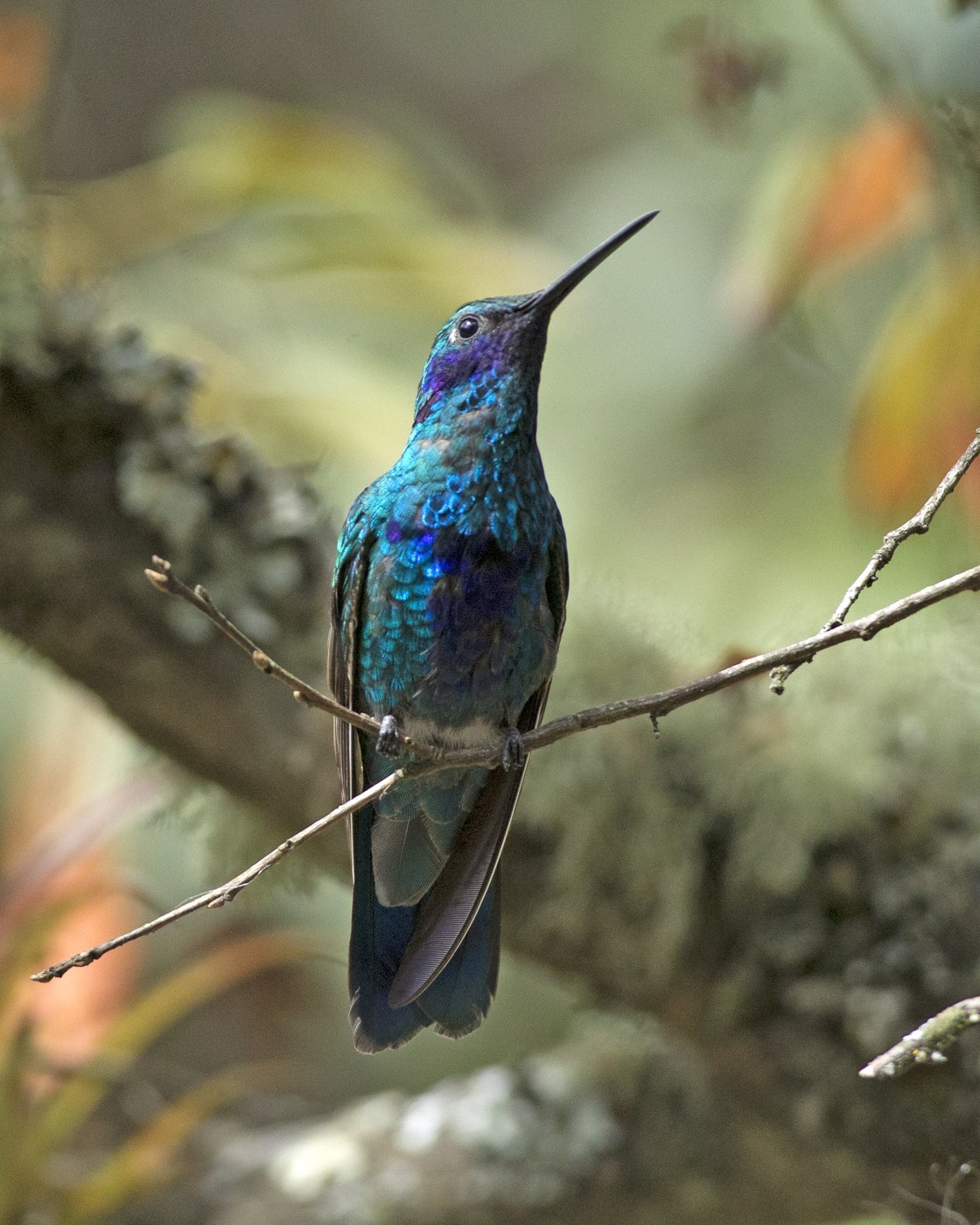
Sparkling Violetear
Iridescent body feathers, large violet ear and chest patches
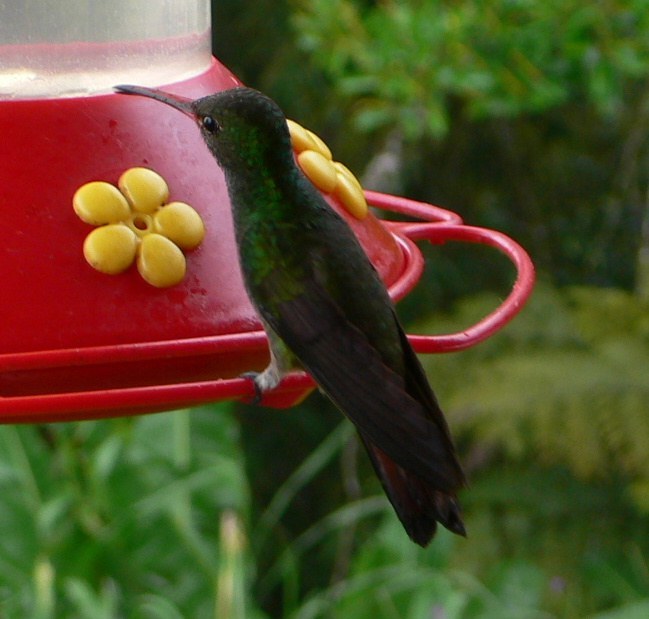
Rufous-tailed Hummingbird
Iridescent throat and breast feathers, rufous tail feathers

Rufous-breasted Hermit
Slightly decurved bill with rufous-washed contour feathers
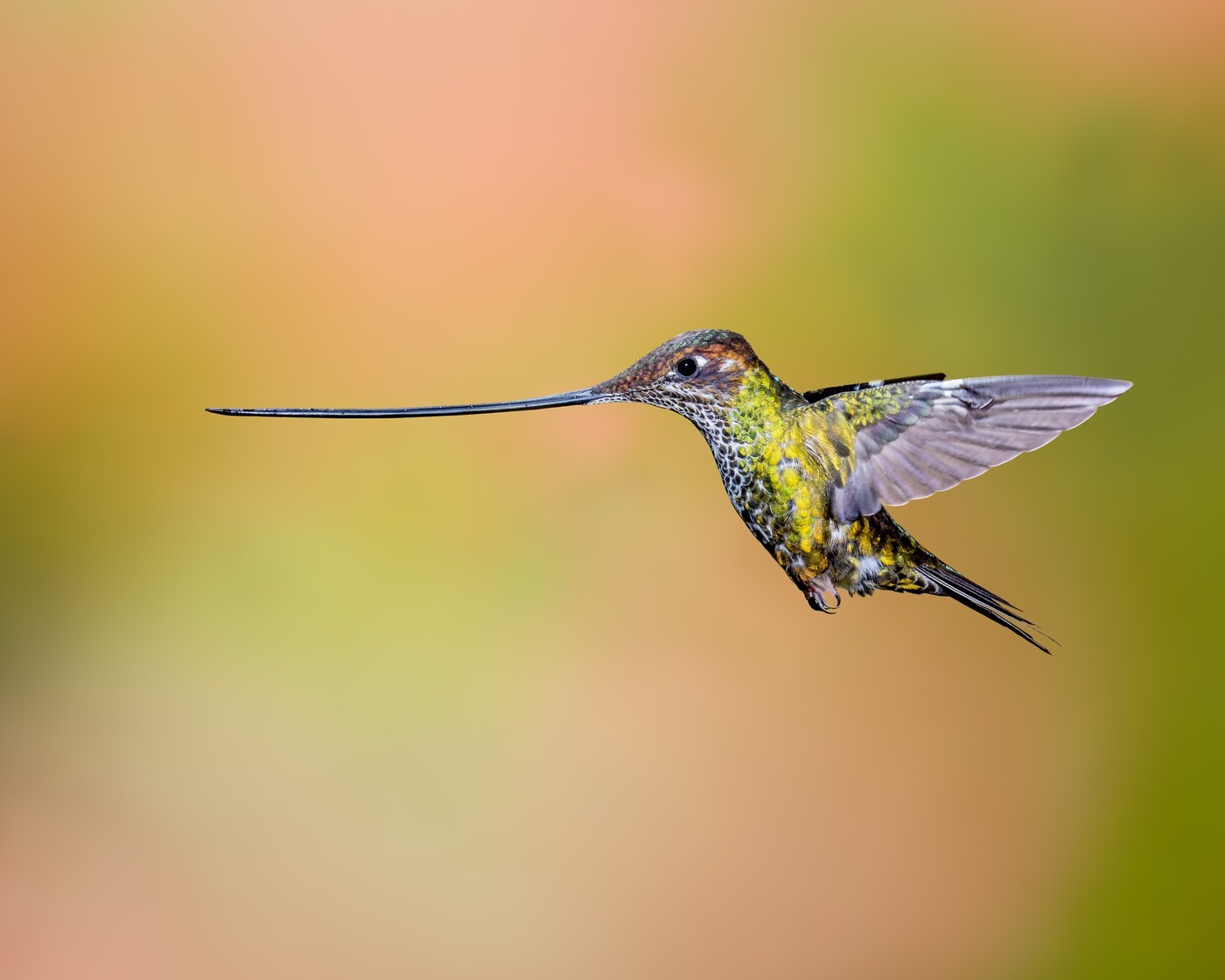
Sword-billed Hummingbird
Iridescent body feathers, extraordinarily long bill (non-feather feature)
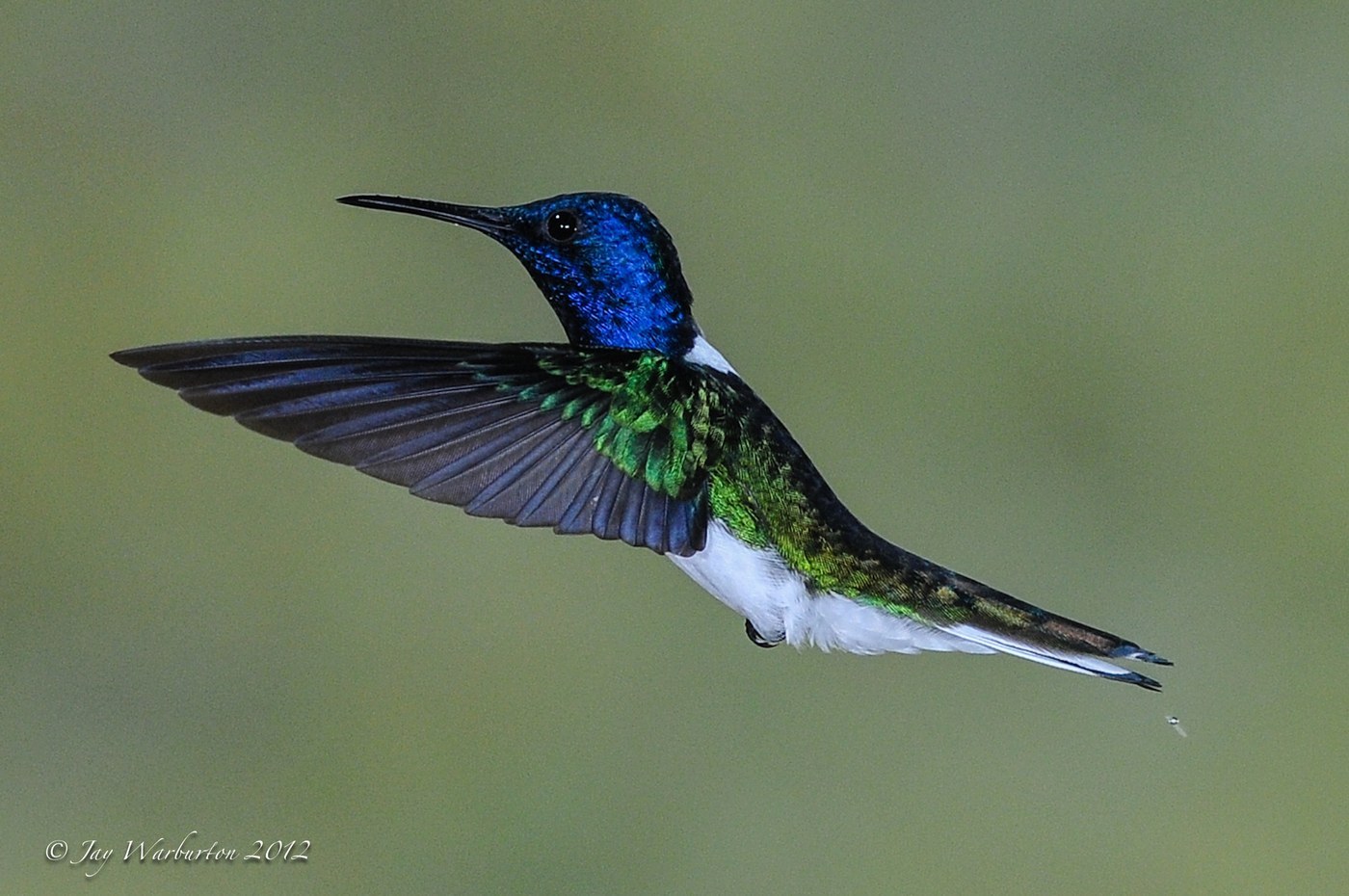
White-necked Jacobin
Iridescent head feathers, contrasting white nape and belly

White-eared Hummingbird
Iridescent gorget feathers, bold facial stripe
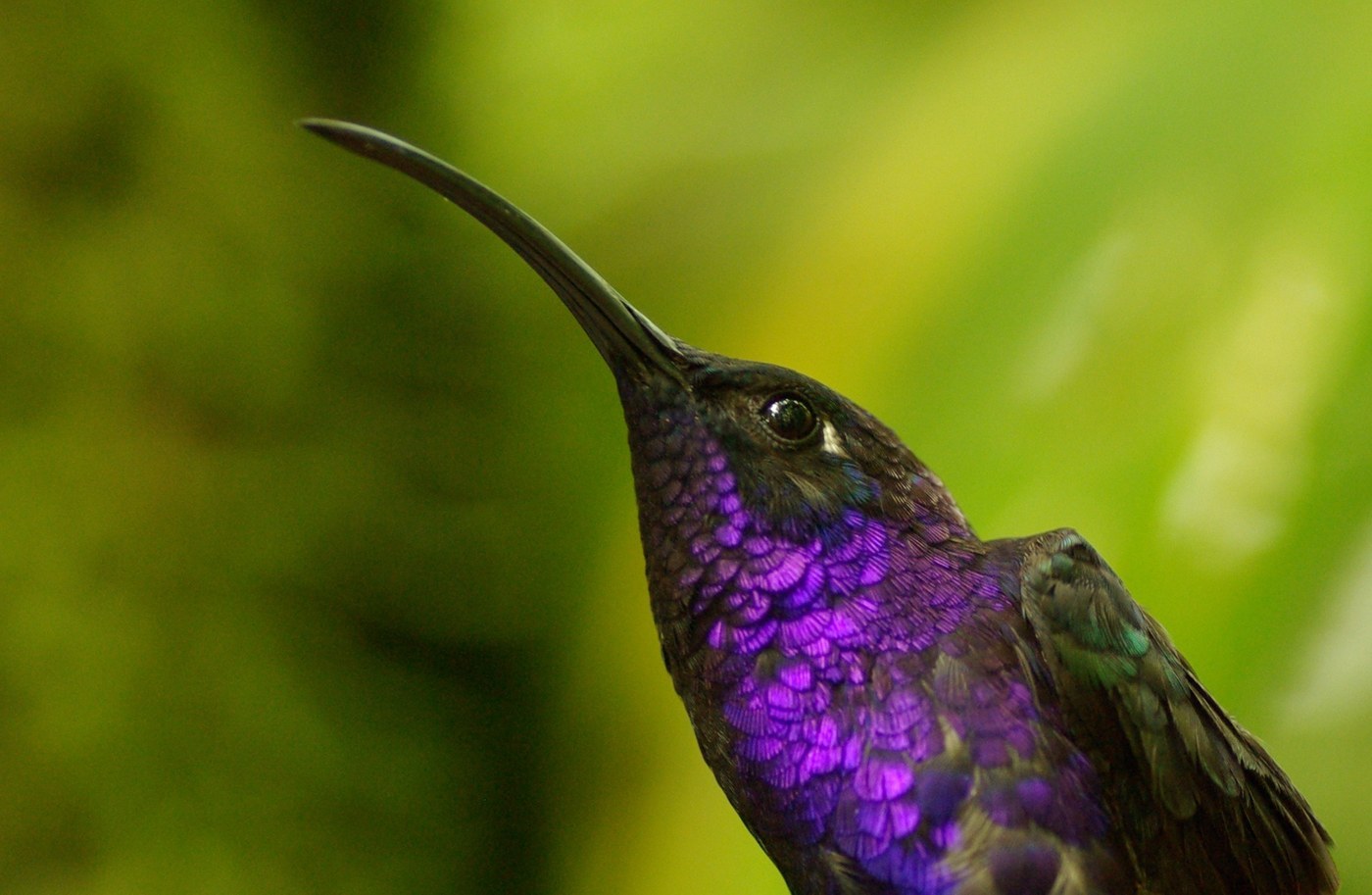
Violet Sabrewing
Iridescent body feathers, thickened curved primary shafts

Velvet-purple Coronet
Dense, velvety contour feathers with iridescent crown patch

Violet-crowned Hummingbird
Iridescent crown feathers, clean white underparts

Shining Sunbeam
Iridescent contour feathers with coppery-bronze wing sheen

Rufous Hummingbird
Tiny contour, gorget, and narrow flight feathers