
Bridled Titmouse
Baeolophus wollweberi
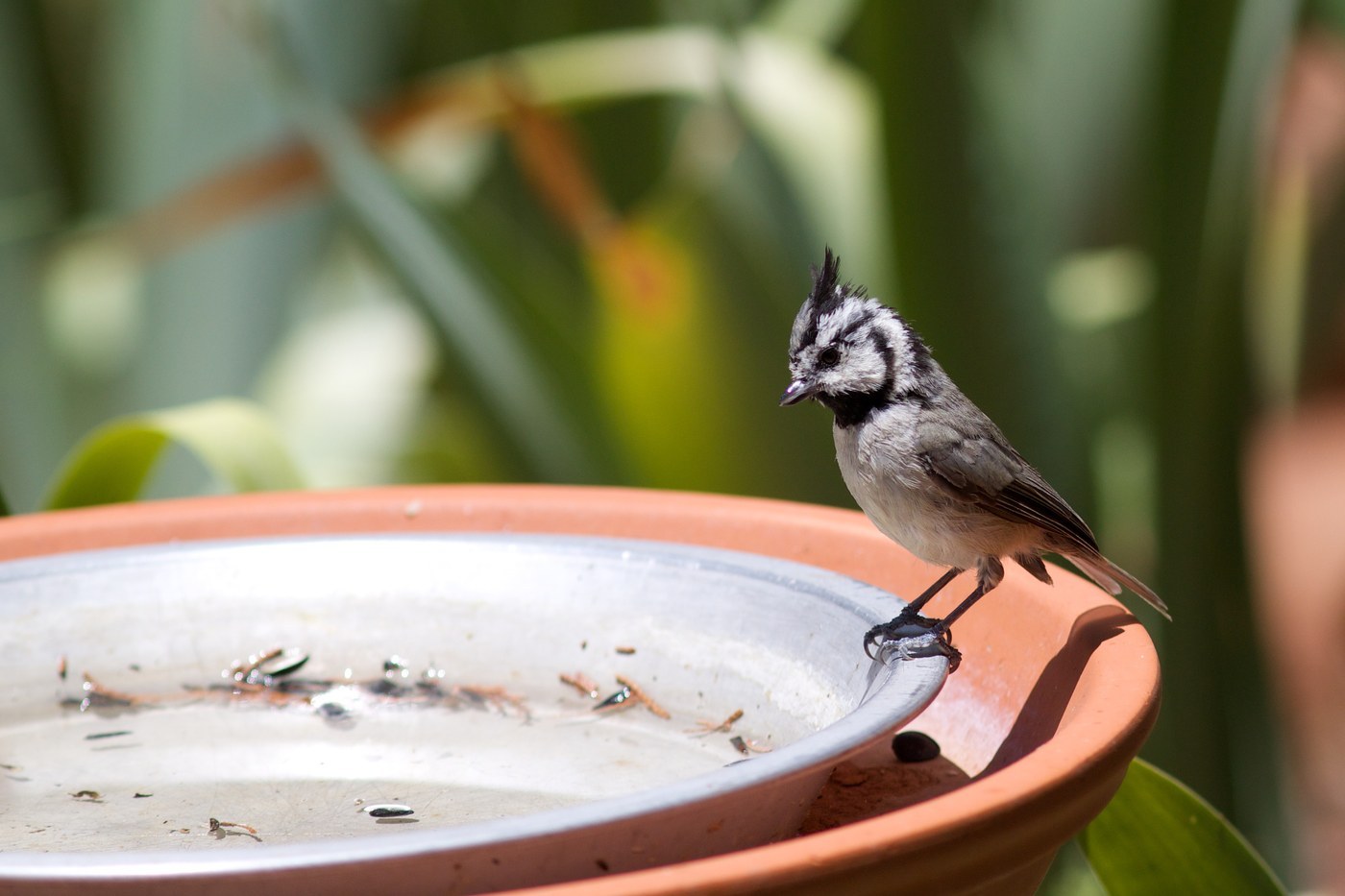
The Bridled Titmouse is a small, crested songbird distinguished by its striking black-and-white facial pattern resembling a bridle, found in oak and pine-oak canyons of the borderlands.
- Feather type
- Crested body plumage with a bold black-and-white facial pattern
- Colours
- Gray body, black-and-white striped face, black bib
- Bird size
- Small titmouse, ~12-13 cm
Found a feather like this?
Identify any feather from a photo, free.
Overview
Overview
The Bridled Titmouse is a distinctive small titmouse of the southwestern borderlands, named for the black-and-white harness-like pattern across its face and crest. It favors oak and pine-oak woodland in mountain canyons of Arizona, New Mexico, and Mexico.
- Only North American titmouse with a strongly patterned face
- Tied closely to oak and pine-oak canyon woodland
- Non-migratory resident of the borderlands region
Identifying the Feather
Feather Identification
Bridled Titmouse feathers show more facial patterning than any other North American titmouse.
- Crest feathers: Gray with black tips forming a two-toned peaked crest
- Face feathers: Bold black-and-white striping forming a bridle-like pattern around the eye and crest
- Throat feathers: Small black bib beneath the chin
- Body feathers: Plain gray above, whitish-gray below, without streaking
- The black-and-white striped face and bib are diagnostic and separate shed Bridled Titmouse feathers from the plainer-faced Juniper or Oak Titmouse
Plumage & Molt
Plumage, Sex & Age Differences
Males and females look alike, both showing the same striking facial pattern, gray crest with dark tips, and small black throat patch. Juveniles show a duller, less defined facial pattern that sharpens after the first molt. A single complete molt takes place after the breeding season.
Habitat & Range
Habitat & Range
Bridled Titmice are non-migratory residents of oak, pine-oak, and sycamore canyon woodlands in the mountains of southeastern Arizona, southwestern New Mexico, and much of Mexico. They generally remain at mid-elevations year-round, closely associated with oak-dominated woodland.
Behavior & Field Notes
Behavior, Voice & Field Notes
Bridled Titmice forage actively and acrobatically through oak canopy for insects and seeds, often in small flocks with other woodland songbirds. Their call is a scolding, chickadee-like chatter, and their song is a simple whistled series. They nest in natural cavities or old woodpecker holes in oaks or sycamores.
Frequently asked questions
What makes Bridled Titmouse feathers recognizable?
The bold black-and-white striped facial pattern and small black throat bib, unique among North American titmice.
Where do Bridled Titmice live?
Oak and pine-oak canyon woodlands of the southwestern U.S. borderlands and Mexico.
Do male and female Bridled Titmice differ in plumage?
No, the sexes look alike.
Are Bridled Titmice migratory?
No, they are non-migratory year-round residents of their woodland habitat.
Bridled Titmouse guides
In-depth guides for identifying and understanding Bridled Titmouse.
Other feathers you may enjoy

Yellow-breasted Bunting
Contour and flight feathers, chestnut-and-yellow breeding pattern

Sedge Wren
Tiny streaked crown and back feathers

Yellow-winged Cacique
Glossy black body feathers, yellow wing patch, shaggy crest

Yellow Warbler
Small contour and flight feathers

Yellow-throated Warbler
Small contour and flight feathers

Yellow-throated Vireo
Bright yellow throat and spectacle feathers; olive-green back feathers; two white wing-bar feathers

Yellow-rumped Warbler
Small contour and flight feathers

Yellow-hooded Blackbird
Contrasting hood and body feathers

Yellow-headed Blackbird
Glossy black body plumage with a bright yellow head and breast

Yellow-eyed Junco
Contour and flight feathers

Yellow-fronted Canary
Small, smooth body plumage

Yellow-breasted Greenfinch
Compact, smooth body plumage