
Black-necked Swan
Cygnus melancoryphus
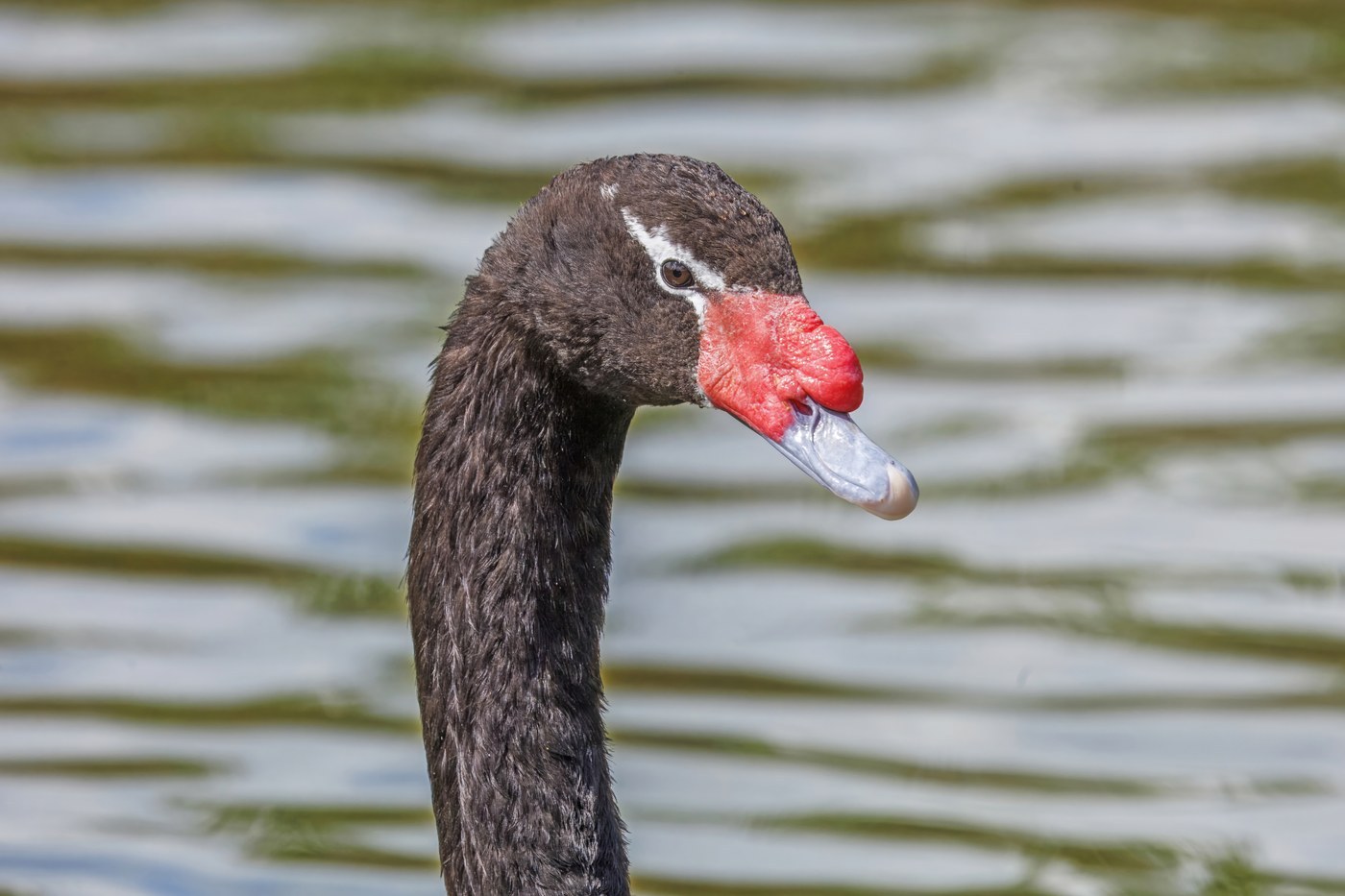
A striking South American swan with a pure white body set off by a jet-black head and neck, plus a bright red facial knob at the base of the bill.
- Feather type
- Contour, down, and flight feathers
- Colours
- White body with a contrasting black head and neck
- Bird size
- Large swan, ~102-124 cm
Found a feather like this?
Identify any feather from a photo, free.
Overview
Overview
The Black-necked Swan is the only swan native to South America, found from central Chile and Argentina south to Tierra del Fuego and the Falkland Islands. Its bold two-toned plumage makes it one of the most visually distinctive waterfowl species in the region.
Unlike many swans that are entirely white, this species carries a striking black neck and head, immediately setting it apart from all other swan species worldwide.
Identifying the Feather
Feather Identification
- Body feathers: pure white across the entire body, wings, and underparts
- Neck and head feathers: solid glossy black, sharply demarcated from the white body at the base of the neck
- Facial marking: a thin white line runs behind the eye, breaking up the black head slightly
- Bare parts: a bright red knob (caruncle) sits at the base of the bill, contrasting with the black facial feathering
- Flight feathers: white primaries and secondaries, visible as a solid white wing in flight
- The combination of an all-white body with a solid black neck is unique among swans and makes this species instantly identifiable even from a distance
Plumage & Molt
Plumage Details
Adults of both sexes look alike, with males slightly larger than females. The stark white body plumage remains constant year-round with no seasonal color change, while the black neck and head feathers stay glossy black in all seasons.
Cygnets (juveniles) are grayish overall with a paler, mottled neck, gradually acquiring the adult black-and-white pattern and red facial knob as they mature over the first year. Adults undergo a complete molt after breeding, during which they become flightless for several weeks like other swans.
Habitat & Range
Habitat & Range
Black-necked Swans inhabit freshwater lakes, marshes, lagoons, and sheltered coastal bays across temperate and subantarctic South America, including central and southern Chile, Argentina, and the Falkland Islands. Southern populations are partially migratory, moving northward to escape the harshest winter conditions, while others remain resident where open water persists year-round.
Behavior & Field Notes
Behavior & Field Notes
These swans are social outside the breeding season, often gathering in flocks on open water, but become territorial and pair off during nesting. Diet consists mainly of aquatic vegetation, algae, and small invertebrates gathered by dabbling or upending in shallow water.
Nests are large mounds of vegetation built near the water's edge or on floating platforms in marshes. The voice includes soft whistling and low trumpeting notes, quieter than those of some larger swan species. In the field, the sharp white-body/black-neck contrast is visible from a great distance, making this one of the easiest waterfowl species to identify on sight.
Frequently asked questions
What is the red knob on this swan's face?
It is a fleshy caruncle at the base of the bill, bright red in color, present in both sexes.
Is the Black-necked Swan the only swan in South America?
Yes, it is the sole swan species native to the continent.
Do juveniles look different from adults?
Yes, cygnets are grayish overall with a paler neck, gradually developing the sharp black-and-white adult pattern over their first year.
Does this species migrate?
Southern populations move north seasonally to avoid the coldest conditions, while others remain resident on ice-free waters.
Black-necked Swan guides
In-depth guides for identifying and understanding Black-necked Swan.
Other feathers you may enjoy

Mallard
Wing (speculum), body, and tail feathers

Spectacled Eider
Large sea-duck body feathers with distinctive eye-ring patches

Canada Goose
Body and flight feathers
Mute Swan
Body (contour) and flight feathers

Wood Duck
Iridescent crest feathers; ornate scapular and flank feathers; white teardrop facial feathers (female)
Whooper Swan
Contour and flight feathers

White-winged Scoter
Large sea-duck body feathers with a white wing patch

Ruddy Duck
Stiff tail feathers and compact body plumage

Ross's Goose
Contour and flight feathers

White-cheeked Pintail
Contour and elongated tail feathers

Torrent Duck
Dense, sleek contour feathers; stiff, pointed tail feathers used for bracing against rocks

Tundra Swan
Contour and flight feathers