
How to Identify Black-necked Swan Feathers
A guide to the white body and jet-black neck feathers of South America's only swan species.
Read the full Black-necked Swan encyclopedia entry →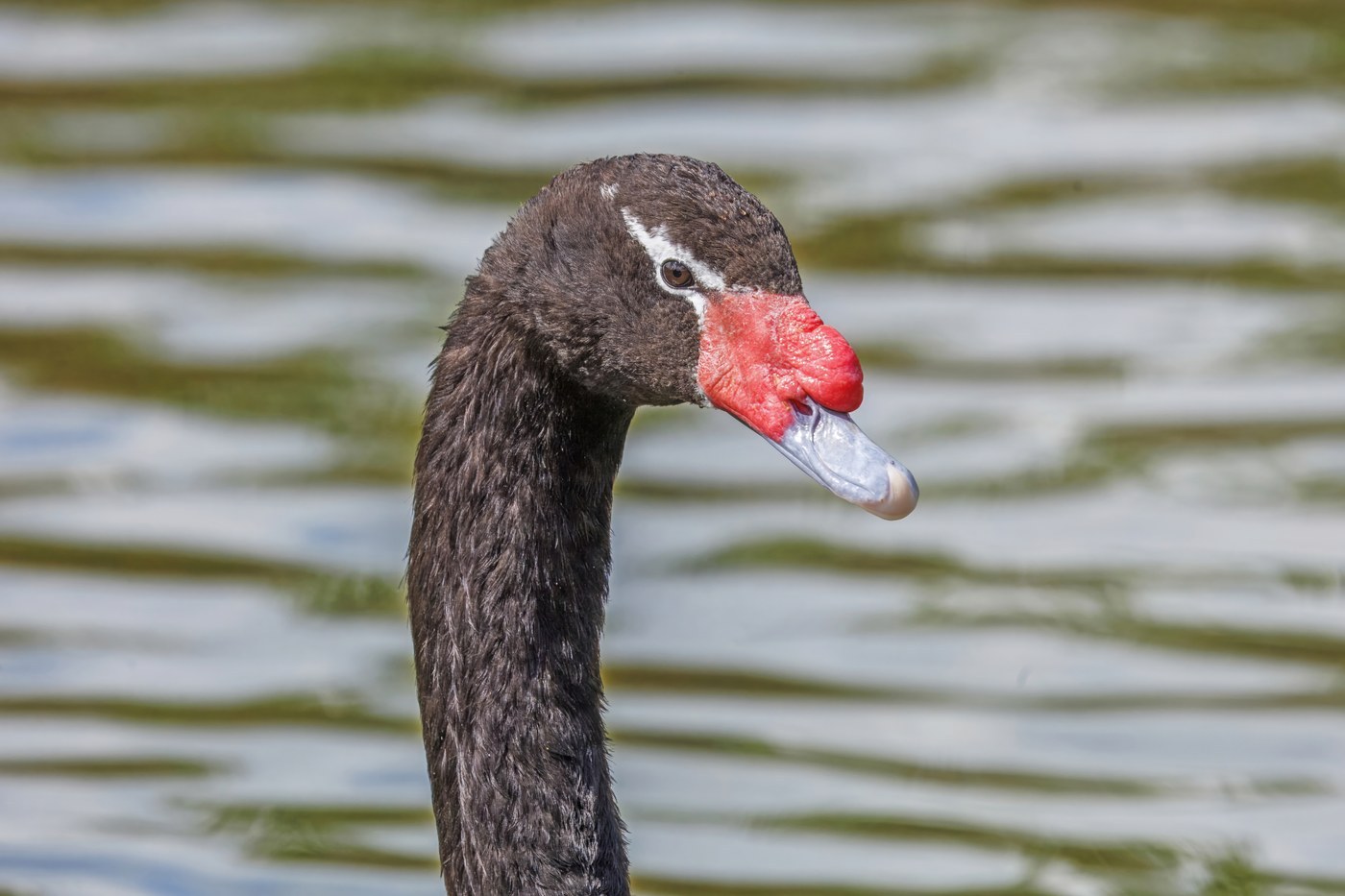
What Black-necked Swan Feathers Look Like
As the only swan native to South America, this species is fairly easy to place once the feather set is understood. The body is pure white, large, soft, and dense — body feathers run 6-10 cm, with the classic soft, almost silky texture of swan contour feathers. In sharp contrast, the entire head and neck are solid black, feathers dense, slightly glossy, and unmarked, creating a bold two-tone division unlike most other swans, which are either entirely white (Mute, Whooper, Tundra Swans) or entirely black/dark (Black Swan). A feather that is clearly swan-sized but jet black would come from the head or neck region of this species, while a similarly large white feather comes from the body.
Flight feathers are large, 25-32 cm, pure white, stiff, and strong, reflecting the powerful flight of a large waterfowl species. The base of the bill has a fleshy red knob or shield in adults (not a feather feature, but useful supporting context if bill material is found alongside plumage). Down feathers, if found near nests, are soft, white, and very dense, typical of waterfowl insulation.
Step-by-Step: Is This Feather From a Black-necked Swan?
- Sort by color first. Pure white, large, soft feathers indicate the body; solid black, similarly large feathers indicate the head/neck — this two-zone division is close to diagnostic once size is confirmed as swan-scale.
- Check size to confirm swan scale. Body feathers 6-10 cm and flight feathers 25-32 cm are far larger than a duck's or most geese's, helping confirm swan-level size before relying on color alone.
- Assess texture. Soft, dense, slightly silky body feathers are typical swan structure, distinct from the coarser feel of some geese.
- Look for solid black without white flecking on neck-region feathers. No mottling or patchiness should be present — the black should be clean and complete.
- Consider range context. A swan feather found in southern South America (Chile, Argentina) strongly supports this species, since it's the only native swan there.
Similar Species & How to Tell Them Apart
Black Swan, native to Australia but introduced elsewhere, has a body that is entirely black to dark grey (not white), with white only visible as a flash on the wings in flight — the opposite color arrangement from Black-necked Swan's white body and black neck, making the two easy to separate. Mute, Whooper, and Tundra Swans, all Northern Hemisphere species, are entirely white with no black neck feathers at all (aside from occasional dark facial skin at the bill base, not feathers), so any solid black neck feather immediately rules these out in favor of the Black-necked Swan. Domestic or feral white geese, while all-white, have notably smaller, less silky feathers overall and never show a solid contrasting black neck to pair with the white body feathers.
Where & When You'll Find Them
Black-necked Swans live in wetlands, lagoons, and estuaries across southern South America, particularly Chile and Argentina, with some populations also found in the Falkland Islands. Feathers are most often found near shallow lake margins, marshes, and coastal lagoons where the species forages on aquatic vegetation, often in pairs or small family groups. Molt includes a flightless period after breeding when adults replace all their flight feathers at once, a vulnerable time when large numbers of white flight feathers can be found near molting sites on secluded lakes and marshes, typically in the austral summer months.
Frequently asked questions
What's the simplest way to identify this species' feathers?
Sort by color: pure white, large, soft feathers are body feathers, while solid black feathers of similar size are from the head and neck — a combination unique among swans.
How do I tell this apart from Black Swan?
Black Swan has an entirely dark body with white only on the wings in flight, the reverse pattern from this species' white body and black neck.
Could a white feather be from a goose instead?
Possible, but goose feathers are smaller and less silky, and geese never pair white body feathers with a solid contrasting black neck like this species.
When are the most feathers found near molting sites?
During the austral summer flightless molt period, when adults replace all flight feathers at once near secluded lakes and marshes.
Where does this species live?
Wetlands, lagoons, and estuaries across southern South America, especially Chile and Argentina, plus the Falkland Islands.