
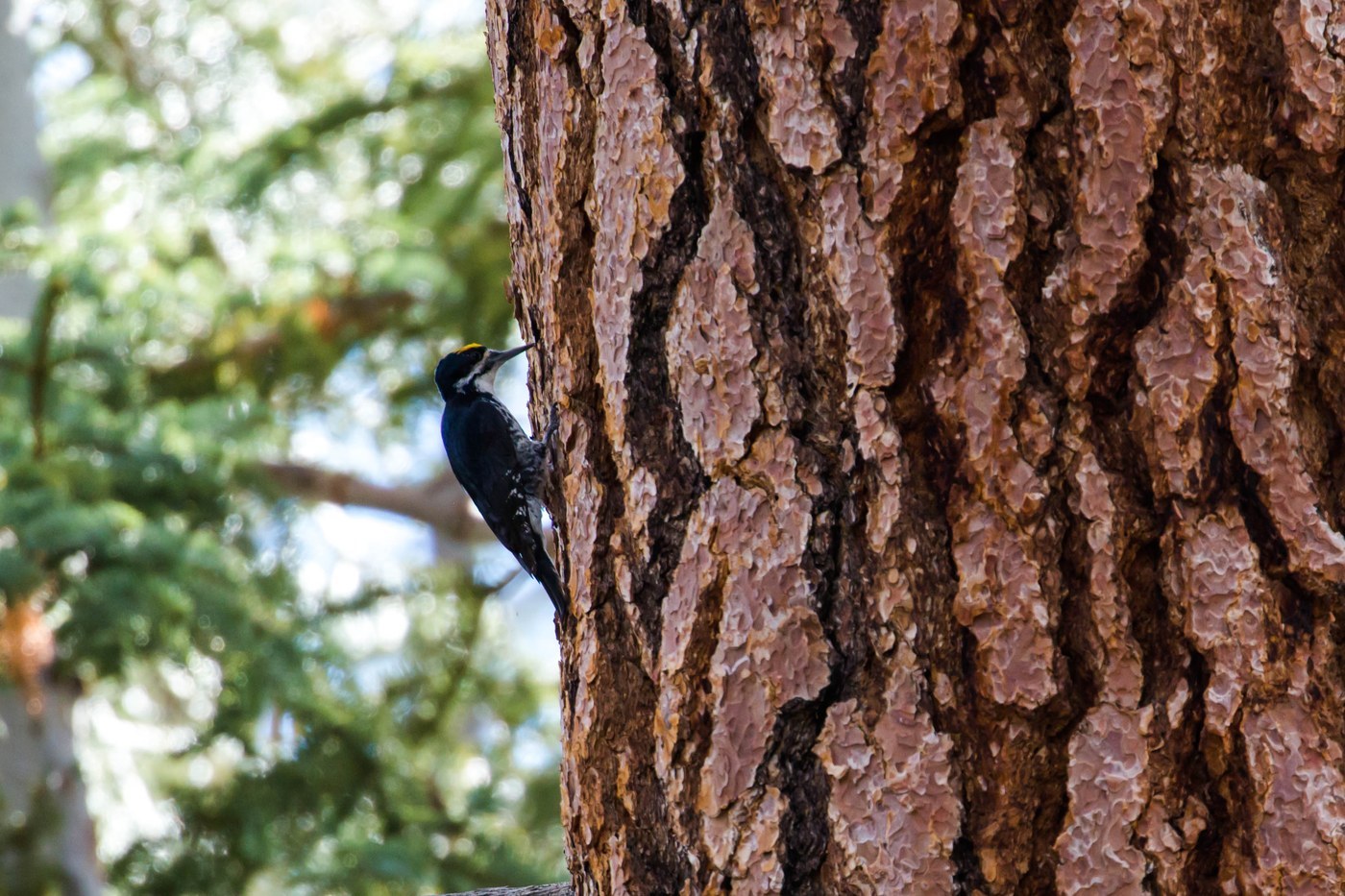
Black-backed Woodpecker
Picoides arcticus
A fire-and-beetle-kill specialist of North American conifer forests, told from the Three-toed Woodpeckers by its solid, unbarred glossy black back.
- Feather type
- Solid glossy black back feathers with a yellow crown patch in males
- Colours
- Glossy black back with bold white-barred flanks
- Bird size
- Medium, ~23-25 cm
Found a feather like this?
Identify any feather from a photo, free.
Overview
The Black-backed Woodpecker occupies boreal and montane coniferous forest across Canada and the northern and western United States, with a strong ecological association with recently burned forest and areas experiencing bark beetle outbreaks. It closely resembles the Three-toed Woodpeckers in overall build and yellow-capped males but is readily distinguished by its solid black back, lacking the white barring found in its close relatives.
This species is often among the very first woodpeckers to colonize a newly burned forest stand, exploiting the sudden abundance of dead wood and wood-boring beetle larvae.
Identifying the Feather
Key features:
- Back and crown feathers are solid, glossy black with no white barring, unlike the Three-toed Woodpeckers
- Males show a yellow crown patch; females have a solid black head with no yellow or red
- Flank feathers show bold black-and-white barring
- A white stripe runs below the eye, and a white malar area is bordered by black
Compared to similar species: the solid black (unbarred) back is the clearest feather-level distinction from both the Eurasian and American Three-toed Woodpeckers, which show at least partial white barring across the back.
Plumage & Molt
Males show a yellow crown patch, while females have an entirely black head with no yellow or red. Juveniles are duller overall. The bold, unbarred black back is consistent in both sexes and across ages, setting this species apart from its barred-backed relatives.
Habitat & Range
This species occupies boreal and montane coniferous forest across Canada and the northern and western United States, with a strong preference for recently burned forest and stands affected by bark beetle outbreaks, where standing dead wood is abundant. It is largely resident but shows notable irruptive dispersal to newly burned areas as they become available.
Behavior & Field Notes
Black-backed Woodpeckers are heavy bark-scalers, feeding on wood-boring beetle larvae in fire-killed and beetle-killed trees, and are often the first woodpecker species to colonize a new burn. They are generally quiet and can be easily overlooked despite their striking plumage, with soft calls and moderate drumming. Nests are excavated in dead conifer snags, often within recently burned stands.
Frequently asked questions
How do I identify a Black-backed Woodpecker feather?
A solid, glossy black back feather with no white barring, combined with bold black-and-white barred flank feathers, points strongly to this species over the similarly built Three-toed Woodpeckers.
What habitat is this species most associated with?
Recently burned coniferous forest or stands affected by bark beetle outbreaks, where abundant dead wood supports its wood-boring beetle larvae prey.
Does crown color indicate sex?
Yes, males show a yellow crown patch, while females have a solid black head with no yellow or red present.
Is this species easy to spot despite its bold pattern?
It is often overlooked in the field due to quiet behavior and soft calls, despite its bold black-and-white plumage, so it is frequently detected by feeding sign on burned trees before being seen directly.
Black-backed Woodpecker guides
In-depth guides for identifying and understanding Black-backed Woodpecker.

Other feathers you may enjoy

Ivory-billed Woodpecker
Very large flight feathers with a solid white trailing patch

Great Slaty Woodpecker
Massive, uniformly colored contour feathers

Yellow-tufted Woodpecker
Black body feathers with bright yellow forehead tufts

Magellanic Woodpecker
Very large, glossy contour feathers with a recurved crest

Yellow-bellied Sapsucker
Black-and-white patterned back and facial-stripe feathers
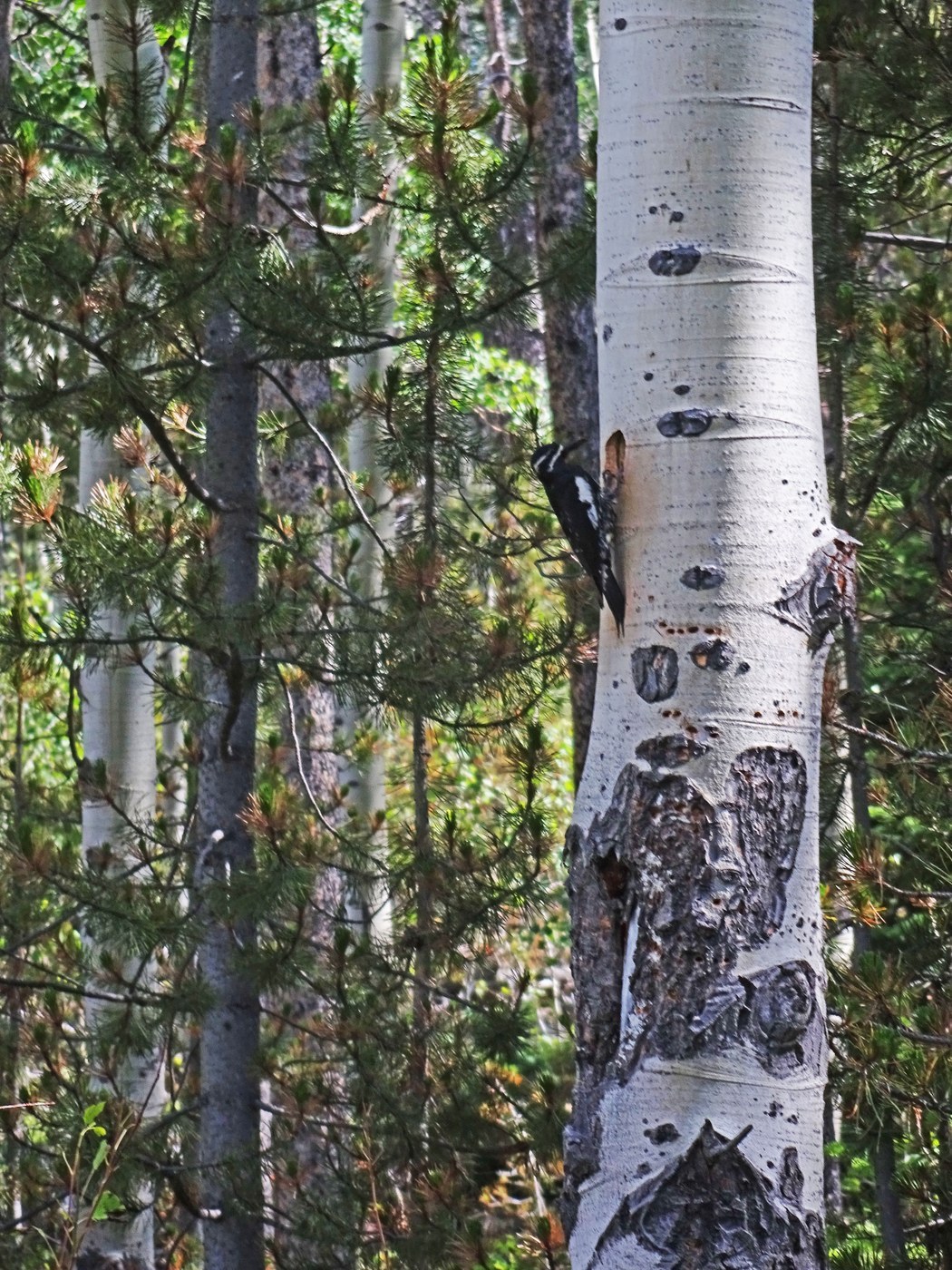
Williamson's Sapsucker
Strongly sexually dimorphic body feathers, glossy black or finely barred brown

Yellow-crowned Woodpecker
Contour and flight feathers

White Woodpecker
Mostly white body feathers with contrasting black wings and back

Red-throated Wryneck
Soft, cryptically mottled contour feathers

White-bellied Woodpecker
Large, glossy black contour and flight feathers

White-backed Woodpecker
Barred back feathers rather than a solid white patch
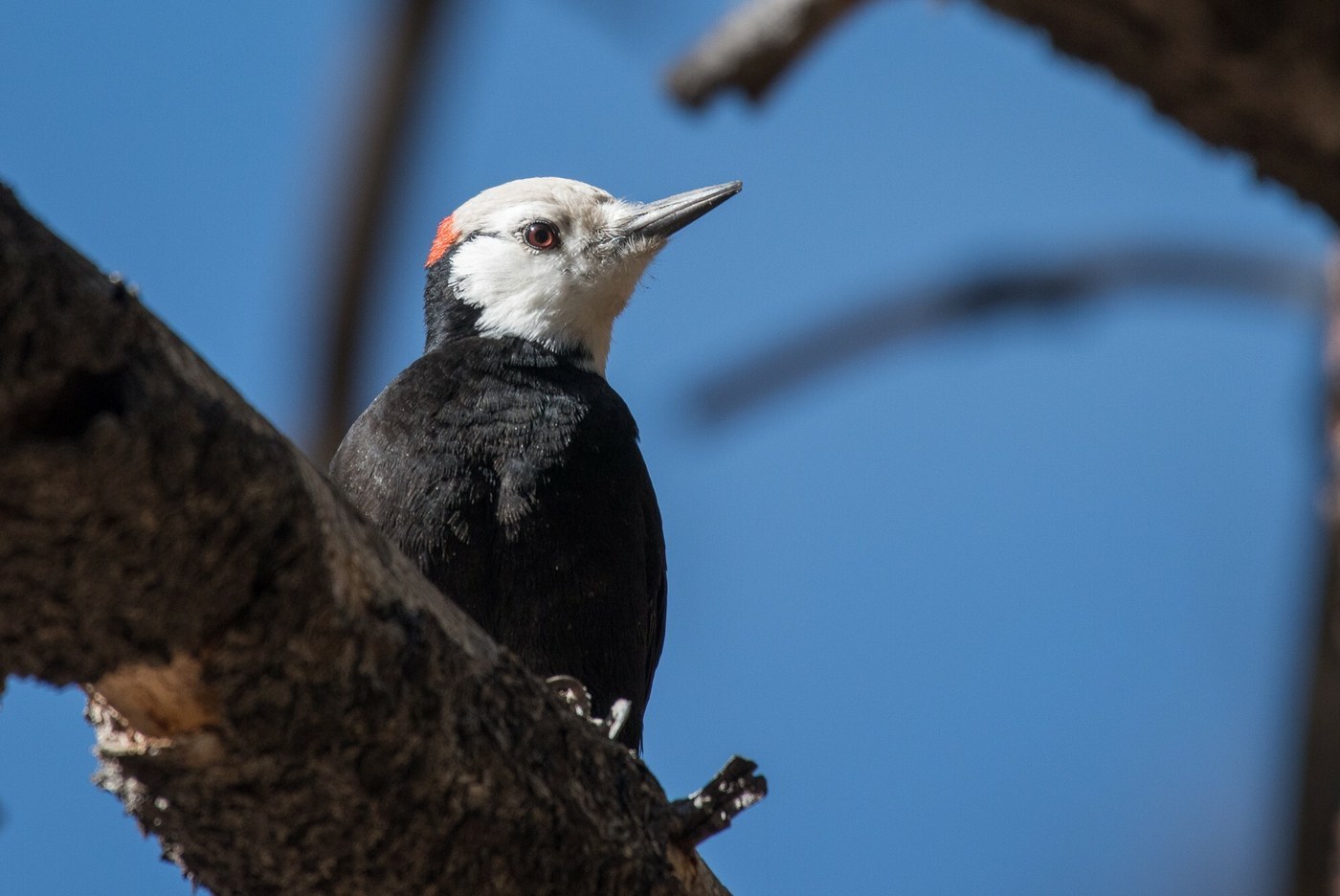
White-headed Woodpecker
Solid black body feathers with an entirely white head