
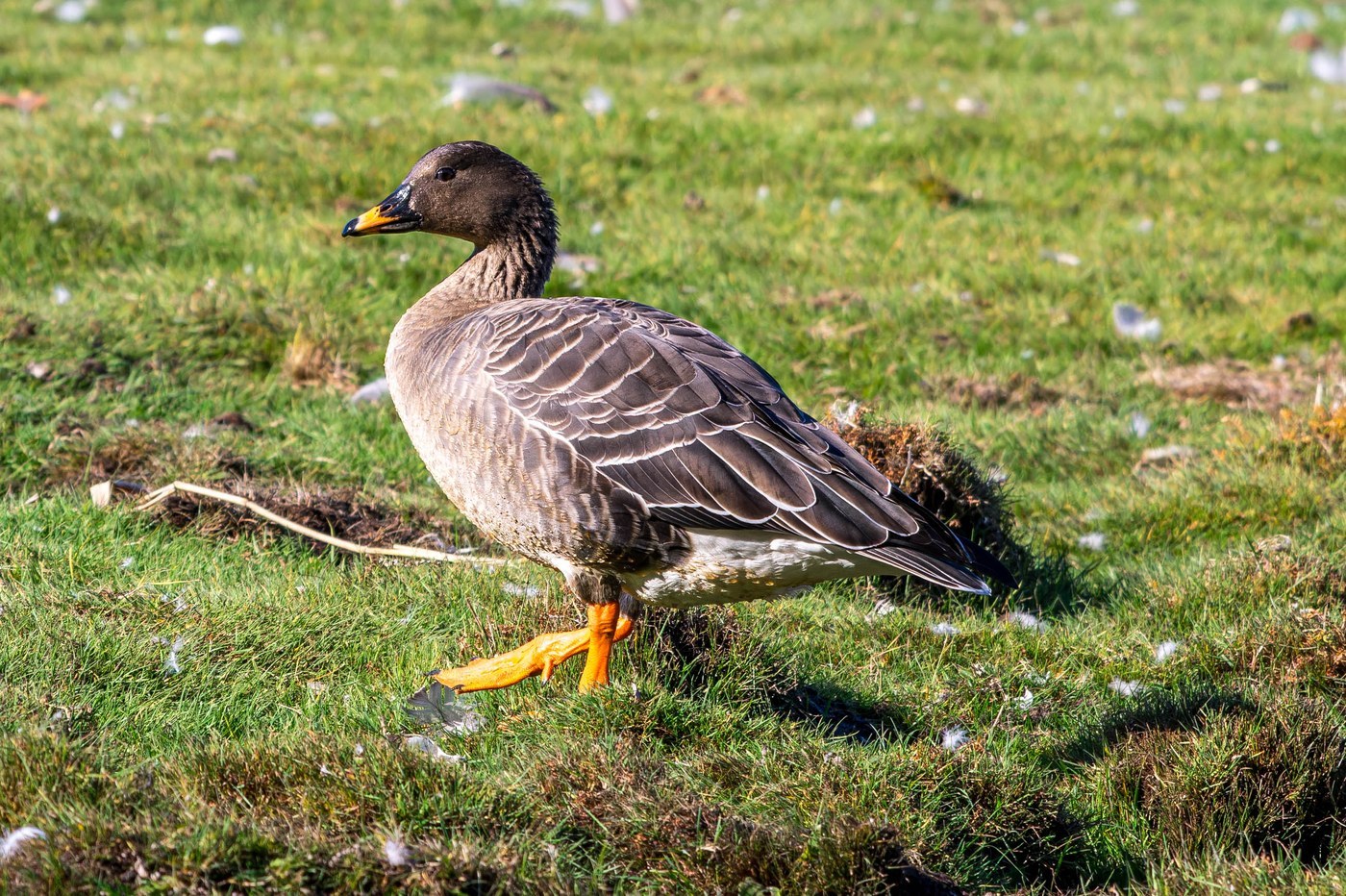
Bean Goose
Anser fabalis
A dark, orange-legged gray goose of Eurasian taiga and tundra, uniformly brown without the pale head-body contrast or bright bill color of related species.
- Feather type
- Contour and flight feathers
- Colours
- Dark brown with narrow pale fringing
- Bird size
- Medium-large goose, ~75 cm
Found a feather like this?
Identify any feather from a photo, free.
Overview
The Bean Goose is a widespread Eurasian breeder occurring in two recognized forms, often treated as separate groups: a longer-billed taiga-breeding form and a shorter-billed tundra-breeding form. Both are darker and more uniformly colored than most other gray geese, wintering on farmland and wetlands across temperate Europe and Asia.
Identifying the Feather
Body feathers are dark brown, narrowly fringed with buff, giving a subtler scaling pattern than the coarser barring of the Greylag Goose and lacking the pale forewing panel of that species. Unlike the Pink-footed Goose, the head is not noticeably darker than the body, appearing more uniformly brown throughout. The bill is black with an orange band whose extent varies by population, and legs are orange rather than pink. Bill length and shape differ between the taiga form (longer, more evenly proportioned) and the tundra form (shorter, more triangular).
Plumage & Molt
Sexes look alike. Juveniles are duller with less distinct pale fringing. Molt follows the typical goose pattern, with flightless adults replacing flight feathers on the breeding grounds in summer.
Habitat & Range
The taiga form breeds in forest bogs and wet clearings across the Siberian and Scandinavian taiga; the tundra form breeds further north on open tundra. Both winter on farmland, wetlands, and grassland across temperate Europe and Asia.
Behavior & Field Notes
Grazes on grain stubble, grass, and marsh vegetation, often forming mixed flocks with other geese on shared wintering grounds. Nests on the ground, in forest bogs for the taiga form or open tundra for the tundra form. Gives deep, resonant honking calls typical of gray geese, used in flight and while foraging in flocks.
Frequently asked questions
Why are there two forms of Bean Goose?
A taiga-breeding form with a longer bill and a tundra-breeding form with a shorter bill are both recognized, differing subtly in size and proportions.
How does Bean Goose differ from Pink-footed Goose?
Bean Goose has orange legs and a more uniformly dark body without the darker-headed, paler-bodied contrast of the Pink-footed Goose.
What color are Bean Goose legs?
Orange, distinguishing it from the pink-legged Pink-footed Goose.
Where does the Bean Goose breed?
Across the taiga forests and tundra of Scandinavia and Siberia, depending on the form.
Bean Goose guides
In-depth guides for identifying and understanding Bean Goose.
Other feathers you may enjoy

Mallard
Wing (speculum), body, and tail feathers

Spectacled Eider
Large sea-duck body feathers with distinctive eye-ring patches

Canada Goose
Body and flight feathers
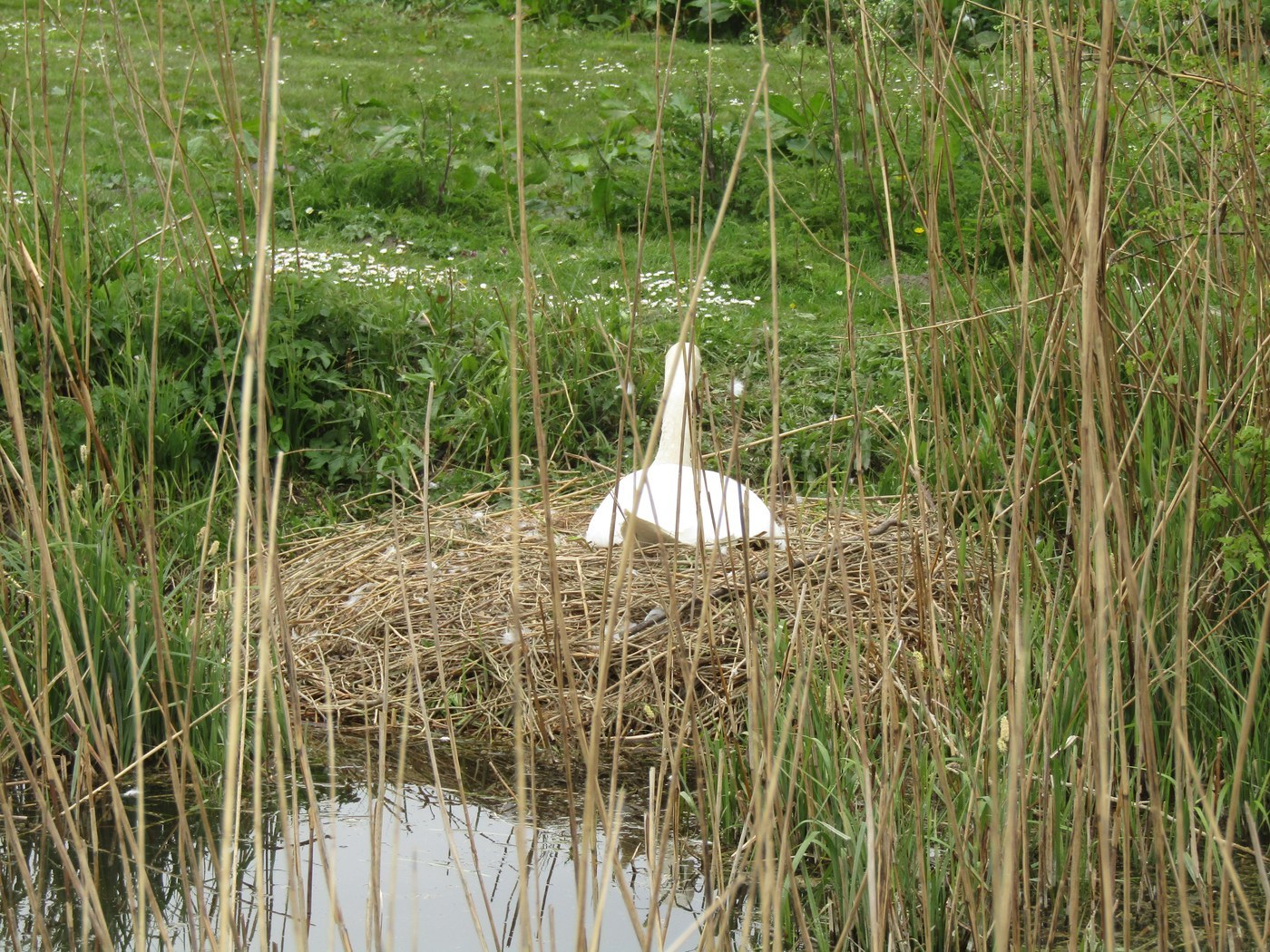
Mute Swan
Body (contour) and flight feathers

Wood Duck
Iridescent crest feathers; ornate scapular and flank feathers; white teardrop facial feathers (female)
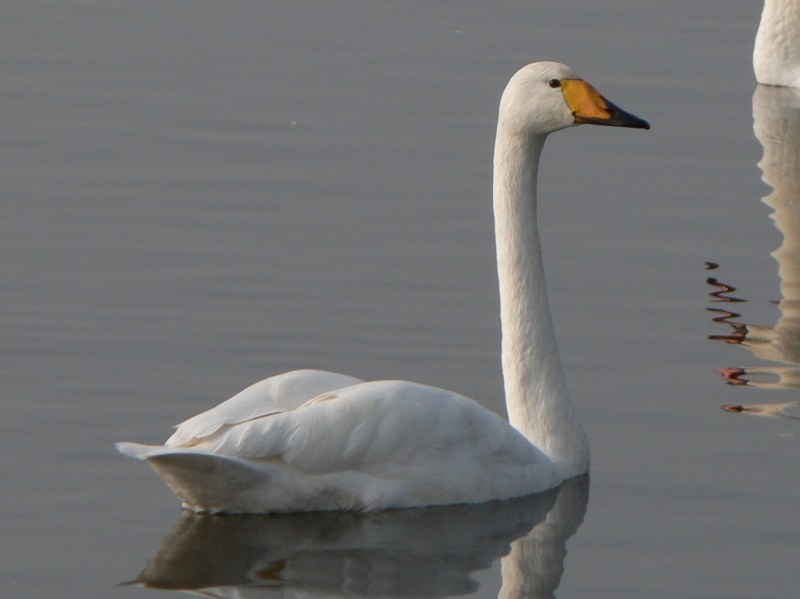
Whooper Swan
Contour and flight feathers

White-winged Scoter
Large sea-duck body feathers with a white wing patch

Ruddy Duck
Stiff tail feathers and compact body plumage

Ross's Goose
Contour and flight feathers

White-cheeked Pintail
Contour and elongated tail feathers

Torrent Duck
Dense, sleek contour feathers; stiff, pointed tail feathers used for bracing against rocks

Tundra Swan
Contour and flight feathers