

Andean Hillstar
Oreotrochilus estella
A high-altitude specialist hummingbird of the Andean puna, showing a white belly and, in males, a glittering green throat above a violet breast band.
- Feather type
- Dense, insulating contour feathers adapted to cold high-altitude climates
- Colours
- Bronze-green above, white belly, males with iridescent green throat and purple breast band
- Bird size
- Small-medium hummingbird, ~13-14 cm
Found a feather like this?
Identify any feather from a photo, free.
Overview
Overview
The Andean Hillstar occupies some of the highest elevations of any hummingbird, living on rocky slopes and puna grassland well above the treeline in the central Andes. Its plumage and physiology are adapted to the cold, thin air of this extreme environment.
Adult males show a glittering emerald-green throat bordered below by a violet-purple band, set against a white belly, while females lack these bright gorget colors and appear more subdued overall.
Identifying the Feather
Feather Identification
- Body feathers: Bronze-green above with a notably white belly and undertail region
- Throat feathers: In males, small iridescent scale-like feathers form a glittering green gorget bordered by a violet-purple breast band
- Tail feathers: Somewhat forked, dark with white outer edges in some individuals
- Shaft color: Pale on the white belly feathers, dark above
- Size: Slightly larger and more robust than many lowland hummingbirds, an adaptation to cold high-altitude conditions
- Similar species: The white belly combined with the male's green-and-violet throat pattern separates it from other high-Andes hummingbirds
Plumage & Molt
Plumage Details
Adult males display an iridescent green throat patch bordered by a violet-purple chest band, bronze-green upperparts, and a clean white belly. Females lack the bright gorget and breast band, showing duller green upperparts and pale, sometimes speckled underparts. Juveniles resemble females. There is no strong seasonal plumage shift, though feather wear can dull colors between molts.
Habitat & Range
Habitat & Range
Andean Hillstars inhabit high-altitude puna grassland, rocky outcrops, and shrub-steppe in the central Andes of Peru, Bolivia, and northern Chile and Argentina, often at elevations above 3,000 meters. The species is largely resident, though some populations make local elevational movements tied to flower availability.
Behavior & Field Notes
Behavior & Field Notes
This hummingbird feeds on nectar from low-growing high-altitude flowers, often perching to feed rather than constantly hovering, an energy-saving adaptation to the cold climate. It also consumes small insects. At night and in cold conditions it can enter torpor to conserve energy. Nests are built in sheltered rock crevices or under overhangs, offering protection from wind and cold. Calls are thin, high-pitched chips typical of high-altitude hummingbirds.
Frequently asked questions
What feather traits identify an Andean Hillstar?
A white belly paired with, in males, an iridescent green throat and violet-purple breast band set against bronze-green upperparts.
Why does this hummingbird often perch to feed?
Perching while feeding helps conserve energy in the cold, thin air of its high-altitude puna habitat.
At what elevation does this species live?
It is typically found above 3,000 meters in high Andean grassland and rocky terrain.
Do females show the bright throat and chest markings?
No, females lack the iridescent green throat and violet band seen in adult males.
Andean Hillstar guides
In-depth guides for identifying and understanding Andean Hillstar.

Other feathers you may enjoy

Speckled Hummingbird
Small contour feathers with fine speckled underpart markings
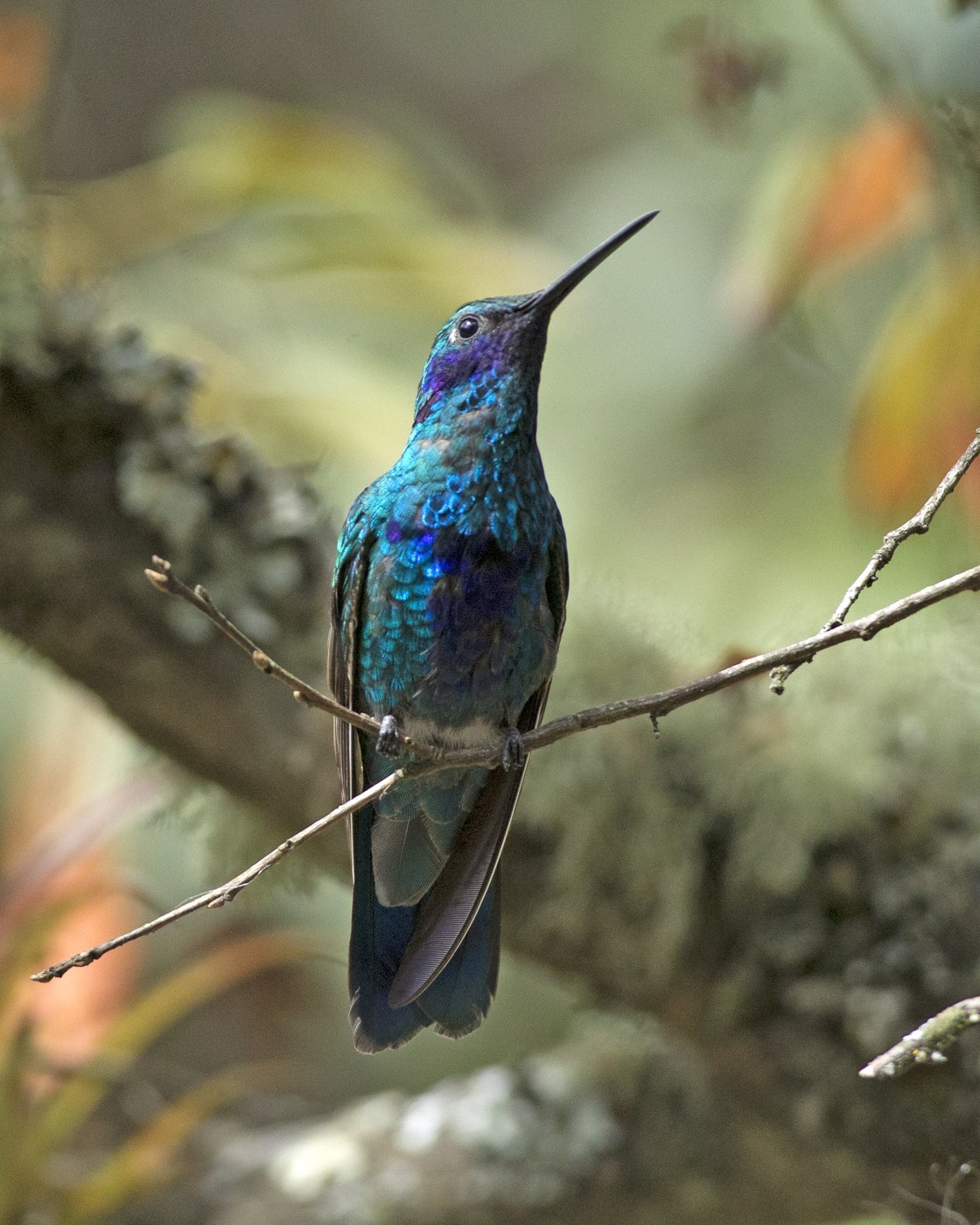
Sparkling Violetear
Iridescent body feathers, large violet ear and chest patches
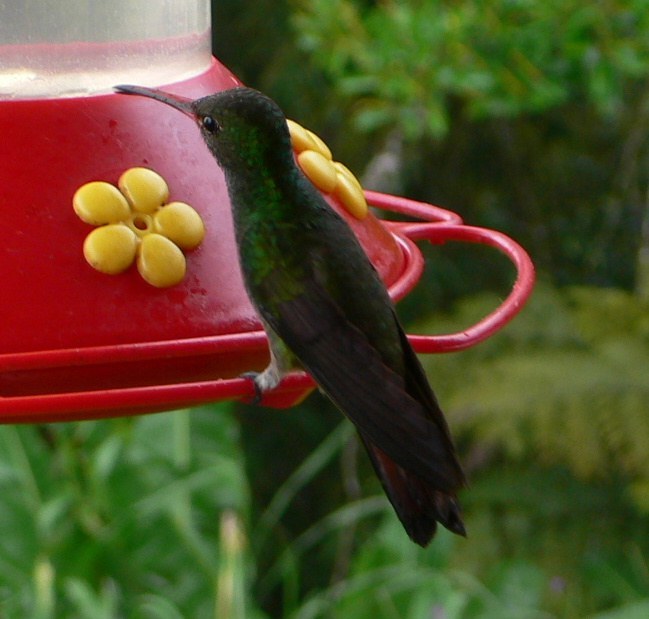
Rufous-tailed Hummingbird
Iridescent throat and breast feathers, rufous tail feathers

Rufous-breasted Hermit
Slightly decurved bill with rufous-washed contour feathers
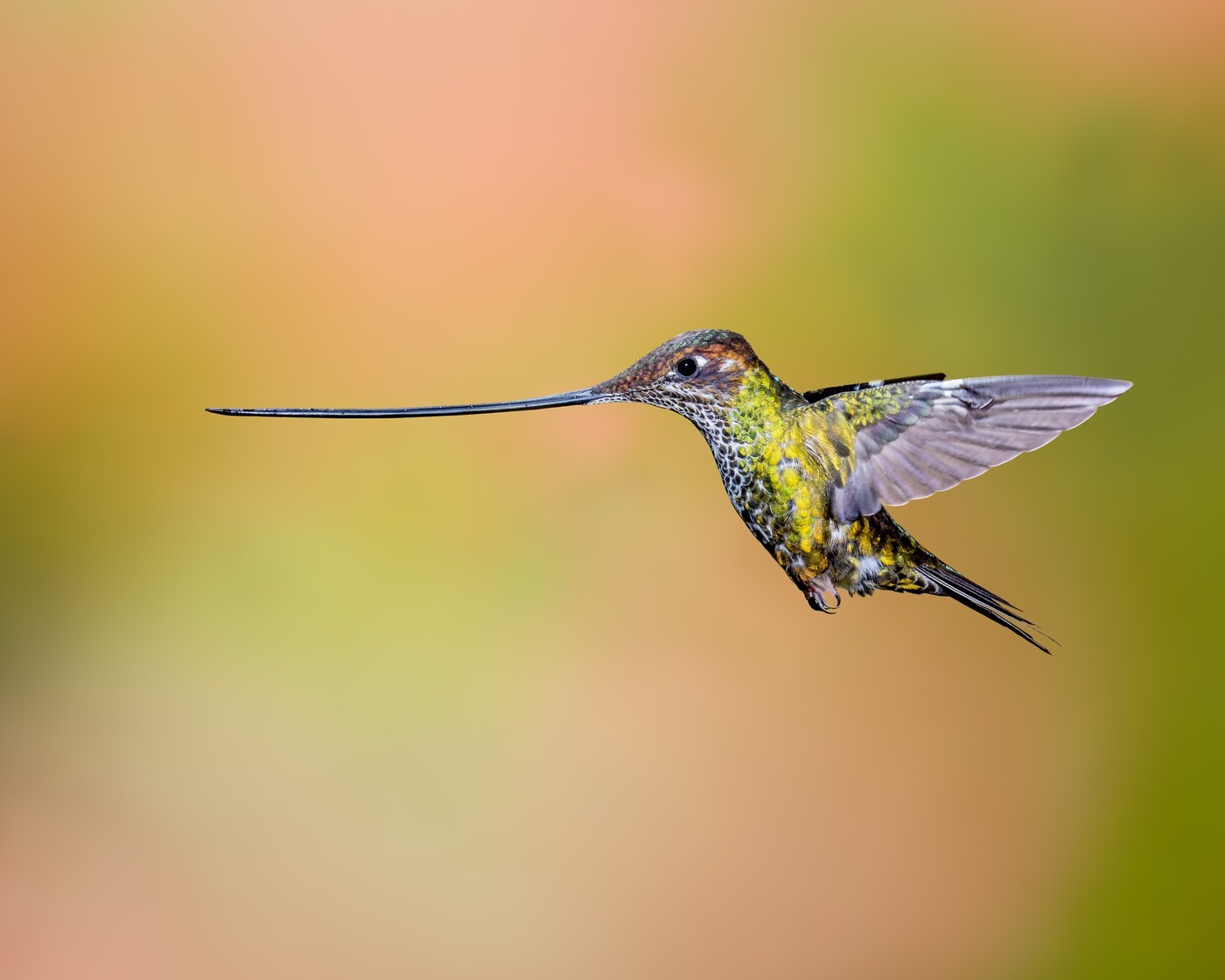
Sword-billed Hummingbird
Iridescent body feathers, extraordinarily long bill (non-feather feature)
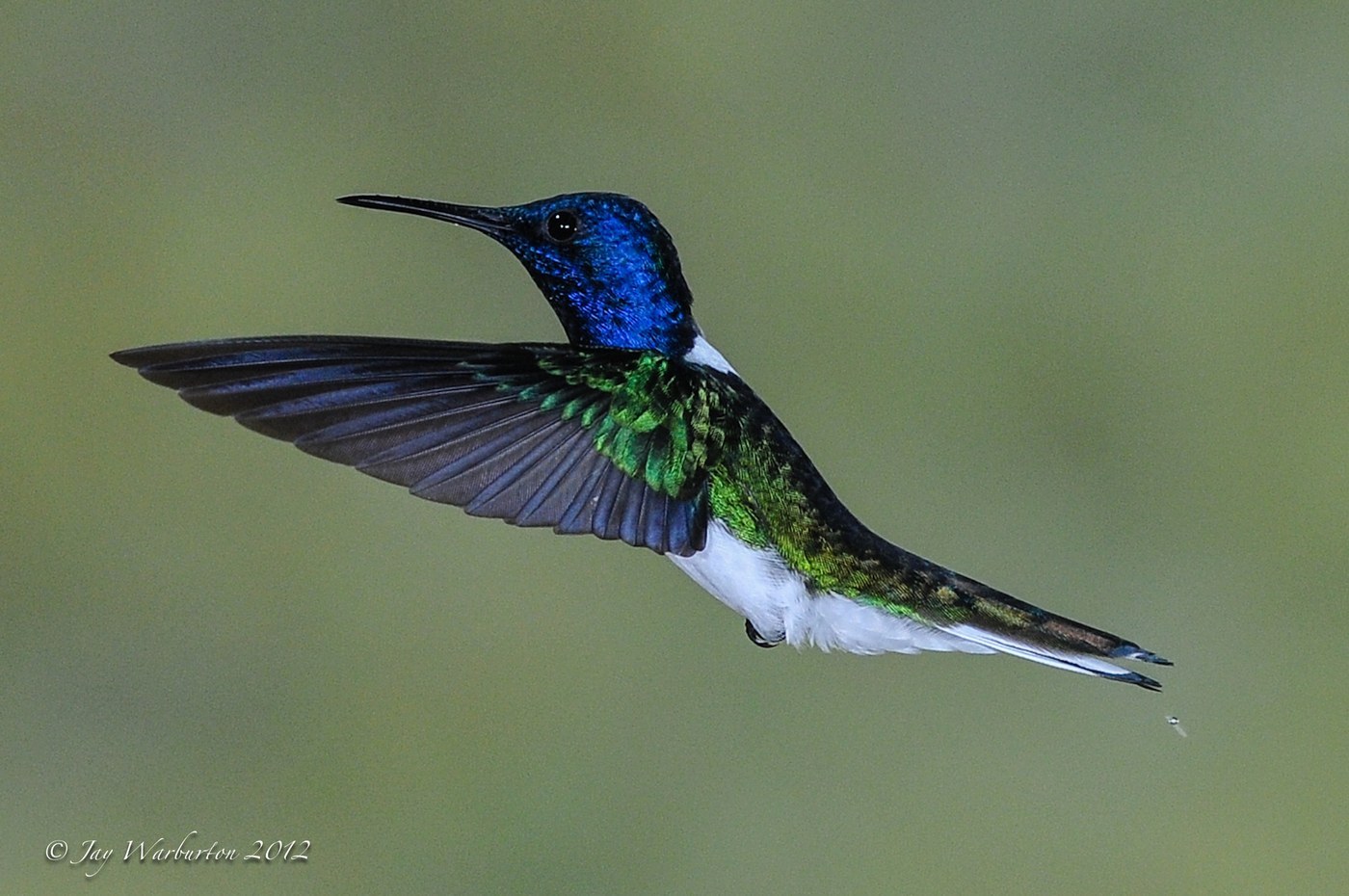
White-necked Jacobin
Iridescent head feathers, contrasting white nape and belly

White-eared Hummingbird
Iridescent gorget feathers, bold facial stripe
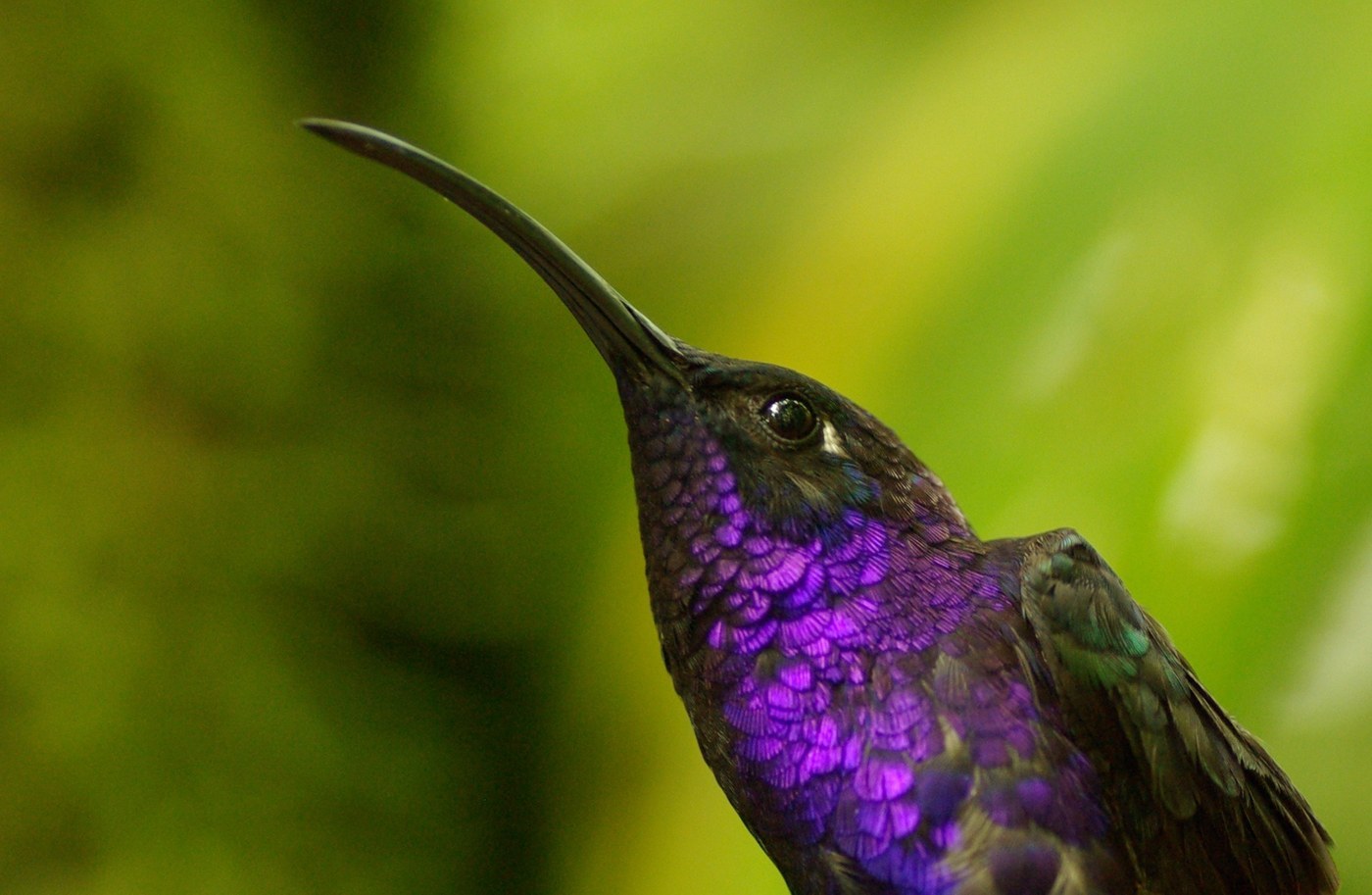
Violet Sabrewing
Iridescent body feathers, thickened curved primary shafts

Velvet-purple Coronet
Dense, velvety contour feathers with iridescent crown patch

Violet-crowned Hummingbird
Iridescent crown feathers, clean white underparts

Shining Sunbeam
Iridescent contour feathers with coppery-bronze wing sheen

Rufous Hummingbird
Tiny contour, gorget, and narrow flight feathers