

American Three-toed Woodpecker
Picoides dorsalis
The North American counterpart of the Eurasian Three-toed Woodpecker, a boreal conifer specialist with a yellow-capped male and barred black-and-white flanks.
- Feather type
- Barred back feathers with a yellow crown patch in males
- Colours
- Black-and-white barred, with no red plumage
- Bird size
- Small-medium, ~21-22 cm
Found a feather like this?
Identify any feather from a photo, free.
Overview
The American Three-toed Woodpecker occupies boreal forest across Canada and Alaska, extending south into higher-elevation coniferous forest of the western United States. It closely parallels the Eurasian Three-toed Woodpecker in appearance and habits, sharing the yellow crown patch of males and a complete lack of red plumage, though back pattern varies somewhat between regional populations.
Its strong association with burned and beetle-killed conifer stands makes it an important indicator of disturbance-driven forest habitat in North America.
Identifying the Feather
Key features:
- Crown feathers are yellow-gold in males, solid black in females, with no red present in either sex
- Back pattern varies by population: eastern and boreal birds often show a whiter central back stripe, while some Rocky Mountain populations show more heavily barred or blackish backs
- Flank feathers are barred black and white
- Only three toes per foot, shared with its Eurasian counterpart and the Black-backed Woodpecker
Compared to similar species: the Black-backed Woodpecker has a solid, unbarred black back and more heavily barred flanks, while this species shows at least some white barring on the back in most populations.
Plumage & Molt
Males show a yellow-gold crown patch; females have a solid black crown without yellow or red. Juveniles are duller with less defined back and flank patterning. Populations vary somewhat in the extent of white barring on the back, with some western mountain populations appearing darker overall than boreal birds farther north and east.
Habitat & Range
This species occupies boreal and subalpine coniferous forest across Canada, Alaska, and higher-elevation forest in the western United States, often in association with recently burned or beetle-killed conifer stands. It is largely resident, with some populations showing irruptive movement in response to new insect outbreaks or fires.
Behavior & Field Notes
American Three-toed Woodpeckers are dedicated bark-scalers, feeding on wood-boring beetle larvae in dead and dying conifers, and are frequently among the first woodpeckers to colonize recently burned forest. They are generally quiet, with soft calls and moderate drumming. Nests are placed in cavities excavated in dead conifers.
Frequently asked questions
How do I identify a feather from this species?
A yellow-gold crown feather with no red anywhere, combined with barred flank feathers and a back pattern ranging from partly white-striped to more heavily barred depending on population, points to this species.
How is this species different from the Black-backed Woodpecker?
The Black-backed Woodpecker has a solid, unbarred black back, while the American Three-toed Woodpecker typically shows at least some white barring on the back, varying by population.
What habitat is this species tied to?
Boreal and montane coniferous forest across Canada, Alaska, and higher elevations in the western US, frequently in recently burned or beetle-killed stands.
Does back pattern vary across this species' range?
Yes, populations differ somewhat, with boreal and eastern birds generally showing more white on the back than some western mountain populations, which can appear darker overall.
American Three-toed Woodpecker guides
In-depth guides for identifying and understanding American Three-toed Woodpecker.

Other feathers you may enjoy

Ivory-billed Woodpecker
Very large flight feathers with a solid white trailing patch

Great Slaty Woodpecker
Massive, uniformly colored contour feathers

Yellow-tufted Woodpecker
Black body feathers with bright yellow forehead tufts

Magellanic Woodpecker
Very large, glossy contour feathers with a recurved crest

Yellow-bellied Sapsucker
Black-and-white patterned back and facial-stripe feathers
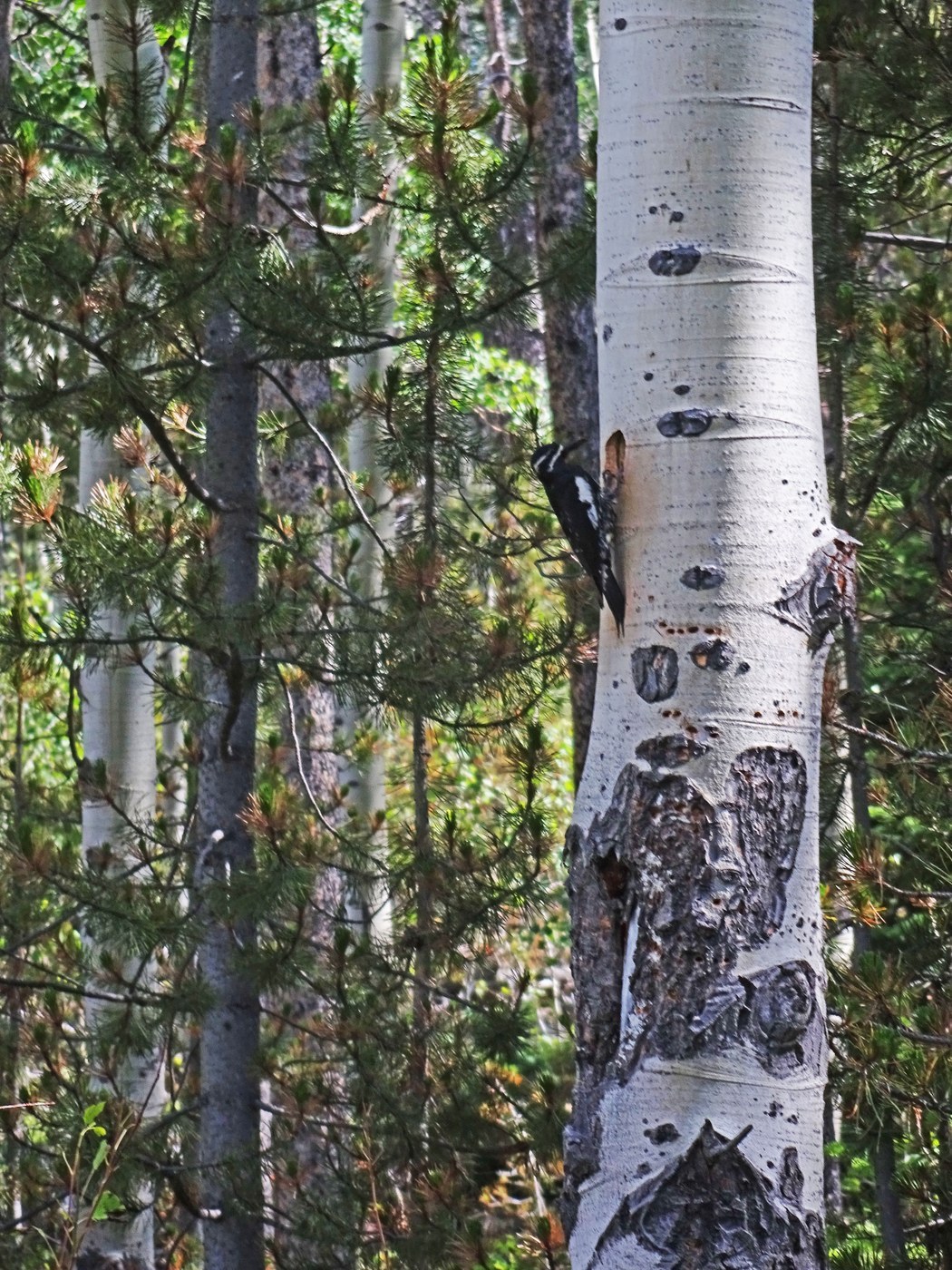
Williamson's Sapsucker
Strongly sexually dimorphic body feathers, glossy black or finely barred brown

Yellow-crowned Woodpecker
Contour and flight feathers

White Woodpecker
Mostly white body feathers with contrasting black wings and back

Red-throated Wryneck
Soft, cryptically mottled contour feathers

White-bellied Woodpecker
Large, glossy black contour and flight feathers

White-backed Woodpecker
Barred back feathers rather than a solid white patch
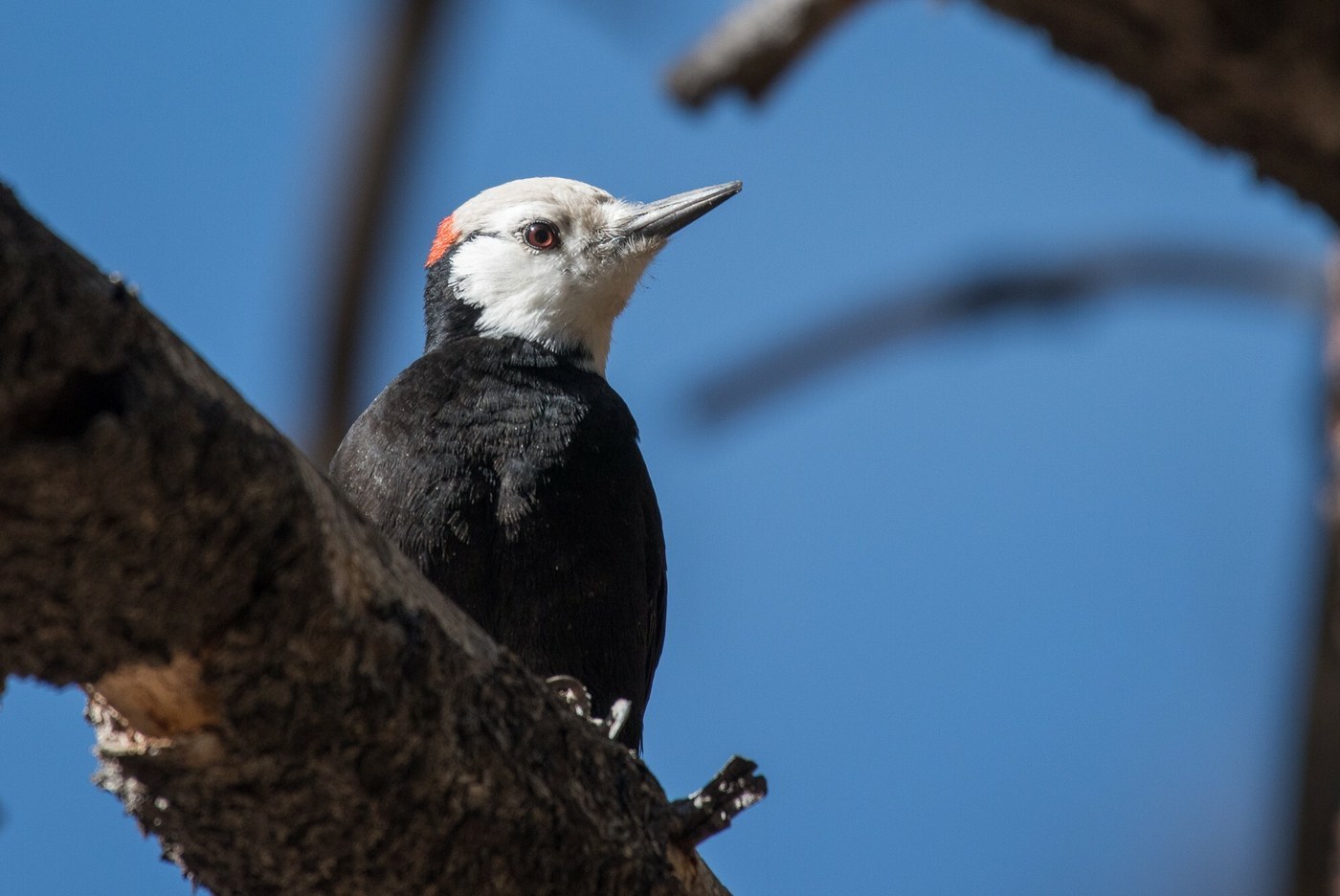
White-headed Woodpecker
Solid black body feathers with an entirely white head