
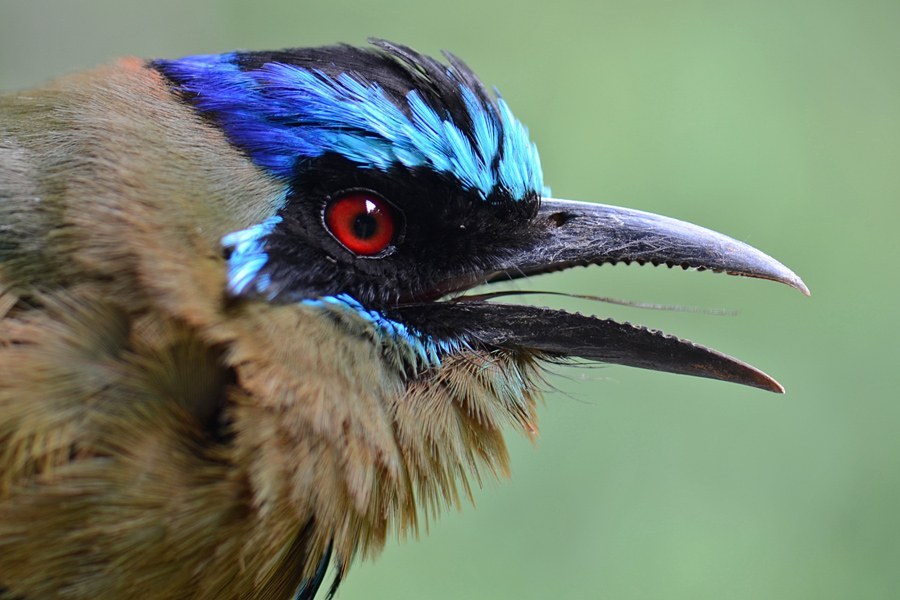
Amazonian Motmot
Momotus momota
A quiet rainforest bird of the Amazon basin, the Amazonian Motmot has an overall green plumage set off by a dark blue crown patch and a long racket-tipped tail.
- Feather type
- Dense contour feathers with a long, graduated racket tail
- Colours
- Green body, blue crown patch, black facial mask, rufous underparts in some populations
- Bird size
- Jay-sized, ~38-43 cm including tail
Found a feather like this?
Identify any feather from a photo, free.
Overview
The Amazonian Motmot is a mid-to-large motmot of South American lowland and foothill rainforest, often detected by its low hooting call before it is seen. It sits still for long periods on a low to mid-level perch, its green plumage blending into shaded understory, and reveals itself mainly through the slow pendulum swing of its long tail.
Identifying the Feather
The tail is long and strongly graduated, with the central pair of feathers extending well past the rest and ending in bare-shafted racket tips, a structure unique to motmots among similarly sized rainforest birds. Body feathers are predominantly green, darkening to blackish on a facial mask through the eye, with a crown patch of deep blue feathers bordered by black. Underparts vary from greenish to rufous-tinged depending on population. The wings are short and rounded relative to the tail, with flight feathers duller green and lacking the racket structure. Compared to smaller motmots, this species is bulkier with a heavier, more strongly hooked bill visible even on isolated head feathers or bill fragments.
Plumage & Molt
Both sexes appear similar, with no strong plumage difference between males and females. Immature birds show a shorter tail without fully developed racket tips and duller crown coloration. Feather wear and self-preening are involved in shaping the bare racket shaft over time, so tail length and racket definition can vary between individuals and populations across its wide range.
Habitat & Range
This species occupies lowland and foothill rainforest interior and edge across much of the Amazon basin and adjacent regions, generally staying below the high canopy. It is a non-migratory resident, remaining on established territories year-round.
Behavior & Field Notes
Amazonian Motmots feed on large insects and other small prey, most often taken in sit-and-wait sallies from a low perch. They excavate nest burrows into earthen banks or slopes. Their voice is a low, resonant, often paired hooting call, frequently the first indication of the bird's presence in dense forest. The characteristic slow tail swing is used as an alert display when the bird is disturbed.
Frequently asked questions
How can you tell an Amazonian Motmot feather from other motmots?
Its overall green body plumage, blue crown patch bordered in black, and heavier build compared with smaller, more colorful motmot species.
What does its call sound like?
A low, resonant hooting note, often repeated, that carries through dense forest before the bird is seen.
Does it migrate?
No, it is a non-migratory resident that stays on its forest territory year-round.
Where does it build its nest?
In burrows dug into earthen banks or slopes within or near forest habitat.
Amazonian Motmot guides
In-depth guides for identifying and understanding Amazonian Motmot.

Other feathers you may enjoy

Common Cuckoo
Flight and body feathers
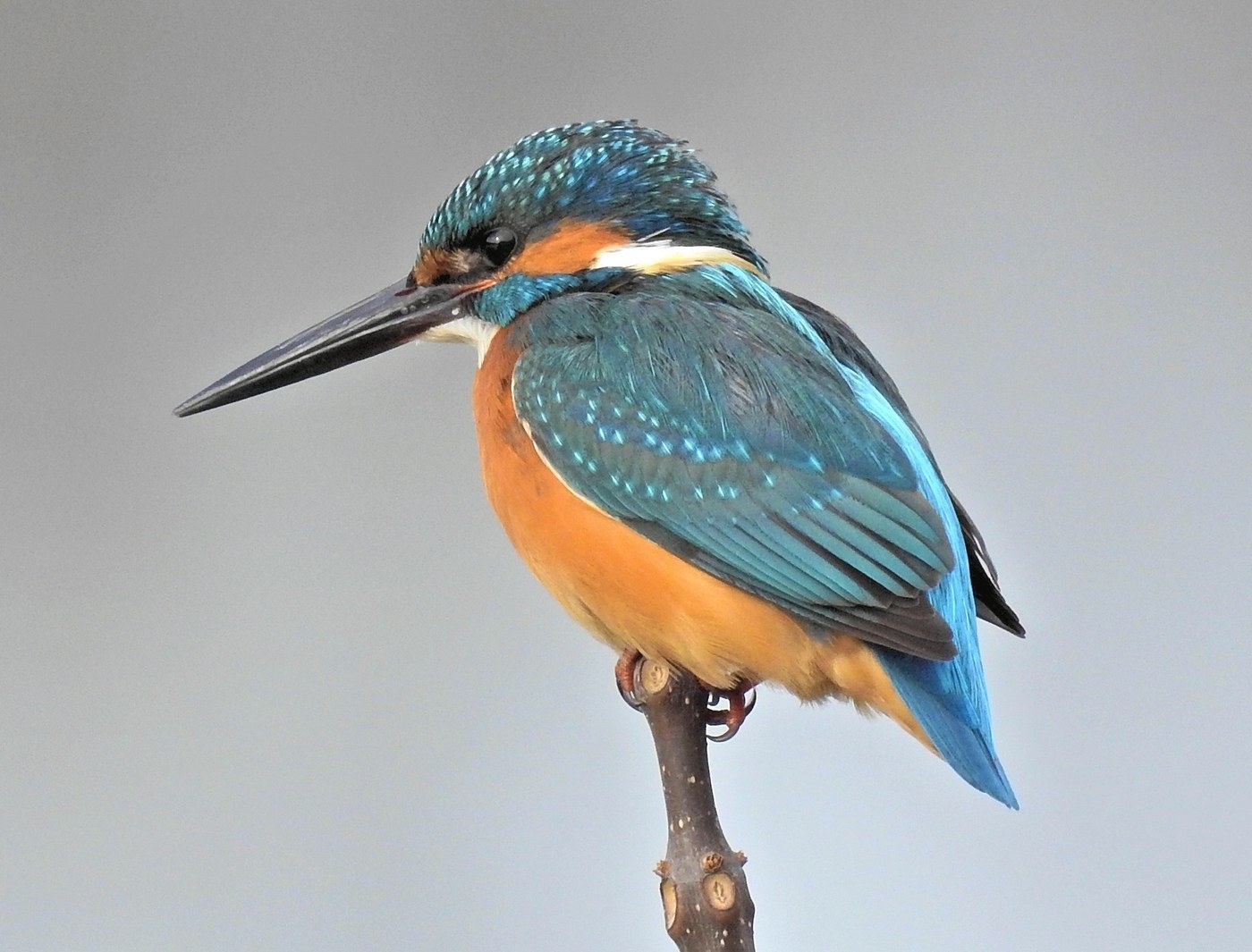
Common Kingfisher
Body (contour) and wing feathers
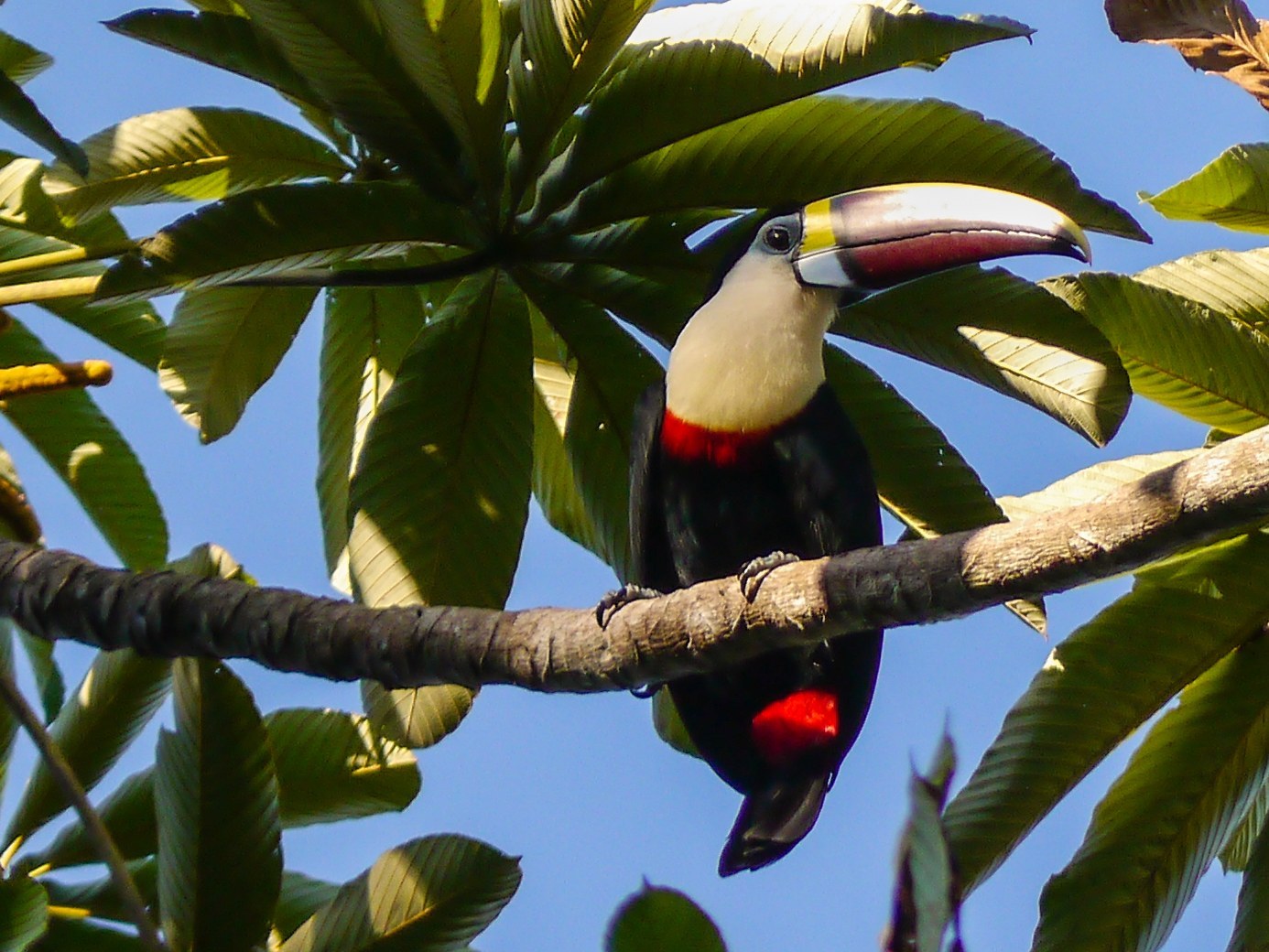
White-throated Toucan
Short rounded contour feathers, short broad wings
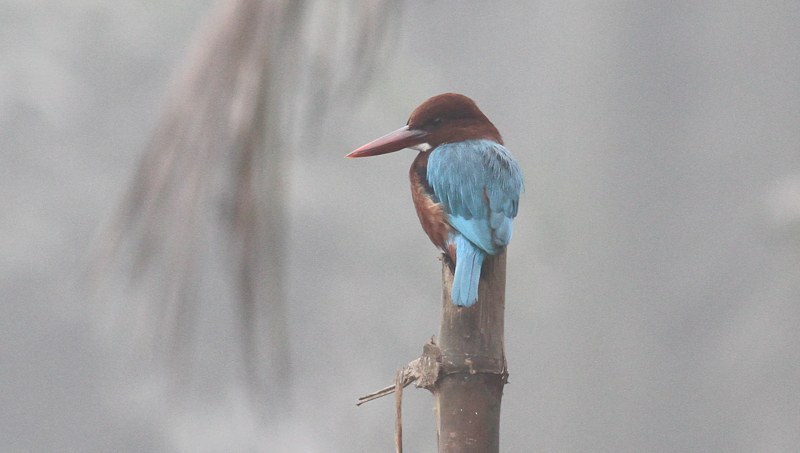
White-throated Kingfisher
Dense contour feathers; broad rounded wings

White-throated Bee-eater
Sleek, aerodynamic contour feathers; elongated central tail streamers
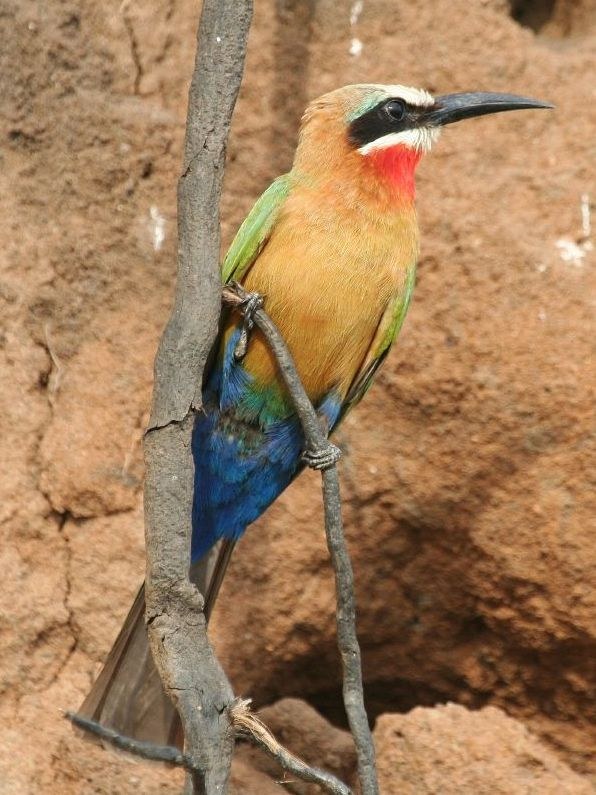
White-fronted Bee-eater
Sleek contour feathers; short tail with slight point

Southern Yellow-billed Hornbill
Slender contour feathers, moderate flight feathers
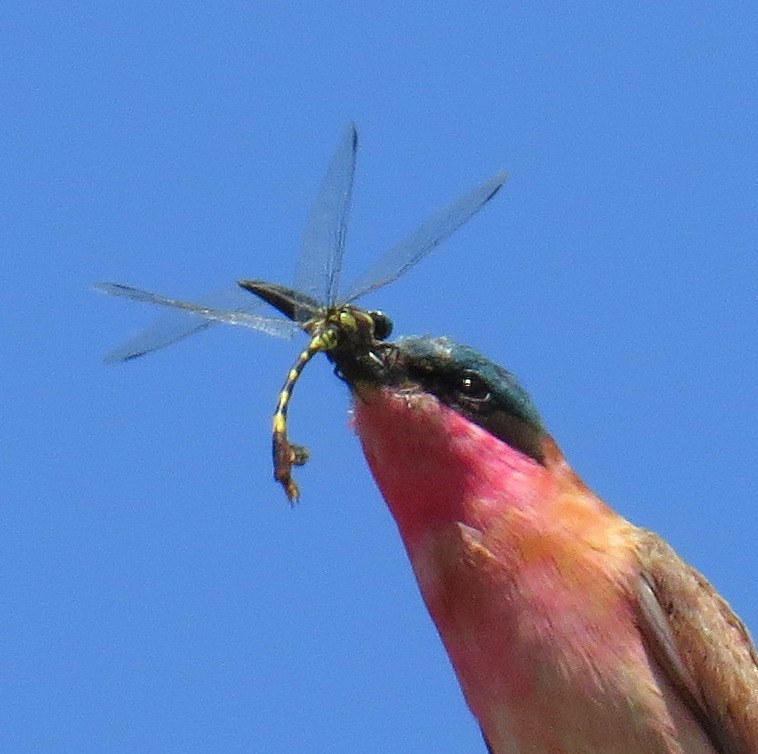
Southern Carmine Bee-eater
Sleek, pointed contour feathers; elongated central tail streamers
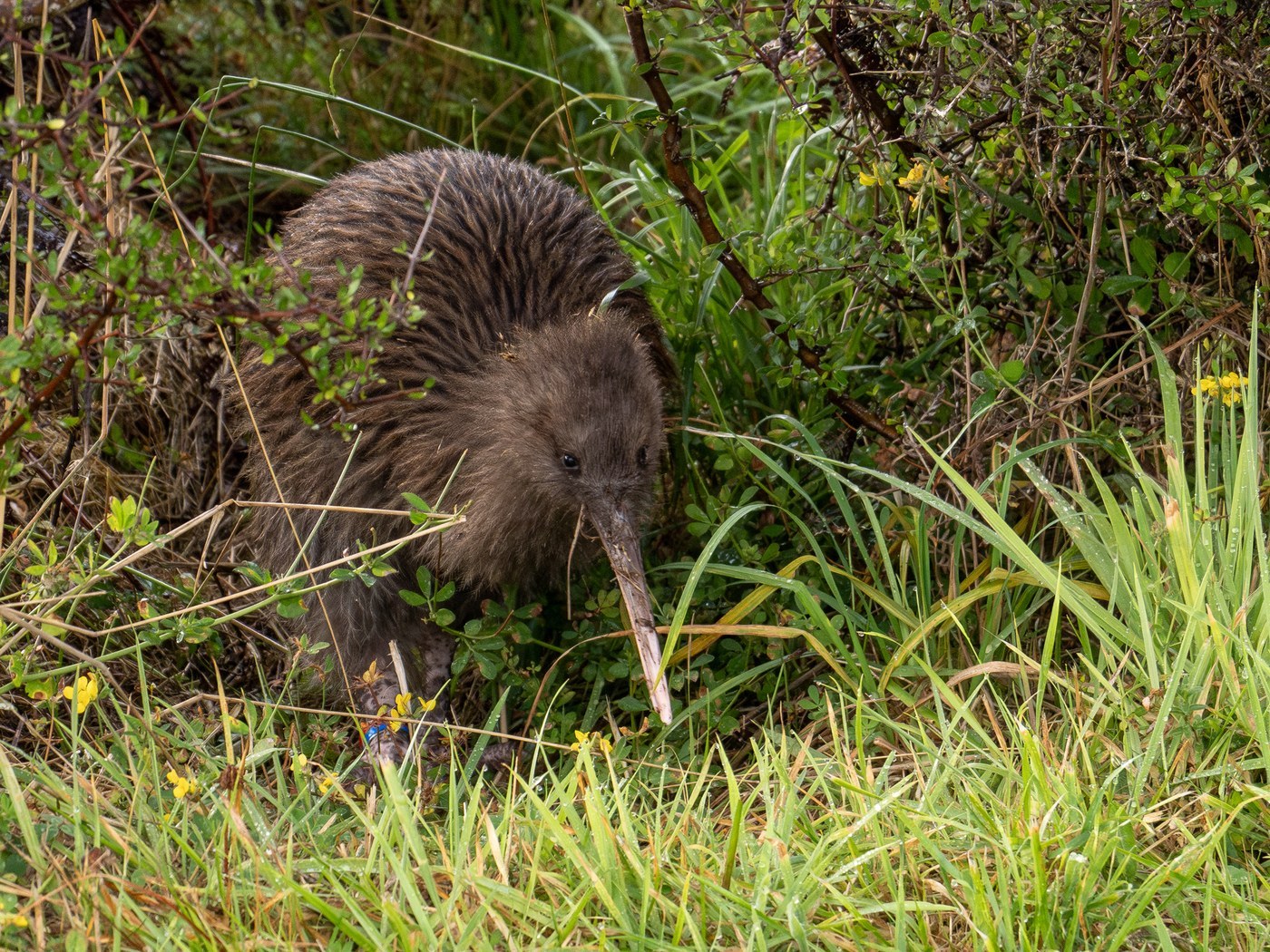
Southern Brown Kiwi
Shaggy, hair-like plumage with loose barbs lacking barbules; flightless, vestigial wings hidden beneath body feathers

Somali Ostrich
Loose, soft plumes lacking interlocking barbules

Wreathed Hornbill
Dense contour feathers, broad flight feathers

Woodland Kingfisher
Firm contour feathers; broad wing feathers