
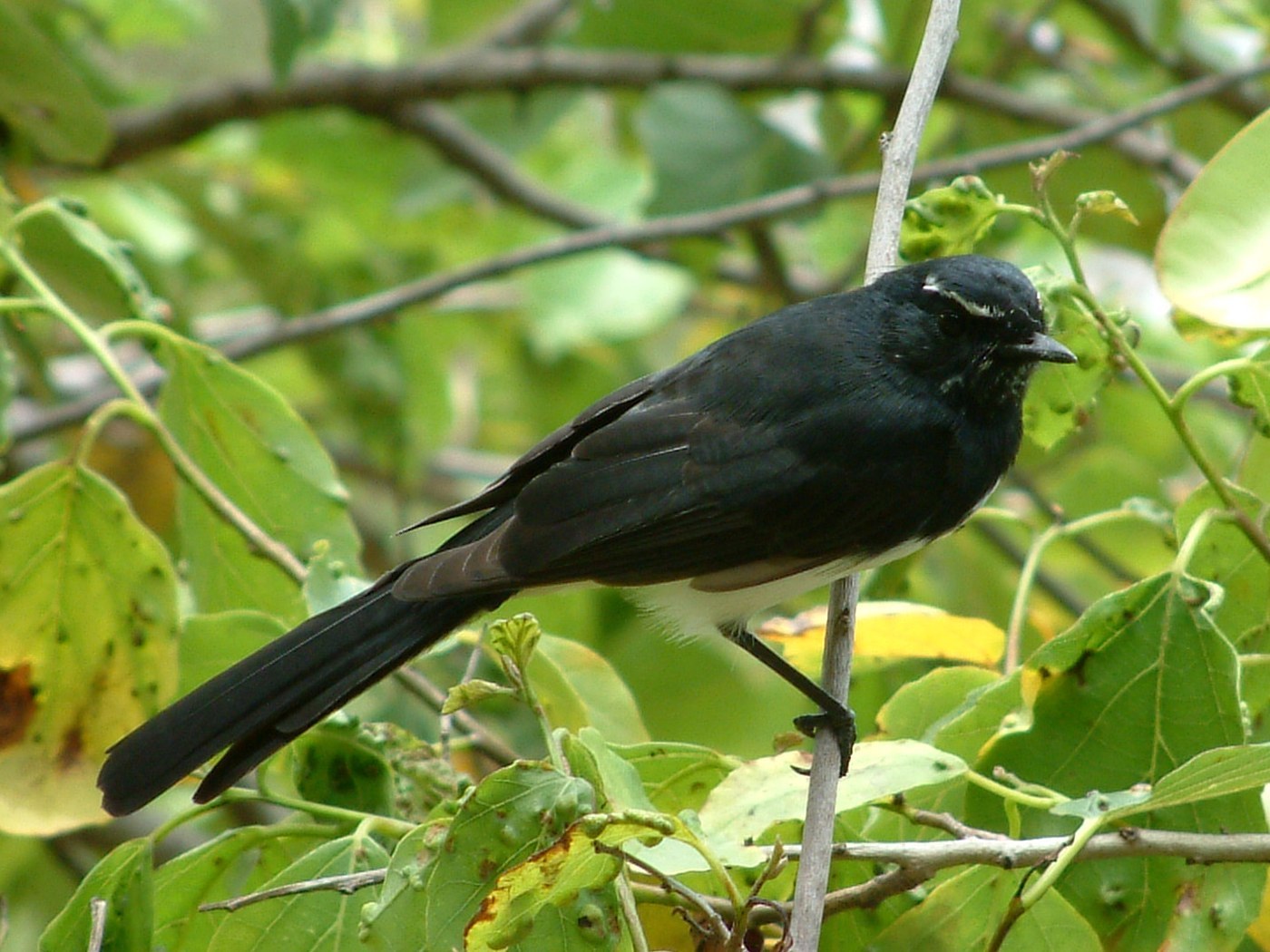
Willie Wagtail
Rhipidura leucophrys
A bold black-and-white fantail relative common across Australia, the Willie Wagtail is known for constantly wagging its long tail from side to side while perched or foraging.
- Feather type
- Small, soft contour feathers; long tail habitually wagged side to side
- Colours
- Black upperparts and breast, white underparts, thin white eyebrow
- Bird size
- Small songbird, ~19-21 cm including tail
Found a feather like this?
Identify any feather from a photo, free.
Overview
The Willie Wagtail is a familiar, confident songbird across Australia, New Guinea, and nearby islands, recognized by its crisp black-and-white plumage and its habit of swaying its long tail side to side almost constantly. It is often seen in open, semi-cleared habitats close to people, including farmland and urban parks.
Identifying the Feather
Plumage is boldly two-toned, with glossy black upperparts, head, and breast contrasting sharply against clean white underparts, a pattern that distinguishes it clearly from the grayer, buffier fantail relatives. A thin white eyebrow-like line of feathers crosses above the eye, and fine whisker-like feathers (rictal bristles) are present around the base of the bill. The tail is long relative to body size and is wagged side to side rather than fanned vertically as in some related fantails, though it can also be spread. Wings are short and rounded for quick, agile flight. The strong black-and-white contrast, larger size, and side-to-side tail motion readily separate this species from grayer fantails.
Plumage & Molt
Sexes look alike in this species. Juveniles show duller, browner upperparts with less crisp contrast than adults, gradually acquiring full black-and-white plumage. Molt is regular, maintaining the sharp plumage contrast that is a hallmark of the adult bird.
Habitat & Range
Willie Wagtails occupy a very broad range of open habitats, including farmland, open woodland, wetland edges, parks, and gardens, generally avoiding only dense unbroken forest. The species is largely non-migratory and often highly territorial, defending the same area across seasons.
Behavior & Field Notes
This species feeds on insects, caught both in short sallies from a perch and while walking on the ground. It is noted for its bold, sometimes aggressive behavior toward much larger birds near its nest. Nests are small, neat cups often built on horizontal branches or artificial structures. Its call is a bright, often described as chattering or scolding, series of notes, and the near-constant tail-wagging is one of the most recognizable behavioral traits among Australian birds.
Frequently asked questions
How can you tell a Willie Wagtail from a Grey Fantail feather?
Willie Wagtail feathers show bold black-and-white contrast rather than the grayer upperparts and buff underparts of the Grey Fantail, and the bird is noticeably larger.
Why does it wag its tail?
It habitually sways its long tail side to side while foraging, a behavior thought to help flush insects or maintain balance.
Is the Willie Wagtail aggressive?
It can be notably bold, sometimes chasing much larger birds away from its nesting territory.
Does it migrate?
No, it is largely non-migratory and often defends the same territory across seasons.
Willie Wagtail guides
In-depth guides for identifying and understanding Willie Wagtail.
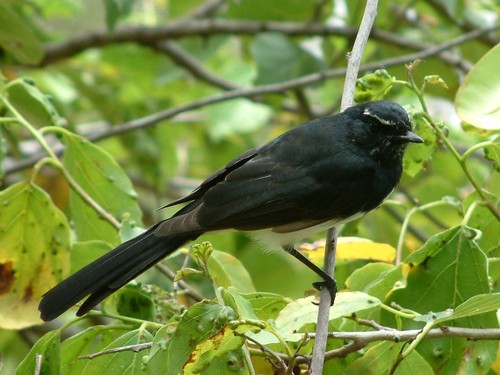
Willie Wagtail identified by the community
Real feathers identified with Feather Identifier.

Other feathers you may enjoy

Yellow-breasted Bunting
Contour and flight feathers, chestnut-and-yellow breeding pattern
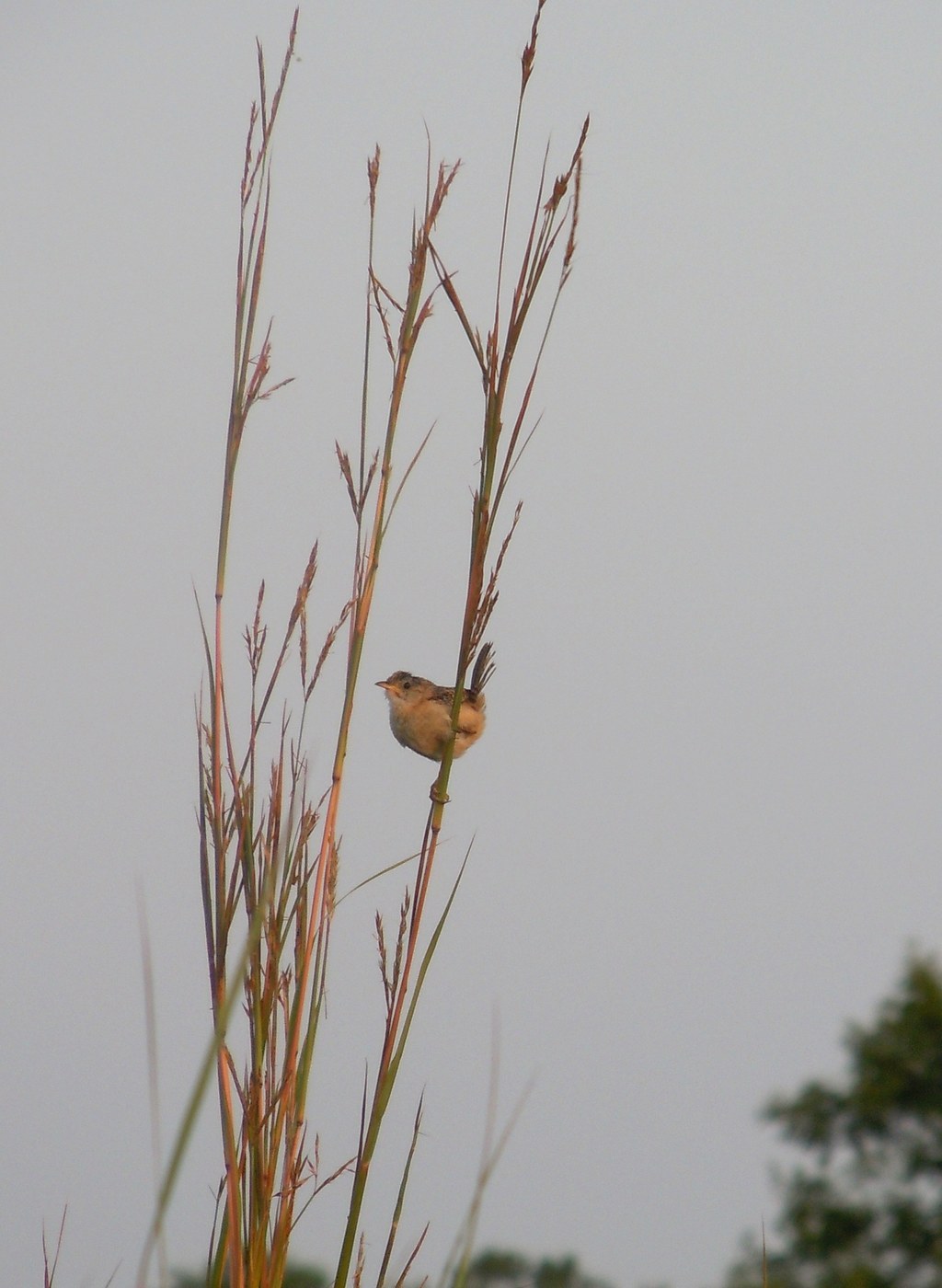
Sedge Wren
Tiny streaked crown and back feathers

Yellow-winged Cacique
Glossy black body feathers, yellow wing patch, shaggy crest

Yellow Warbler
Small contour and flight feathers
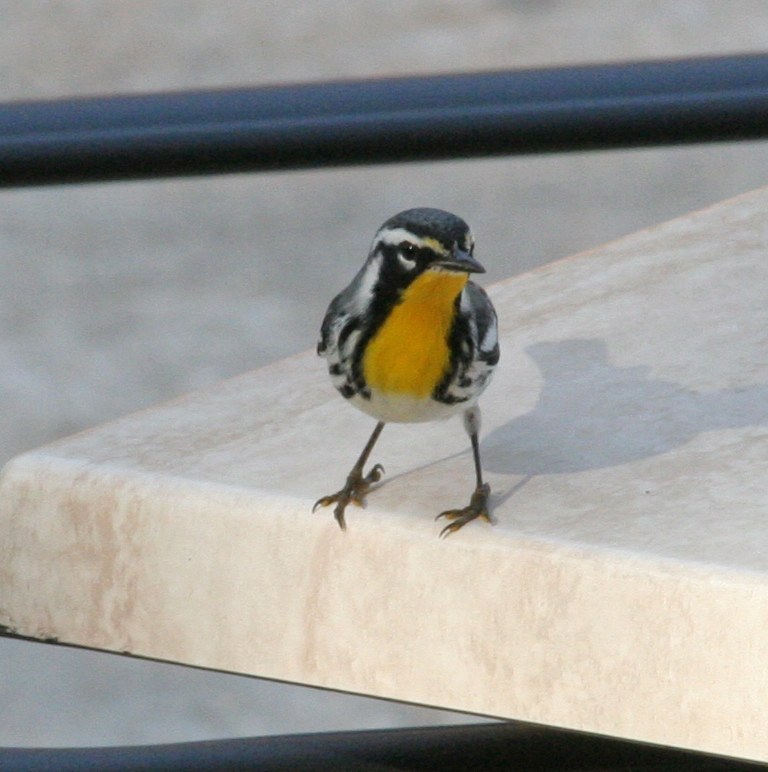
Yellow-throated Warbler
Small contour and flight feathers
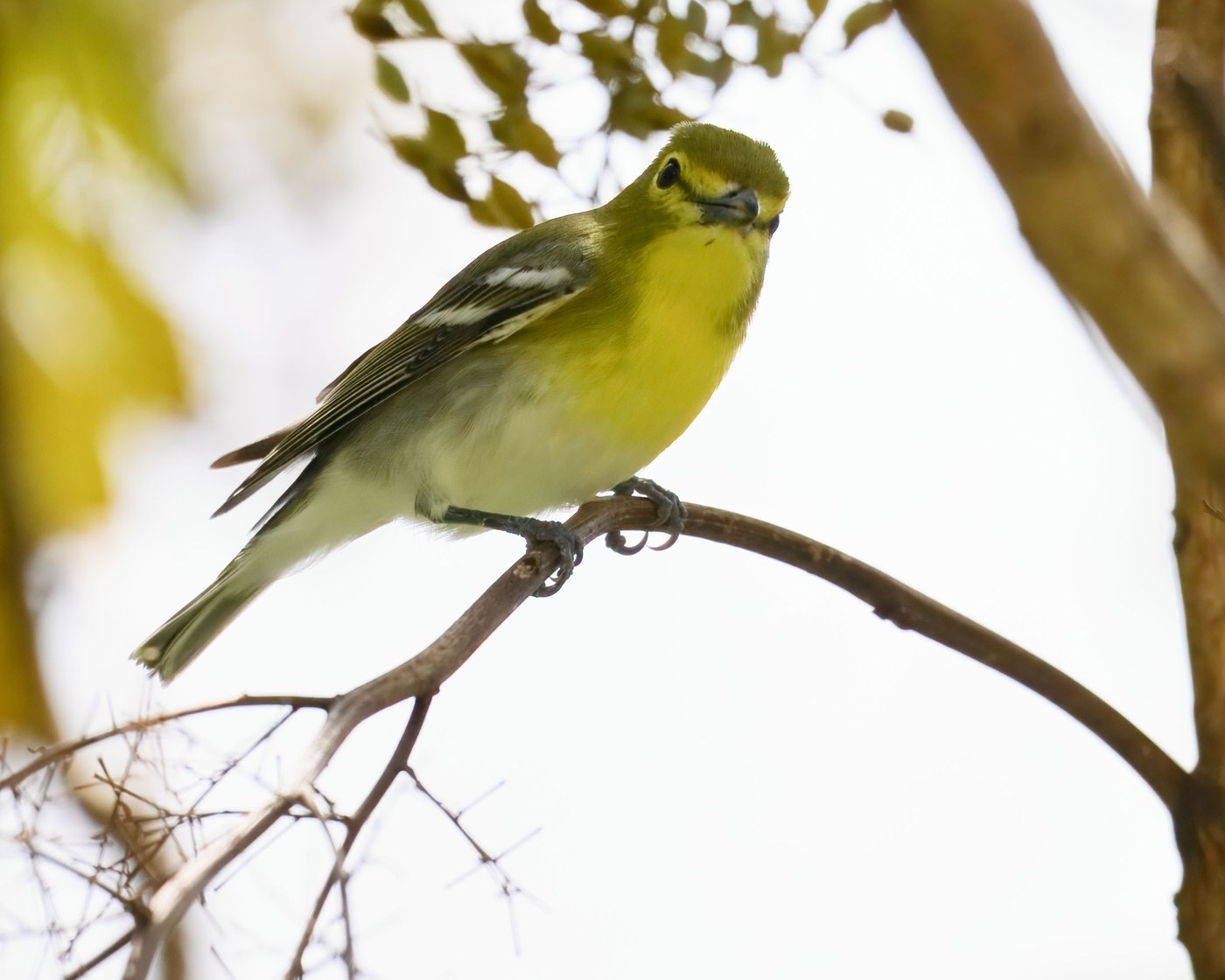
Yellow-throated Vireo
Bright yellow throat and spectacle feathers; olive-green back feathers; two white wing-bar feathers

Yellow-rumped Warbler
Small contour and flight feathers
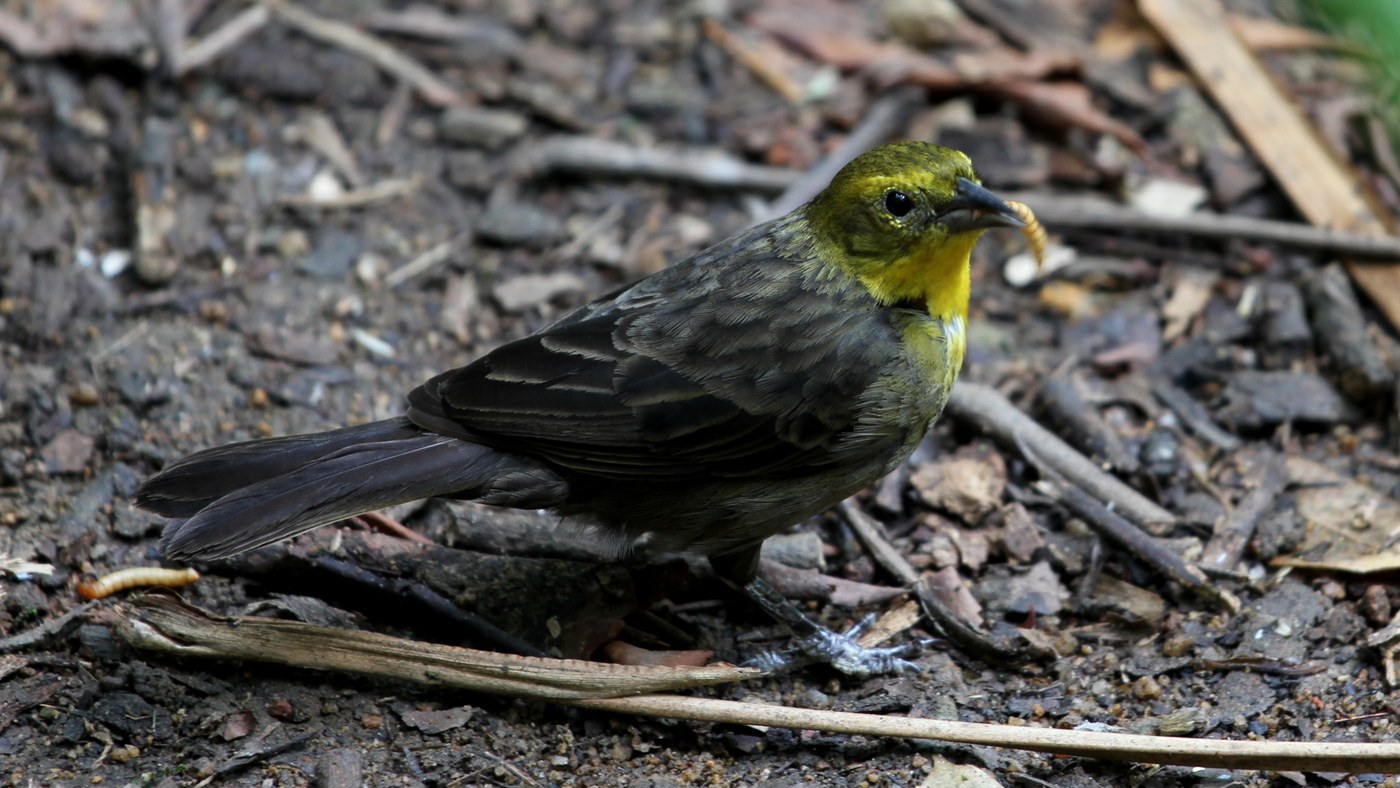
Yellow-hooded Blackbird
Contrasting hood and body feathers
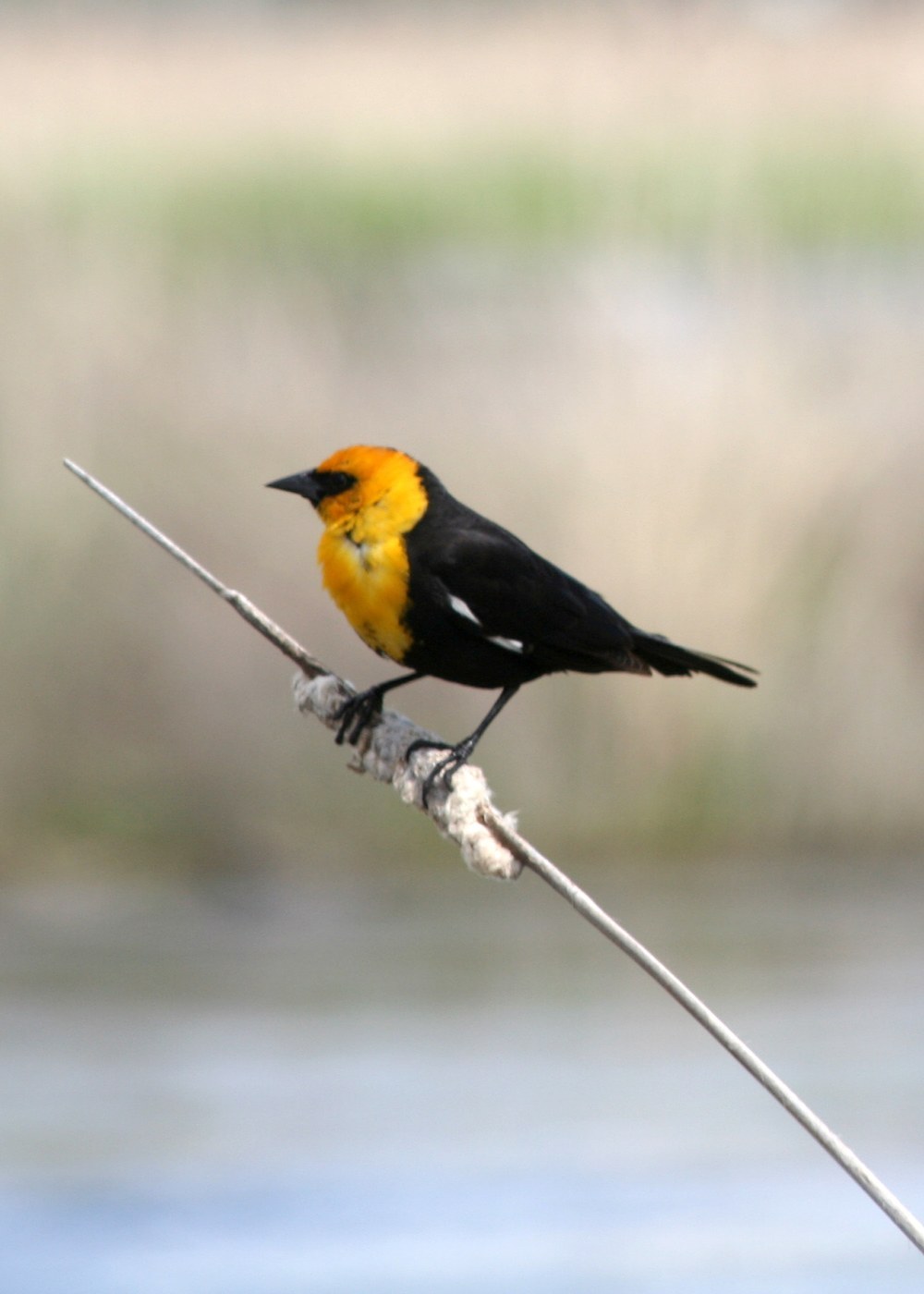
Yellow-headed Blackbird
Glossy black body plumage with a bright yellow head and breast

Yellow-eyed Junco
Contour and flight feathers

Yellow-fronted Canary
Small, smooth body plumage

Yellow-breasted Greenfinch
Compact, smooth body plumage