
Swainson's Warbler
Limnothlypis swainsonii
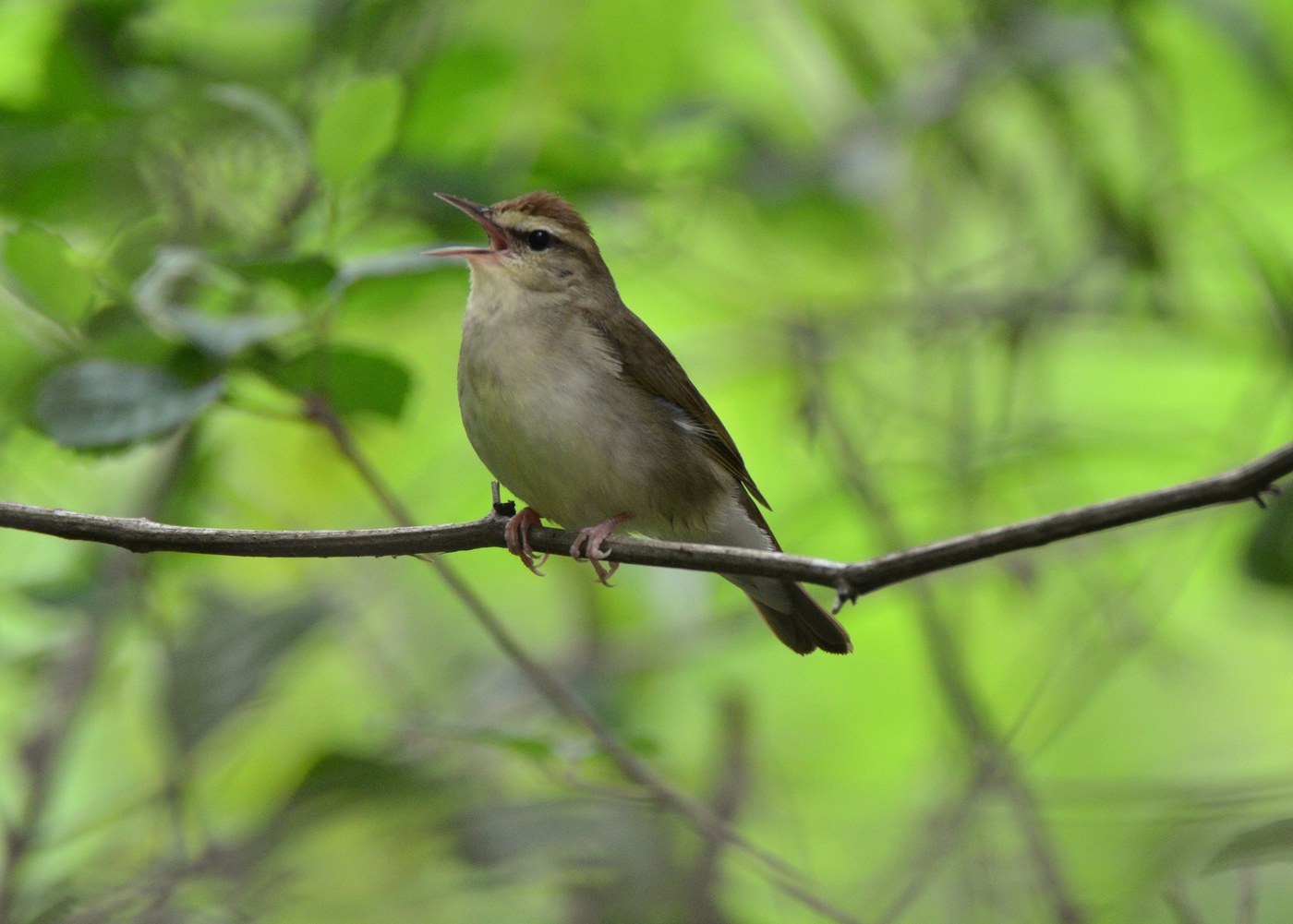
Swainson's Warbler is a plain, secretive brown warbler of southeastern thickets, best known for a rich, ringing song rather than bold plumage.
- Feather type
- Plain, unstreaked contour feathers; rounded flight feathers; large-billed head feathers
- Colours
- Warm olive-brown above, plain buffy-white below, rufous-tinged crown feathers
- Bird size
- Sparrow-sized, ~13-15 cm
Found a feather like this?
Identify any feather from a photo, free.
Overview
Overview
Swainson's Warbler is one of the drabbest members of the New World warbler family, lacking any bold wing bars, streaking, or bright colors. It breeds in dense canebrakes and rhododendron tangles of the southeastern United States and winters in Caribbean and Central American thickets, spending most of its life low and hidden.
Because it forages on the ground and in leaf litter rather than flitting through open branches, its feathers are rarely seen but are distinctive once compared against the mostly patterned warblers around it.
Identifying the Feather
Recognizing the Feathers
- Upperpart feathers: warm olive-brown to russet-brown, entirely unstreaked
- Crown feathers: slightly warmer, rufous-tinged compared to the back
- Underpart feathers: plain buffy-white to pale yellowish-white, without streaks or spots
- Flight feathers: rounded, plain brown, lacking wing bars
The combination of an unmarked back and unmarked underparts helps separate loose feathers from most other warblers, which typically show at least faint streaking or wing bars.
Plumage & Molt
Plumage
Sexes look alike, with plain olive-brown upperparts, a slightly warmer rufous-brown crown, a pale eyebrow stripe, and buffy-white underparts. Juveniles are similarly plain but with a slightly duller, more uniform tone overall. There is one complete molt after breeding, with plumage otherwise stable through the year and no seasonal color shift.
Habitat & Range
Habitat & Range
This warbler breeds in the southeastern United States, favoring dense canebrakes, floodplain thickets, and rhododendron-choked ravines, then migrates to winter in the Caribbean and parts of Central America. It is a long-distance migrant that keeps almost entirely to low, tangled vegetation rather than open woodland.
Behavior & Field Notes
Behavior & Field Notes
Swainson's Warbler forages methodically on the ground, flipping leaf litter with its bill in search of small invertebrates. It builds a bulky cup nest low in cane or shrubs and is famous for a loud, clear, whistled song that carries far through dense cover, often the only clue to its presence. It is notoriously difficult to see despite being locally common in the right habitat.
Frequently asked questions
Why are Swainson's Warbler feathers so plain?
The species spends nearly all its time skulking in dense, shaded thickets, where a plain olive-brown and buffy-white pattern provides better camouflage than bold markings would.
How can I tell a Swainson's Warbler feather from other brown warblers?
Look for a completely unstreaked back and unmarked underparts combined with a slightly warmer, rufous-tinged crown; most similarly sized warblers show at least faint streaking or a wing bar.
Does plumage differ between males and females?
No, the sexes are essentially identical in this species, so feather color alone will not indicate sex.
Where would I most likely find a feather from this species?
In or near dense canebrakes, rhododendron thickets, or swampy understory in the southeastern United States during the breeding season.
Swainson's Warbler guides
In-depth guides for identifying and understanding Swainson's Warbler.
Other feathers you may enjoy

Yellow-breasted Bunting
Contour and flight feathers, chestnut-and-yellow breeding pattern

Sedge Wren
Tiny streaked crown and back feathers

Yellow-winged Cacique
Glossy black body feathers, yellow wing patch, shaggy crest

Yellow Warbler
Small contour and flight feathers

Yellow-throated Warbler
Small contour and flight feathers

Yellow-throated Vireo
Bright yellow throat and spectacle feathers; olive-green back feathers; two white wing-bar feathers

Yellow-rumped Warbler
Small contour and flight feathers

Yellow-hooded Blackbird
Contrasting hood and body feathers

Yellow-headed Blackbird
Glossy black body plumage with a bright yellow head and breast

Yellow-eyed Junco
Contour and flight feathers

Yellow-fronted Canary
Small, smooth body plumage

Yellow-breasted Greenfinch
Compact, smooth body plumage