
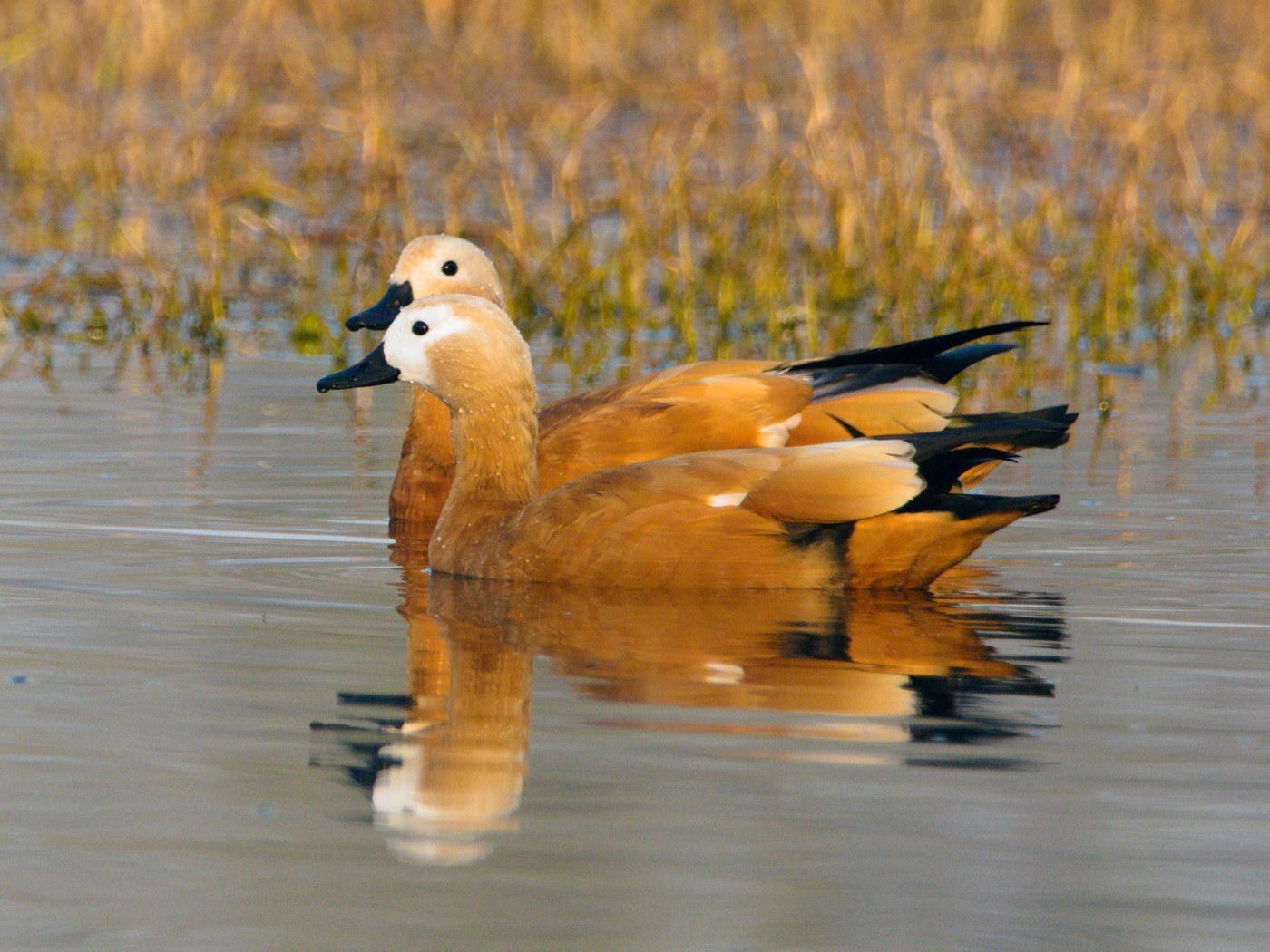
Ruddy Shelduck
Tadorna ferruginea
A warm orange-cinnamon duck with a paler, buffy head, solid black flight feathers, and a bright white patch on the upperwing bordered by a glossy green speculum.
- Feather type
- Contour and flight feathers
- Colours
- Orange-cinnamon body, paler head, black flight feathers, white wing patch
- Bird size
- Large duck, ~64 cm
Found a feather like this?
Identify any feather from a photo, free.
Overview
The Ruddy Shelduck breeds across a broad swath of Central Asia, eastern Europe, and parts of the Middle East and East Asia, favoring open steppe lakes, rivers, and sometimes high-altitude wetlands. Its warm, unbarred orange plumage and habit of nesting in burrows or cavities away from water make it a distinctive and adaptable waterfowl species.
Identifying the Feather
Body feathers are a rich, unbarred orange-cinnamon color throughout, lacking the fine vermiculation typical of many dabbling ducks. Head and face feathers are noticeably paler, creamy-buff, contrasting gently with the darker orange body. A large white patch covers the upperwing coverts, bordered by a narrow black band and a glossy green speculum, prominent in flight and identifiable on individual covert feathers. Tail and primary feathers are blackish.
Plumage & Molt
Males develop a narrow black ring around the neck during the breeding season, otherwise the sexes look broadly similar. Juveniles are duller than adults, with a less crisp contrast between head and body coloring.
Habitat & Range
Breeds across steppe lakes and rivers of Central Asia and parts of eastern Europe, with some populations breeding at high elevations on the Tibetan Plateau and neighboring mountain regions. Migratory populations winter further south in South Asia and parts of Africa, while some populations are more sedentary.
Behavior & Field Notes
Feeds on a mix of grain, grasses, and small aquatic invertebrates, foraging both on land and in shallow water. Nests in burrows, cliff crevices, or tree cavities, sometimes at considerable distance from water, with young later led overland to wetlands. Territorial and often seen in pairs or small family groups, giving loud, far-carrying honking calls.
Frequently asked questions
What feather features identify a Ruddy Shelduck?
Rich orange-cinnamon body feathers, a paler buffy head, and a bold white wing patch bordered by a glossy green speculum.
Does the Ruddy Shelduck always nest near water?
Not necessarily; it often nests in burrows, cliff crevices, or tree cavities some distance from water, leading young overland afterward.
How can you tell a breeding male Ruddy Shelduck?
Breeding males show a narrow black ring around the neck, absent or less distinct at other times of year.
Where does the Ruddy Shelduck breed at high elevation?
Some populations nest on the Tibetan Plateau and adjacent high-altitude wetlands in Central Asia.
Ruddy Shelduck guides
In-depth guides for identifying and understanding Ruddy Shelduck.
Other feathers you may enjoy

Mallard
Wing (speculum), body, and tail feathers

Spectacled Eider
Large sea-duck body feathers with distinctive eye-ring patches

Canada Goose
Body and flight feathers
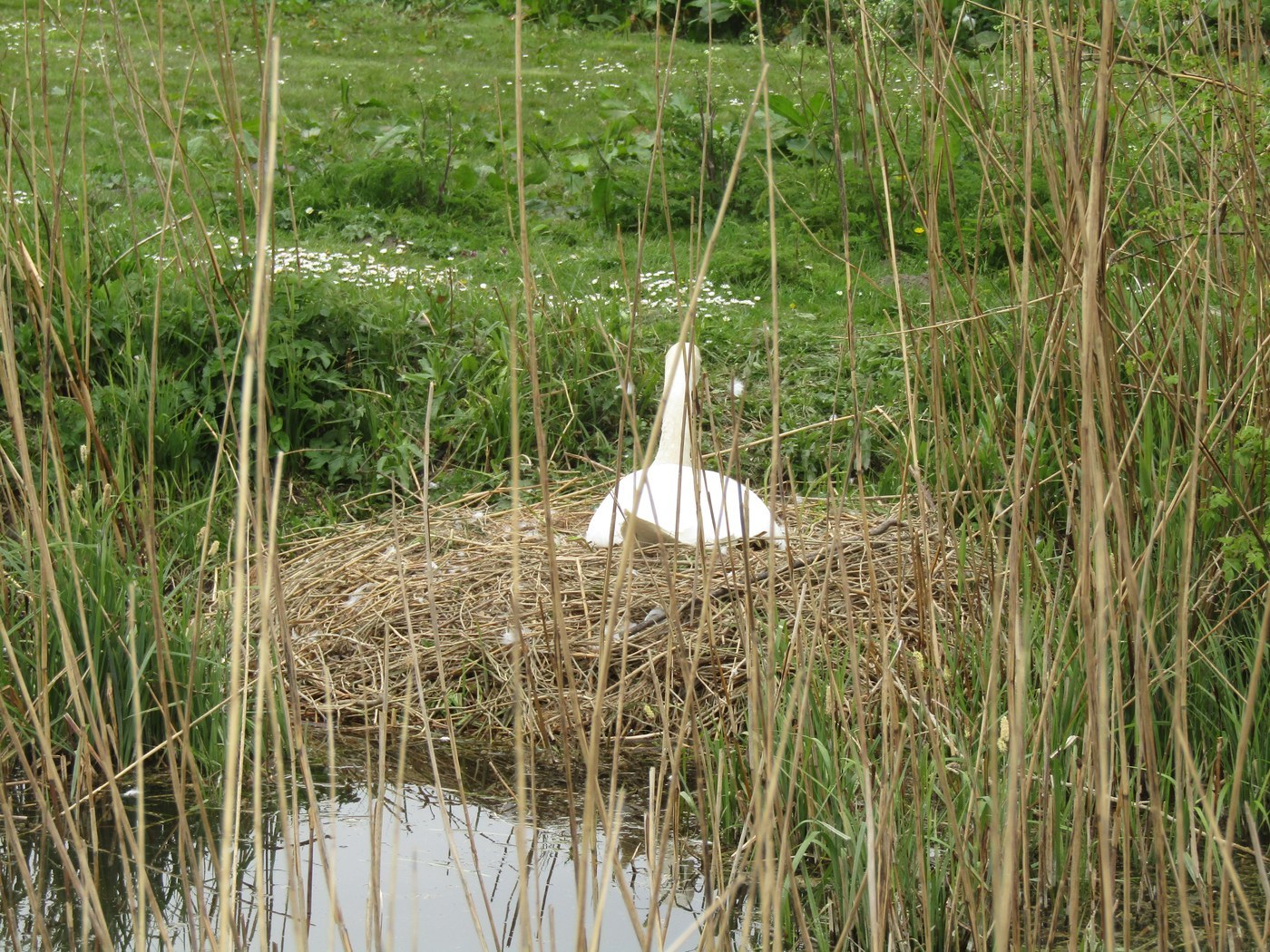
Mute Swan
Body (contour) and flight feathers

Wood Duck
Iridescent crest feathers; ornate scapular and flank feathers; white teardrop facial feathers (female)
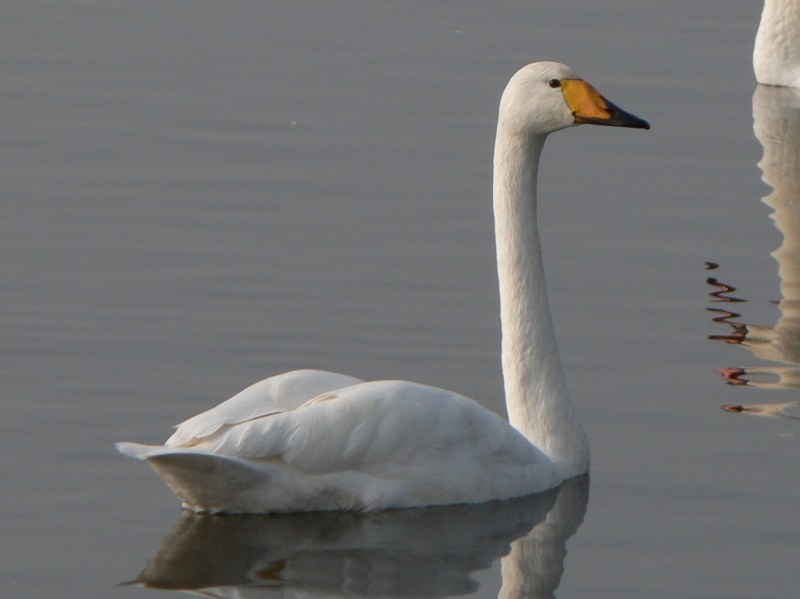
Whooper Swan
Contour and flight feathers

White-winged Scoter
Large sea-duck body feathers with a white wing patch

Ruddy Duck
Stiff tail feathers and compact body plumage

Ross's Goose
Contour and flight feathers

White-cheeked Pintail
Contour and elongated tail feathers

Torrent Duck
Dense, sleek contour feathers; stiff, pointed tail feathers used for bracing against rocks

Tundra Swan
Contour and flight feathers