
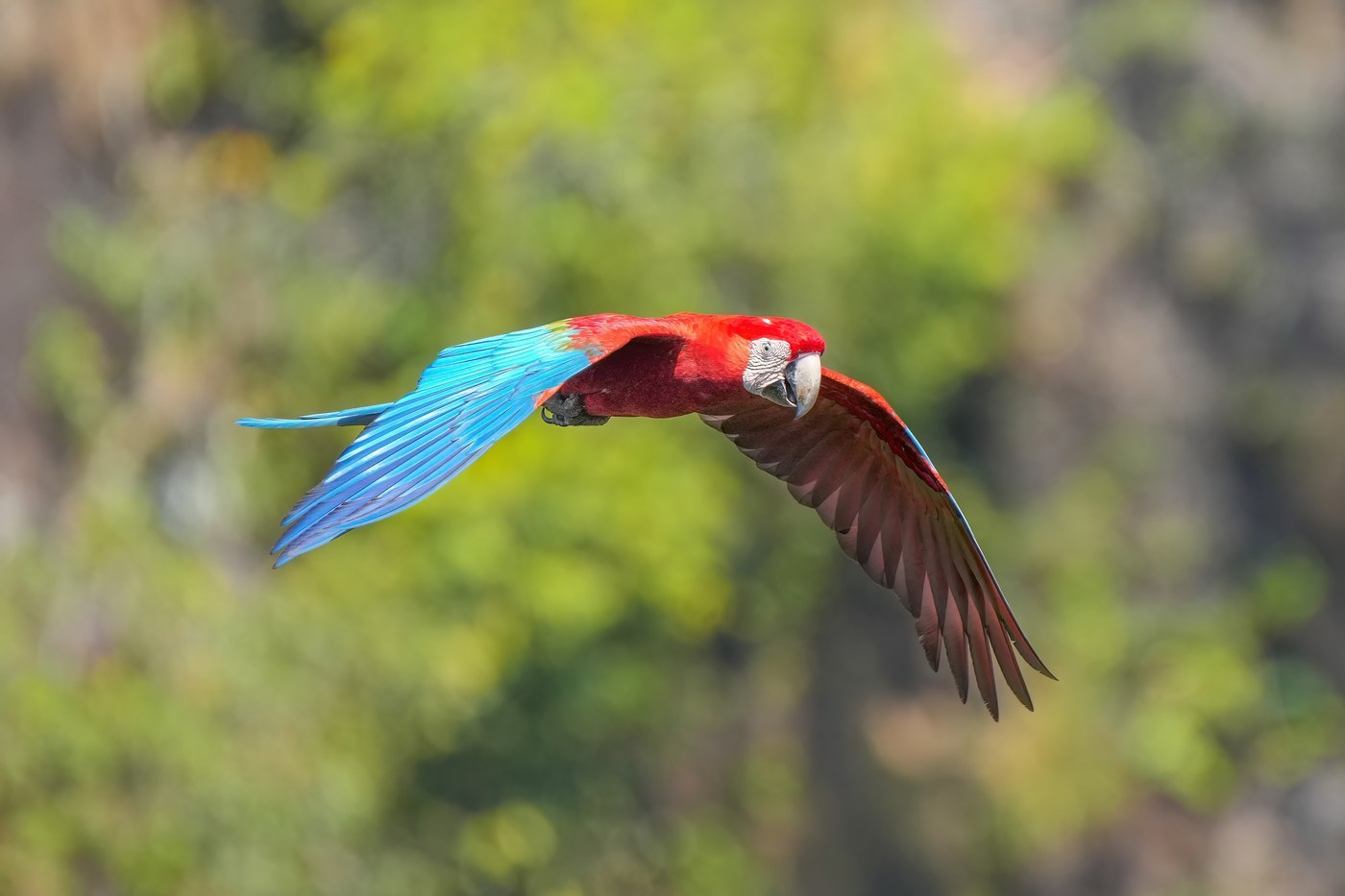
Red-and-green Macaw
Ara chloropterus
One of the largest macaws, a vivid red parrot of South American forests with a green wing band, blue flight feathers, and a bare white face marked with thin lines of red feathers.
- Feather type
- Large, broad flight and tail feathers; dense body contour feathers
- Colours
- Vivid red body with green wing band and blue flight and tail feathers
- Bird size
- Very large parrot, ~90-95 cm including tail
Found a feather like this?
Identify any feather from a photo, free.
Overview
The Red-and-green Macaw, also known as the Green-winged Macaw, is one of the largest parrot species in the world, found in lowland tropical forests across much of South America. Its brilliant red plumage combined with green and blue wing tones makes it one of the most recognizable macaws.
Like other large macaws, it is highly social, typically seen in pairs or small flocks flying above the forest canopy, and often visits exposed riverbank clay licks in groups to supplement its diet.
Identifying the Feather
- Body is vivid red overall, from the head and neck through the breast and belly
- Wing coverts form a broad green band across the upper wing, distinguishing it from the all-red Scarlet Macaw
- Flight feathers and tail are blue, with the tail long and pointed
- Bare facial skin is whitish, marked with thin lines of small red feathers, a feature unique among large macaws
- Bill is large, mostly pale horn-colored with a dark tip
- Distinguished from the Scarlet Macaw by the green wing band (versus yellow) and from other macaws by its larger size and facial feather lines
Plumage & Molt
Adults of both sexes look alike, with vivid red body plumage, a green wing band, and blue flight and tail feathers present year-round. Juveniles show duller coloration overall and shorter tails, with facial feather lines less developed, gradually acquiring full adult plumage over one to two years. There is no seasonal plumage variation in this species.
Habitat & Range
This species inhabits lowland tropical forest, forest edge, and gallery forest across much of tropical South America, generally favoring areas with tall trees for nesting and roosting. It is largely resident, though pairs and flocks may move locally in response to fruiting patterns of key food trees.
Behavior & Field Notes
Red-and-green Macaws feed mainly on seeds, nuts, and fruit, using their powerful bills to crack open hard shells, and often visit riverbank clay licks in groups. They nest in large tree cavities, typically forming long-term pair bonds. Calls are loud, harsh, and far-carrying, typical of large macaws, and pairs are frequently seen flying together above the canopy.
Frequently asked questions
What does a Red-and-green Macaw feather look like?
Body feathers are vivid red, wing coverts form a green band, and the flight and tail feathers are blue, with a bare white face marked by thin lines of small red feathers.
How can I tell a Red-and-green Macaw from a Scarlet Macaw?
The Red-and-green Macaw has a green wing band rather than the Scarlet Macaw's yellow band, and it is generally larger with a more extensively feather-lined face.
Where does the Red-and-green Macaw live?
It is found in lowland tropical forest across much of South America.
What do Red-and-green Macaws eat?
They feed mainly on seeds, nuts, and fruit, using their strong bills to open hard-shelled food items.
Red-and-green Macaw guides
In-depth guides for identifying and understanding Red-and-green Macaw.
Red-and-green Macaw identified by the community
Real feathers identified with Feather Identifier.

Other feathers you may enjoy
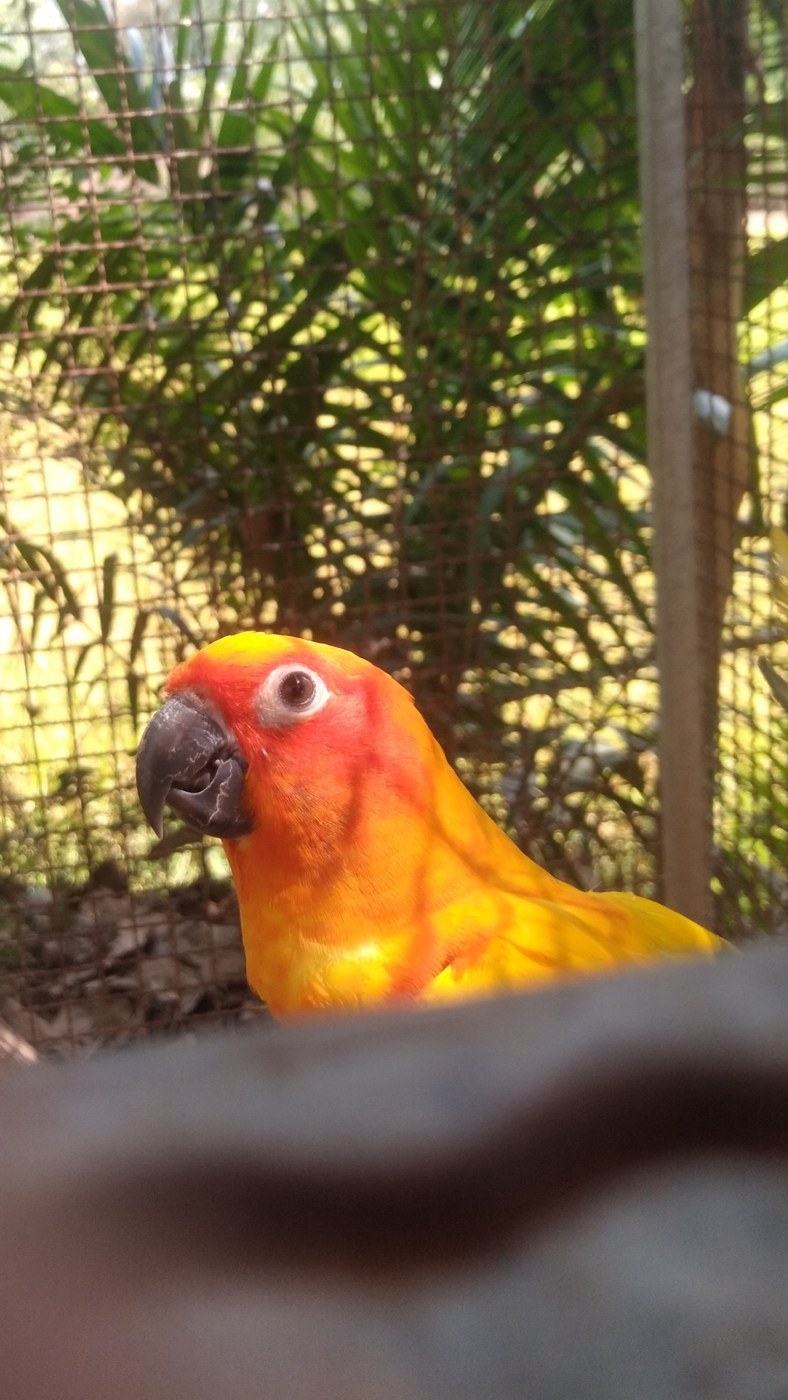
Sun Parakeet
Bright, dense body contour feathers; medium pointed tail feathers

Yellow-naped Amazon
Broad rounded contour feathers with sturdy flight feathers
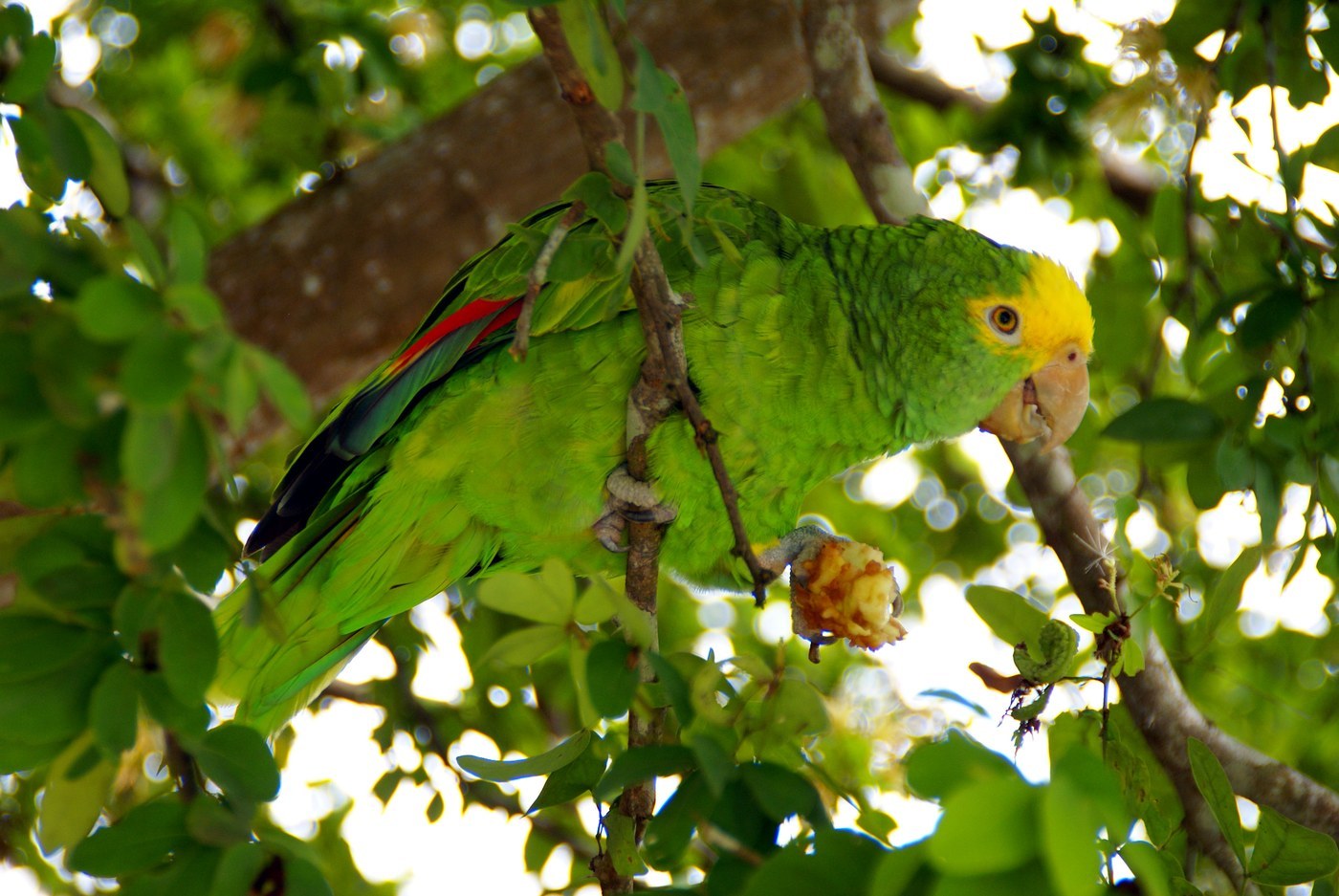
Yellow-headed Amazon
Dense, rounded body contour feathers; broad flight feathers
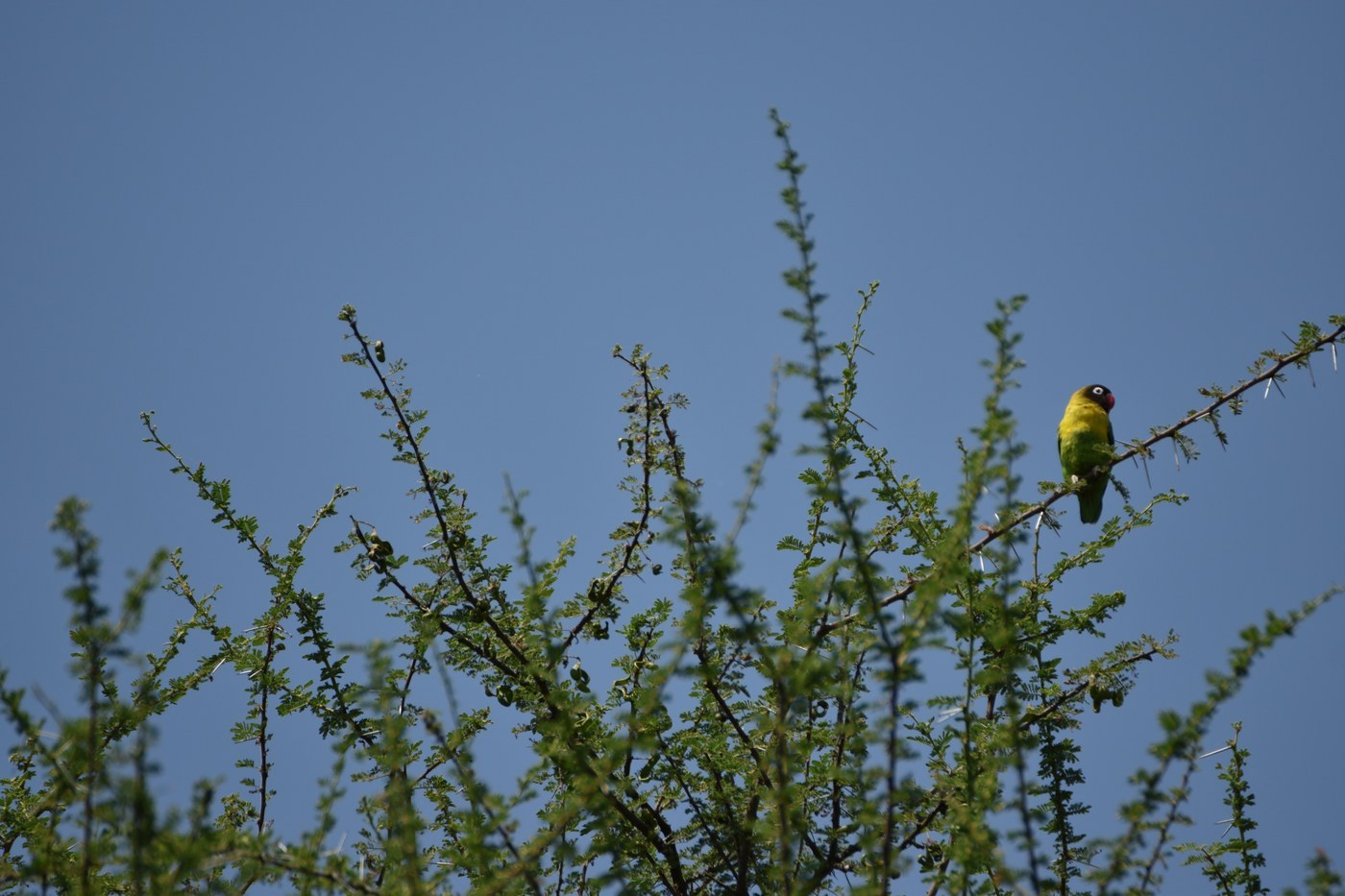
Yellow-collared Lovebird
Small compact flight feathers, short rounded tail

White-eyed Conure
Medium contour and long, graduated tail feathers

Yellow-tailed Black Cockatoo
Large, sturdy contour and flight feathers; short crest

Scarlet-chested Parrot
Small contour and flight feathers

Timneh Parrot
Broad flight feathers, scalloped body feathers with pale edges
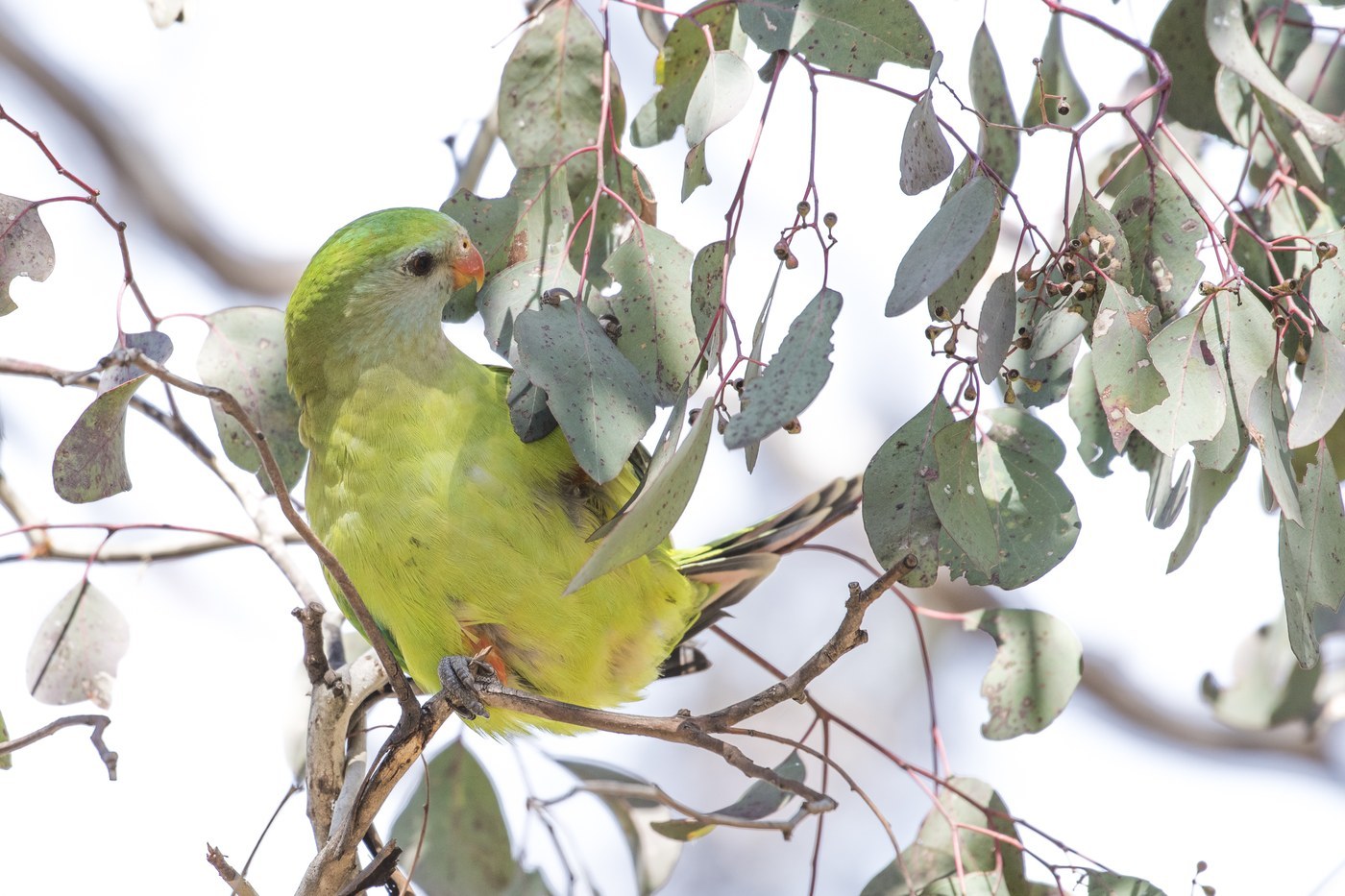
Superb Parrot
Sleek contour feathers with a long tapering tail

Red-shouldered Macaw
Compact body contour feathers; medium flight and tail feathers
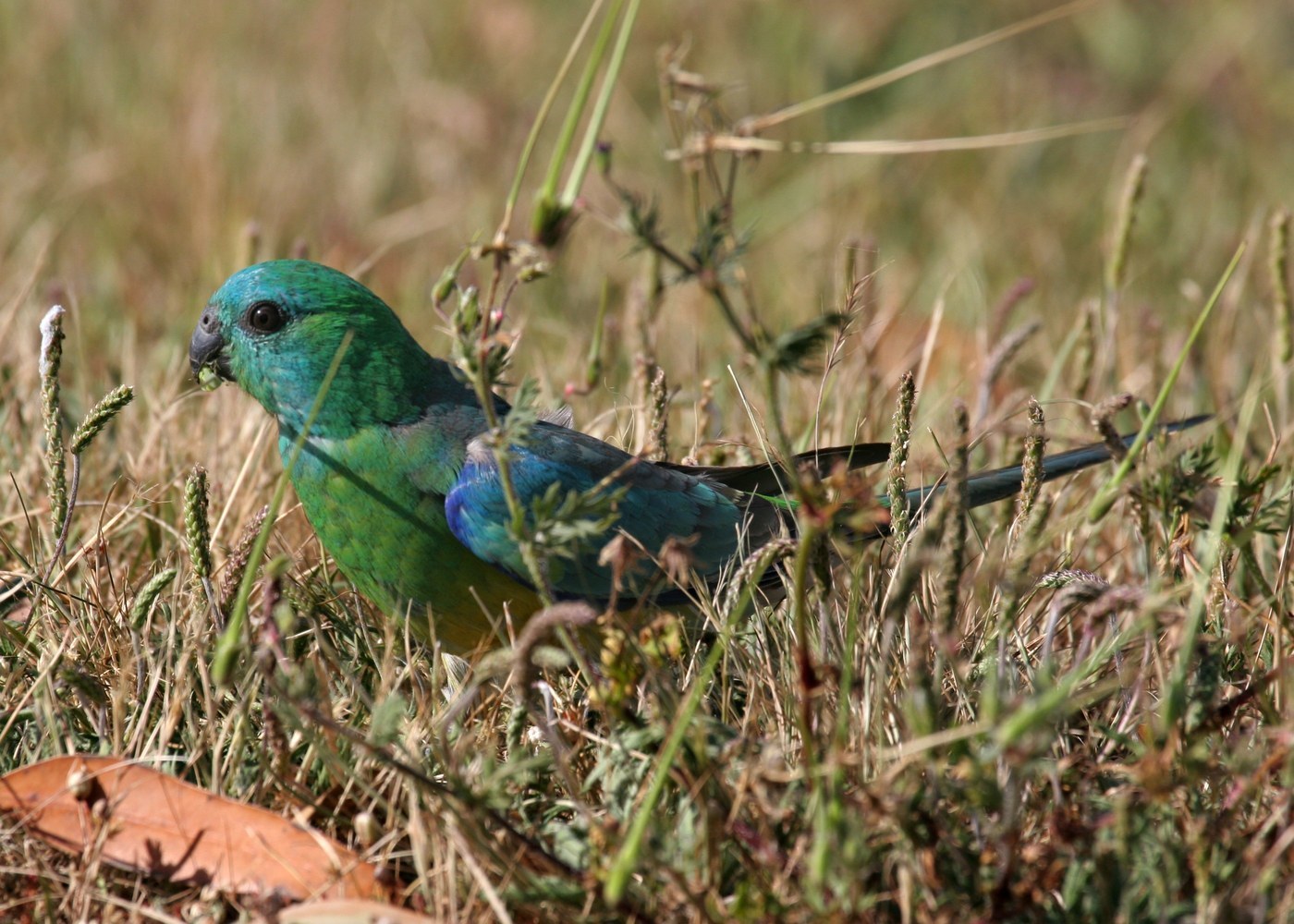
Red-rumped Parrot
Sleek contour feathers with a bright rump patch in males

White-capped Pionus
Compact contour feathers and short, squared tail feathers