
Olive Warbler
Peucedramus taeniatus
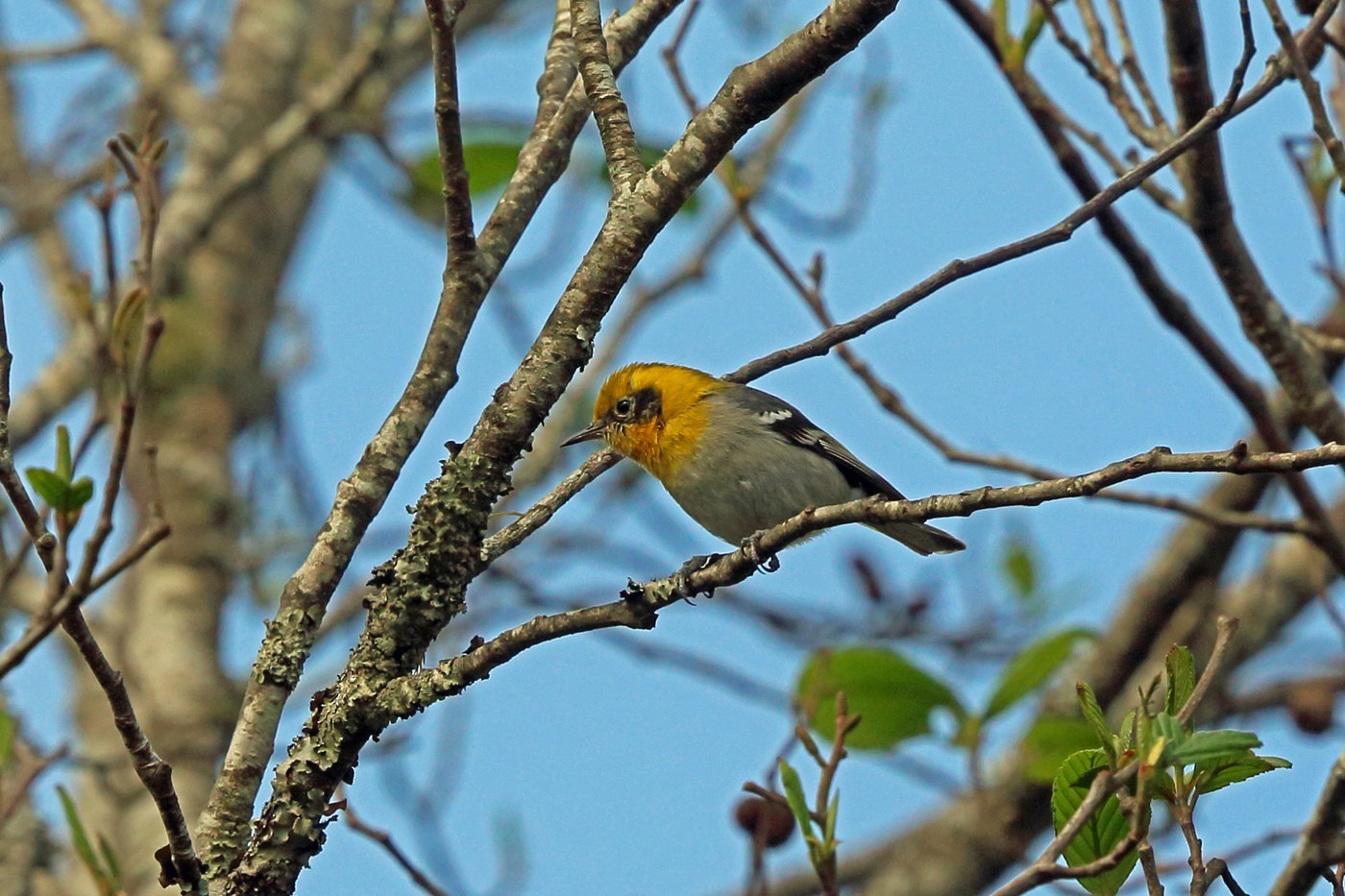
The Olive Warbler is a small, treetop songbird of southwestern highland pines, notable for the male's burnt-orange head and bold black mask.
- Feather type
- Two bold white wing-bar feathers; black mask feathers; gray back feathers
- Colours
- Orange-tawny head and throat in males, black facial mask, gray back, white wing bars
- Bird size
- Small songbird, ~12-14 cm
Found a feather like this?
Identify any feather from a photo, free.
Overview
Overview
Despite its name, the Olive Warbler is now recognized as the sole member of its own family, distinct from the true wood-warblers, reflecting differences in molt pattern and other traits discovered through genetic study. It lives high in the canopy of pine and pine-oak forests across the mountains of the southwestern United States and Mexico south to Central America.
Its feathers show a distinctive orange-and-black facial pattern in males that is unlike any true warbler, aiding identification even from a single feather.
Identifying the Feather
Recognizing the Feathers
- Head & throat feathers (male): rich orange-tawny, unstreaked
- Face feathers (male): bold black mask through the eye and ear region
- Back feathers: plain gray, unstreaked
- Wing feathers: dark with two bold white wing bars
- Female/immature head feathers: duller yellowish rather than orange, with a less defined, grayer mask
The orange (rather than yellow) head tone combined with a solid black mask and plain gray back separates male Olive Warbler feathers from true warblers with similar patterns.
Plumage & Molt
Plumage
Adult males show a rich, burnt-orange head and throat set off by a bold black mask and plain gray body; females and immatures are considerably duller, with a yellowish wash replacing the orange and a less contrasting, grayish facial pattern. There is no strong seasonal plumage shift, with molt occurring after the breeding season.
Habitat & Range
Habitat & Range
Olive Warblers inhabit high-elevation pine and pine-oak forest from the mountains of Arizona and New Mexico south through Mexico and Central America. Northern populations may shift to lower elevations in winter, while more southern populations tend to be resident.
Behavior & Field Notes
Behavior & Field Notes
This species forages high in pine canopies, gleaning insects from needle clusters in a manner similar to kinglets or treetop warblers, often joining mixed foraging flocks. Nests are built high in conifers, well concealed among needle clusters. Its song is a clear, whistled series reminiscent of some true warblers, delivered from high perches.
Frequently asked questions
Is the Olive Warbler a true wood-warbler?
No, despite the name it belongs to its own distinct family, separate from the true New World wood-warblers, based on differences discovered through study of its biology and genetics.
What is the most distinctive feather feature in males?
A rich orange-tawny head and throat combined with a bold black facial mask, unlike the yellow tones typical of true warblers.
How do female feathers differ from male feathers?
Females and immatures show a much duller yellowish wash instead of orange, with a less defined, grayer facial mask.
What forest type is this species tied to?
High-elevation pine and pine-oak forest across mountain ranges of the southwestern United States, Mexico, and Central America.
Olive Warbler guides
In-depth guides for identifying and understanding Olive Warbler.
Other feathers you may enjoy

Yellow-breasted Bunting
Contour and flight feathers, chestnut-and-yellow breeding pattern

Sedge Wren
Tiny streaked crown and back feathers

Yellow-winged Cacique
Glossy black body feathers, yellow wing patch, shaggy crest

Yellow Warbler
Small contour and flight feathers

Yellow-throated Warbler
Small contour and flight feathers

Yellow-throated Vireo
Bright yellow throat and spectacle feathers; olive-green back feathers; two white wing-bar feathers

Yellow-rumped Warbler
Small contour and flight feathers

Yellow-hooded Blackbird
Contrasting hood and body feathers

Yellow-headed Blackbird
Glossy black body plumage with a bright yellow head and breast

Yellow-eyed Junco
Contour and flight feathers

Yellow-fronted Canary
Small, smooth body plumage

Yellow-breasted Greenfinch
Compact, smooth body plumage