
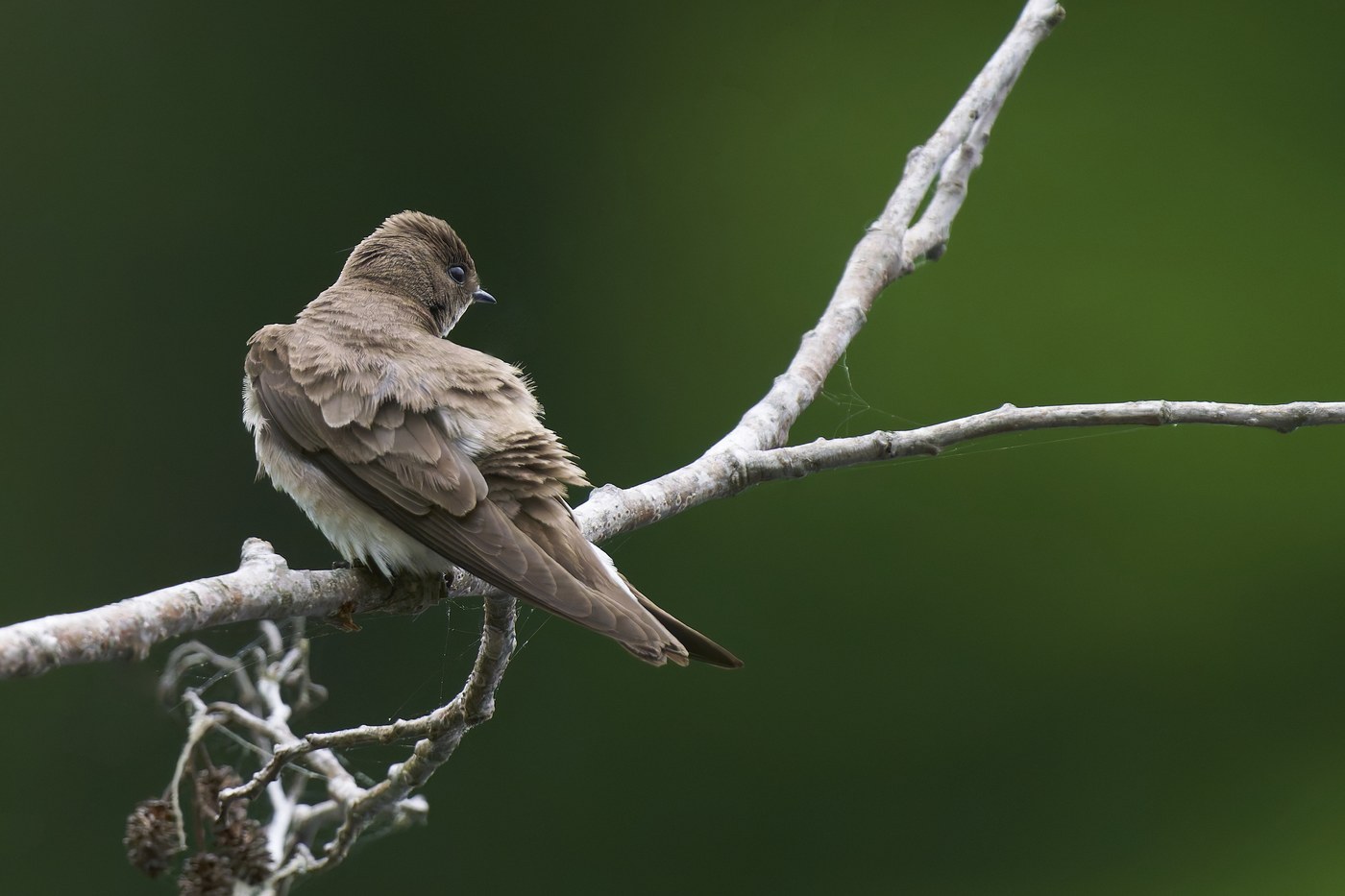
Northern Rough-winged Swallow
Stelgidopteryx serripennis
A plain brown swallow similar to Bank Swallow but lacking a sharp breast band, instead showing a soft, diffuse brownish wash across the throat.
- Feather type
- Contour and flight feathers
- Colours
- Brown upperparts, pale underparts with a diffuse brownish wash on the throat/breast
- Bird size
- Sparrow-sized, ~13 cm
Found a feather like this?
Identify any feather from a photo, free.
Overview
Overview
The Northern Rough-winged Swallow is a plain-plumaged swallow found across much of North America, often nesting singly or in loose association rather than the dense colonies typical of Bank Swallow, and using a variety of natural and artificial burrow-like sites for nesting. Its name refers to tiny hooked barbs on the outer primary feathers, a feature not visible without close examination but distinctive to the genus.
Plumage is understated: brown upperparts paired with pale underparts that show a soft, diffuse brownish wash across the throat and breast, lacking the sharp, well-defined band seen in the similarly plain Bank Swallow.
Identifying the Feather
Feather ID Notes
Northern Rough-winged Swallow feathers are plain brown above and pale below, with a soft, diffuse brownish wash spreading gradually across the throat and upper breast rather than forming a crisp band. The outer primary feathers bear tiny, hooked serrations along the leading edge, giving the species its name, though this feature requires close inspection to detect.
- Head/back feathers: plain brown, unmarked
- Underpart feathers: pale, with a gradual brownish wash on the throat/breast rather than sharp banding
- Outer primary feathers: bear small hooked barbs ("rough" edge), a subtle diagnostic feature
- Overall pattern: plainer and less contrasty than Bank Swallow The lack of a sharply defined breast band, replaced instead by a soft gradual wash, is the main feather-based way to separate this species from the similarly plain Bank Swallow.
Plumage & Molt
Plumage Details
Sexes look alike in this species, both showing the same plain brown and pale pattern. Juveniles are similar but often show slightly warmer, more cinnamon-toned wing edges that fade with the first molt. There is no strong seasonal plumage change in this species.
Habitat & Range
Habitat & Range
This species breeds across much of North America, favoring riverbanks, road cuts, culverts, and other open areas near water where it can find suitable burrow sites, often reusing existing cavities rather than excavating its own. It is migratory across most of its range, wintering from Mexico south into Central America, though some populations in milder regions may remain resident.
Behavior & Field Notes
Behavior & Field Notes
Northern Rough-winged Swallows forage on the wing over water and open habitat, catching flying insects in flight, often alone or in small loose groups rather than large flocks. Diet consists almost entirely of flying insects. Nests are placed in burrows, crevices, or cavities such as culverts, pipes, or eroded banks, generally as isolated pairs rather than dense colonies. Calls are dry, buzzy notes similar to other small swallows, generally less varied than the vocalizations of colonial species like Cliff Swallow.
Frequently asked questions
How can you tell this species from Bank Swallow?
It lacks the sharp, complete breast band of Bank Swallow, instead showing a soft, gradual brownish wash across the throat and breast.
What does its name refer to?
Tiny hooked barbs along the leading edge of the outer primary feathers, a feature requiring close inspection to see.
Does this species nest in colonies?
It typically nests singly or in loose association, unlike the dense colonies formed by Bank Swallow or Cliff Swallow.
Where does it typically nest?
In burrows, crevices, or cavities such as culverts, pipes, or eroded banks near water.
Northern Rough-winged Swallow guides
In-depth guides for identifying and understanding Northern Rough-winged Swallow.
Other feathers you may enjoy

Yellow-breasted Bunting
Contour and flight feathers, chestnut-and-yellow breeding pattern
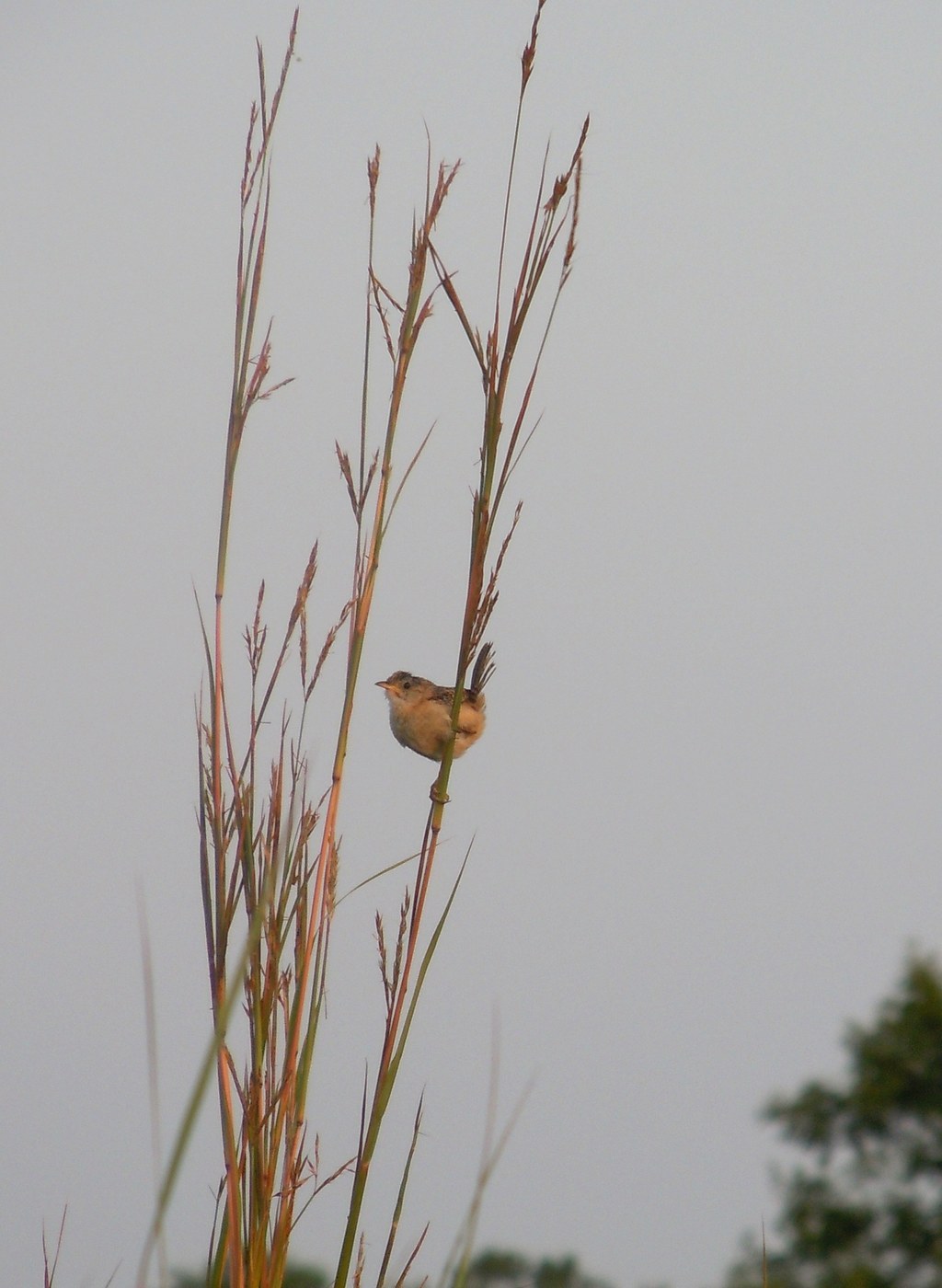
Sedge Wren
Tiny streaked crown and back feathers

Yellow-winged Cacique
Glossy black body feathers, yellow wing patch, shaggy crest

Yellow Warbler
Small contour and flight feathers
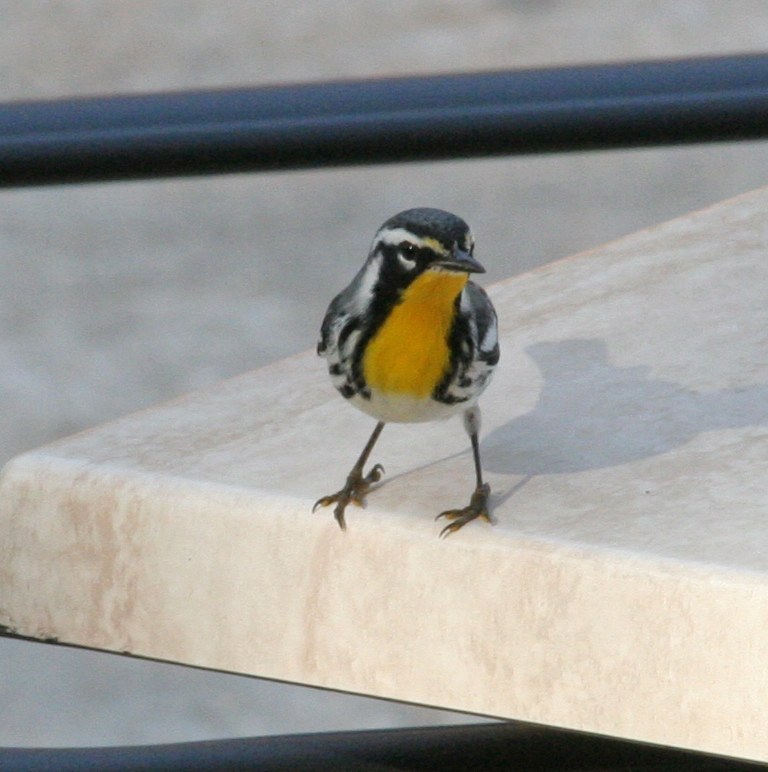
Yellow-throated Warbler
Small contour and flight feathers
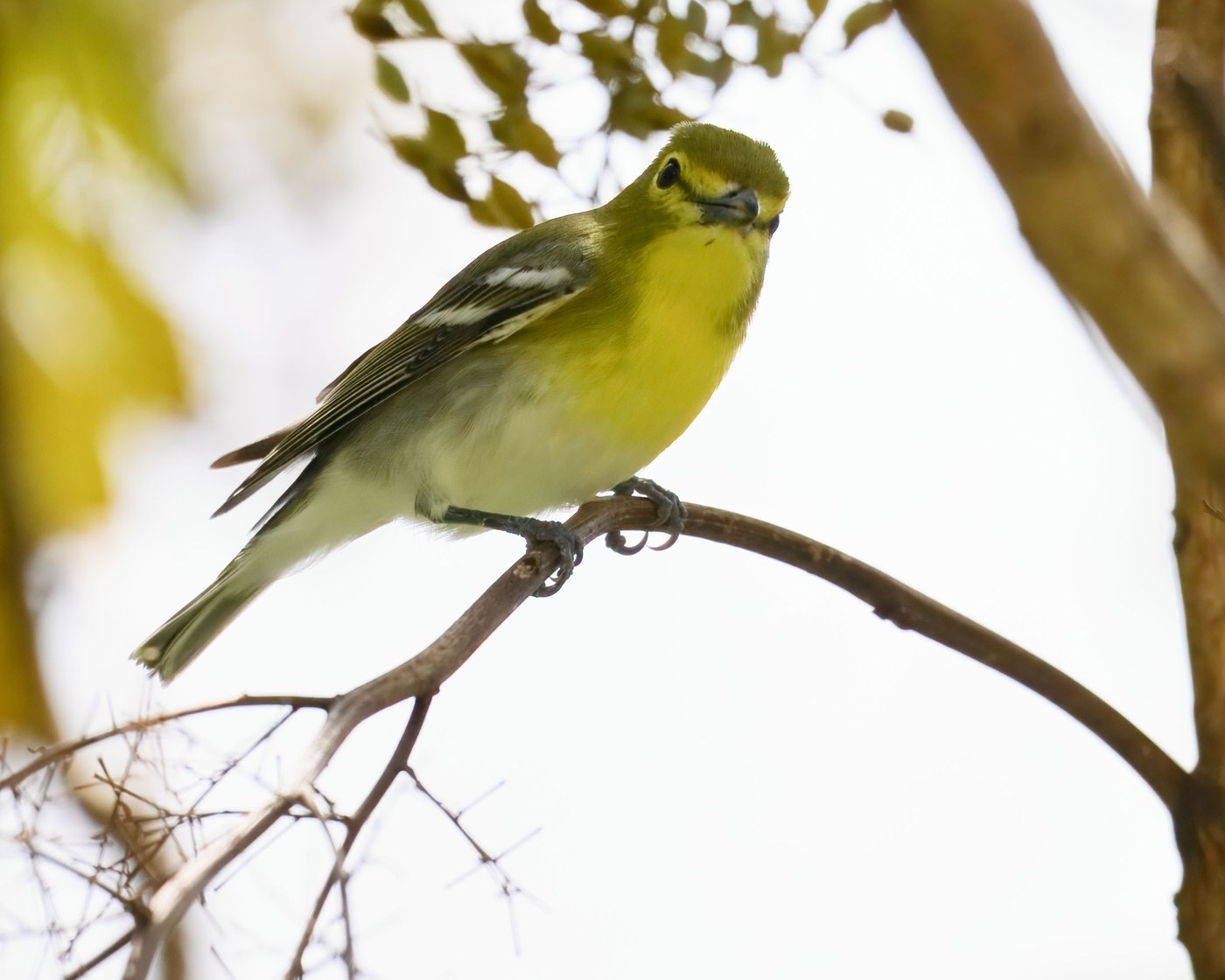
Yellow-throated Vireo
Bright yellow throat and spectacle feathers; olive-green back feathers; two white wing-bar feathers

Yellow-rumped Warbler
Small contour and flight feathers
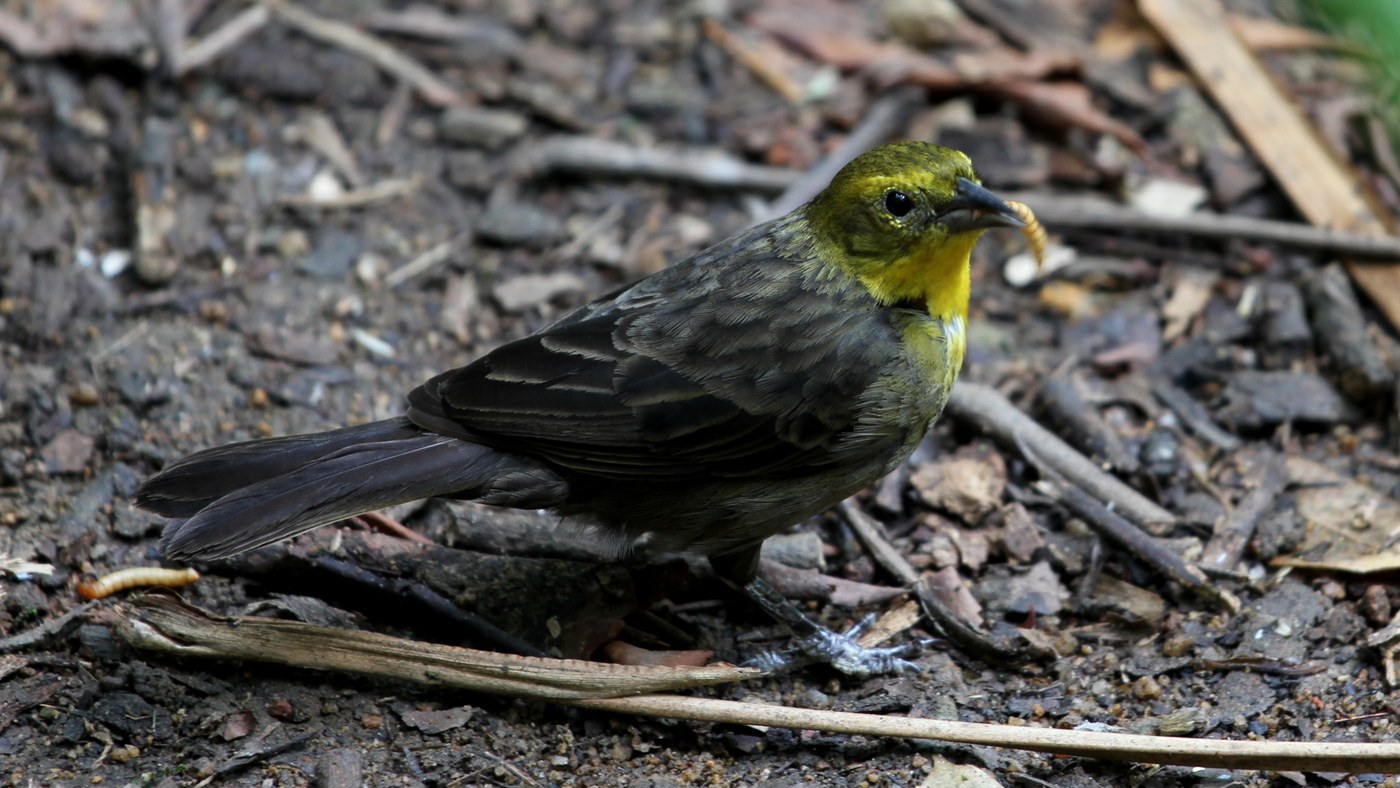
Yellow-hooded Blackbird
Contrasting hood and body feathers
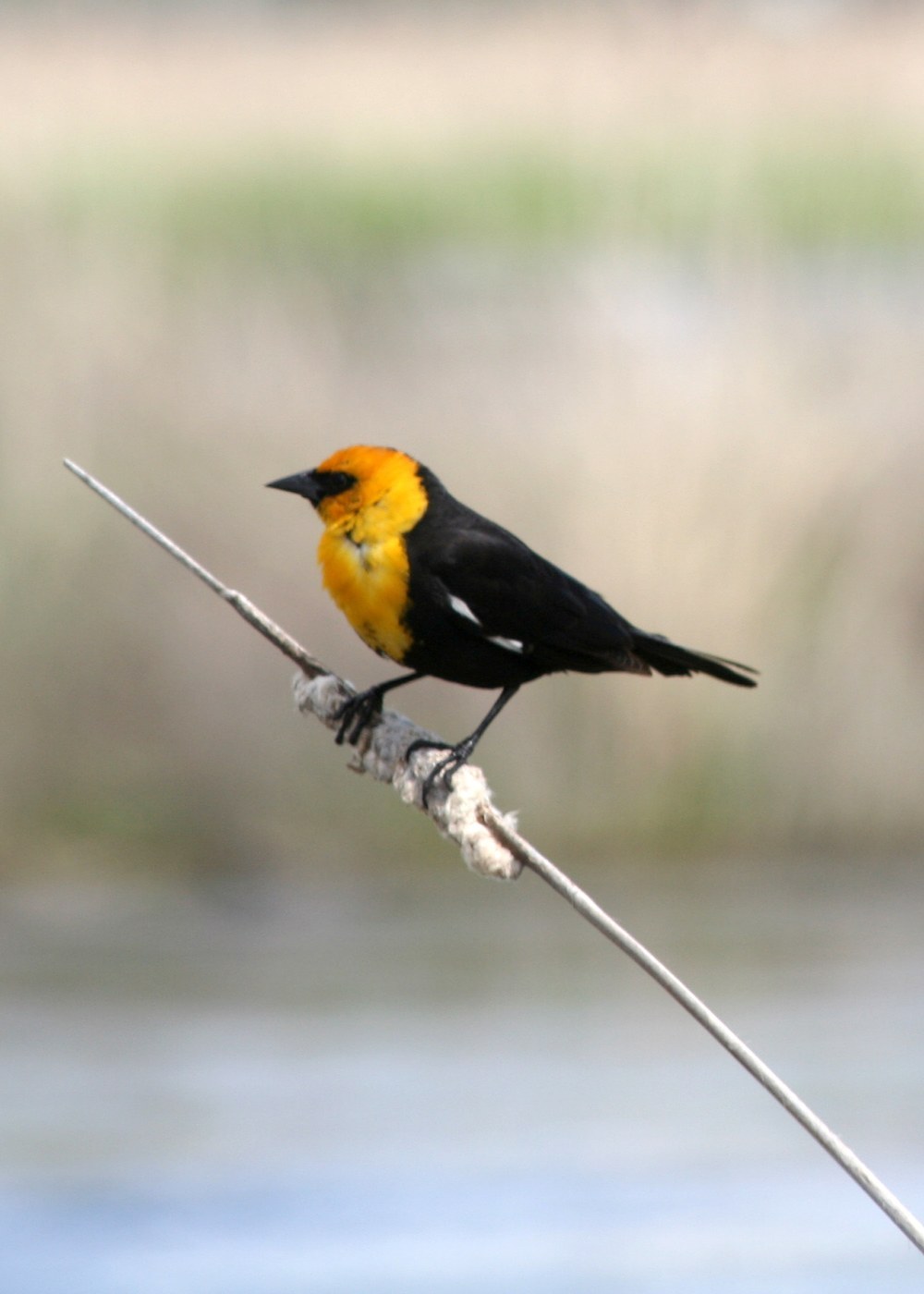
Yellow-headed Blackbird
Glossy black body plumage with a bright yellow head and breast

Yellow-eyed Junco
Contour and flight feathers

Yellow-fronted Canary
Small, smooth body plumage

Yellow-breasted Greenfinch
Compact, smooth body plumage