
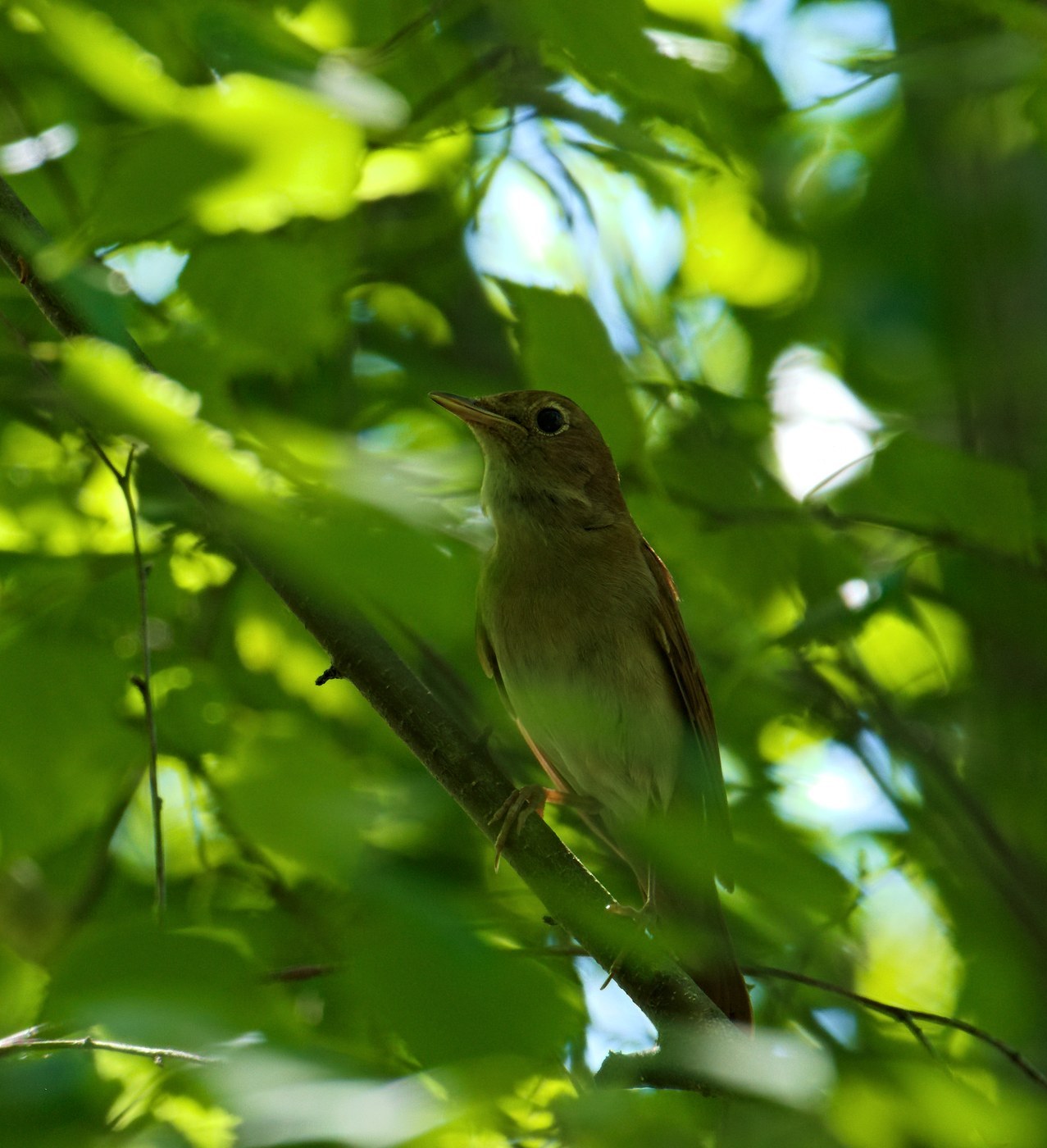
Nightingale
Luscinia megarhynchos
The Nightingale is a plain brown songbird celebrated for its powerful, richly varied nighttime song, far more often heard than seen in dense thickets across Europe.
- Feather type
- Plain, unmarked contour feathers; rounded reddish-brown tail
- Colours
- Warm brown above, rufous tail, pale grayish-buff below
- Bird size
- Small songbird, ~15-16.5 cm
Found a feather like this?
Identify any feather from a photo, free.
Overview
Overview
The Common Nightingale is an unassuming brown songbird whose plain plumage belies one of the most celebrated bird songs in the world. It breeds in dense scrub across Europe and western Asia and migrates to sub-Saharan Africa for the winter, spending much of its time hidden in undergrowth.
- Renowned for a loud, complex, and varied song, often given at night
- Long-distance migrant between Europe and Africa
- Plumage is deliberately plain, aiding concealment in dense cover
Identifying the Feather
Feather Identification
Nightingale feathers are plain and understated compared to the bird's famous voice.
- Tail feathers: Warm rufous-brown, notably brighter than the rest of the upperparts, rounded at the tip
- Back and wing feathers: Plain olive-brown, unmarked and unstreaked
- Underpart feathers: Pale grayish-buff, occasionally with a faint necklace of soft mottling on the upper breast
- Overall texture: Soft-edged and unpatterned, suited to a bird that relies on concealment rather than visual display
- The reddish-brown tail contrasting with duller brown upperparts is one of the more useful features for identifying a shed Nightingale tail feather
Plumage & Molt
Plumage, Sex & Age Differences
Male and female Nightingales are alike in plumage, both plain brown above with a rufous tail and pale underparts. Juveniles show fine buffy spotting on the body that is lost after the post-juvenile molt. Adults undergo a complete molt after breeding, before migrating south, with body feathers refreshed again on the wintering grounds in some populations.
Habitat & Range
Habitat & Range
Nightingales breed across much of Europe and parts of western Asia, favoring dense scrub, coppiced woodland, hedgerows, and thickets with a well-developed shrub layer. The species is a long-distance migrant, wintering in sub-Saharan Africa, and is present on breeding grounds only during spring and summer.
Behavior & Field Notes
Behavior, Voice & Field Notes
Nightingales are notoriously skulking, spending most of their time low in dense cover foraging on the ground for insects and other invertebrates. They are famous for their loud, rich, and highly varied song, delivered both by day and, especially in spring, at night from within thick vegetation. Nests are built low in dense brush, well hidden from view.
Frequently asked questions
What color are Nightingale tail feathers?
Warm rufous-brown, notably brighter than the plainer brown feathers of the back and wings.
Why is the Nightingale's plumage so plain?
Its dull brown coloring helps it stay concealed in dense scrub, where it spends most of its time foraging and singing.
Do Nightingales migrate?
Yes, they are long-distance migrants that breed in Europe and winter in sub-Saharan Africa.
Do juvenile Nightingales look different from adults?
Yes, juveniles show fine buffy spotting on the body that disappears after their first molt.
Nightingale guides
In-depth guides for identifying and understanding Nightingale.
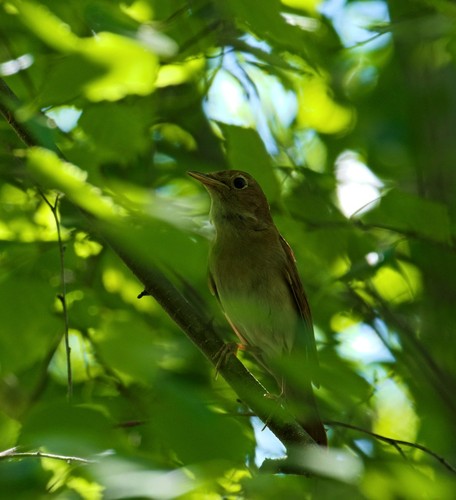
Other feathers you may enjoy

Yellow-breasted Bunting
Contour and flight feathers, chestnut-and-yellow breeding pattern
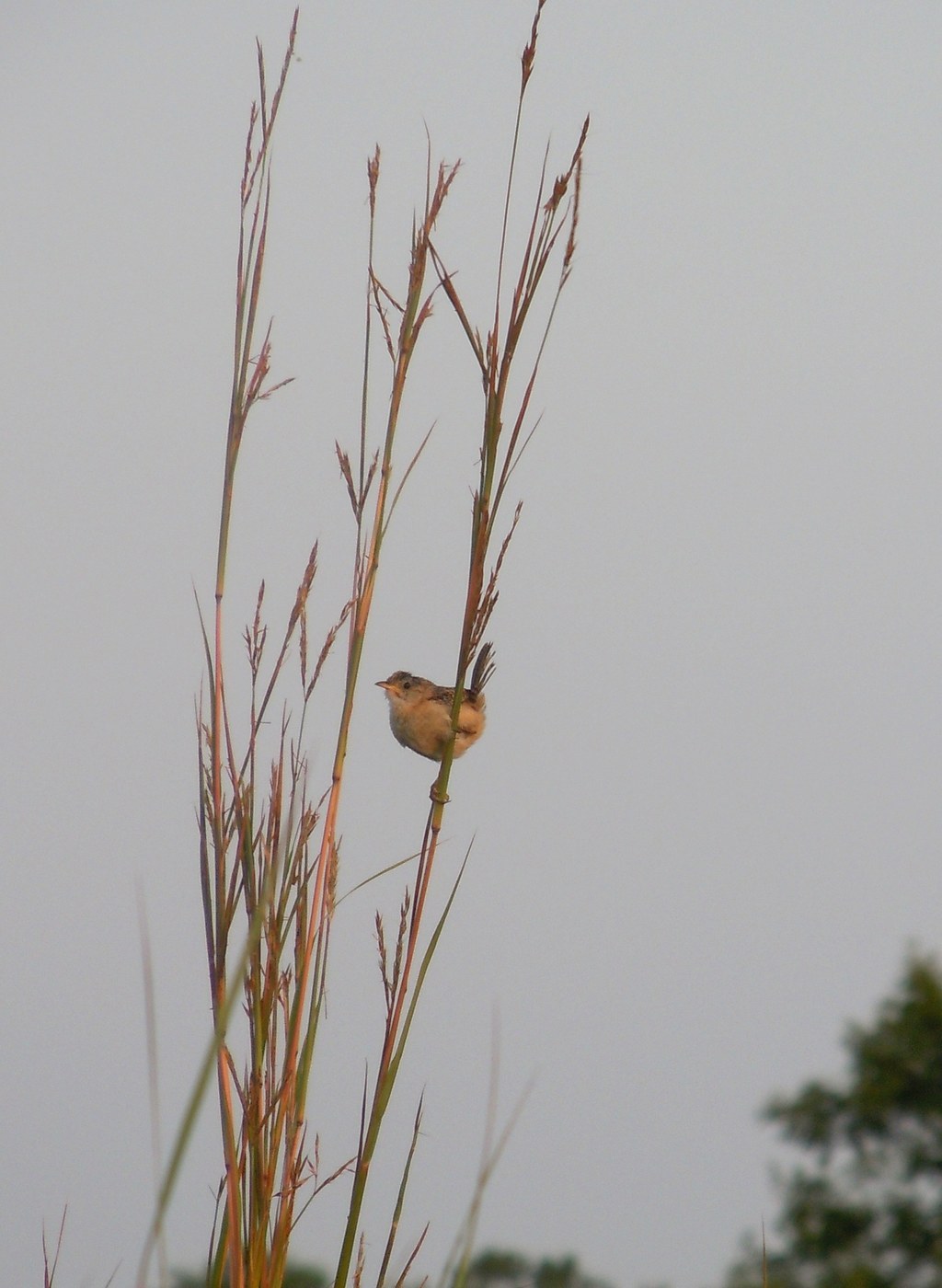
Sedge Wren
Tiny streaked crown and back feathers

Yellow-winged Cacique
Glossy black body feathers, yellow wing patch, shaggy crest

Yellow Warbler
Small contour and flight feathers
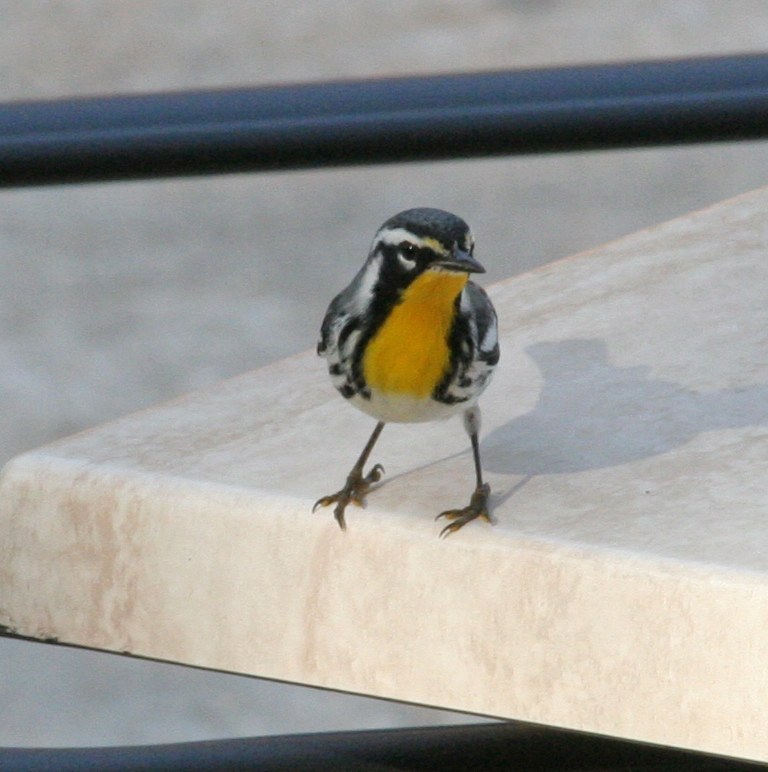
Yellow-throated Warbler
Small contour and flight feathers
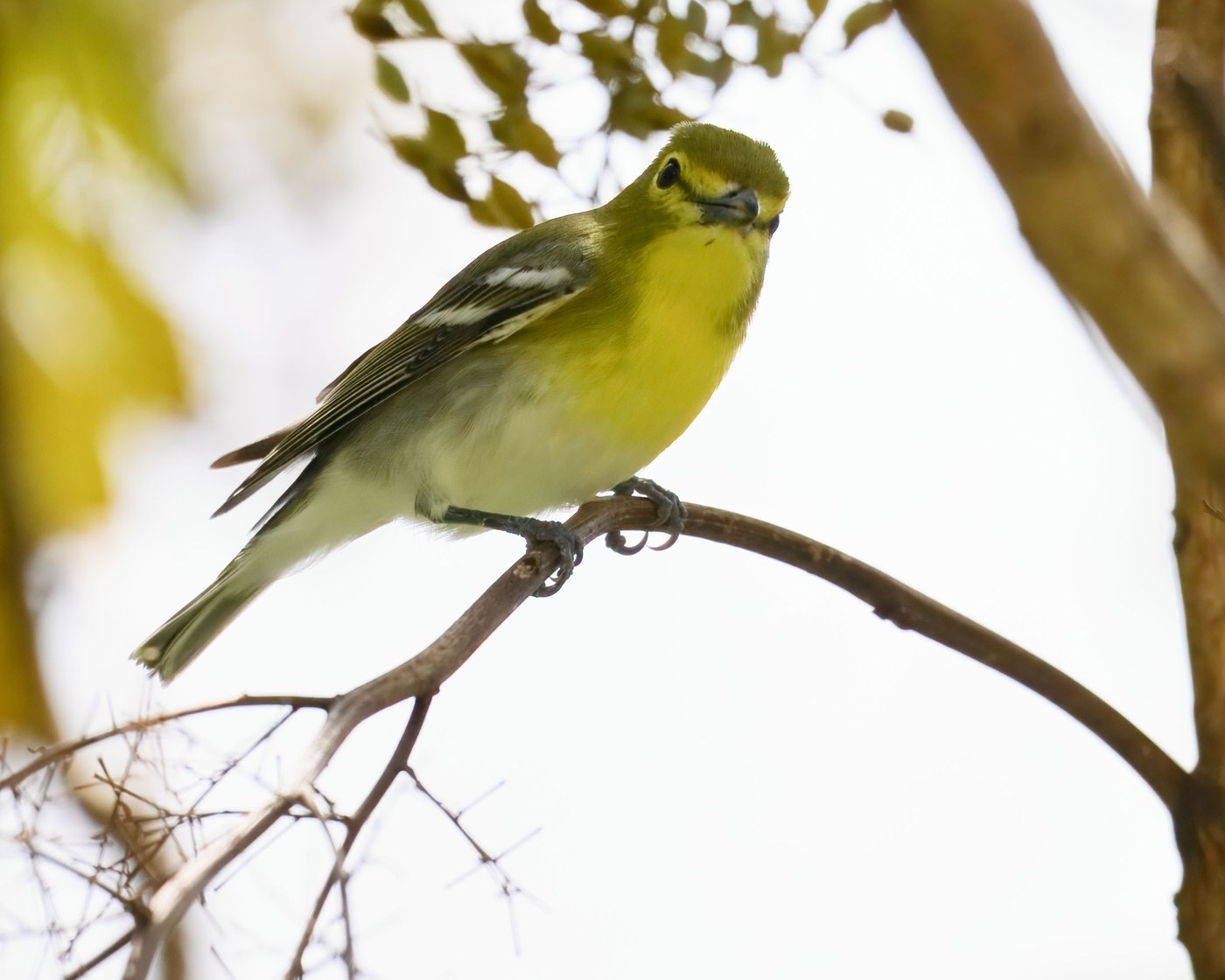
Yellow-throated Vireo
Bright yellow throat and spectacle feathers; olive-green back feathers; two white wing-bar feathers

Yellow-rumped Warbler
Small contour and flight feathers
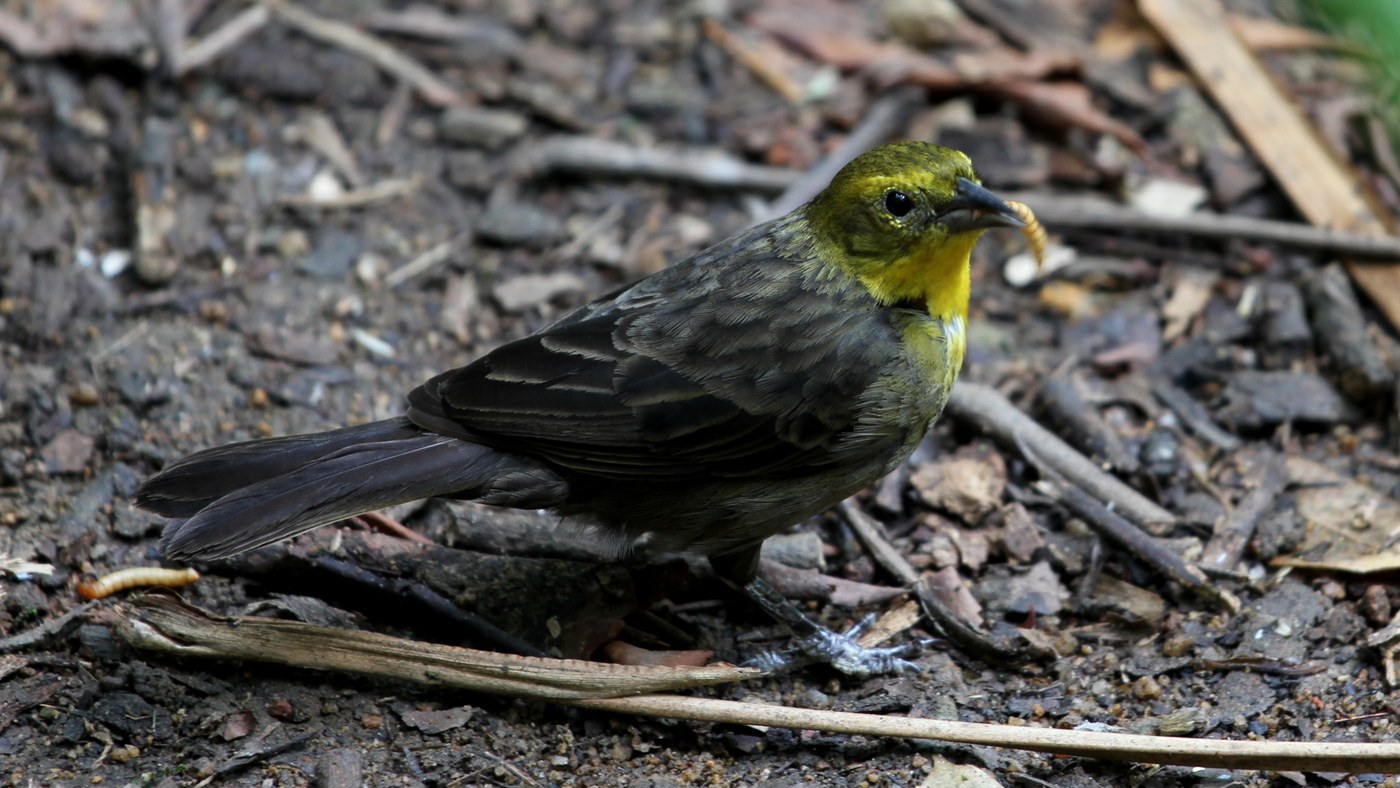
Yellow-hooded Blackbird
Contrasting hood and body feathers
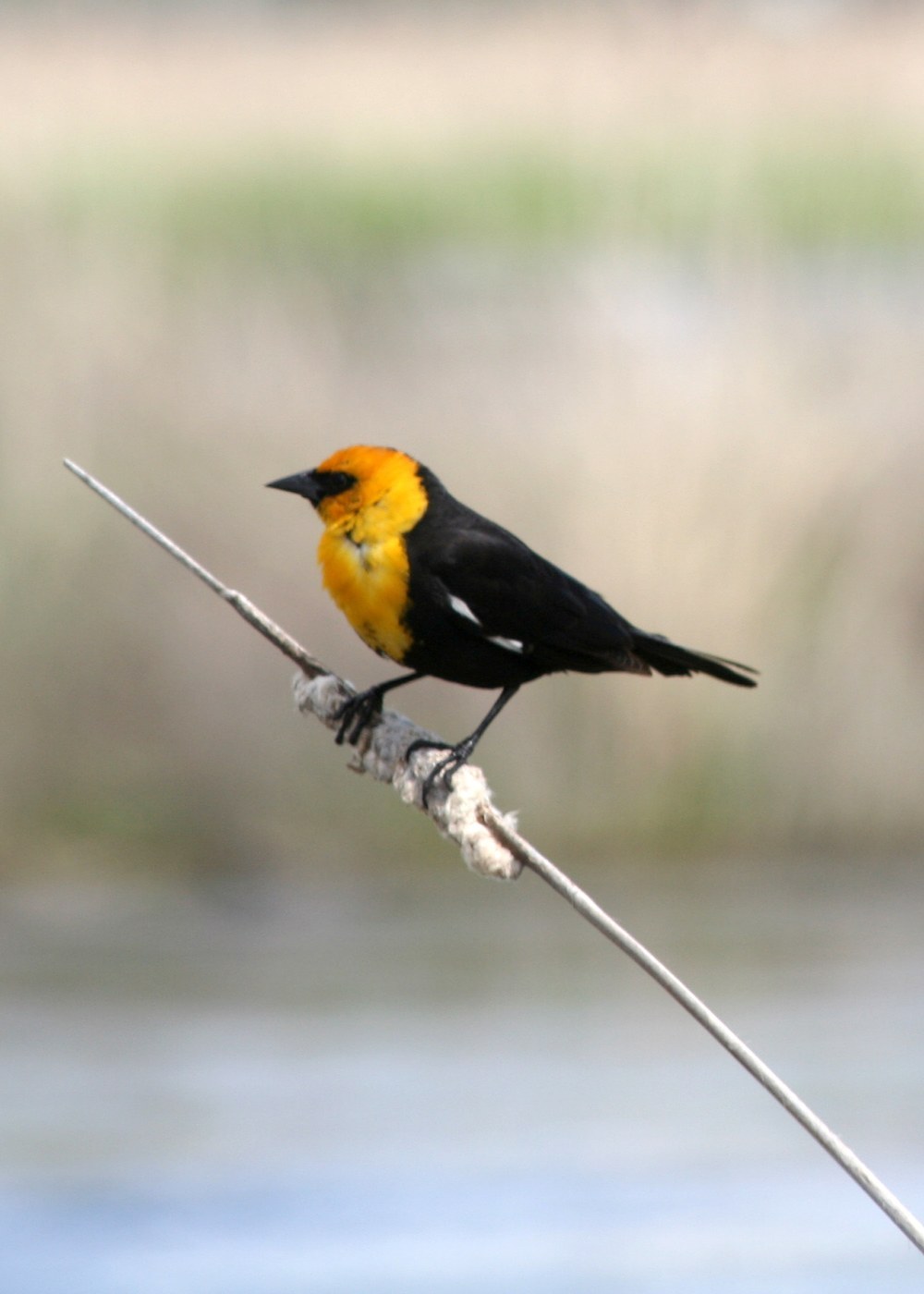
Yellow-headed Blackbird
Glossy black body plumage with a bright yellow head and breast

Yellow-eyed Junco
Contour and flight feathers

Yellow-fronted Canary
Small, smooth body plumage

Yellow-breasted Greenfinch
Compact, smooth body plumage