
How to Identify Nightingale Feathers
Nightingale feathers are plain unstreaked brown-buff throughout, with the tail standing out as a notably warmer rufous-chestnut than the rest of the body.
Read the full Nightingale encyclopedia entry →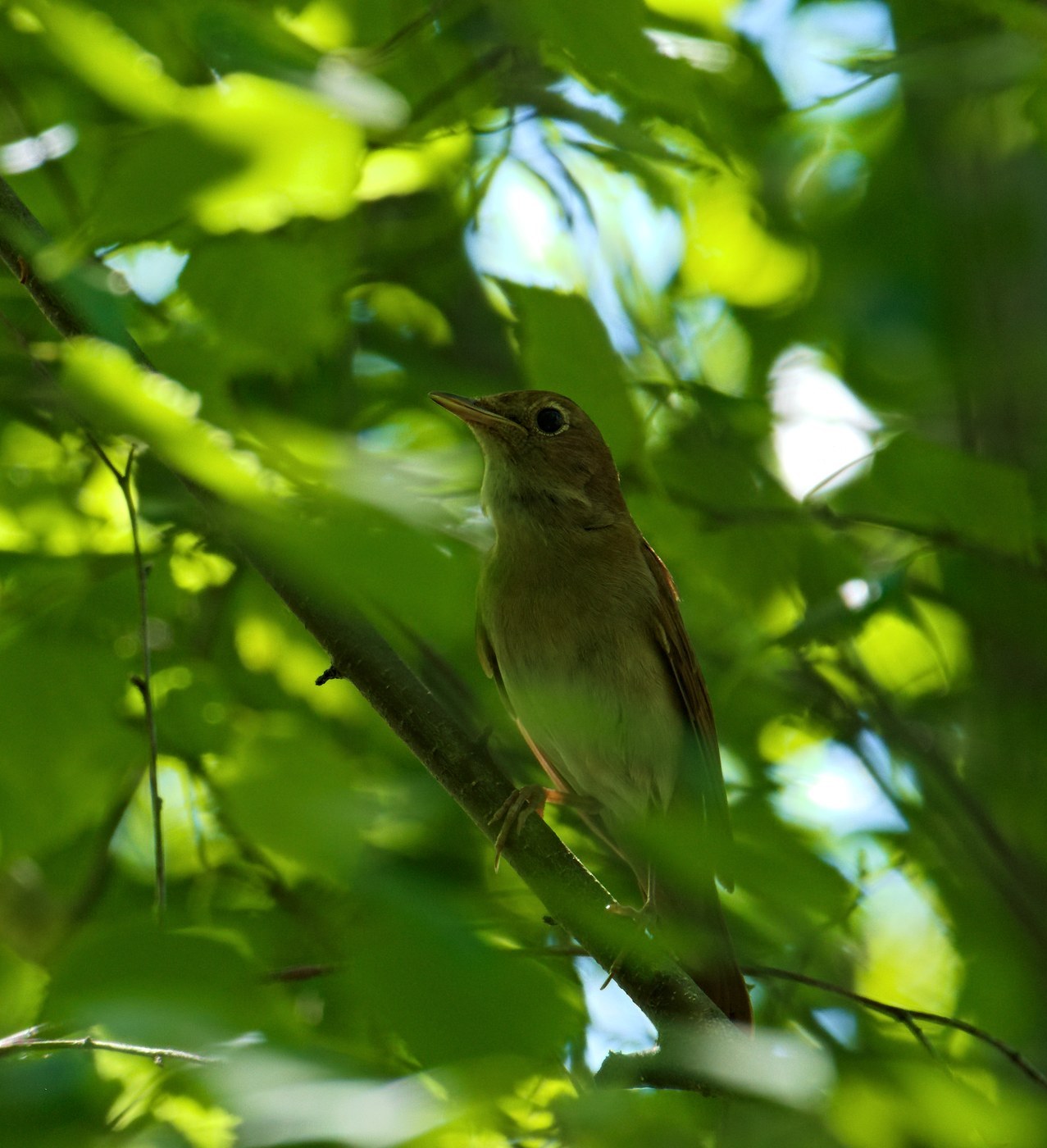
What Nightingale's Feathers Look Like
The nightingale is famous for its voice, not its looks, and its feathers reflect that plain, understated palette. Body feathers on the back, crown, and wings are a warm, unmarked olive-brown to warm brown — notably lacking any streaks, spots, or bars, which is itself a useful clue since so many similarly sized brown songbirds are patterned. The underparts are pale buffy-white to warm buff, especially on the throat and flanks, again with no streaking. The single most diagnostic feather on this species is the tail: nightingale tail feathers are a rich, warm rufous-chestnut, distinctly redder/warmer than the more muted brown of the back and wings, roughly 6-7 cm long with a rounded tip. Flight feathers are plain brown, 5-7 cm, with narrow paler edges and no wing-bars or pale patches. Feather size overall is small, consistent with a robin-sized bird, and shafts are pale brown throughout.
Step-by-Step: Is This Feather From a Nightingale?
- Look at a tail feather first. A warm rufous-chestnut tone that's clearly redder than the rest of the body is the strongest single clue.
- Check for a lack of streaking. Plain, unmarked brown body feathers (no spots or stripes) support this ID over many similarly sized thrushes and warblers.
- Measure size. Small feathers, tail around 6-7 cm and flight feathers 5-7 cm, fit a nightingale rather than a larger thrush.
- Note the underside tone. Pale buff-white, unstreaked, is consistent.
- Rule out wing markings. No wing-bars or pale wing patches should be present.
- Consider habitat: dense scrub, thickets, or coppiced woodland increase likelihood.
Similar Species & How to Tell Them Apart
Common Redstart shares a rufous tail but has much more strikingly patterned body feathers (black throat/face in males, gray back) and a more orange-red rather than chestnut-brown tail tone. European Robin has a rufous-orange breast patch feather that nightingales entirely lack; nightingale underparts are always plain buff, never orange. Song Thrush and other thrushes are considerably larger with heavily spotted underparts, quite different from the nightingale's plain palette. Cetti's Warbler, another skulking brown bird of similar habitat, lacks the specifically warm rufous-chestnut tail contrast and tends toward a more uniform dark brown throughout. The nightingale's combination of an entirely plain, unstreaked brown-buff body with a notably warmer chestnut tail is the key giveaway.
Where & When You'll Find Them
Nightingales breed in dense scrub, thorny thickets, and coppiced woodland understory across much of Europe, western Asia, and parts of North Africa, wintering in sub-Saharan Africa. Because they are notoriously secretive, sitting tight in cover, most found feathers come from the breeding grounds during the post-breeding molt in mid-to-late summer (July-August), when adults undergo a complete molt before migrating south. Look in low, dense scrub and bramble thickets rather than open ground, since this is where the birds spend nearly all their time.
Frequently asked questions
What color is a nightingale's tail?
A warm, rich rufous-chestnut, notably redder than the plain brown of the back and wings.
Are nightingale feathers patterned?
No, body feathers are plain and unstreaked, which itself helps distinguish them from many similarly sized songbirds.
How does a nightingale feather differ from a robin's?
Robins have an orange-red breast patch; nightingales have plain buff-white underparts with no orange coloring at all.
How big are nightingale feathers?
Small; tail feathers run about 6-7 cm and flight feathers 5-7 cm.
When are nightingale feathers most likely to be found?
During the post-breeding molt in mid-to-late summer, in dense scrub and bramble thickets on the breeding grounds.