

Mourning Warbler
Geothlypis philadelphia
A skulking, gray-hooded warbler of dense thickets, with adult males showing a dark, mottled patch across the throat and upper breast and no eye-ring.
- Feather type
- Dense, gray-hooded contour feathers; no eye-ring
- Colours
- Olive-green, gray hood, black smudge on breast, yellow underparts
- Bird size
- Sparrow-sized, ~13 cm
Found a feather like this?
Identify any feather from a photo, free.
Overview
Overview
The Mourning Warbler is a secretive species associated with dense shrubby vegetation, particularly regenerating clearings, forest edges, and thickets across a broad swath of Canada and the north-central and northeastern United States. Its name refers to the somber gray hood over the head and upper breast in adults, which in males is further marked by dark, mottled feathering suggestive of mourning attire.
Despite fairly bright yellow underparts, this species can be difficult to observe well, as it tends to stay low and hidden within dense cover, more often detected by its distinctive song than by sight.
Identifying the Feather
Feather Identification
- Hood: Adult feathers form a solid gray hood covering the head, nape, and upper breast, with adult males additionally showing dark, mottled black feathering across the lower throat and upper breast, differing from the black bib of the similar MacGillivray's Warbler.
- Eye-ring: Critically, this species lacks a white eye-ring or eye-arcs, a key difference from the very similar MacGillivray's Warbler, which shows broken white crescents around the eye.
- Underparts: Breast, belly, and undertail feathers are bright yellow, unmarked below the mottled throat patch.
- Upperparts: Back, wing, and tail feathers are plain olive-green without wing bars.
- Female/immature differences: Females and immatures show a paler, less extensive gray hood and lack the dark mottled throat patch of adult males, sometimes appearing only faintly grayish on the head.
Plumage & Molt
Plumage Details
Adult males have the most developed gray hood and a dark, mottled black patch across the throat and upper breast, contrasting with bright yellow underparts. Adult females show a paler, more diffuse gray wash on the head and breast without the bold dark throat patch, and first-fall immatures can appear even plainer, with just a faint gray tinge to the head and a yellowish throat.
A complete molt takes place on or near the breeding grounds in late summer; there is little additional seasonal change, though hood and throat markings become somewhat more defined with wear and age as pale feather edges abrade.
Habitat & Range
Habitat & Range
Mourning Warblers favor dense, low, shrubby vegetation, particularly in early-successional habitats such as regenerating clearcuts, overgrown fields, and forest edges with thick understory, across the boreal and northern temperate zones of Canada and the northeastern and north-central United States.
This species is a long-distance migrant, wintering primarily in Central America and northern South America, again favoring dense secondary growth and forest edge habitats similar to its breeding range.
Behavior & Field Notes
Behavior & Field Notes
This warbler forages low within dense tangles and shrub thickets, gleaning insects and other invertebrates from leaves and stems, and rarely ventures into the open. Its skulking habits mean it is often located by voice before it is seen.
The nest is a bulky cup built low in dense shrubby vegetation, often within a couple of feet of the ground. The song is a rich, rolling series of paired notes, sometimes rendered as "churry-churry-churry-chorry," with a downslurred ending, differing subtly from the songs of related species. Patience and careful attention to the absence of an eye-ring are often needed to separate this species from the very similar MacGillivray's Warbler where their ranges approach one another.
Frequently asked questions
How can I tell Mourning Warbler feathers from MacGillivray's Warbler?
The key difference is the eye area: Mourning Warbler lacks a white eye-ring, while MacGillivray's Warbler shows broken white crescents above and below the eye.
What does the adult male's throat patch look like?
It is a dark, mottled black area across the lower throat and upper breast, set against the gray hood and bright yellow lower underparts.
Are females as distinctly marked as males?
No, females show a paler, more diffuse gray wash on the head and lack the bold dark throat patch found in adult males.
What habitat is most likely to hold this species?
Dense shrubby thickets, regenerating clearcuts, and brushy forest edges, where it stays low and hidden.
Mourning Warbler guides
In-depth guides for identifying and understanding Mourning Warbler.

Other feathers you may enjoy

Yellow-breasted Bunting
Contour and flight feathers, chestnut-and-yellow breeding pattern
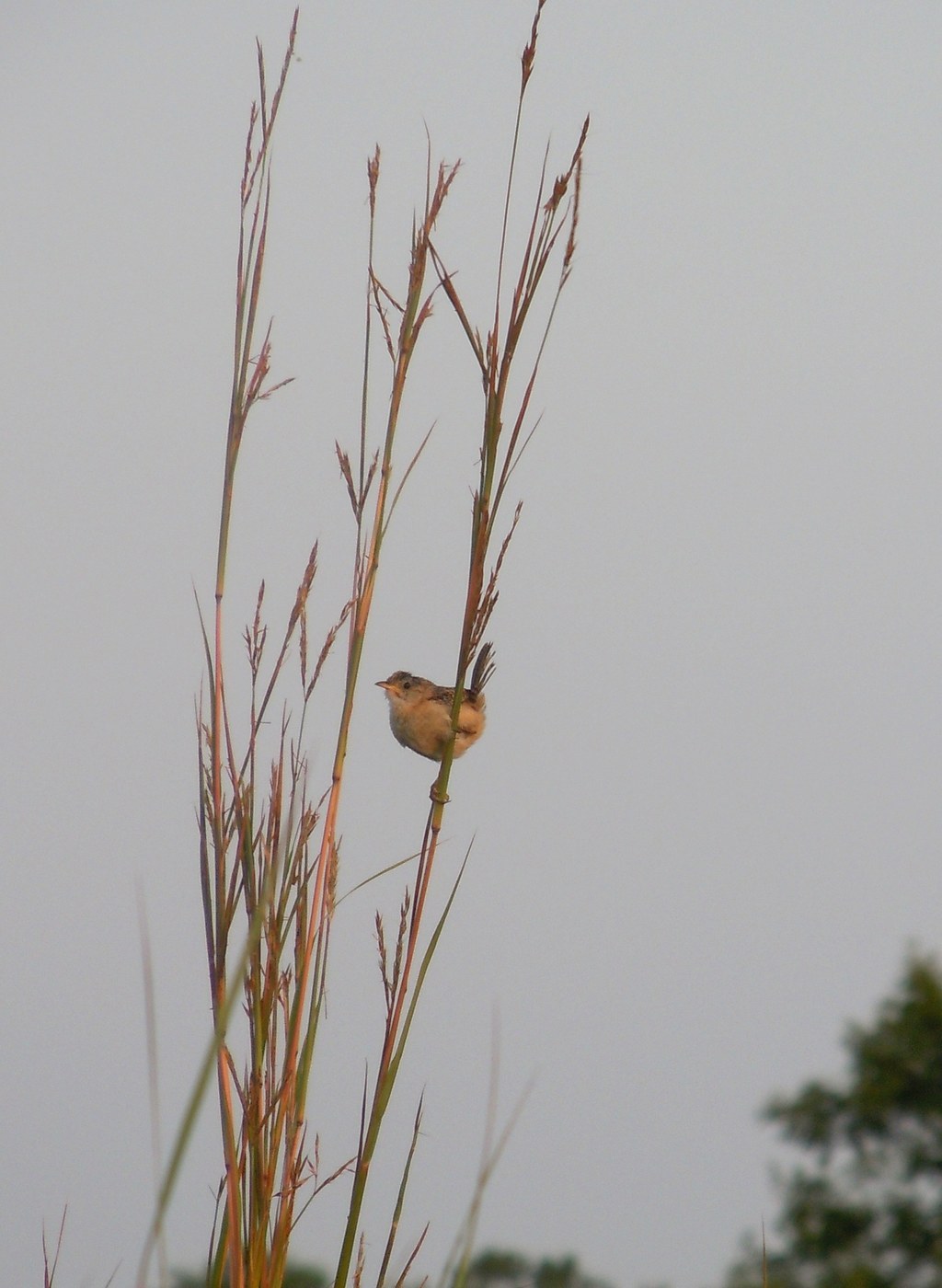
Sedge Wren
Tiny streaked crown and back feathers

Yellow-winged Cacique
Glossy black body feathers, yellow wing patch, shaggy crest

Yellow Warbler
Small contour and flight feathers
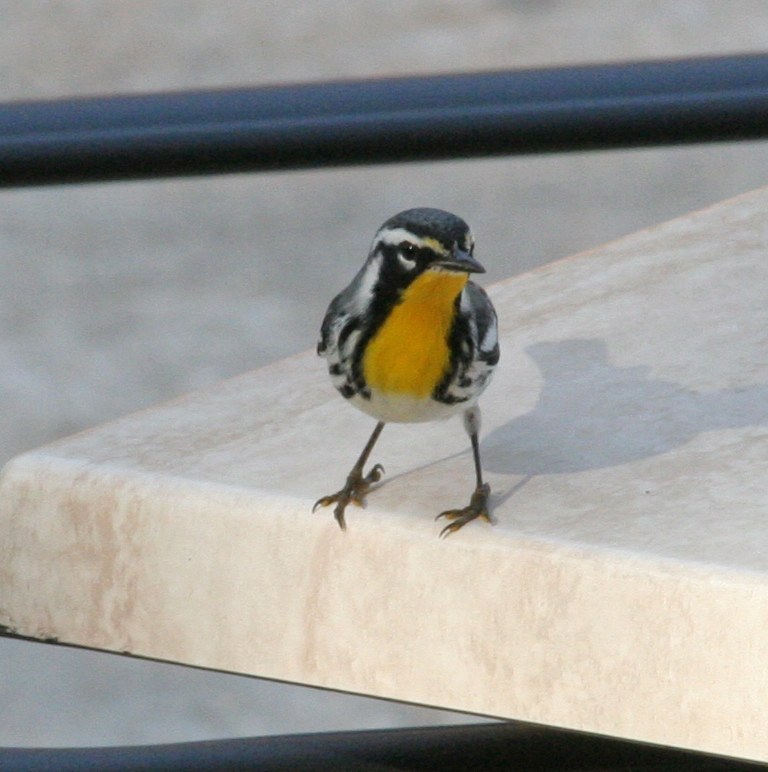
Yellow-throated Warbler
Small contour and flight feathers
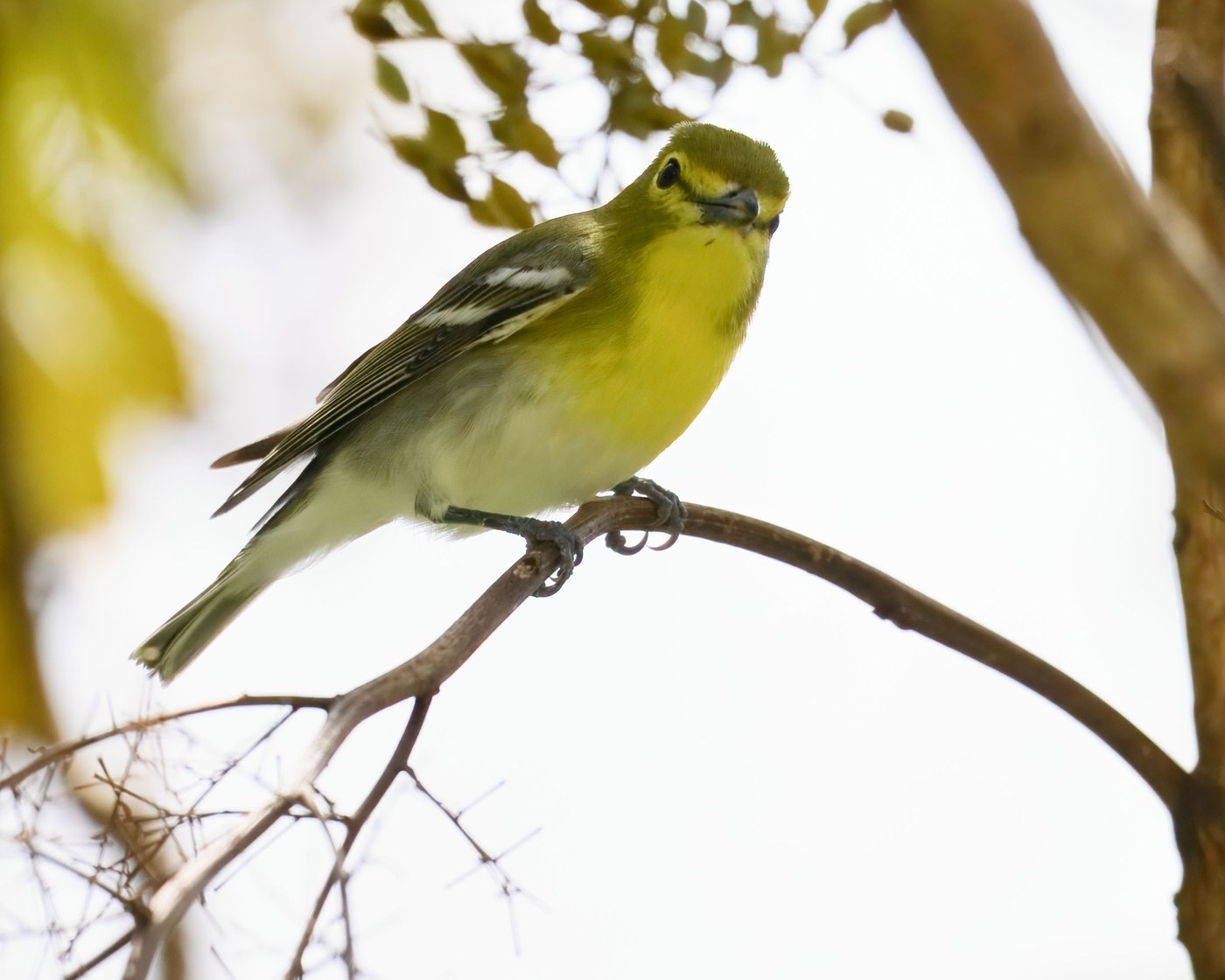
Yellow-throated Vireo
Bright yellow throat and spectacle feathers; olive-green back feathers; two white wing-bar feathers

Yellow-rumped Warbler
Small contour and flight feathers
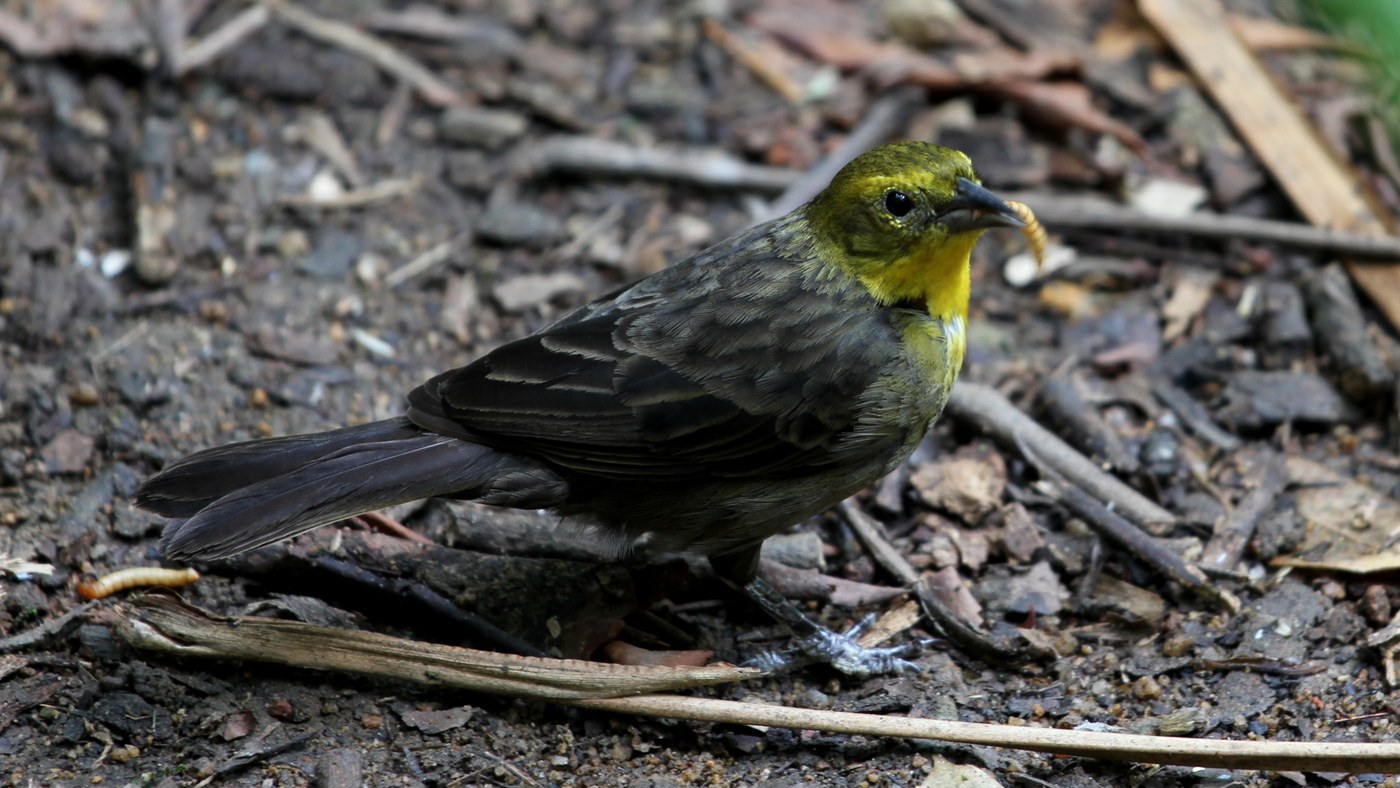
Yellow-hooded Blackbird
Contrasting hood and body feathers
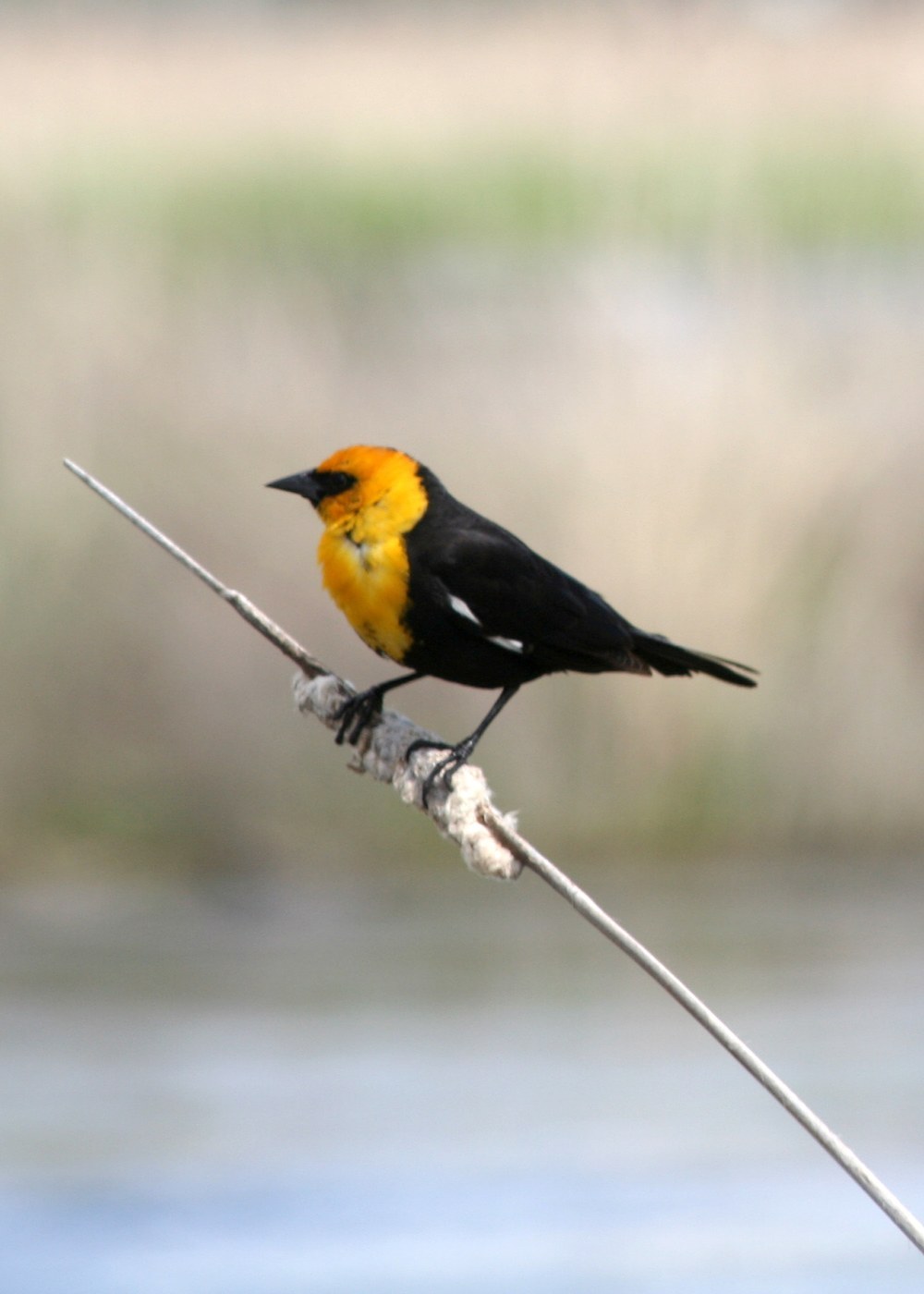
Yellow-headed Blackbird
Glossy black body plumage with a bright yellow head and breast

Yellow-eyed Junco
Contour and flight feathers

Yellow-fronted Canary
Small, smooth body plumage

Yellow-breasted Greenfinch
Compact, smooth body plumage