
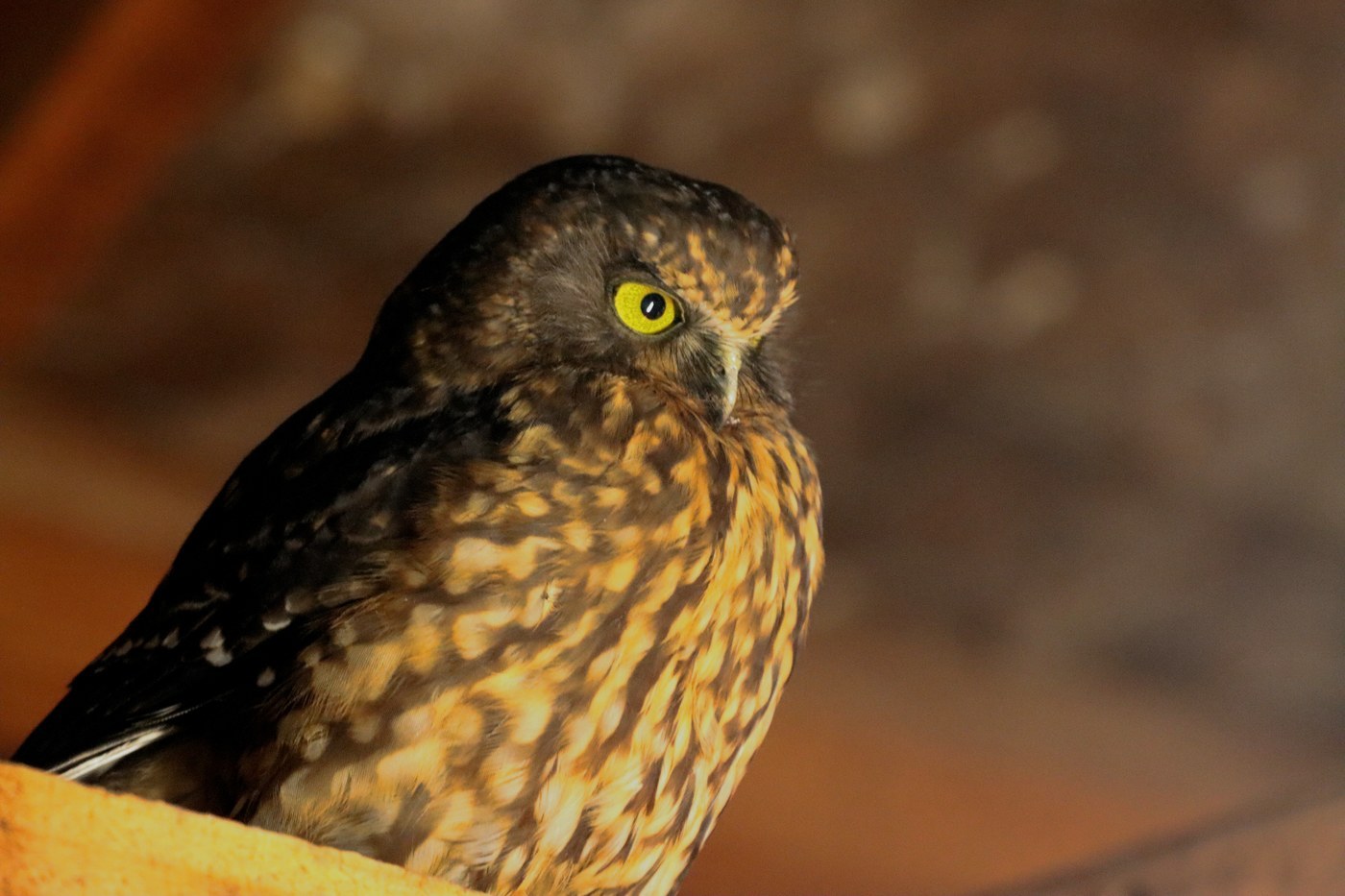
Morepork
Ninox novaeseelandiae
New Zealand's small native owl, named for its call and known to Maori as ruru, with dark brown feathers mottled with pale buff spotting and streaked underparts.
- Feather type
- Rounded flight feathers; banded tail; mottled body plumage
- Colours
- Dark brown mottled with pale buff spots; streaked underparts
- Bird size
- Small, ~27-30 cm
Found a feather like this?
Identify any feather from a photo, free.
Overview
The Morepork, also known by its Maori name Ruru, is New Zealand's only widely recognized native owl, closely related to the Australian Southern Boobook and formerly considered part of the same species. Its name is onomatopoeic, echoing its repeated call heard across the country at night.
It occupies native forest, exotic plantations, and scrubland throughout New Zealand, including offshore islands, and is one of the few native land birds that remains common and widespread despite the country's history of introduced predators.
Its dark brown, mottled plumage provides effective camouflage while roosting in dense foliage by day, and it holds cultural significance in Maori tradition as a symbol associated with watchfulness.
Identifying the Feather
Size and shape
Small feathers from a bird about 27-30 cm long, with rounded wings and a banded tail typical of Ninox owls.
Color and pattern
- Upperparts are dark brown, mottled with pale buff or cream spotting.
- Underparts are buff with brown streaking, similar in pattern to the closely related Southern Boobook.
- The tail is dark brown with several narrow pale bars.
- Shafts are pale brown.
Distinguishing from similar species
Morepork feathers closely resemble those of the Southern Boobook, as the two were once considered the same species, but the Morepork is restricted to New Zealand while the boobook occurs in Australia, so location is the most reliable distinguishing clue.
Plumage & Molt
Adults are dark brown above with pale buff mottling, and buff below with brown streaking. Sexes look alike, with females slightly larger. Juveniles are paler and downier with less defined markings. Molt follows breeding on an annual cycle.
Habitat & Range
This species is found throughout New Zealand, including many offshore islands, in native forest, exotic plantations, and scrubland. It is resident and largely sedentary, holding territories year-round.
Behavior & Field Notes
Moreporks hunt insects, small birds, and small mammals at night, often from a perch within forest or scrub. They roost by day in dense foliage or tree cavities. The call is a repeated two-note 'more-pork' or 'ru-ru,' giving rise to both its common English name and its Maori name. Nests are placed in tree hollows or occasionally on the ground among dense vegetation. When identifying a feather, look for dark brown, buff-mottled upperparts and streaked buff underparts, in a small overall size, and consider that the species is confined to New Zealand.
Frequently asked questions
What is the Maori name for the Morepork and what does it mean?
It is known as Ruru in Maori, a name that, like 'Morepork,' echoes the bird's distinctive repeated call.
Is the Morepork related to the Australian Southern Boobook?
Yes, the two were once considered the same species and remain very closely related, with very similar plumage; they are now treated as separate species divided by the Tasman Sea.
Where in New Zealand can this owl be found?
It occurs throughout New Zealand and many offshore islands in native forest, exotic plantations, and scrubland.
What does a Morepork feather look like?
It is dark brown with pale buff mottling above and buff, brown-streaked underparts, in a small overall size consistent with a bird about 27-30 cm long.
Morepork guides
In-depth guides for identifying and understanding Morepork.
Other feathers you may enjoy

Tawny Owl
Wing (flight) and body (contour) feathers
Little Owl
Wing and body feathers

Balsas Screech-Owl
Small ear-tuft feathers; soft, finely vermiculated body feathers

Blakiston's Fish Owl
Massive flight feathers with looser structure; shaggy body plumage; prominent ear-tuft feathers

Barn Owl
Wing and facial-disc feathers
Southern Boobook
Rounded flight feathers; banded tail; spotted body plumage

Sooty Owl
Broad soft-edged flight feathers; heart-shaped facial disc feathers; finely speckled body plumage

Short-eared Owl
Broad soft-fringed flight feathers; streaked body feathers; tiny, rarely visible ear tufts

Stygian Owl
Dark, mottled flight and body feathers with long, closely-set ear tufts
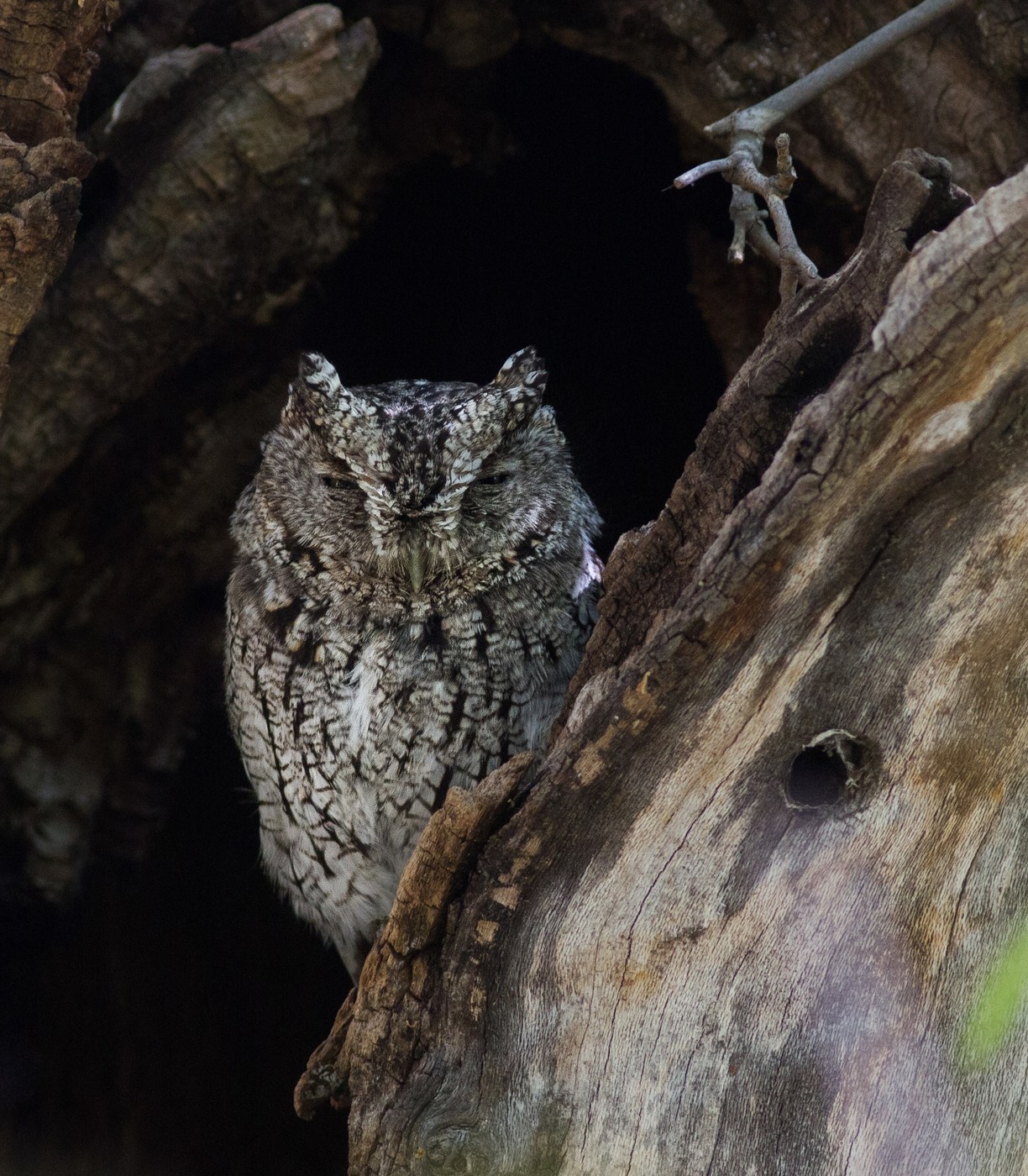
Whiskered Screech-Owl
Small soft-fringed flight feathers; finely mottled body feathers; short ear tufts
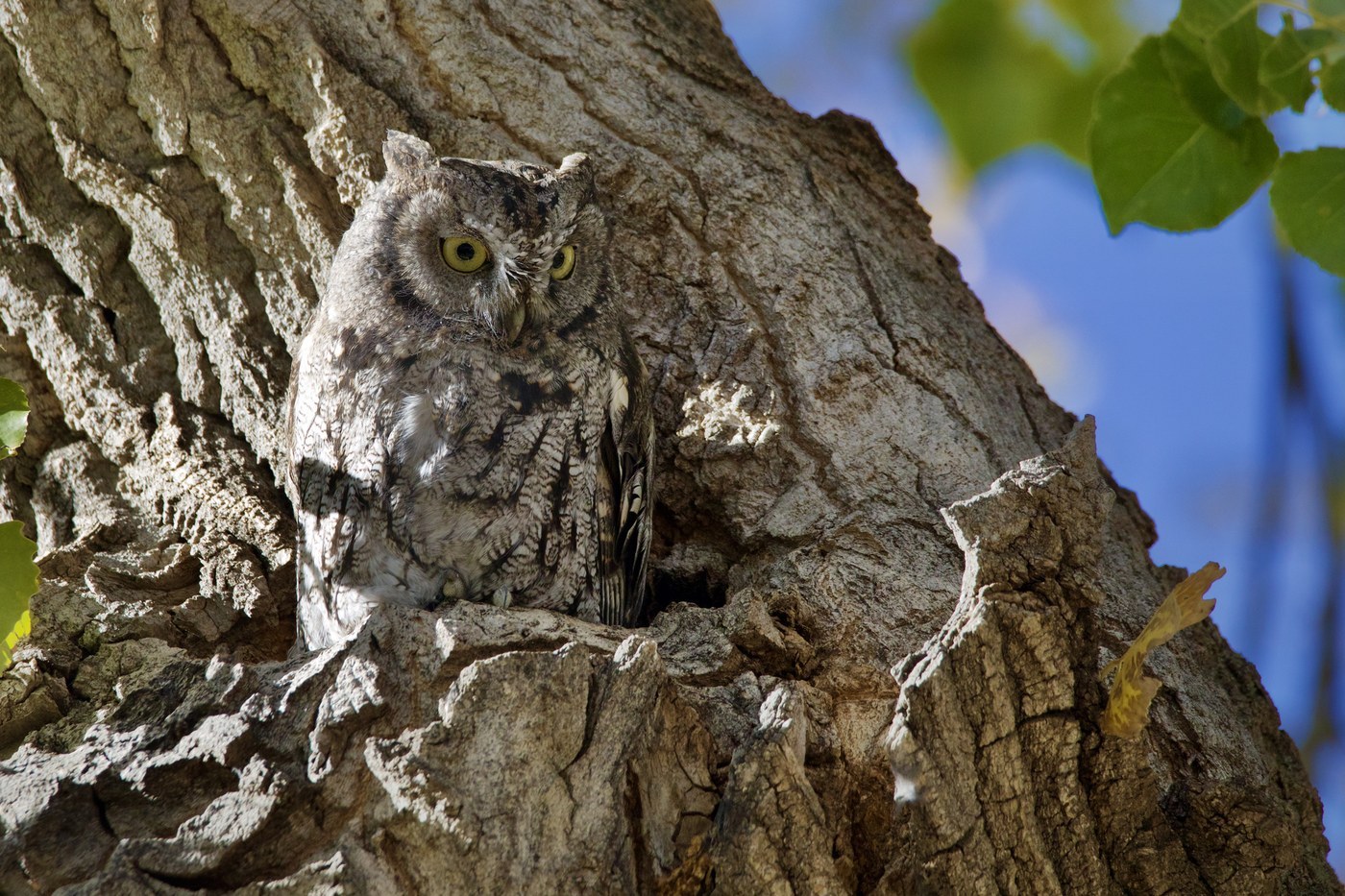
Western Screech-Owl
Small soft-fringed flight feathers; cryptic mottled/streaked body feathers; short ear tufts

White-faced Scops Owl
Small to medium flight feathers with a distinctive whitish facial disc and long ear-tuft plumes