

King Eider
Somateria spectabilis
The King Eider is a large arctic sea duck whose male combines a colorful blue-gray and pale green head with a black body and white breast, topped by an orange bill shield.
- Feather type
- Large sea-duck body feathers with a colorful head shield
- Colours
- Blue-gray crown, pale green cheeks, black body with white breast and foreparts
- Bird size
- Large, ~47-63 cm
Found a feather like this?
Identify any feather from a photo, free.
Overview
Overview
The King Eider is a large sea duck of the high Arctic, closely related to the Common Eider but showing a more colorful head pattern and a more strongly contrasting body. Breeding males have a blue-gray crown, pale green cheeks, and a black body broken by a white breast and foreparts, along with a distinctive orange facial shield at the base of the bill. Females are cinnamon-brown with crescent-shaped barring, differing subtly from the finer, more linear barring of female Common Eiders.
Identifying the Feather
Feather Identification
- Head color: Males show a blue-gray crown and pale green cheeks, a markedly more colorful head pattern than the mostly white-and-black head of the Common Eider.
- Body contrast: A black body with a white breast and foreparts creates a bold two-toned appearance, differing from the more evenly distributed white back and breast of the Common Eider.
- Female barring pattern: Females show crescent-shaped or V-shaped barring across a cinnamon-brown body, distinct from the finer, straighter barring typical of female Common Eiders.
- Facial shield note: Though not a feather trait, the male's bright orange frontal shield above the bill pairs distinctively with the blue-gray and green head feathering.
- Overall shape: A shorter, more rounded head profile compared to the sloping bill-and-forehead line of the Common Eider.
Plumage & Molt
Plumage Notes
Breeding males show a blue-gray crown, pale green cheeks, black body, and white breast and foreparts. Females are cinnamon-brown with crescent-shaped barring year-round. Eclipse males become much duller and darker, losing most of the colorful head pattern until breeding plumage is regained. The species undergoes a complete post-breeding molt with a flightless period. Juveniles resemble females, gradually developing the male's colorful head pattern over a couple of years.
Habitat & Range
Habitat & Range
King Eiders breed on tundra ponds and coastal areas across the high Arctic of North America and Eurasia, nesting on the ground often at some distance from open water. In winter, they move to open ocean waters, sometimes well offshore, particularly along northern coastlines that remain partially ice-free. The species is migratory, undertaking long movements between arctic breeding grounds and marine wintering areas.
Behavior & Field Notes
Behavior & Field Notes
King Eiders dive to forage on invertebrates from the seafloor, often in cold, deep offshore waters during winter. They nest on the ground on tundra, with females solely responsible for incubation and brood care in a challenging arctic environment. The species can form large flocks during migration, moving in long lines over open water and tundra. Calls include soft crooning notes from males during courtship, audible over short distances in the breeding season.
Frequently asked questions
How does a male King Eider's head coloring differ from a Common Eider?
The King Eider shows a blue-gray crown and pale green cheeks, a much more colorful pattern than the mostly white head of the Common Eider.
What does the female King Eider's barring pattern look like?
Crescent- or V-shaped barring across a cinnamon-brown body, differing from the finer, straighter barring of the female Common Eider.
Where does the King Eider spend the winter?
In open ocean waters, sometimes well offshore, along northern coastlines that remain partially ice-free.
Is the King Eider closely related to the Common Eider?
Yes, both belong to the same genus and share a similar large-bodied sea duck build, though their head patterns differ notably.
King Eider guides
In-depth guides for identifying and understanding King Eider.

Other feathers you may enjoy

Mallard
Wing (speculum), body, and tail feathers

Spectacled Eider
Large sea-duck body feathers with distinctive eye-ring patches

Canada Goose
Body and flight feathers
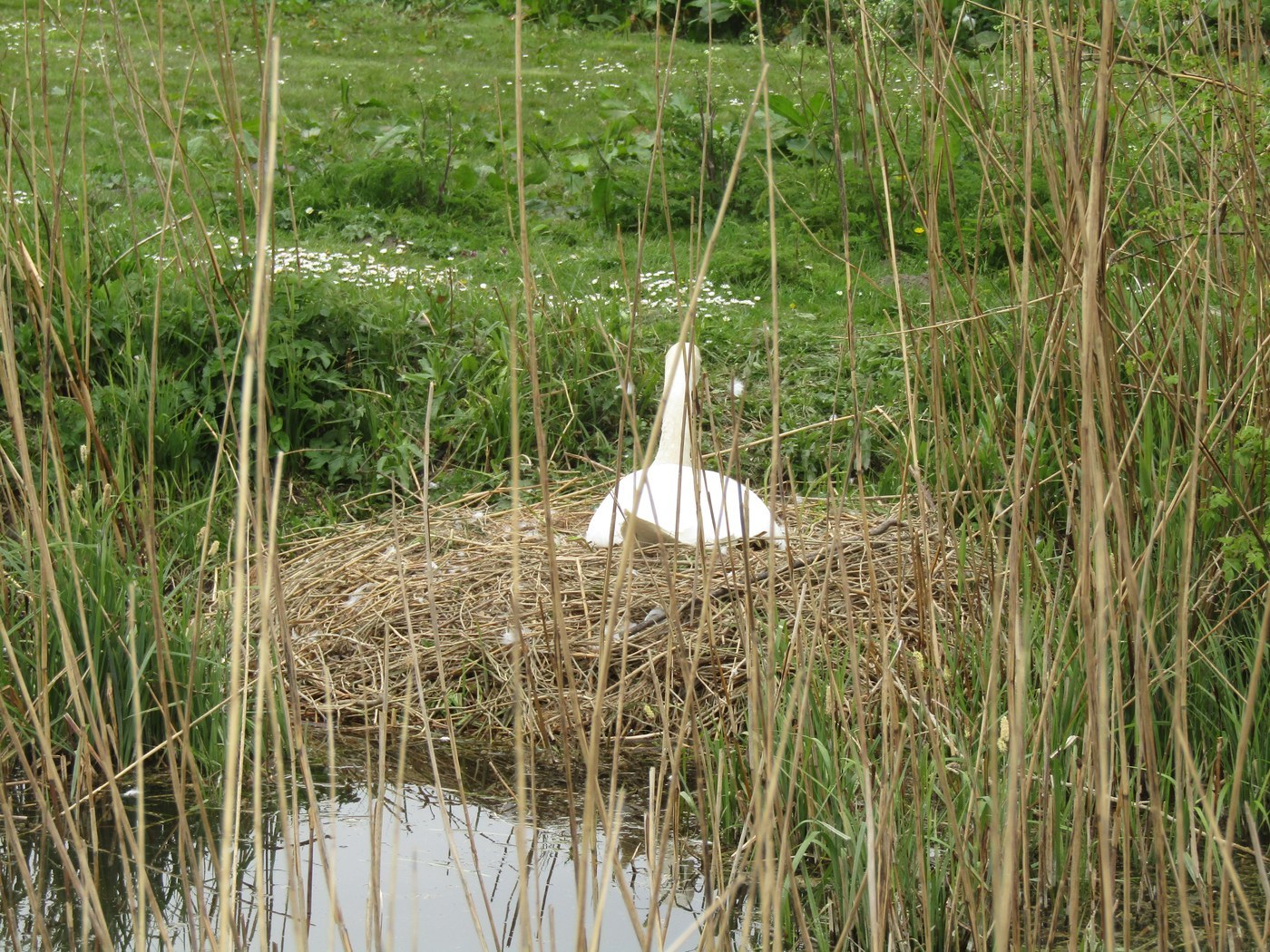
Mute Swan
Body (contour) and flight feathers

Wood Duck
Iridescent crest feathers; ornate scapular and flank feathers; white teardrop facial feathers (female)
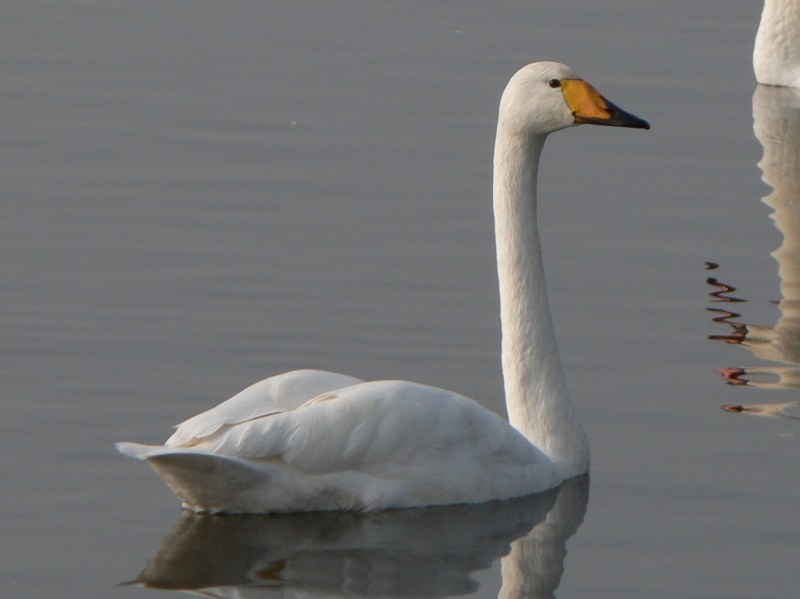
Whooper Swan
Contour and flight feathers

White-winged Scoter
Large sea-duck body feathers with a white wing patch

Ruddy Duck
Stiff tail feathers and compact body plumage

Ross's Goose
Contour and flight feathers

White-cheeked Pintail
Contour and elongated tail feathers

Torrent Duck
Dense, sleek contour feathers; stiff, pointed tail feathers used for bracing against rocks

Tundra Swan
Contour and flight feathers