

Hutton's Vireo
Vireo huttoni
Hutton's Vireo is a stocky, kinglet-like resident of Pacific coast evergreen woodlands, identified by its bold broken eyering and white wing bars.
- Feather type
- Stocky grayish-olive back feathers; bold broken white eyering feathers; two white wing-bar feathers
- Colours
- Grayish-olive overall, bold broken white eyering, whitish wing bars, pale underparts
- Bird size
- Small, stocky vireo, ~12 cm
Found a feather like this?
Identify any feather from a photo, free.
Overview
Overview
Hutton's Vireo is a non-migratory resident of evergreen oak and mixed conifer woodlands along the Pacific coast from British Columbia south through Mexico and Central America. It closely resembles the Ruby-crowned Kinglet in overall shape and coloring, requiring attention to bill shape and behavior for confident identification.
Its feathers show a bold, broken white eyering and prominent white wing bars against an overall grayish-olive body, distinguishing it from plainer vireos.
Identifying the Feather
Recognizing the Feathers
- Back feathers: grayish-olive, unstreaked
- Face feathers: bold, broken white eyering, interrupted above and below the eye
- Wing feathers: dark with two prominent white wing bars
- Underpart feathers: pale grayish-white
- Overall build: stockier, larger-headed feather set compared to kinglets, despite similar coloring
The bold, broken white eyering combined with prominent white wing bars on an overall stocky, grayish-olive body helps distinguish this species, though care is needed to separate it from the similarly plumaged Ruby-crowned Kinglet.
Plumage & Molt
Plumage
Sexes are alike, both showing grayish-olive upperparts, a bold broken white eyering, and prominent white wing bars. Immatures are similar to adults. There is no strong seasonal plumage change, with a single complete molt after breeding.
Habitat & Range
Habitat & Range
This vireo is a non-migratory resident of evergreen oak woodland, mixed conifer forest, and chaparral edge along the Pacific coast from British Columbia south through California and into Mexico and Central America.
Behavior & Field Notes
Behavior & Field Notes
Hutton's Vireo forages at a slower, more deliberate pace than the similarly plumaged kinglets, gleaning insects from foliage in evergreen woodland. Nests are cup-shaped and suspended from a forked branch. Its song is a repeated, simple two-note phrase, quite different from the more complex songs of many other vireos.
Frequently asked questions
How can I tell Hutton's Vireo from a Ruby-crowned Kinglet by feathers?
Hutton's Vireo has a stockier build with a heavier bill-associated feather set and a broken white eyering paired with white wing bars, though overall coloring is quite similar, so behavior and bill shape are also useful clues.
Is this species migratory?
No, it is largely non-migratory, remaining a year-round resident within its evergreen woodland range along the Pacific coast.
What is distinctive about its facial pattern?
A bold, broken white eyering interrupted above and below the eye, rather than a complete, unbroken ring.
What does its song sound like?
A simple, repeated two-note phrase, quite different in structure from the more varied songs given by many other vireos.
Hutton's Vireo guides
In-depth guides for identifying and understanding Hutton's Vireo.

Other feathers you may enjoy

Yellow-breasted Bunting
Contour and flight feathers, chestnut-and-yellow breeding pattern
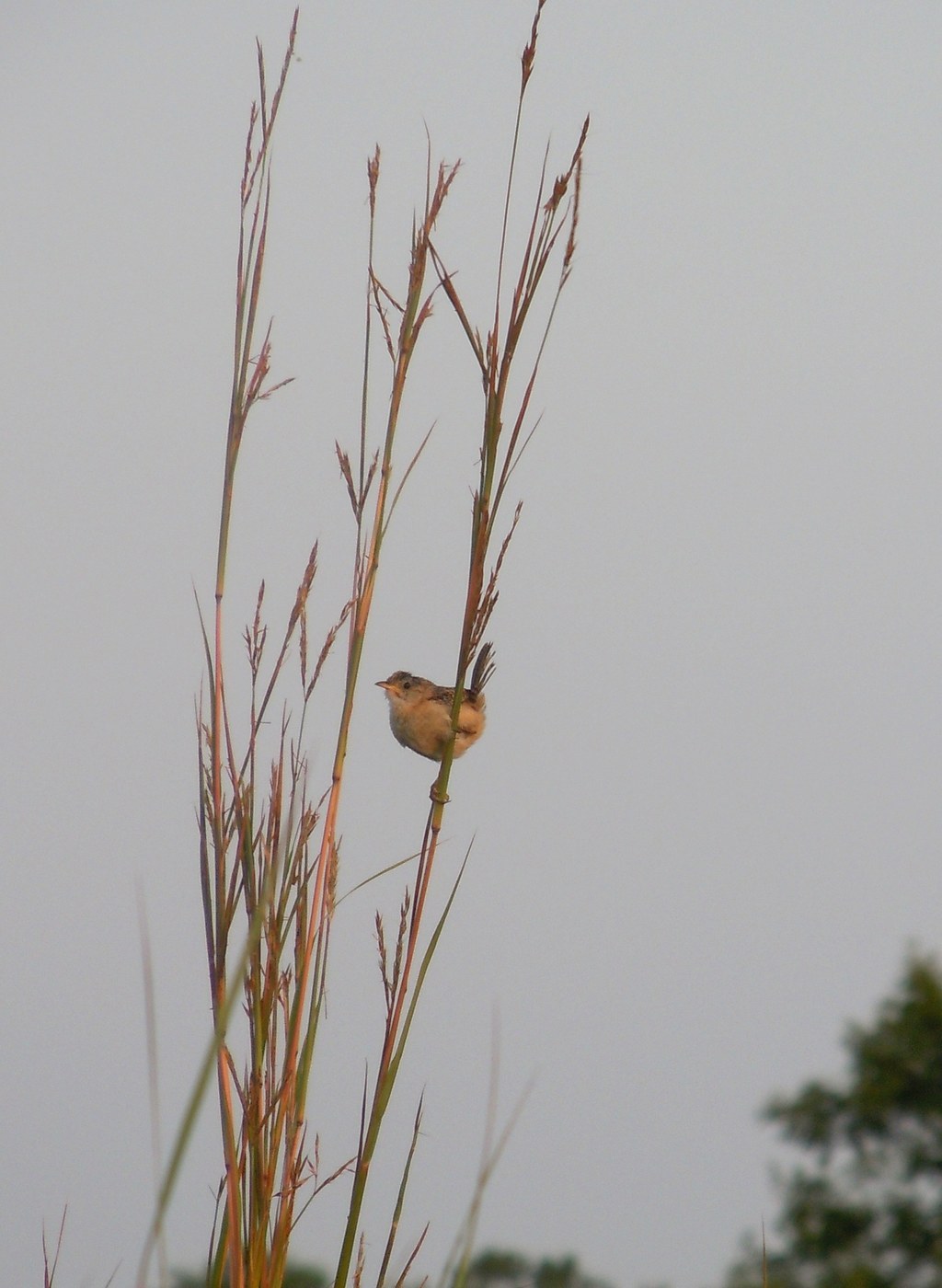
Sedge Wren
Tiny streaked crown and back feathers

Yellow-winged Cacique
Glossy black body feathers, yellow wing patch, shaggy crest

Yellow Warbler
Small contour and flight feathers
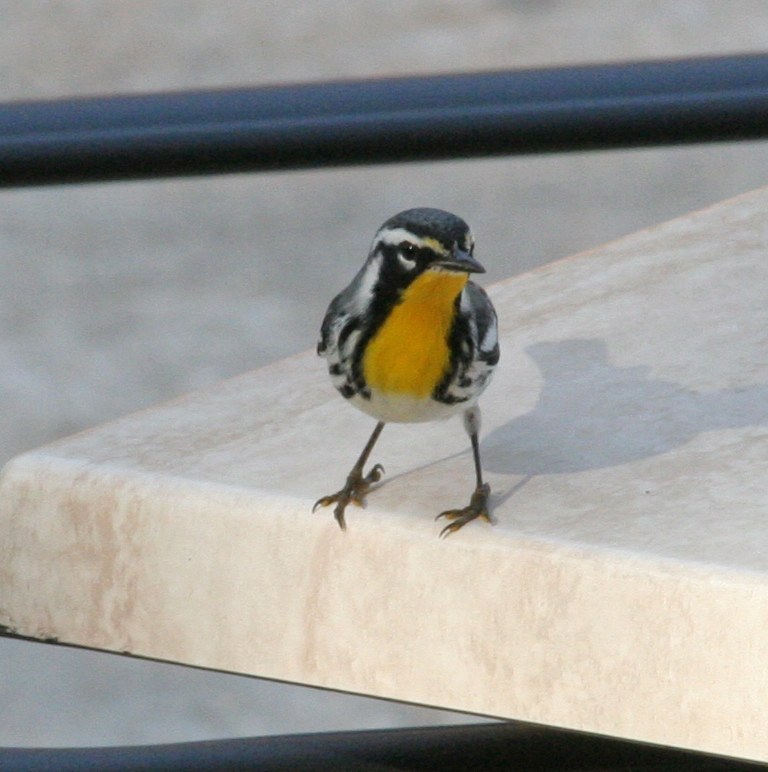
Yellow-throated Warbler
Small contour and flight feathers
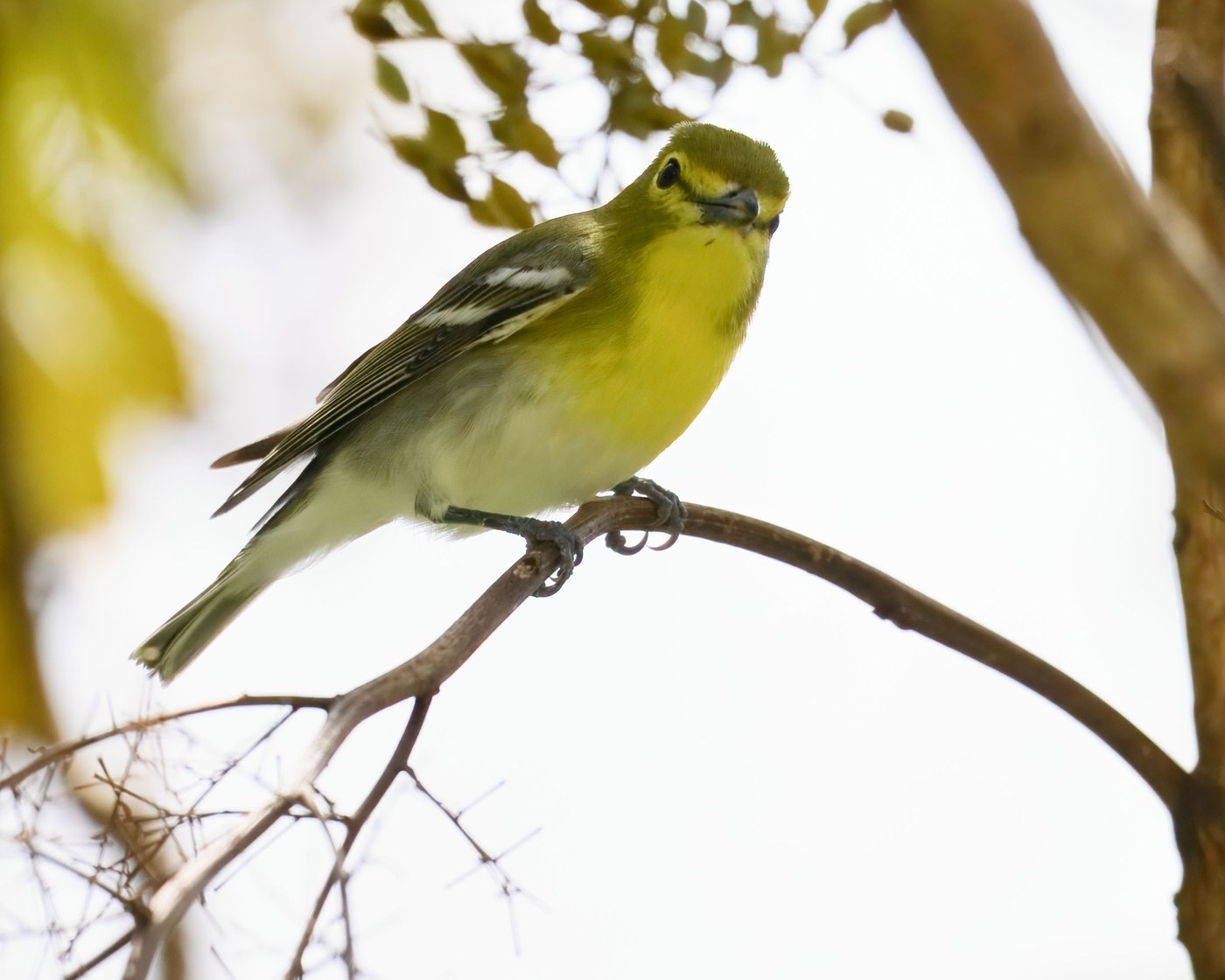
Yellow-throated Vireo
Bright yellow throat and spectacle feathers; olive-green back feathers; two white wing-bar feathers

Yellow-rumped Warbler
Small contour and flight feathers
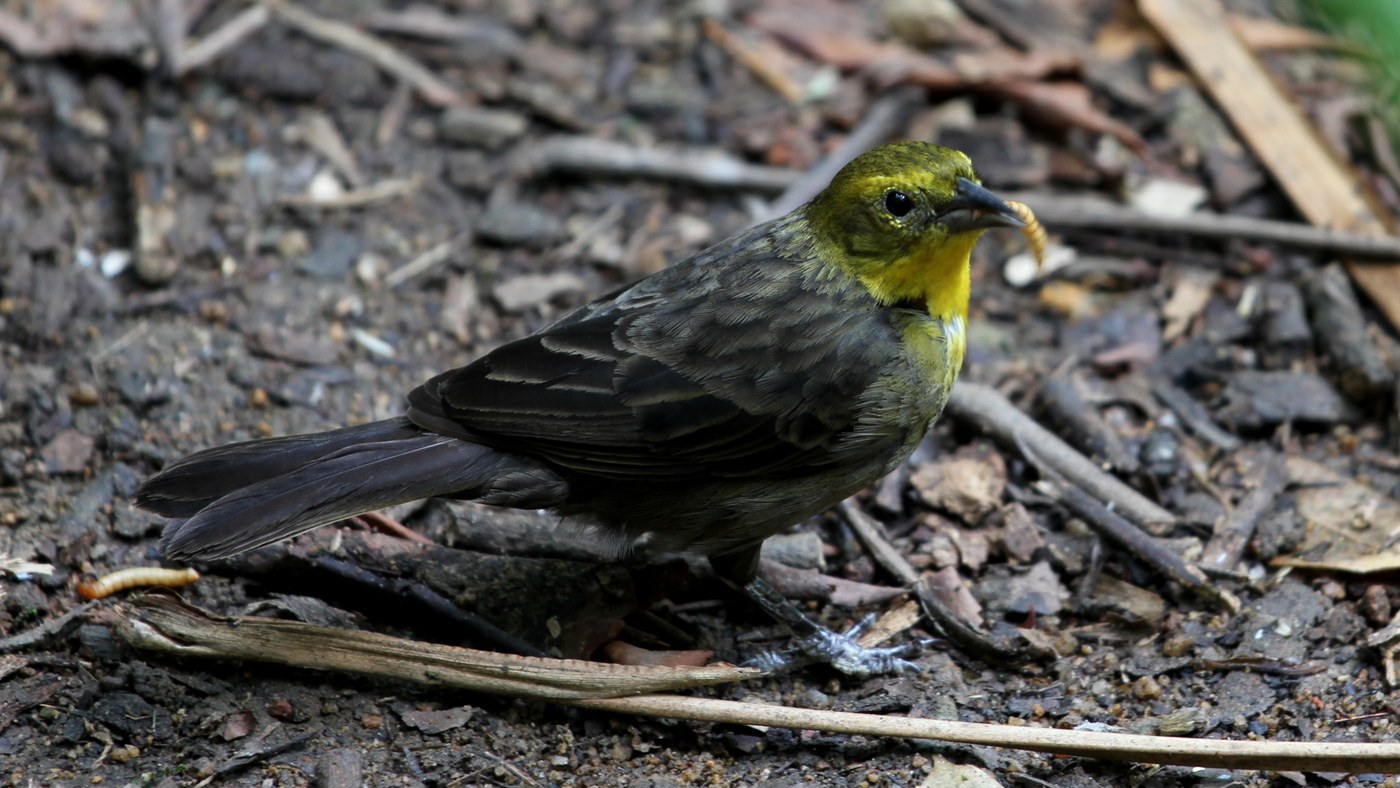
Yellow-hooded Blackbird
Contrasting hood and body feathers
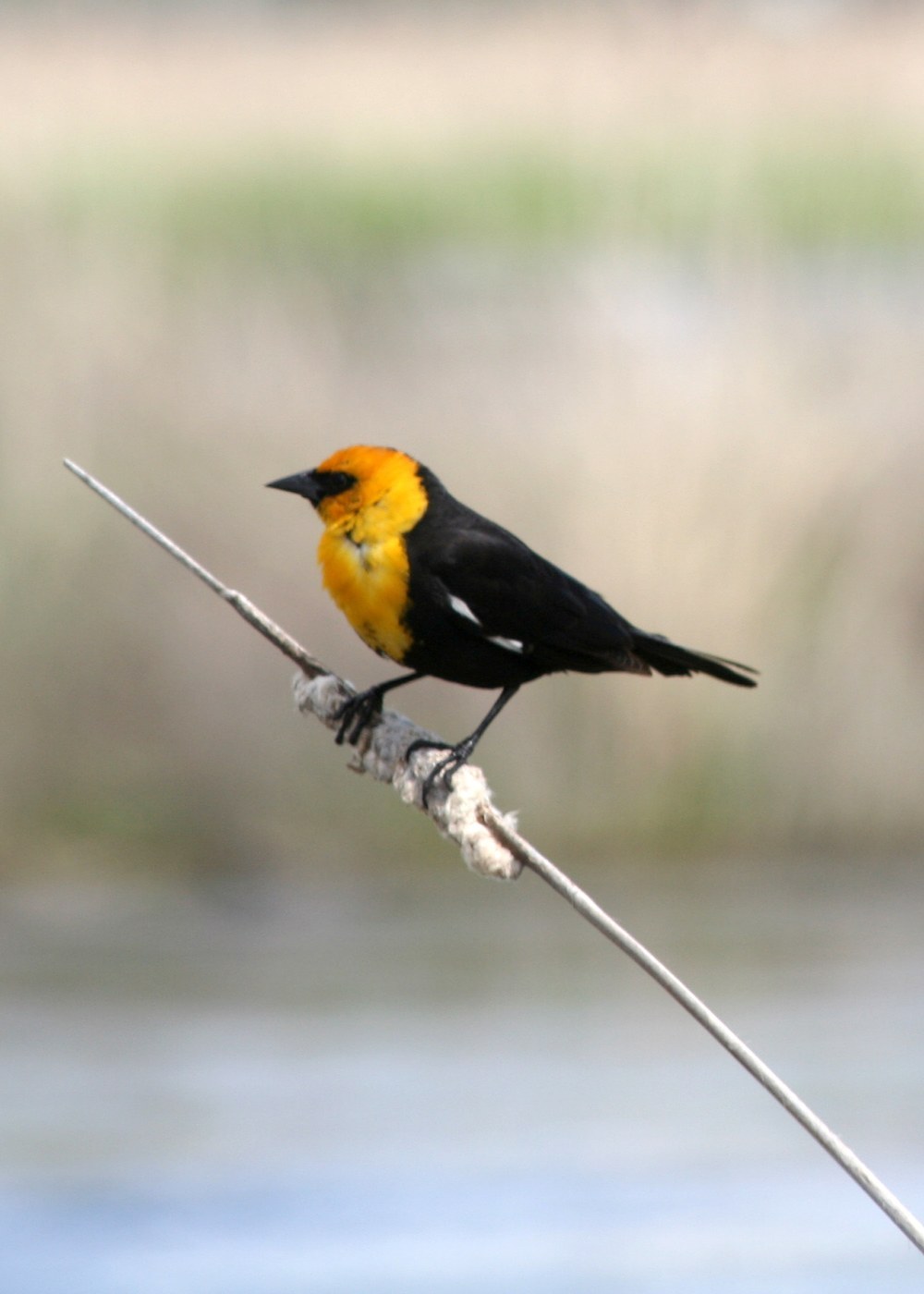
Yellow-headed Blackbird
Glossy black body plumage with a bright yellow head and breast

Yellow-eyed Junco
Contour and flight feathers

Yellow-fronted Canary
Small, smooth body plumage

Yellow-breasted Greenfinch
Compact, smooth body plumage