
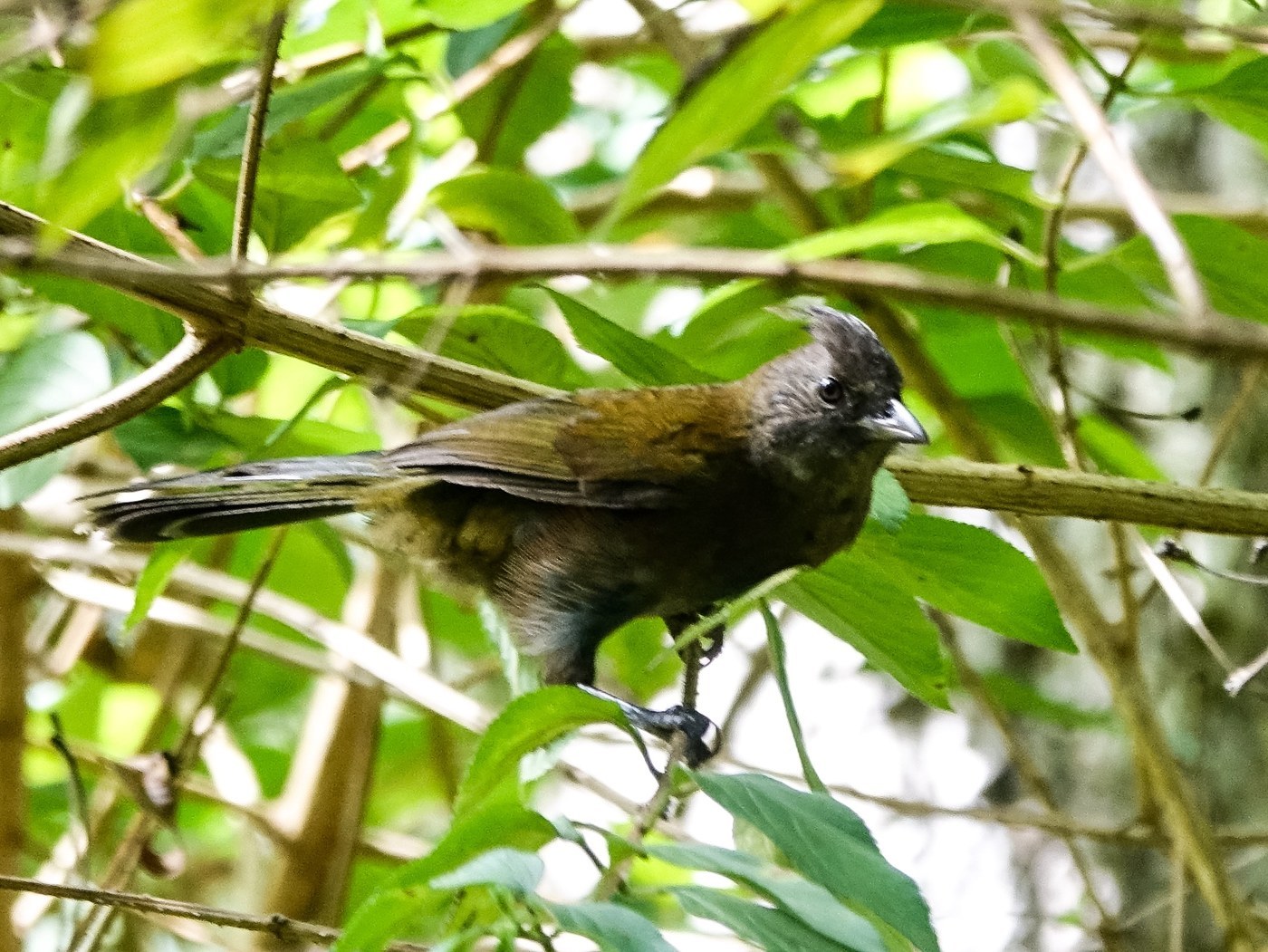
Eastern Whipbird
Psophodes olivaceus
The Eastern Whipbird is a skulking, olive-green Australian songbird best known for its explosive, whip-crack call rather than for being easily seen.
- Feather type
- Loose, olive-green contour feathers with a shaggy crest and long tail
- Colours
- Olive-green body with a blackish crested head and white cheek patch
- Bird size
- Medium, ~28 cm (including a long tail)
Found a feather like this?
Identify any feather from a photo, free.
Overview
Overview
The Eastern Whipbird is a shy, ground-dwelling inhabitant of dense rainforest and wet scrub along the east coast of Australia, far more often heard than seen. Its loud, whip-crack call, frequently answered in duet by its mate, is one of the most recognisable sounds of eastern Australian forests.
- Family: Psophodidae (whipbirds and allies)
- Distribution: eastern Australia from Cape York to Victoria
- Notable trait: distinctive whip-crack call, often given as a duet
Identifying the Feather
Feather Identification
Body plumage is olive-green overall, with a blackish head bearing a shaggy, pointed crest and a bold white patch on the cheek below the eye. The tail is long, dark, and often held cocked, with white tips visible on the outer feathers when fanned. Wings are plain olive with no strong barring.
- Overall tone: olive-green body, dark crested head
- Key mark: white cheek patch against the blackish head
- Compare with: no closely similar species shares this combination of crest, white cheek patch, and long dark tail in the same range
Plumage & Molt
Plumage
Sexes look alike in plumage pattern. Juveniles are duller, lacking the sharply defined white cheek patch and full crest of adults, which develop with maturity. There is no strong seasonal plumage variation beyond the annual moult.
Habitat & Range
Habitat & Range
Eastern Whipbirds inhabit dense rainforest, wet sclerophyll forest, and thick understorey scrub along the eastern Australian coast and ranges. They are sedentary, holding a territory in dense cover year-round.
Behavior & Field Notes
Behavior & Field Notes
This species forages on or near the ground in leaf litter for insects and other invertebrates, remaining largely hidden in dense vegetation. Its famous call is a long whistled note followed by a sharp whip-crack, often completed by the female's answering 'choo-choo' note in a tight duet. Nests are cup-shaped, built low in dense shrubbery.
- Diet: ground and litter-dwelling insects and other invertebrates
- Voice: a long rising whistle ending in an explosive whip-crack, frequently duetted
- Field note: its loud call is far more often encountered than a clear view of the bird itself, given its preference for dense cover
Frequently asked questions
Why is the Whipbird hard to see?
It stays hidden in dense rainforest and scrub understorey, foraging on or near the ground rather than in the open.
What does its call sound like?
A long rising whistle followed by a sharp crack like a whip, often immediately answered by the mate's 'choo-choo' notes in duet.
What is the best visual field mark?
A blackish crested head with a bold white cheek patch set against an otherwise olive-green body.
Does the Whipbird migrate?
No, it is sedentary and defends a forest territory year-round.
Eastern Whipbird guides
In-depth guides for identifying and understanding Eastern Whipbird.
Other feathers you may enjoy

Yellow-breasted Bunting
Contour and flight feathers, chestnut-and-yellow breeding pattern

Sedge Wren
Tiny streaked crown and back feathers

Yellow-winged Cacique
Glossy black body feathers, yellow wing patch, shaggy crest

Yellow Warbler
Small contour and flight feathers

Yellow-throated Warbler
Small contour and flight feathers

Yellow-throated Vireo
Bright yellow throat and spectacle feathers; olive-green back feathers; two white wing-bar feathers

Yellow-rumped Warbler
Small contour and flight feathers

Yellow-hooded Blackbird
Contrasting hood and body feathers

Yellow-headed Blackbird
Glossy black body plumage with a bright yellow head and breast

Yellow-eyed Junco
Contour and flight feathers

Yellow-fronted Canary
Small, smooth body plumage

Yellow-breasted Greenfinch
Compact, smooth body plumage