
How to Identify Eastern Whipbird Feathers
How to recognize the dark olive-green, crested feathers of the Eastern Whipbird, a shy Australian rainforest bird known for its whip-crack call.
Read the full Eastern Whipbird encyclopedia entry →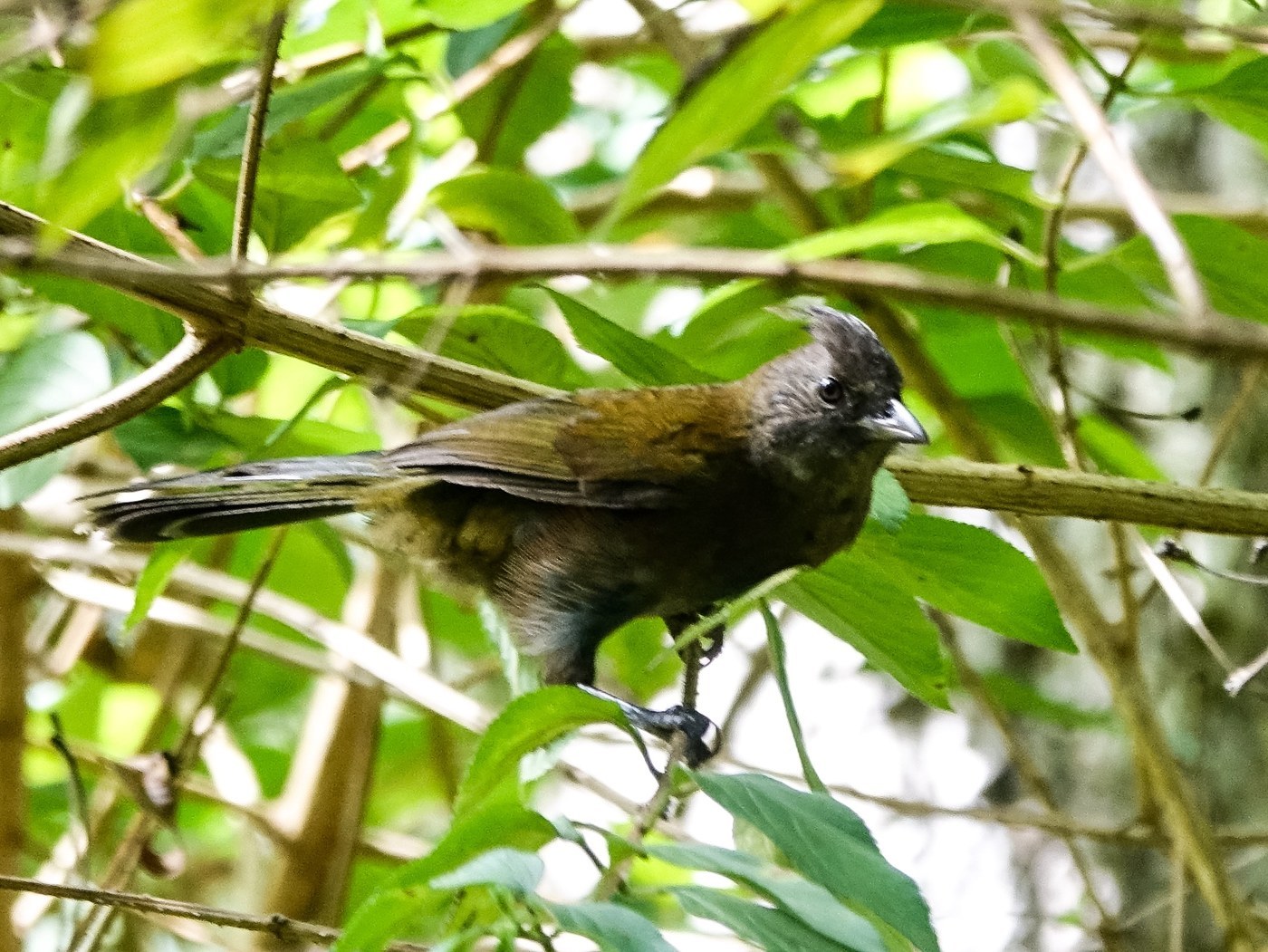
What Eastern Whipbird's Feathers Look Like
Eastern Whipbird feathers combine subdued olive-green body tones with a few striking accent features that make identification easier than the bird's shy, skulking habits might suggest. Body feathers — back, wings, and underparts — are a rich, dark olive-green, deepening to blackish on the head. The head carries a distinctive shaggy black crest, made of elongated, slightly ragged-tipped feathers quite different in texture from the smoother olive body feathers. A bold white patch sits on the cheek/malar area, standing out sharply against the black head feathers — a strong and reliable field mark even from a single isolated feather. The tail is notably long and graduated, dark olive-blackish, with the outer tail feathers tipped in white, forming small white corner spots that flash as the bird flicks its tail (a frequent habit). Overall feather size fits a medium-sized, long-tailed songbird, with the tail feathers themselves notably elongated relative to the compact body.
Step-by-Step: Is This Feather From an Eastern Whipbird?
- Check for a shaggy, elongated black crest feather — the ragged, spiky texture is distinct from smooth body contour feathers.
- Look for a bold white patch feather that would sit on the cheek, sharply contrasting against black head feathers.
- Examine tail feathers for white tips, especially on the outer feathers, against an otherwise dark olive-blackish tail.
- Confirm the deep olive-green body tone, distinct from the duller browns of many understory birds sharing similar habitat.
- Measure the tail length. Long and graduated relative to body size supports whipbird over stockier understory species.
- Weigh the dense rainforest/wet-forest habitat, since this species rarely ventures into open or dry country.
Similar Species & How to Tell Them Apart
The Eastern Yellow Robin, sharing some habitat, is a completely different color — bright yellow underparts and gray upperparts — so it's easily ruled out if a feather shows the whipbird's olive-green and black tones. Bassian Thrush and other rainforest-floor thrushes show mottled brown-and-buff scalloping rather than solid olive-green, and lack both the shaggy crest and white cheek patch. Spotted Catbird, found in some overlapping rainforest, is a duller olive-green overall but is heavily spotted with pale markings across the body, a pattern absent in the cleaner, unspotted olive plumage of Eastern Whipbird. The shaggy black crest paired with a bold white cheek patch is a combination essentially unique to whipbirds among common rainforest-understory birds in the region.
Where & When You'll Find Them
Eastern Whipbirds inhabit dense, wet rainforest and eucalypt forest understory along the east coast of Australia, from Queensland down through New South Wales and into parts of Victoria, where they forage secretively on the forest floor and in dense low vegetation, more often heard (via their distinctive whip-crack call) than seen. As a largely non-migratory, resident species, feathers can be found year-round, though the breeding season (spring through summer in the Southern Hemisphere, roughly September through January) is likely the best window, when nesting activity in low, dense shrubs increases feather turnover. Search low to the ground in dense understory thickets, vine tangles, and along shaded rainforest tracks where this shy species spends nearly all its time.
Frequently asked questions
What is the most distinctive feature of an Eastern Whipbird feather?
A shaggy, elongated black crest feather combined with a bold white cheek-patch feather contrasting against otherwise dark olive-green plumage.
Does the Eastern Whipbird have white in its tail?
Yes — the outer tail feathers are tipped in white, forming small white corner spots visible when the bird flicks its long tail.
How can I tell this apart from a Spotted Catbird feather?
Spotted Catbird is heavily spotted with pale markings across the body, while Eastern Whipbird's olive-green plumage is clean and unspotted.
What habitat should I search for Eastern Whipbird feathers?
Dense, wet rainforest and eucalypt forest understory along Australia's east coast, especially low, shaded, densely vegetated areas.
When is the best time to find Eastern Whipbird feathers?
Year-round is possible since they're resident, but spring through summer (roughly September-January) breeding season likely offers the best chance.