

Dodo
Raphus cucullatus
A large, flightless pigeon relative once native to Mauritius, known for its stout grey-brown body, oversized hooked bill, and small, curled tuft of tail feathers; it has been extinct since the late 1600s.
- Feather type
- Down-like body feathers, vestigial flight feathers
- Colours
- Grey-brown body, small pale or yellowish wing and tail tufts
- Bird size
- Large, flightless, roughly turkey-sized
Found a feather like this?
Identify any feather from a photo, free.
Overview
The Dodo was a large, flightless bird endemic to the island of Mauritius and one of the closest known relatives of modern pigeons and doves. Isolated from major predators for millennia, it evolved a heavy body, reduced wings, and ground-dwelling habits before European contact in the 16th and 17th centuries brought introduced predators and habitat change that led to its extinction by the late 1600s. Much of what is known about its plumage and appearance comes from historical illustrations, written accounts, and surviving skeletal and subfossil remains rather than preserved feather specimens.
Identifying the Feather
Based on historical descriptions and depictions, the Dodo's body was covered in downy, loosely structured grey-brown feathers rather than the tight, sleek plumage typical of flighted pigeons. Its wings were greatly reduced and are described as bearing small, degenerate flight feathers unsuited for flight. A tuft of small, curled feathers was present at the rear, sometimes described as pale or yellowish in historical sources. Because no complete original feathers are known to survive in verified museum collections, feather-level identification relies on these historical and artistic records rather than direct physical comparison.
Plumage & Molt
Descriptions suggest a fairly uniform grey-brown body plumage, with some historical sources noting variation in illustrated color that may reflect artistic interpretation rather than confirmed sexual or seasonal differences. Distinct male and female plumage differences, if any existed, are not well documented. No information on molt patterns has been confirmed, given the absence of living populations to study.
Habitat & Range
The Dodo was restricted entirely to the island of Mauritius in the Indian Ocean, where it inhabited native forest prior to significant human settlement of the island. It is extinct, with the last confirmed records dating to the late 17th century, and no wild or captive populations exist today.
Behavior & Field Notes
Historical accounts describe the Dodo as a ground-dwelling bird that fed on fallen fruit and other plant matter within Mauritian forest. Its nesting habits are not well documented, though it is believed to have nested on the ground. Its extinction is closely associated with the introduction of non-native predators and disturbance to its island habitat following human settlement, making it one of the most well-known examples of human-caused extinction.
Frequently asked questions
What did Dodo feathers reportedly look like?
Historical accounts and illustrations describe loose, downy grey-brown body feathers with small, non-functional wing feathers unsuited for flight.
Is the Dodo still alive today?
No, the Dodo is extinct; the last confirmed records date to the late 17th century.
Where did the Dodo live?
It was found only on the island of Mauritius in the Indian Ocean.
What is the Dodo related to?
It was a flightless relative of modern pigeons and doves, part of the same broader bird family.
Dodo guides
In-depth guides for identifying and understanding Dodo.

Other feathers you may enjoy

Victoria Crowned Pigeon
Large lace-like fan crest plumes over dense body contour feathers

Plain Pigeon
Contour feathers, plain and uniformly toned, with a white wing patch

Zenaida Dove
Contour and flight feathers, faint iridescent sheen on neck

Pink Pigeon
Soft contour feathers with graduated tail

Nicobar Pigeon
Long, hackle-like elongated neck feathers with iridescent sheen
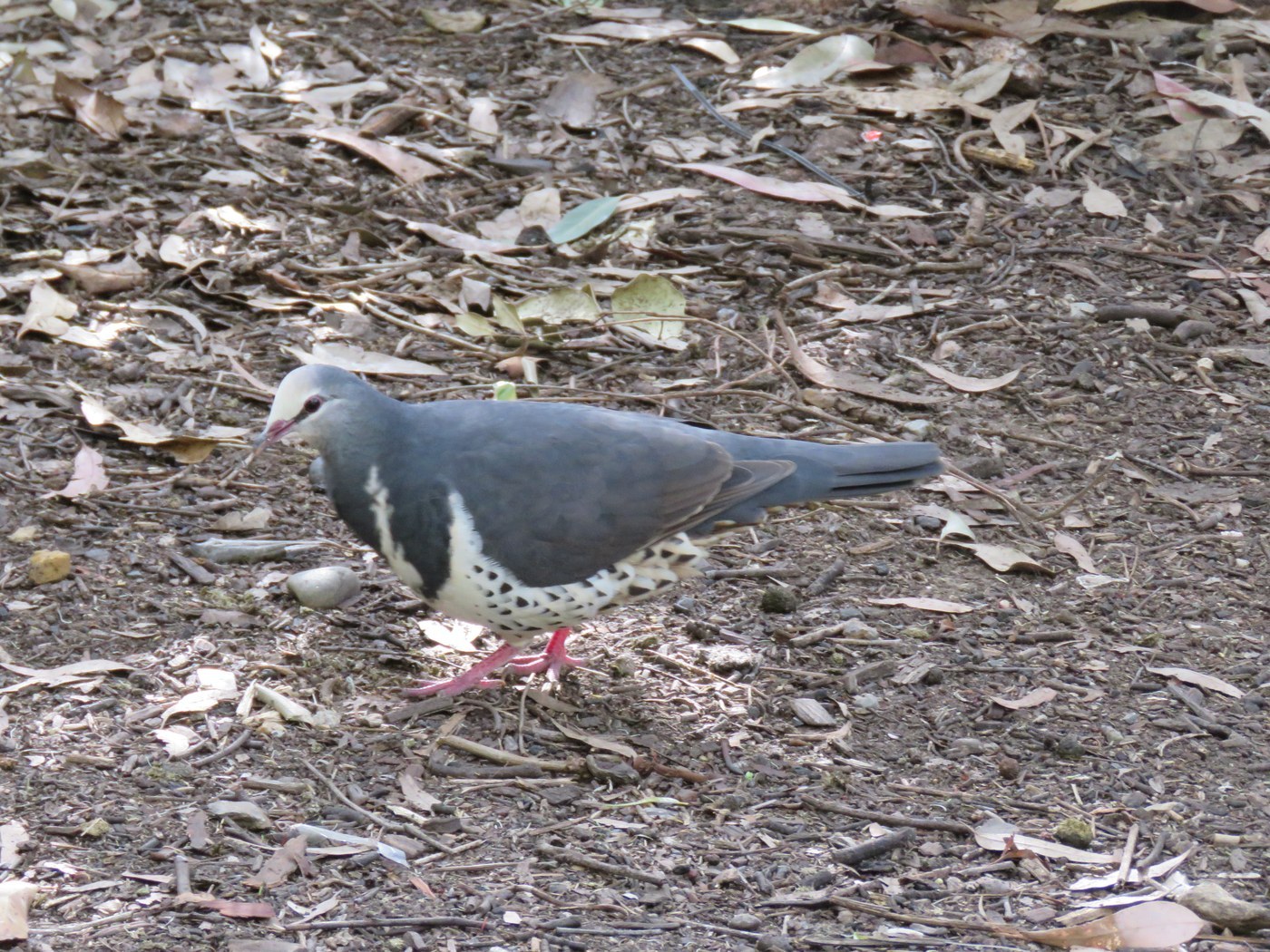
Wonga Pigeon
Dense, soft body contour feathers over a stocky frame

Squatter Pigeon
Dense, cryptic body contour feathers with a bold facial pattern

White-winged Dove
Broad, sturdy flight feathers with a bold white wing stripe

Western Crowned Pigeon
Rounded fan crest plumes over dense soft body feathers

Snow Pigeon
Dense insulating body contour feathers with a bold white rump and belly patch

Zebra Dove
Contour feathers with bold, extensive black-and-white barring

Scaly-naped Pigeon
Contour feathers with iridescent scaled nape pattern