
Common Pochard
Aythya ferina
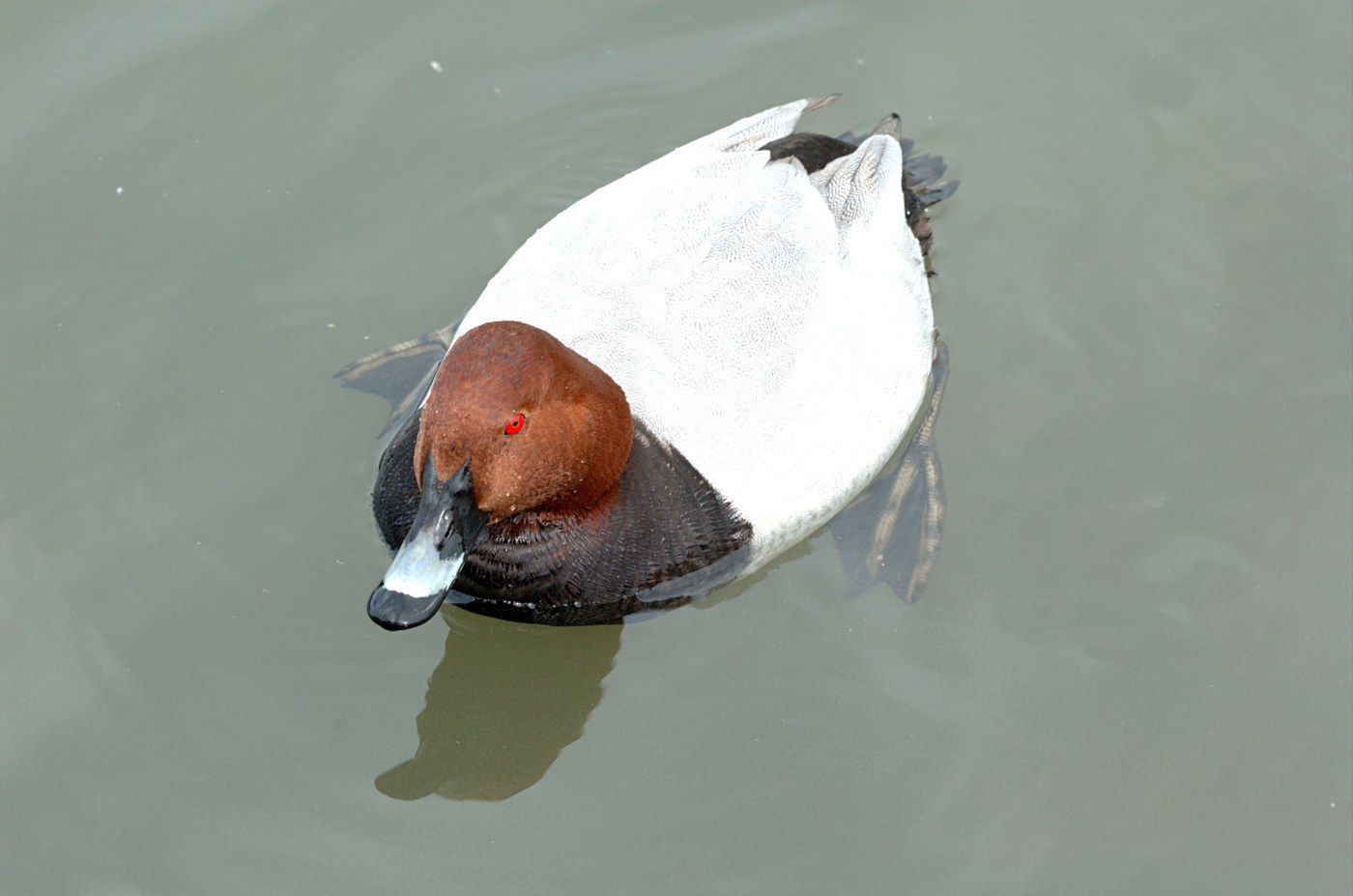
The Common Pochard is a Eurasian diving duck notable for the male's warm chestnut head and contrasting black breast, set against a pale, finely patterned gray body.
- Feather type
- Diving-duck body and wing feathers
- Colours
- Rich chestnut head, black breast, pale gray vermiculated body
- Bird size
- Slightly smaller than a Mallard, ~42-49 cm
Found a feather like this?
Identify any feather from a photo, free.
Overview
Overview
The Common Pochard is a mid-sized diving duck widespread across Europe and Asia, favoring open freshwater lakes and wetlands. Breeding males show a rounded chestnut-red head, black breast and rear, and a pale gray body created by fine, dense vermiculations - a pattern that gives the bird a frosted appearance from a distance. Females are more subdued brown overall with a paler face and throat, lacking the male's bold color contrasts.
Identifying the Feather
Feather Identification
- Head color: The male's head and neck feathers are a warm, even chestnut-red, distinct from the darker, glossier heads of most other Aythya ducks.
- Body vermiculation: The back and flank feathers show extremely fine, densely packed gray vermiculations, producing a smooth pale gray look rather than a bold black-and-white pattern.
- Breast and rear contrast: A solid black breast and black rear contrast sharply with the pale gray body and reddish head, aiding quick identification even at a distance.
- Wing pattern: The speculum is grayish rather than bright white, duller than in scaup or Tufted Duck, an important distinguishing feature in flight.
- Female facial tone: Females show a paler grayish-brown face and throat against an otherwise mottled brown body, without a bold white patch at the bill base.
Plumage & Molt
Plumage Notes
Adult male Common Pochards in breeding plumage combine a chestnut head, black breast and stern, and pale vermiculated gray flanks and back. Eclipse males become duller and browner, losing some of the sharp color contrast but retaining traces of the chestnut head tone. Females remain a more uniform brown year-round with subtle paler areas on the face. The species undergoes a complete molt after breeding, with males especially transitioning through a drab eclipse phase before regaining full breeding coloration. Juveniles resemble females and acquire adult male patterning gradually.
Habitat & Range
Habitat & Range
Common Pochards breed across a broad swath of temperate Europe and Asia on freshwater lakes, reservoirs, and marshes with open water and fringing vegetation. In winter, they concentrate on large lakes, reservoirs, and coastal lagoons across milder parts of their range. The species is migratory across much of its range, moving from northern and continental breeding areas to more temperate wintering grounds.
Behavior & Field Notes
Behavior & Field Notes
Common Pochards are active divers, foraging on aquatic vegetation and invertebrates from the bottoms of lakes and wetlands. They are gregarious outside the breeding season, often forming large single- or mixed-species rafts on favored lakes. Nesting occurs on the ground in dense waterside vegetation, with the female handling incubation and brood care alone. Vocalizations are relatively quiet, with males giving soft wheezing notes during courtship displays and females a harsher growl. Flight is strong and direct on rapidly beating wings.
Frequently asked questions
What color is a male Common Pochard's head feathers?
A warm, even chestnut-red, which is one of the most distinctive features separating it from other diving ducks with darker or glossier heads.
How does the Common Pochard's back feathering compare to a Scaup's?
Both show pale, vermiculated gray backs, but the Pochard's chestnut head and contrasting black breast set it apart at a glance.
Is the Common Pochard found in North America?
It is primarily a Eurasian species and only rarely recorded as a vagrant outside that range.
Do female Common Pochards show any bold facial markings?
No, females are fairly uniformly brown with only subtle paler tones on the face and throat, without a bold white patch.
Common Pochard guides
In-depth guides for identifying and understanding Common Pochard.
Other feathers you may enjoy

Mallard
Wing (speculum), body, and tail feathers

Spectacled Eider
Large sea-duck body feathers with distinctive eye-ring patches

Canada Goose
Body and flight feathers
Mute Swan
Body (contour) and flight feathers

Wood Duck
Iridescent crest feathers; ornate scapular and flank feathers; white teardrop facial feathers (female)
Whooper Swan
Contour and flight feathers

White-winged Scoter
Large sea-duck body feathers with a white wing patch

Ruddy Duck
Stiff tail feathers and compact body plumage

Ross's Goose
Contour and flight feathers

White-cheeked Pintail
Contour and elongated tail feathers

Torrent Duck
Dense, sleek contour feathers; stiff, pointed tail feathers used for bracing against rocks

Tundra Swan
Contour and flight feathers