
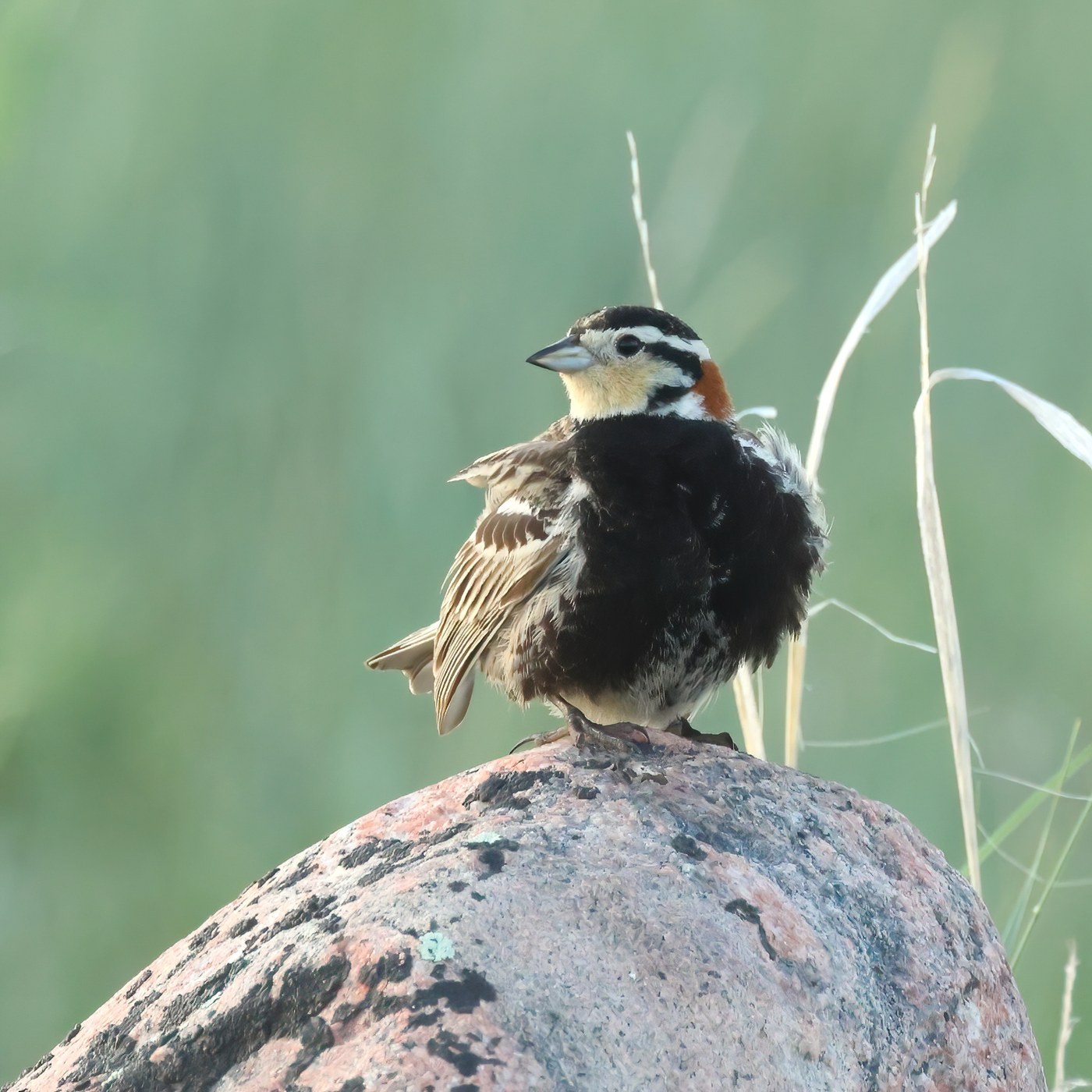
Chestnut-collared Longspur
Calcarius ornatus
The Chestnut-collared Longspur is a prairie songbird whose breeding males show striking black underparts and a chestnut nape collar, delivered in a fluttering display flight over grassland.
- Feather type
- Contour and flight feathers, black-and-buff breeding pattern
- Colours
- Black underparts with a chestnut collar in breeding males
- Bird size
- Sparrow-sized, ~14 cm
Found a feather like this?
Identify any feather from a photo, free.
Overview
Overview
The Chestnut-collared Longspur is a grassland specialist of the northern Great Plains, known for its striking breeding plumage and aerial display flight performed low over open prairie.
- Family: Longspurs and snow buntings (Calcariidae)
- Genus: Calcarius, sharing the elongated hind claw of its relatives
- Among the most strongly patterned longspurs in breeding plumage
Identifying the Feather
Feather Identification
Chestnut-collared Longspur feathers in breeding males show black body feathers on the underparts contrasting with a chestnut band across the nape and a black-and-white facial pattern.
- Shape: Rounded contour feathers; tail feathers show extensive white with a dark central triangle, useful in flight
- Size: Small, one of the smaller longspurs
- Color pattern: Breeding males show black underparts, chestnut collar, buffy face, and black-and-white crown stripes; females and winter birds are streaky buff-brown with less contrast
- Shaft: Pale, not a key feature
- Vs. similar species: The mostly white tail with a dark central wedge separates this species from other longspurs in flight; breeding males are unmistakable with black underparts
Plumage & Molt
Plumage Details
Breeding males show black underparts, a chestnut nape collar, and a buffy face bordered by black crown stripes; females and nonbreeding birds are streaky brown overall.
- Sexes: Strongly dimorphic in breeding plumage; females are much duller and streaked
- Juveniles: Streaked buffy-brown overall, similar to nonbreeding females
- Seasonal changes: Breeding males become notably duller in winter, with buff feather edges obscuring the black underparts until they wear away by spring
- Molt: Complete molt after breeding, with a partial molt or feather wear contributing to the bright spring appearance
Habitat & Range
Habitat & Range
Chestnut-collared Longspurs are tied closely to native shortgrass and mixed-grass prairie in the northern plains.
- Range: Breeds in the northern Great Plains of the US and southern Canada; winters in the southern Great Plains and northern Mexico
- Habitat: Shortgrass and mixed-grass prairie, avoiding tall or dense vegetation
- Migratory status: Medium-distance migrant, moving between northern breeding grounds and southern wintering grasslands
Behavior & Field Notes
Behavior & Field Notes
Chestnut-collared Longspurs forage on the ground in open grassland, walking through short grass for seeds and insects.
- Diet: Insects during the breeding season; seeds and grain more prominent in migration and winter
- Nesting: Builds a grass cup nest directly on the ground, hidden by surrounding grass
- Voice: A short, jingling song given during a fluttering display flight; calls include a dry rattle
- Field notes: Males perform a distinctive slow, fluttering display flight over the prairie while singing, dropping back to the ground afterward
Frequently asked questions
What is the key field mark of a breeding male Chestnut-collared Longspur?
Solid black underparts paired with a chestnut collar across the nape and a buffy face are the defining marks.
How can Chestnut-collared Longspur be told from other longspurs in flight?
Its tail shows extensive white with a dark central wedge, differing from the tail patterns of related longspur species.
What habitat does this species require?
It depends on native shortgrass or mixed-grass prairie and generally avoids taller or denser grassland habitats.
Does the Chestnut-collared Longspur migrate?
Yes, it is a medium-distance migrant moving between northern plains breeding grounds and southern wintering grasslands.
Chestnut-collared Longspur guides
In-depth guides for identifying and understanding Chestnut-collared Longspur.
Other feathers you may enjoy

Yellow-breasted Bunting
Contour and flight feathers, chestnut-and-yellow breeding pattern
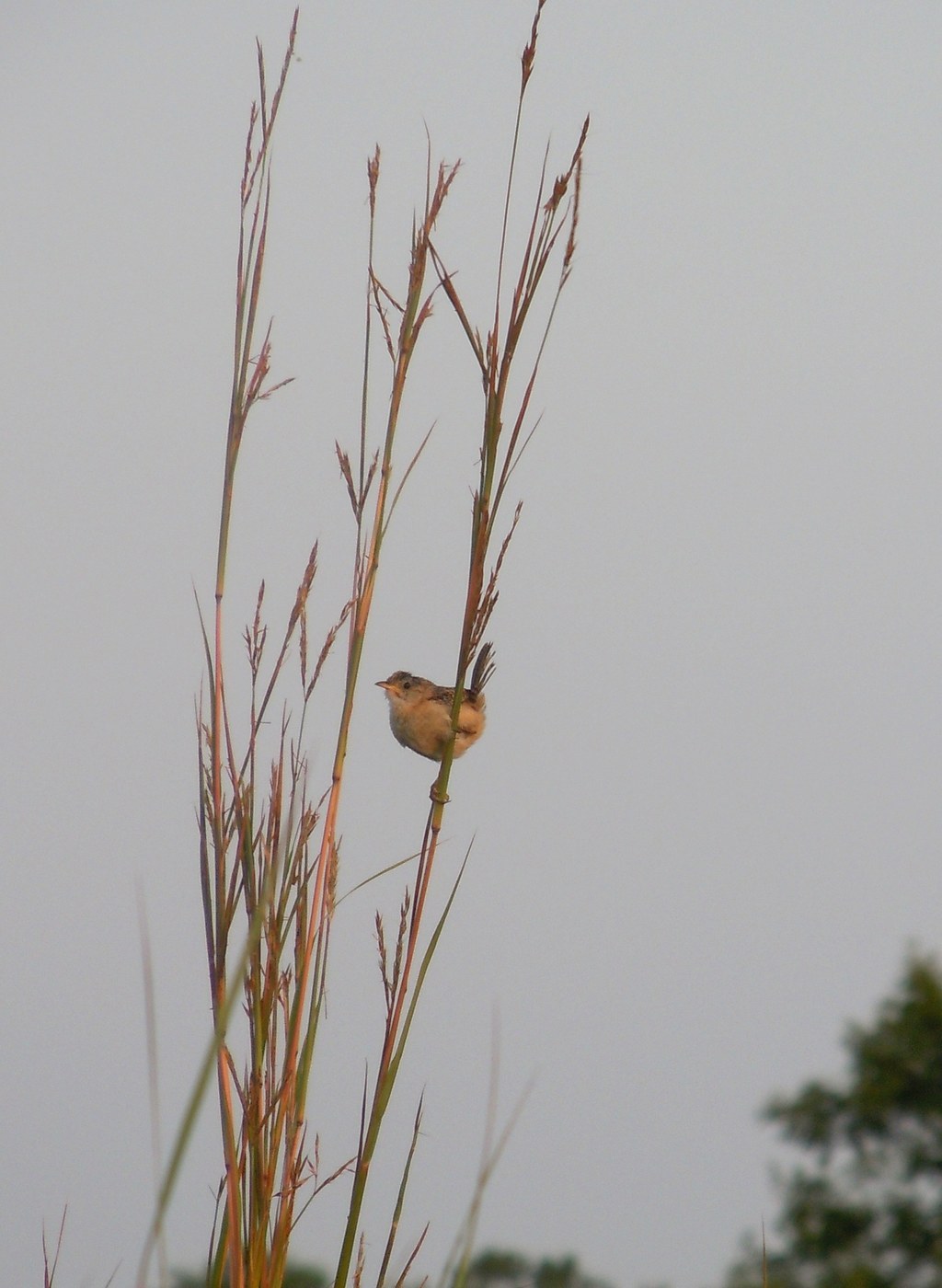
Sedge Wren
Tiny streaked crown and back feathers

Yellow-winged Cacique
Glossy black body feathers, yellow wing patch, shaggy crest

Yellow Warbler
Small contour and flight feathers
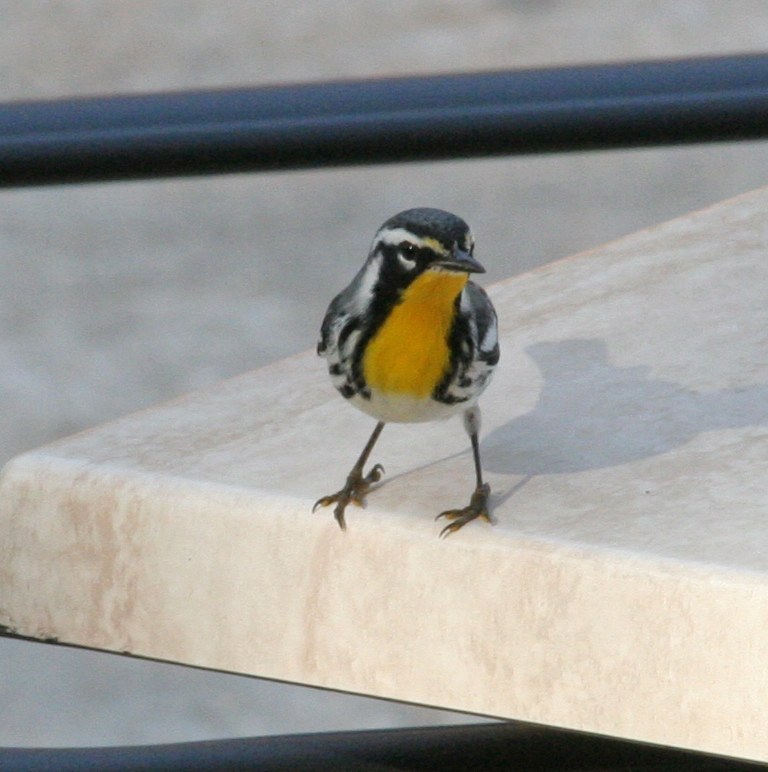
Yellow-throated Warbler
Small contour and flight feathers
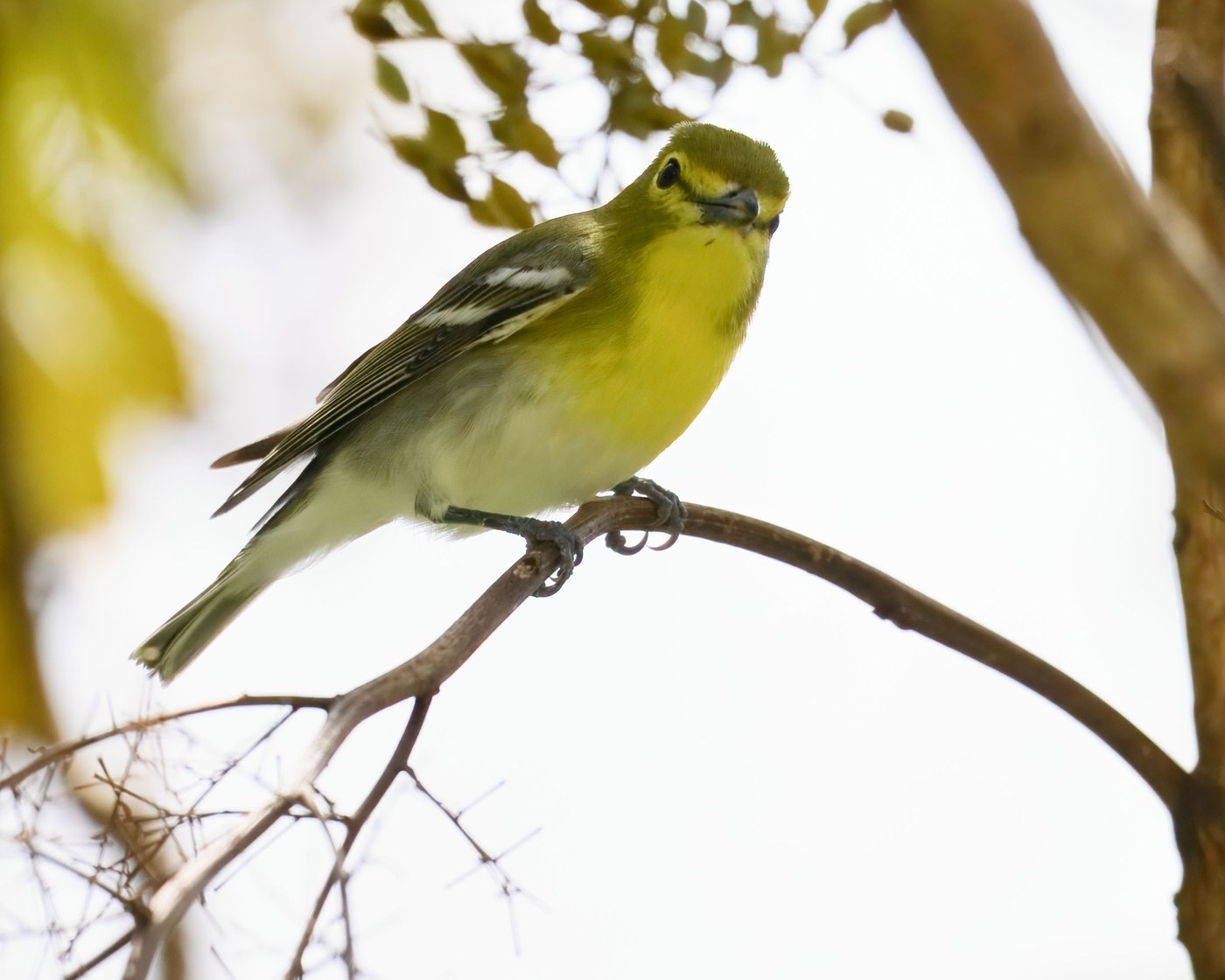
Yellow-throated Vireo
Bright yellow throat and spectacle feathers; olive-green back feathers; two white wing-bar feathers

Yellow-rumped Warbler
Small contour and flight feathers
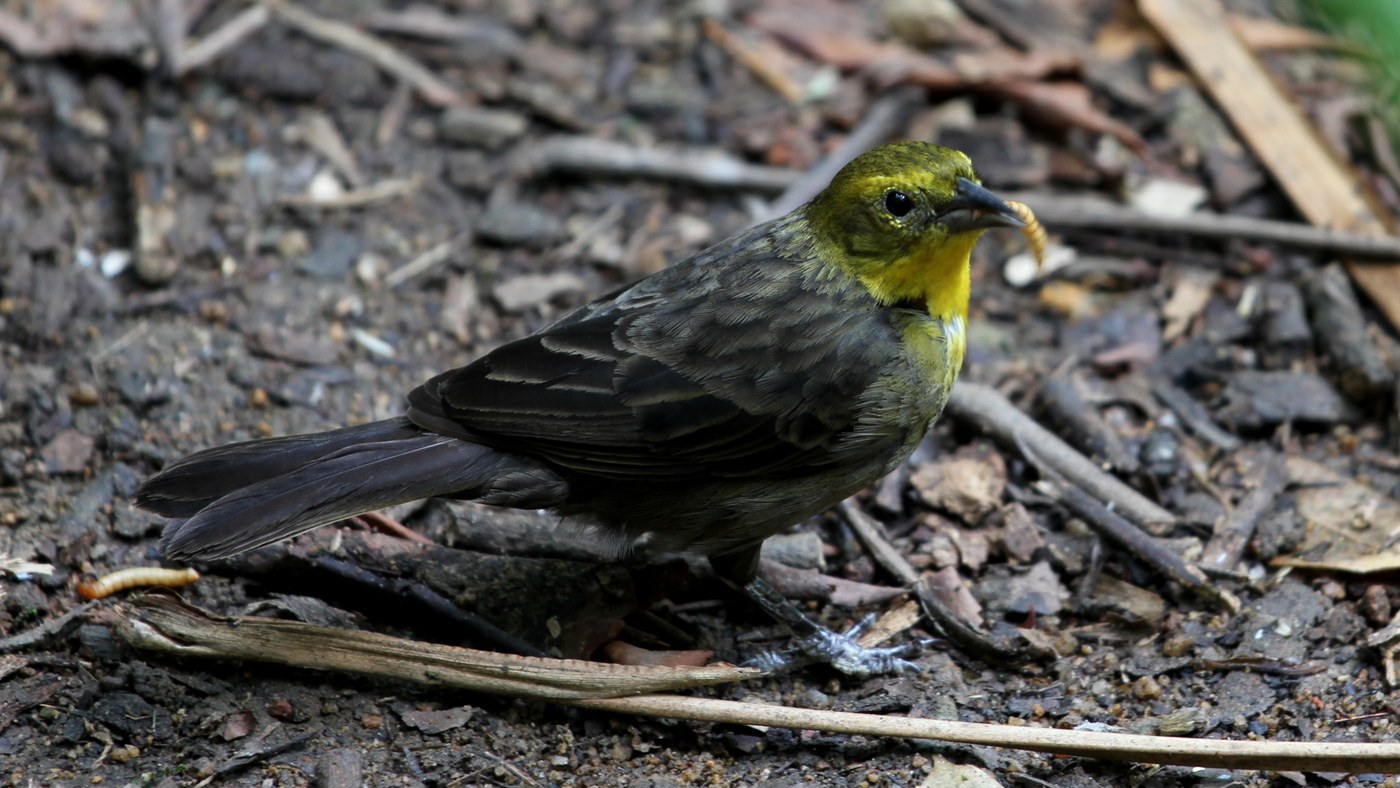
Yellow-hooded Blackbird
Contrasting hood and body feathers
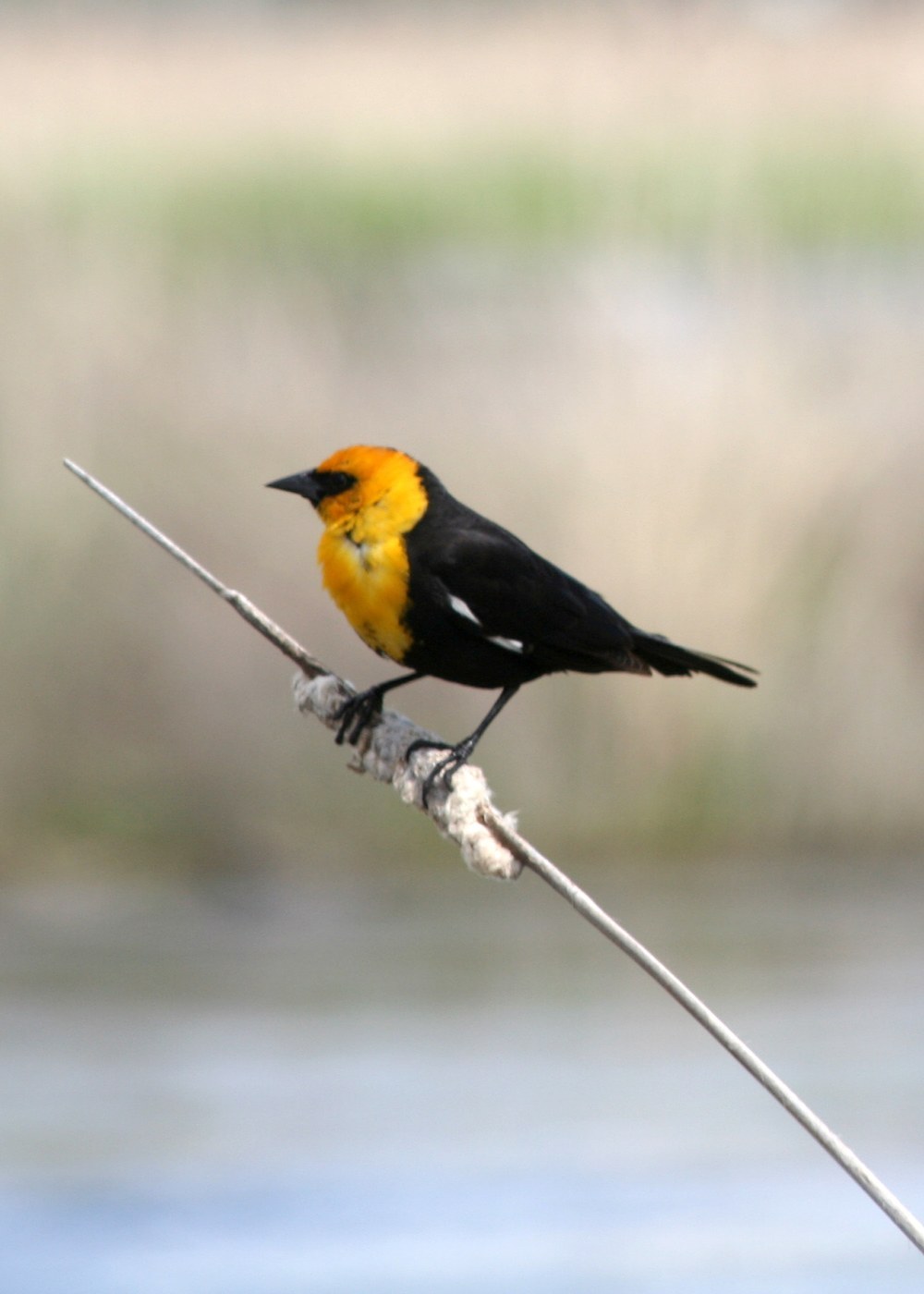
Yellow-headed Blackbird
Glossy black body plumage with a bright yellow head and breast

Yellow-eyed Junco
Contour and flight feathers

Yellow-fronted Canary
Small, smooth body plumage

Yellow-breasted Greenfinch
Compact, smooth body plumage